Have you read Katherine May’s ‘Wintering – the power of rest and retreat at difficult times”? She writes:
“I walk in the late January frost, and I realise that I am a wolf today. I had already been overcome by the need to prowl: to go outside and stalk about my territory, restless and wary. There is an unrest in my gut that feels like hunger.”
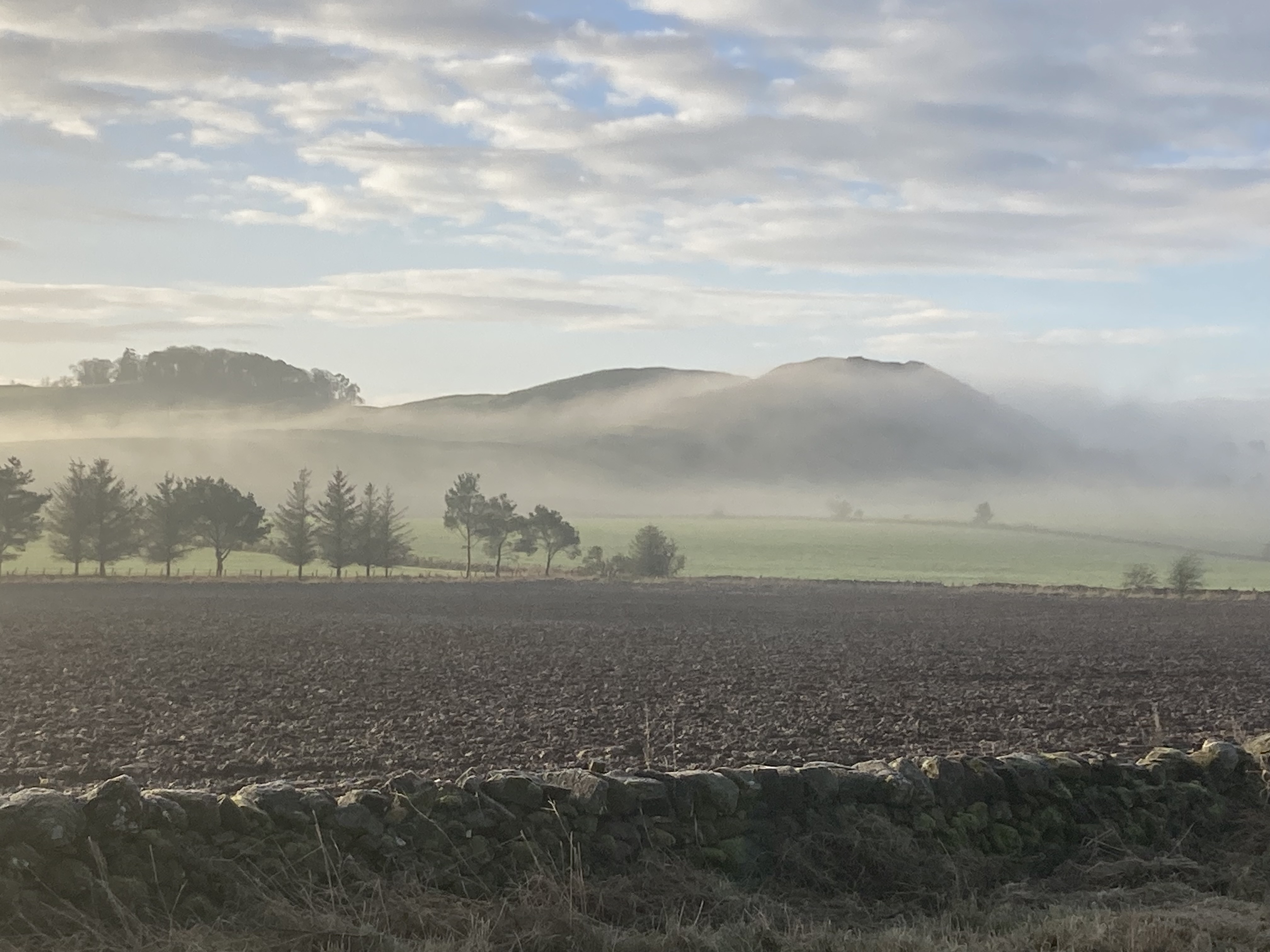
I won’t be sad to see the back of January this year. It’s been a dark and dreary month full of fog and cloud, sleet and snow, ice and rain. It’s been the sort of weather to keep me indoors even though I’m also overcome by the need to prowl.
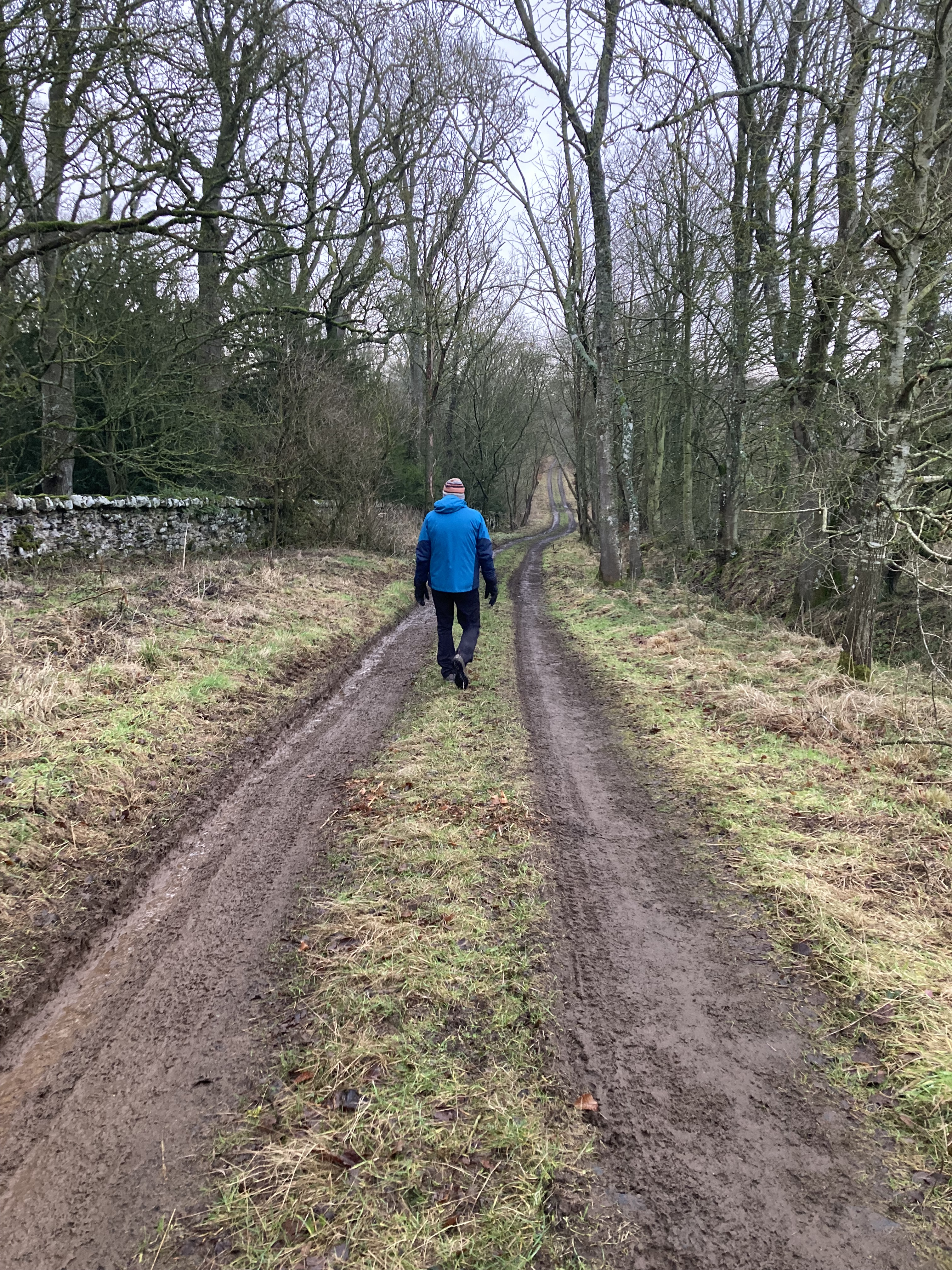
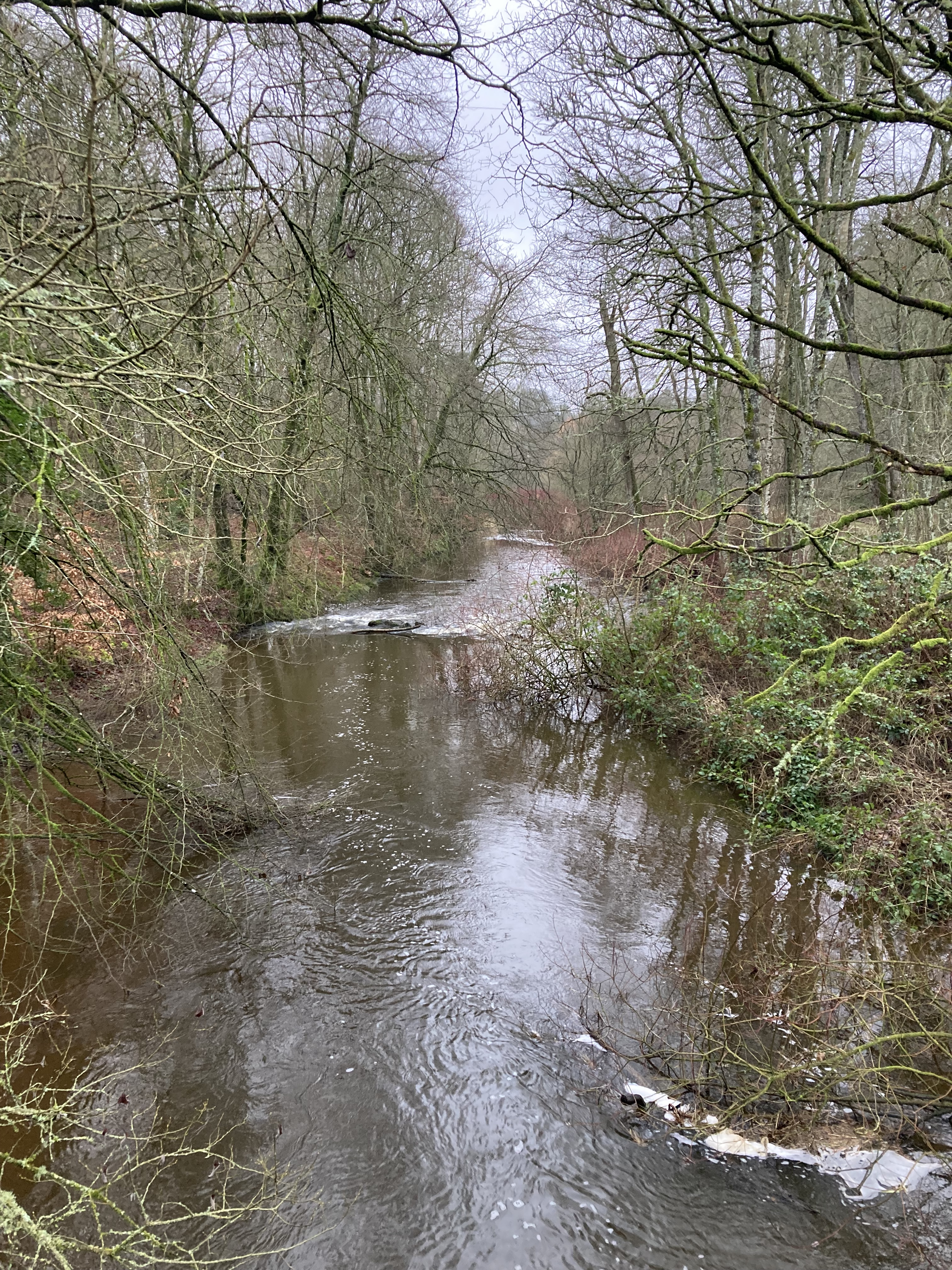
I remembered the other day why I like to walk…..from flat, miserable, dark mood, a few steps, a wet path, a rushing river can turn my mood to hopefulness.
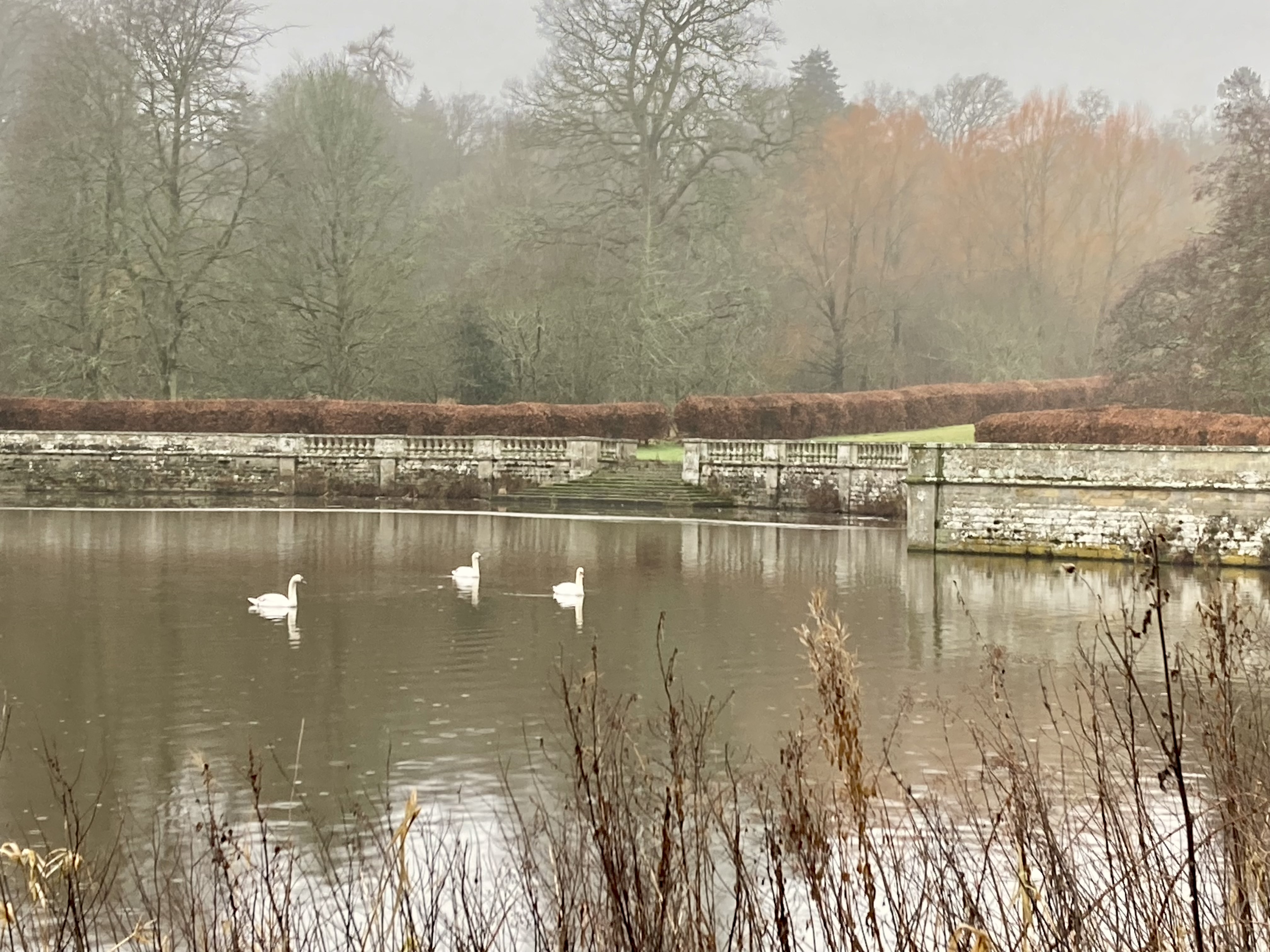
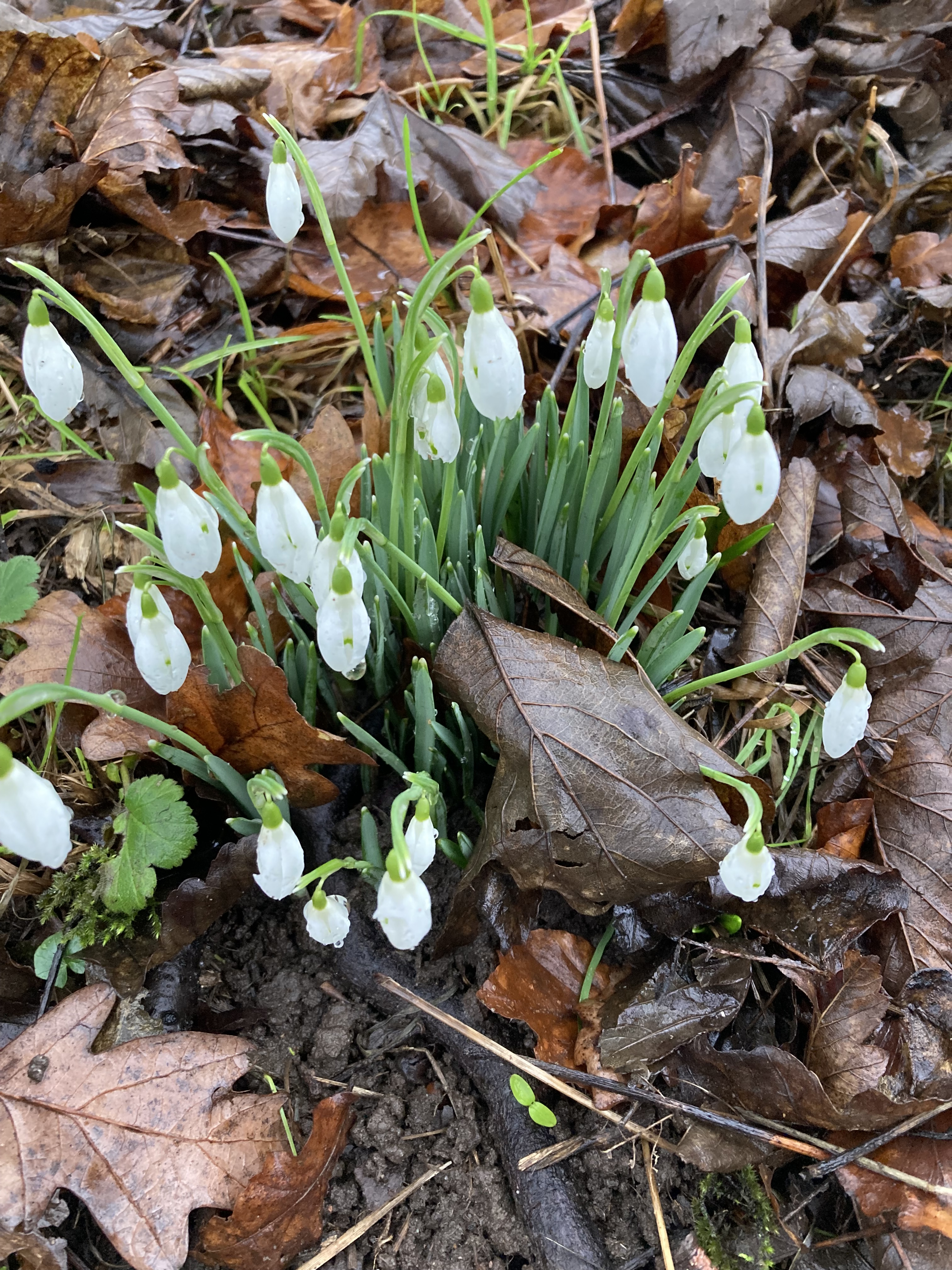
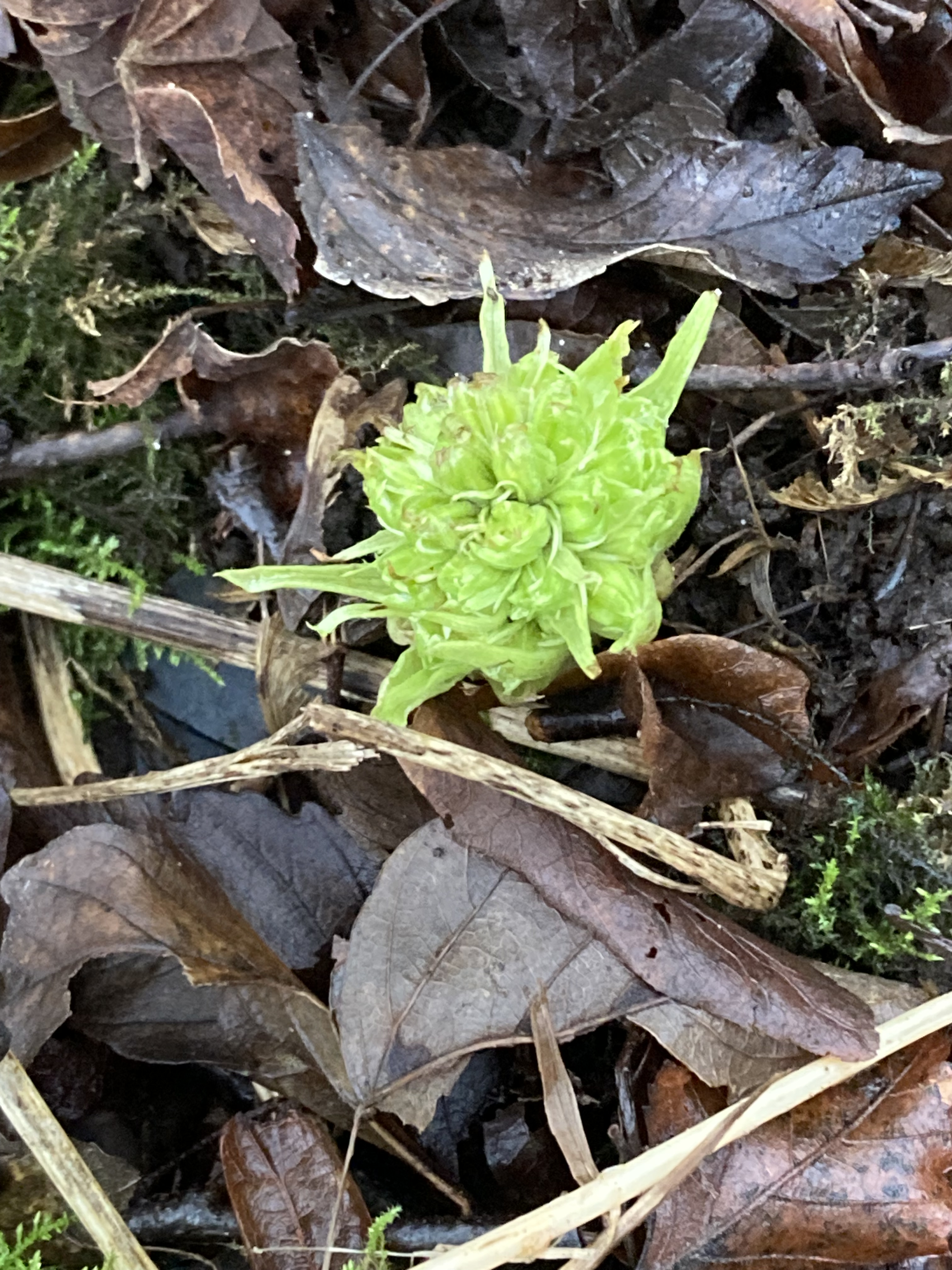
The icy, muddy green water of the Mellerstain Lake on a dark dank cold and misty morning, the bright green new growth of the snowdrops, daffodils and butterbur plants poking their heads above the dark soil and the yellow catkins hanging delicately from their branch reset my day.
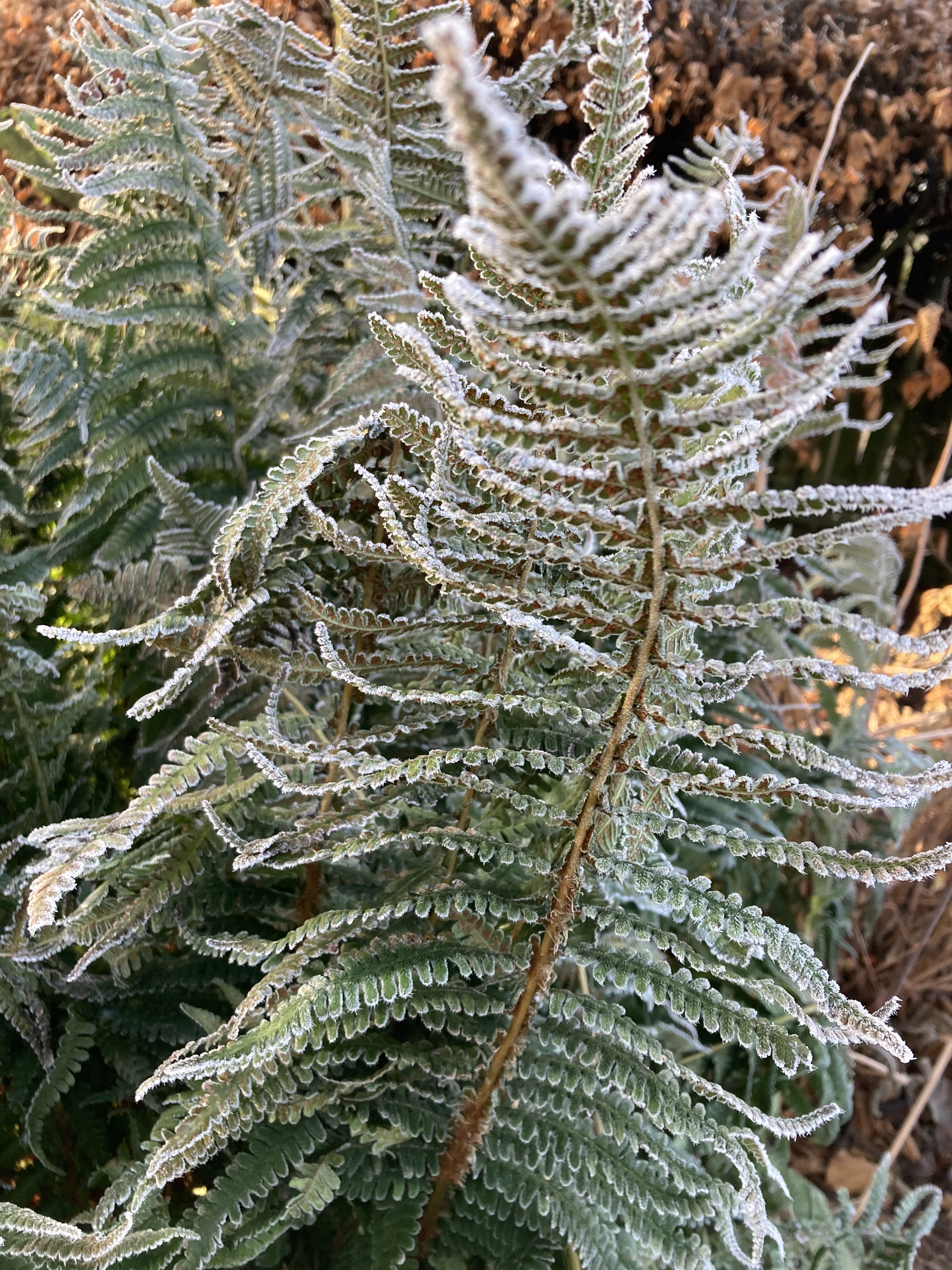
The frost on the ferns, the swans on the iced over lake and the heron taking off through the bare trees, all the noticings, all the happenings that can’t be seen in Spring or Summer when leaves and trees and lush green growth block the view. The best of Winter despite the biting cold and wet,slippy mud.
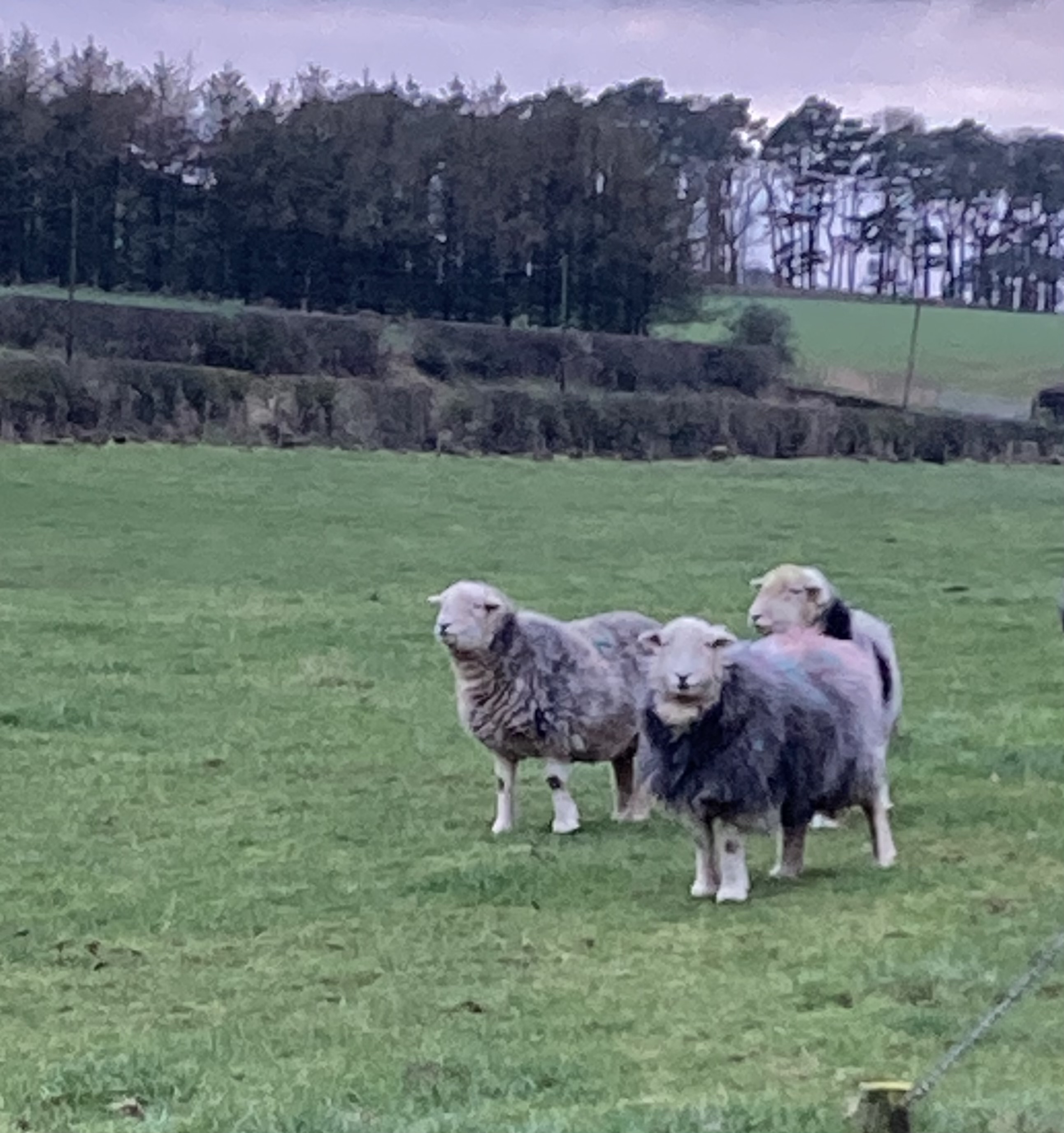
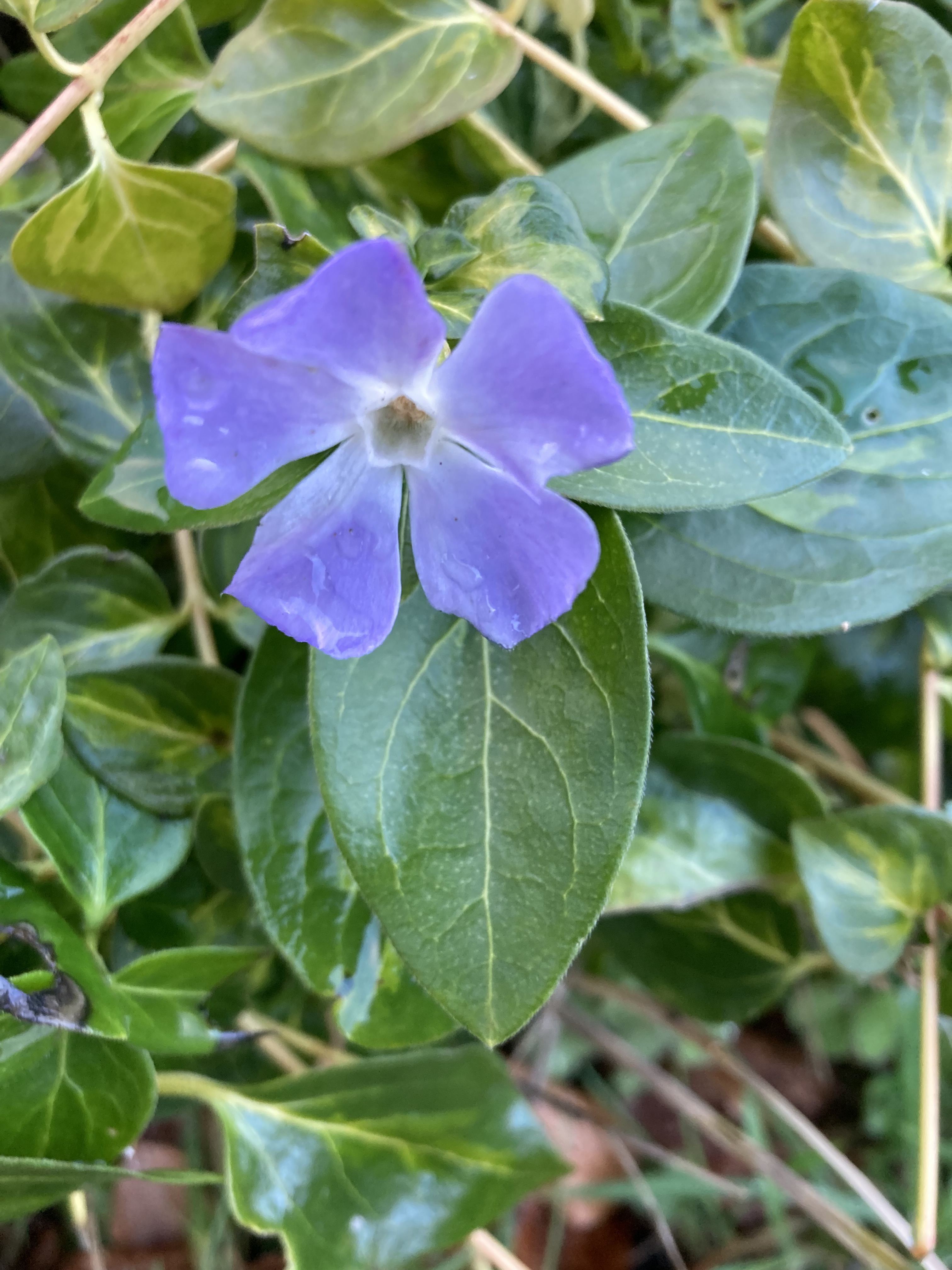
As the month ends I took a late afternoon walk in a sudden light and bright spell after an especially dark day – so glad I did. A blue periwinkle flower has appeared, I saw a hare scampering over the field and as I walked down the lane and around the corner the little flock of Herdwickes hurried to the field edge and followed along keeping me in their sights – in case I had food I expect. As we stood either side of the field gate, contemplating each other, listening to the buzzards screeching overhead, a beautiful white barn owl swooped down the hill and over our heads startling us all. Barn owls are so mesmerising, I watched it glide across the field and up the hill towards the farm waiting for ages in case it came back – but it didn’t.
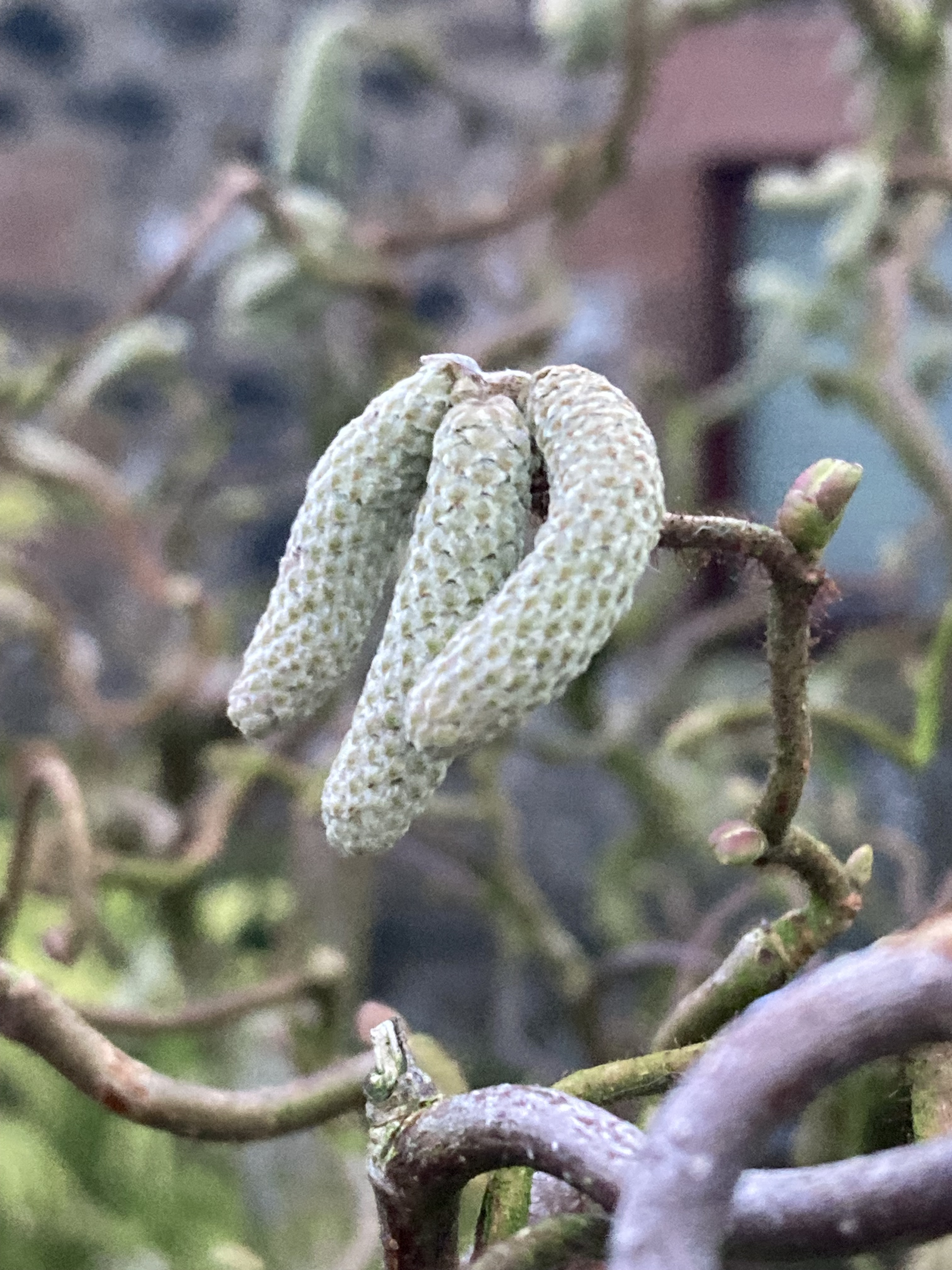
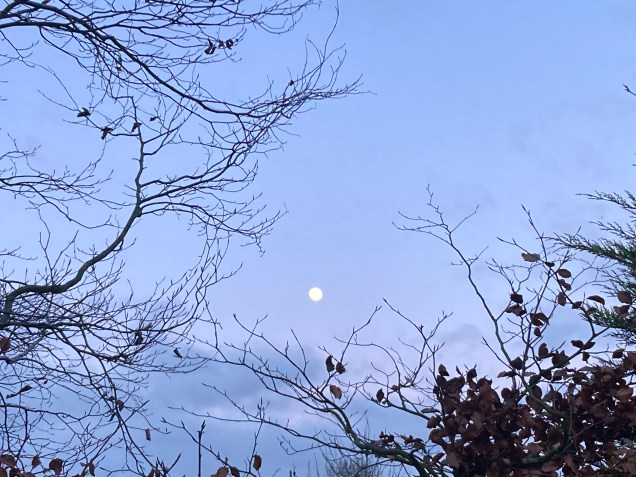
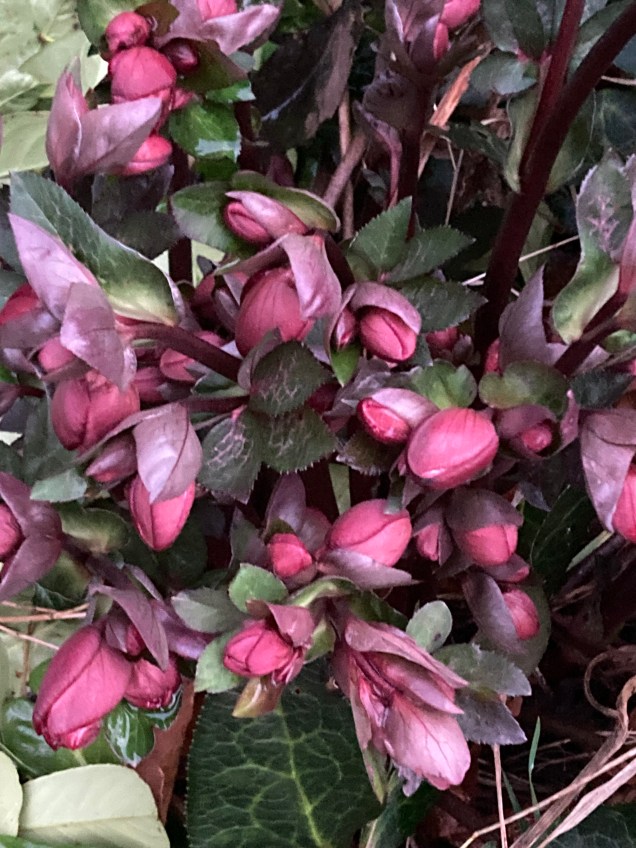
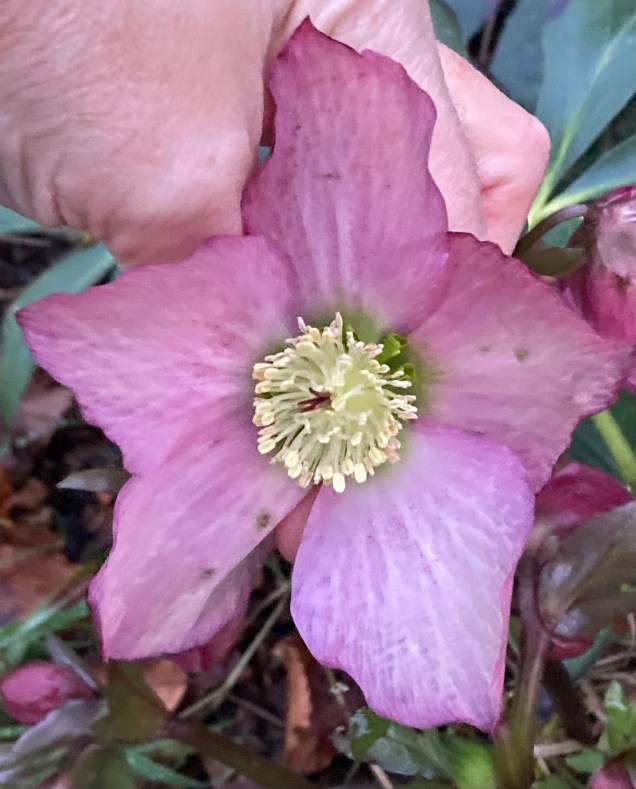
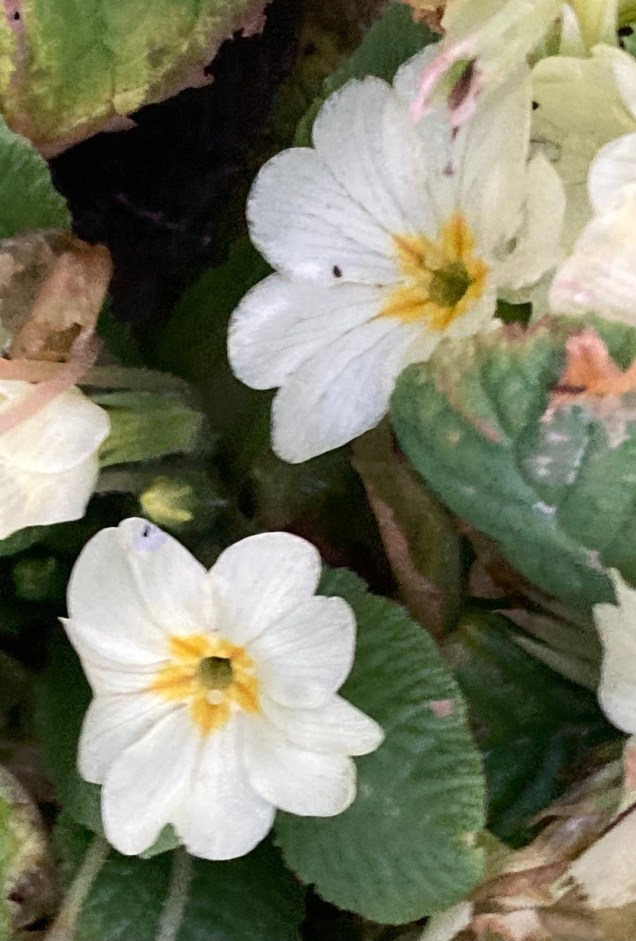
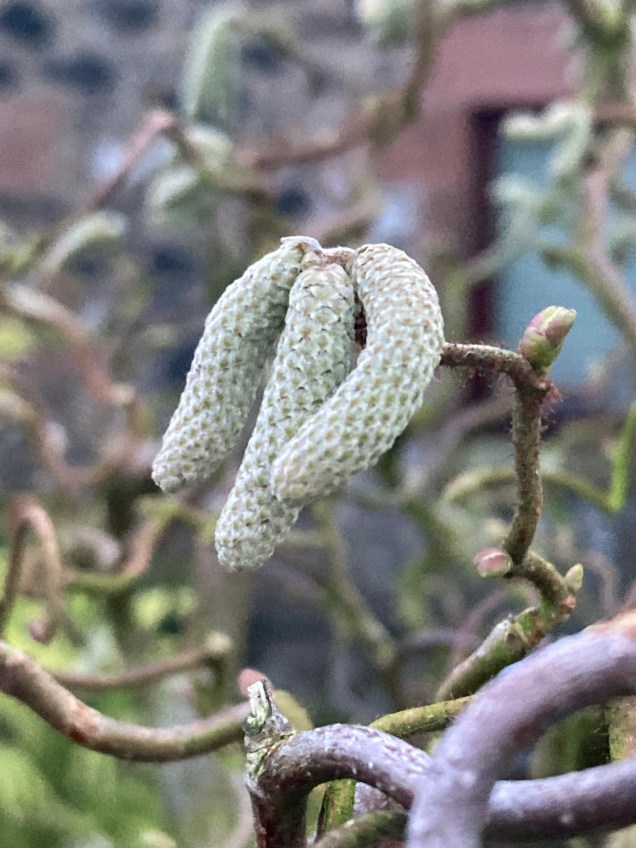
It’s a full moon this weekend as we leap into February – called a Snow Moon because February is supposed to be full of snow. In the garden as well as the snowdrops, the tulips are already showing their leaves, the hellebores are looking amazing and the primroses are hanging in there. There are catkins on the corkscrew hazel and buds on the climbing hydrangea.
Two lovely Scottish names to pick apart today and two beautiful places to talk about. We visited the National Trust for Scotland’s Inveresk Lodge Garden which is near Musselburgh a couple of weeks ago before popping along the coast past some wonderfully named places – Prestonpans, Cockenzie and Longniddry to the lovely little town of Aberlady – one of my favourite places in East Lothian.
Inveresk:
Inver… meaning the mouth of a river and Esk being the name of the river – so Inveresk. Esk is the name of several rivers in England and Scotland and is probably from the Brythonic (Celtic) word – meaning “water”.
Aberlady:
Aber…..also meaning the mouth of a river or where the waters meet – also probably Brythonic – and “lady” probably was an earlier name for the West Peffer Burn which is the stream which flows into the Firth of Forth at this point. Interestingly “Peffer” also comes from the same language and means ‘radiant’ or ‘beautiful’.
So now you know – two places at the mouth of streams or rivers where they flow into the Firth of Forth.
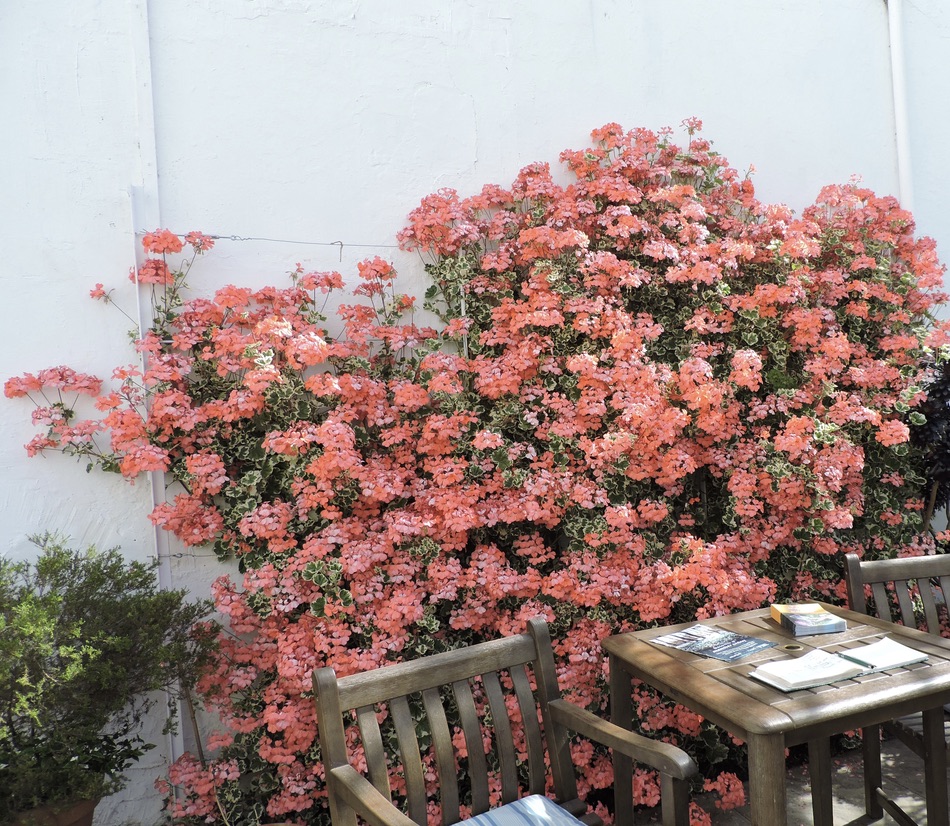
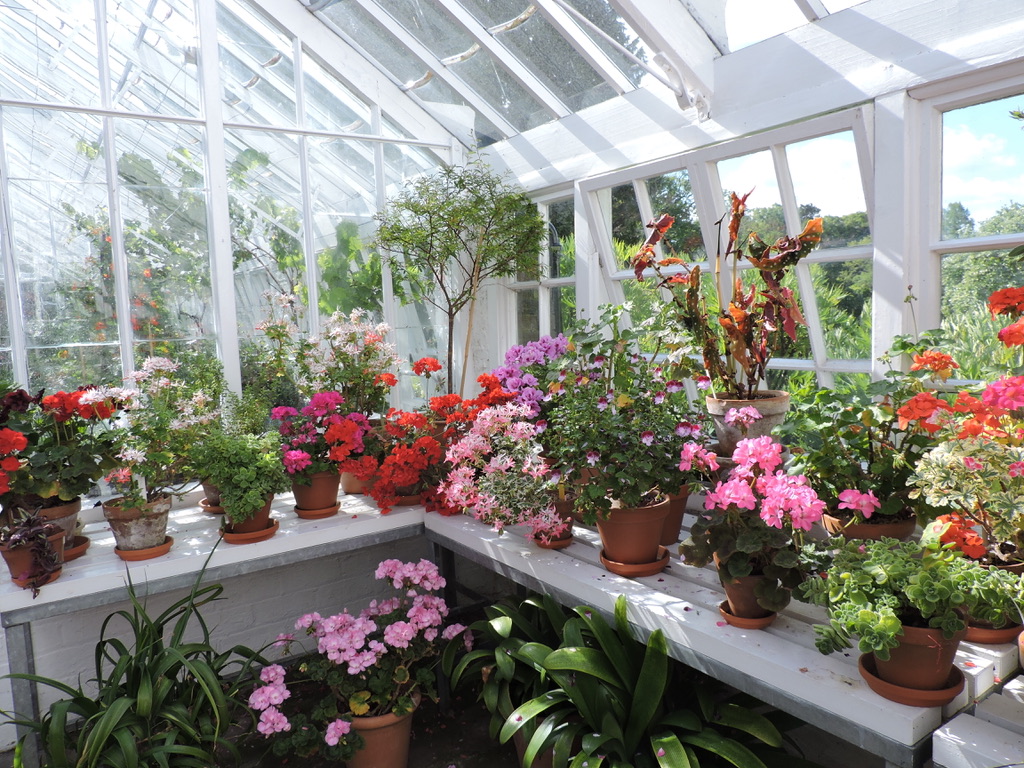
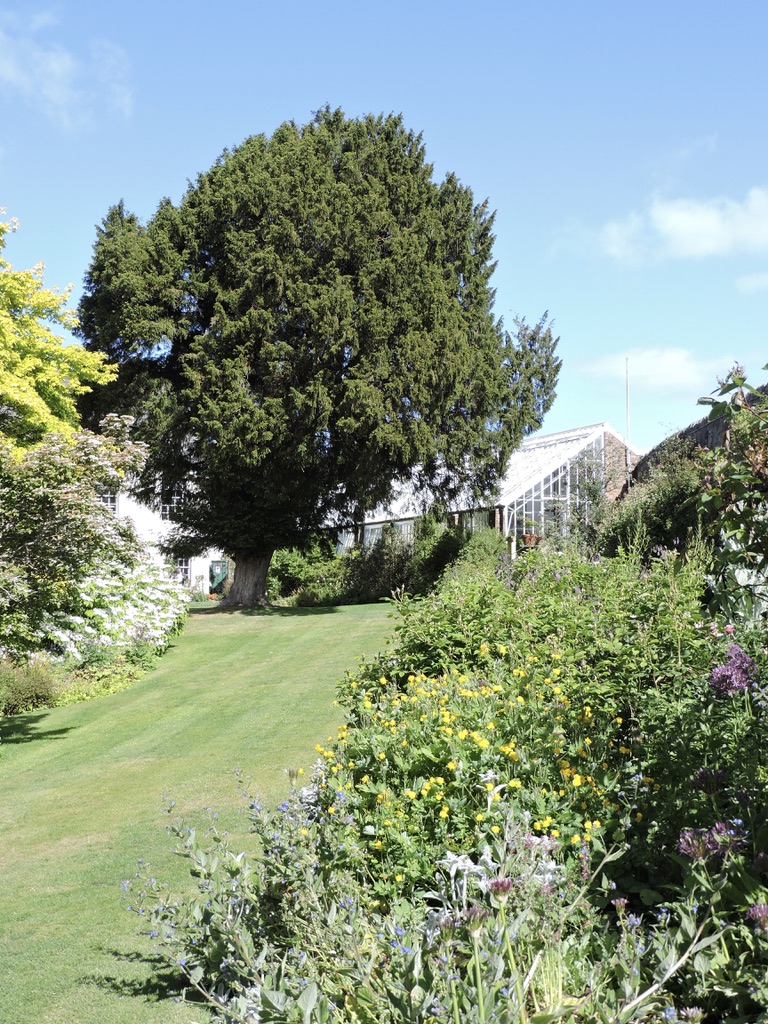
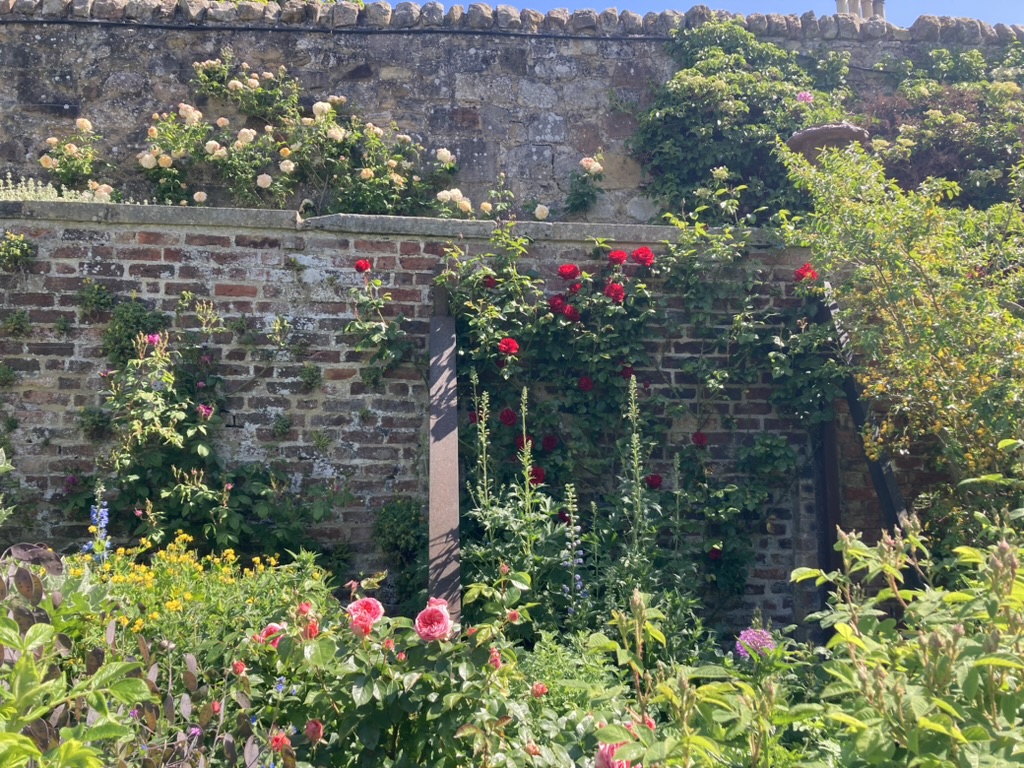
Inveresk is a pretty historic village which seems to be on its way to becoming a suburb of Musselburgh judging by the amount of house building going on on its outskirts. We may go back for a walk around the old village one day but this time we headed straight into the Lodge Gardens which are split into two areas – the greenhouses and lawned area with their pretty borders, and the wilder hillside woods, meadows and ponds. The greenhouse was notable for its astonishing wall of geranium – I’ve never seen a geranium climbing like this one before:
We wandered through the woods and meadows and around the ponds which contained millions of tadpoles, and then back up to the more formal lawned area.
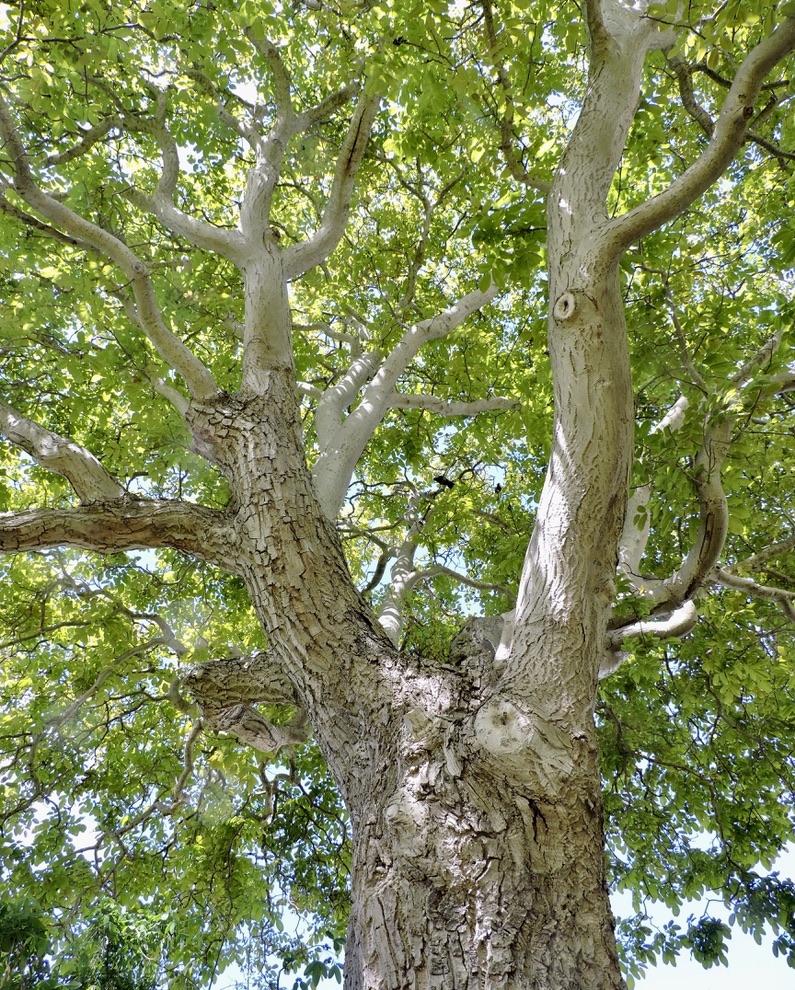
SundialHerb GardenWalnut TreeRose Border
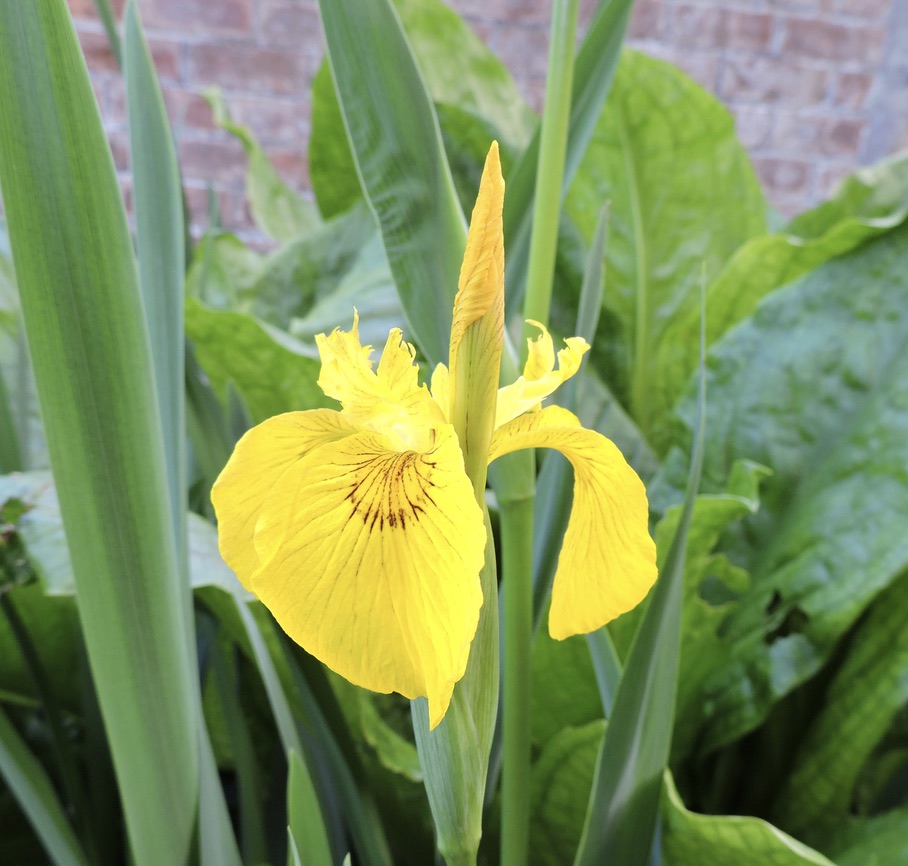
This beautiful flag iris was in the border, we have some in flower right now in our pond at home. I would nip out and grab a photo but some much needed torrential rain is happening and I’m not inclined to get that wet!
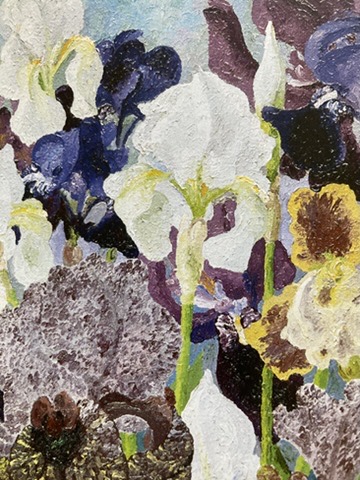
Talking about Irises and just digressing for a minute – today we went to Berwick-Upon-Tweed and saw an exhibition of work by Cedric Morris, a British artist and plantsman. He became obsessed with irises and bred bearded irises from seed – and then of course, he painted them. I’m not so good at the art appreciation stuff – but I quite liked his flower paintings – here’s a little bit of one taken from a card (May Flowering Irises – 1935).
Anyway – onward to Aberlady!
We were really ready for lunch when we got to the outskirts of Aberlady and we had been well-prepared and, checking online found a lovely farmshop and cafe…..except when we got there….no cafe!! This was disappointing to say the least because we knew that there were very few places to get lunch in Aberlady, however we had a wander through the main street and ended up in a lovely hotel garden with delicious scones and tea so all was not lost (though lunch would have been nice).
In the middle ages Aberlady was a port serving the old county town of Haddington, but it actually dates back much earlier than that to around the 7th century when it had a role is supporting pilgrims travelling between Iona to the North and Lindisfarne to the south.
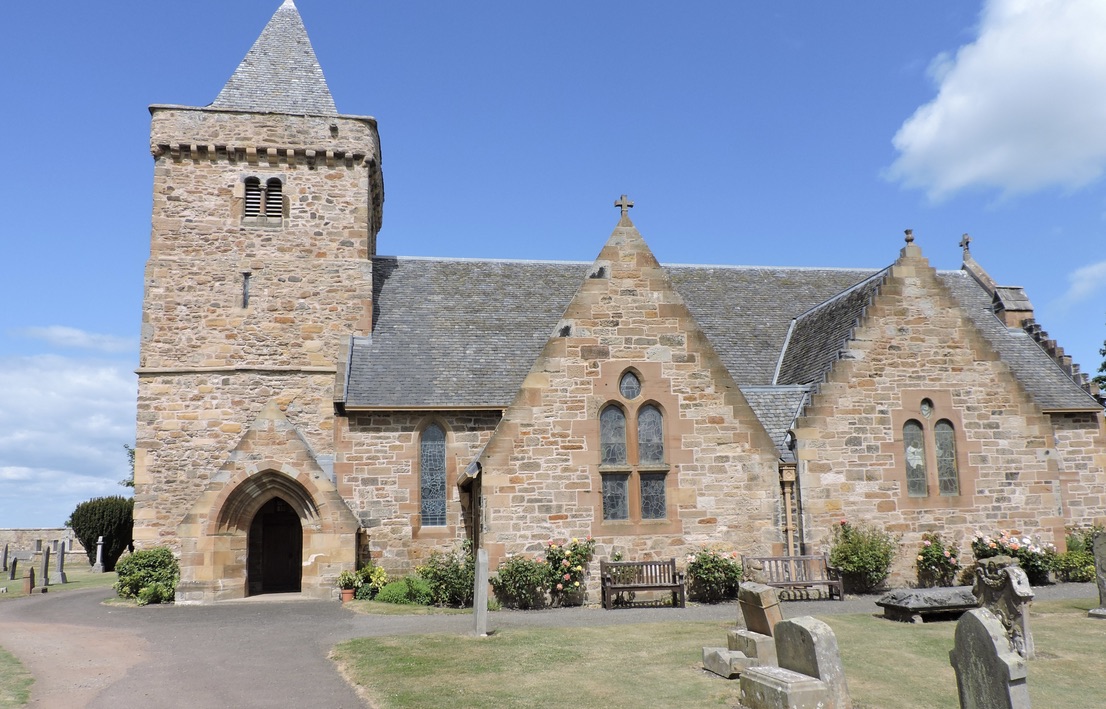
After our scones we walked on along the road to the parish church with its well-tended grounds and walked through to admire the estuary from viewpoint.
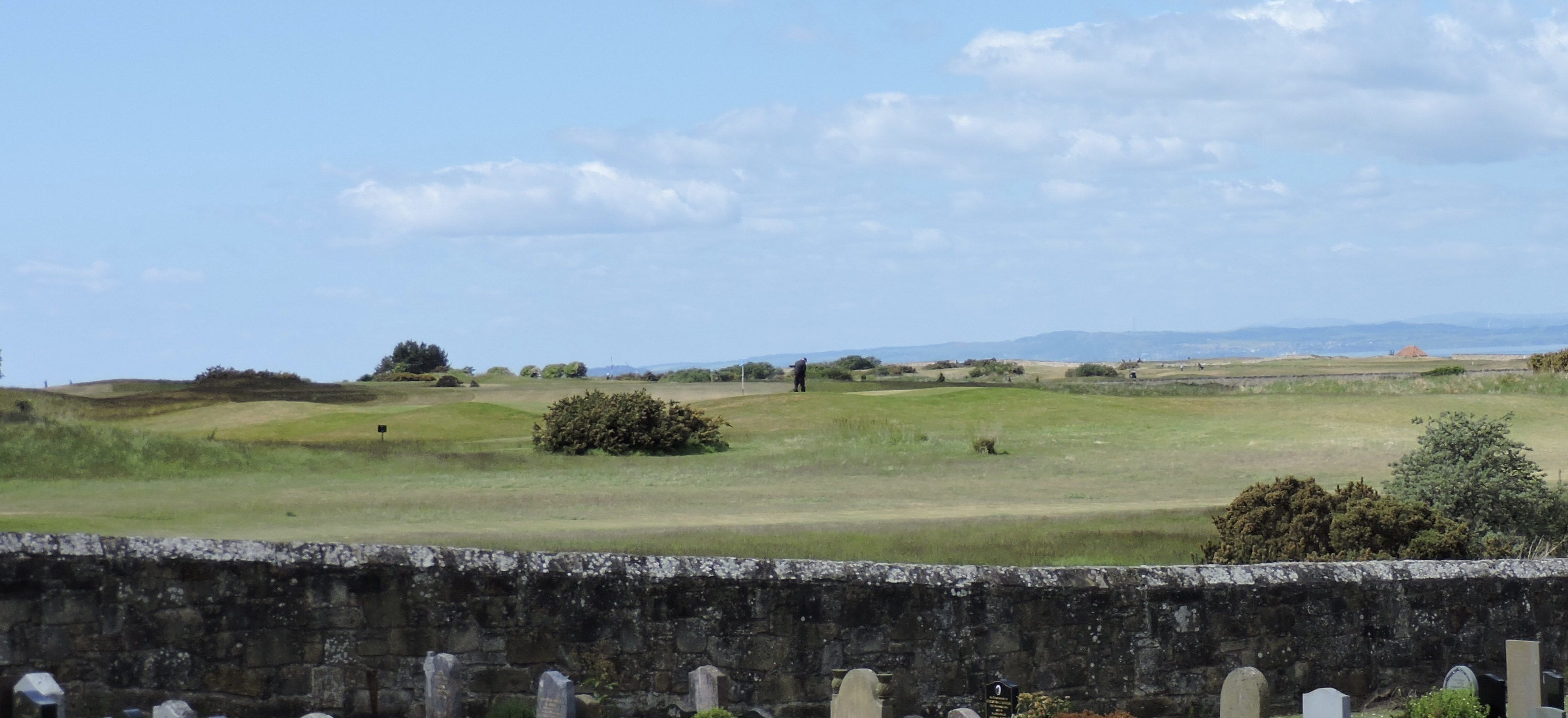
The view from the churchyard to the Firth of Forth across the golf course – this part of East Lothian is full of golf courses!
The very well looked after Parish Church of Aberlady
Right next to the churchyard is Coffin Lane (!) and we walked through here to walk back to the main road along the coast road.
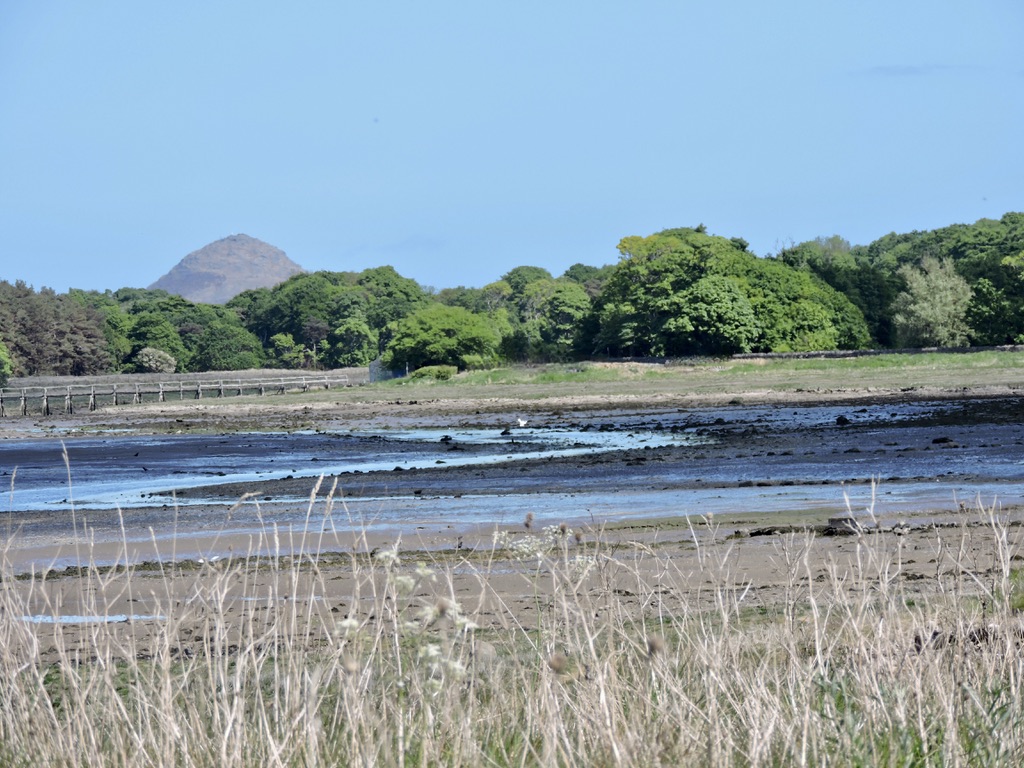
The view looking inland – the hill in the background is Berwick Law, a very steep hill that I have climbed once in the distant past. Maybe its time to try it again!
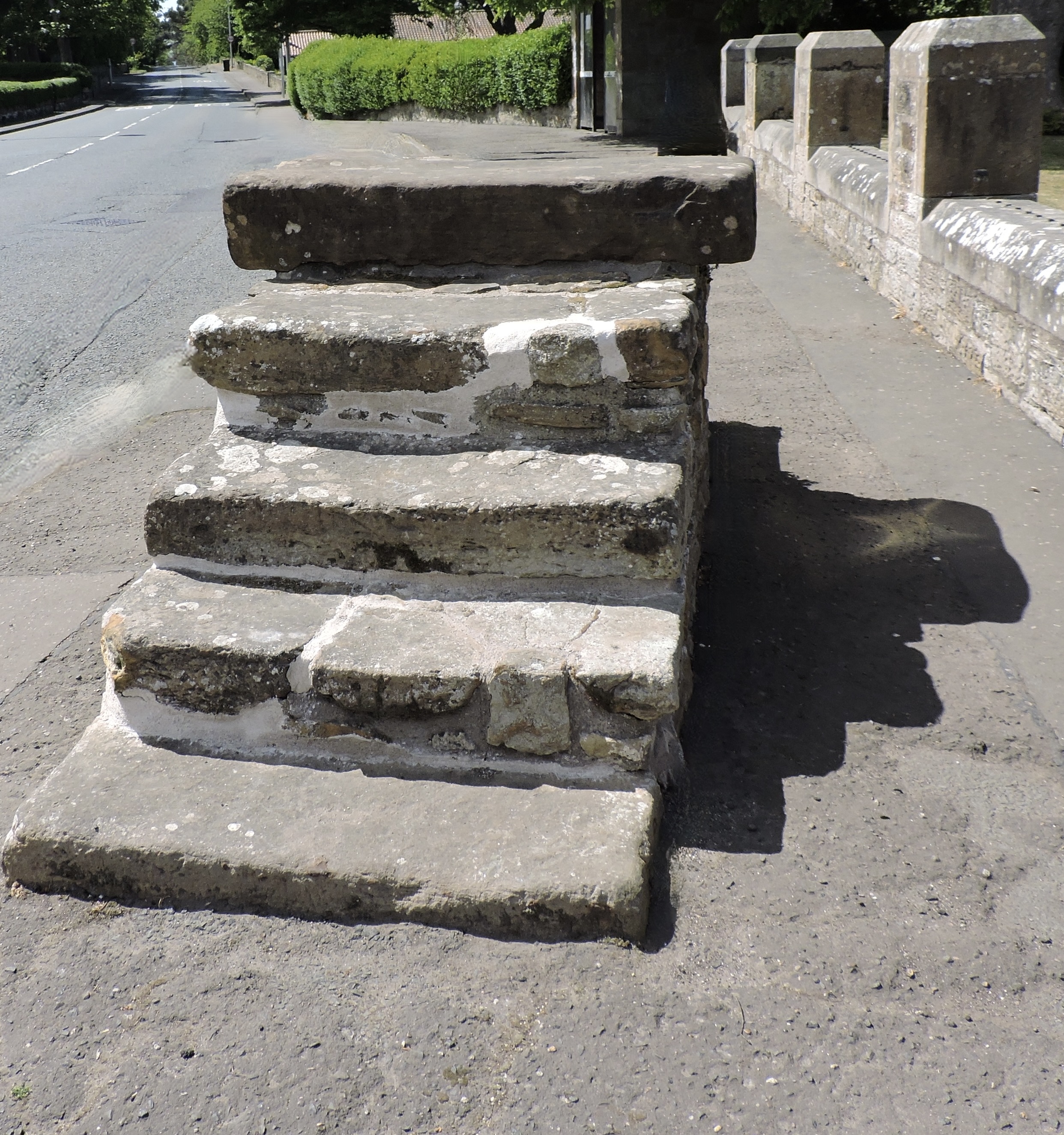
We follow the road out of town towards the Scottish Ornithological Centre at Waterston House passing this set of steps right in the middle of the pavement on the way – I know what they are but do you have any ideas what they are for? Comment below with your answer……
Blue skies had appeared by the time we arrived at the bird centre – this is a view of the pond taken from inside the viewing room.
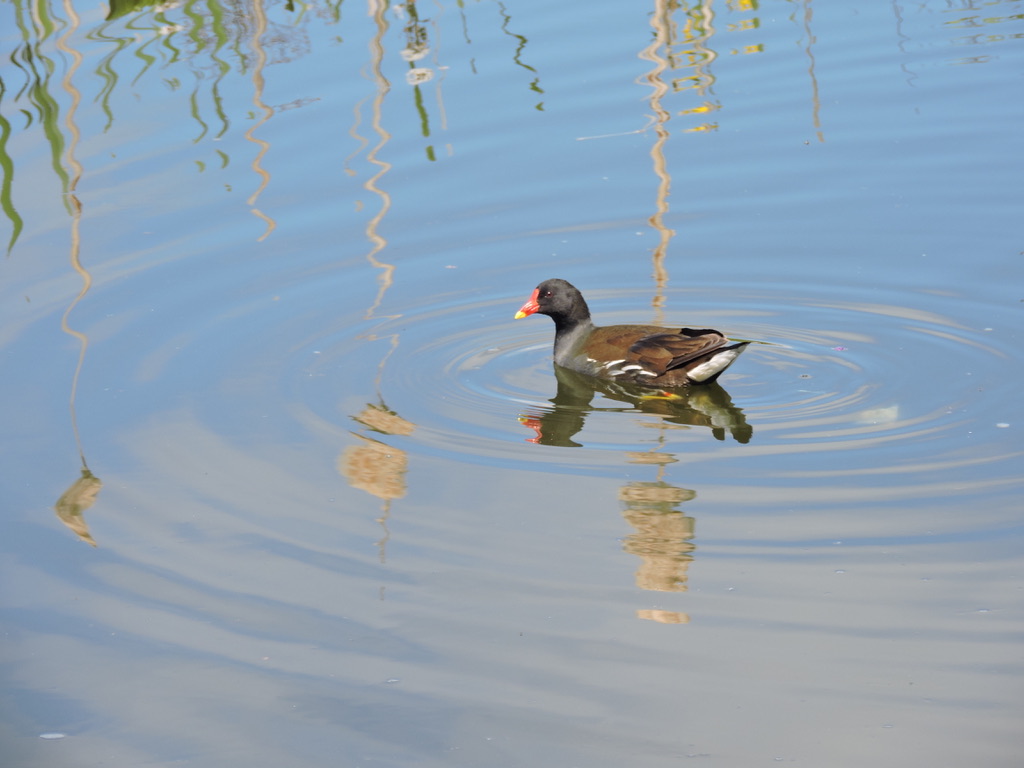
The only bird we saw though was a moorhen:
I love how his movement disturbs the reflection of the bullrushes!
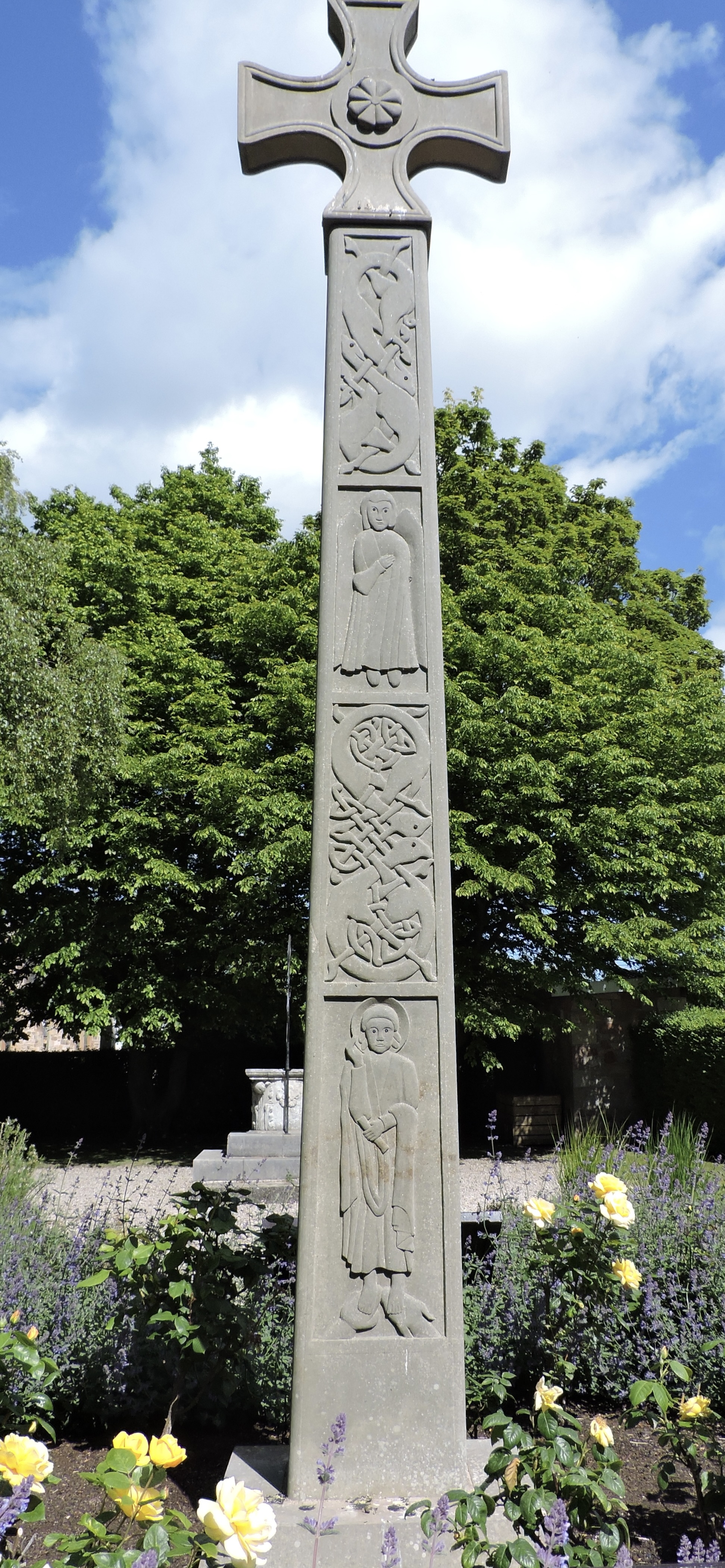
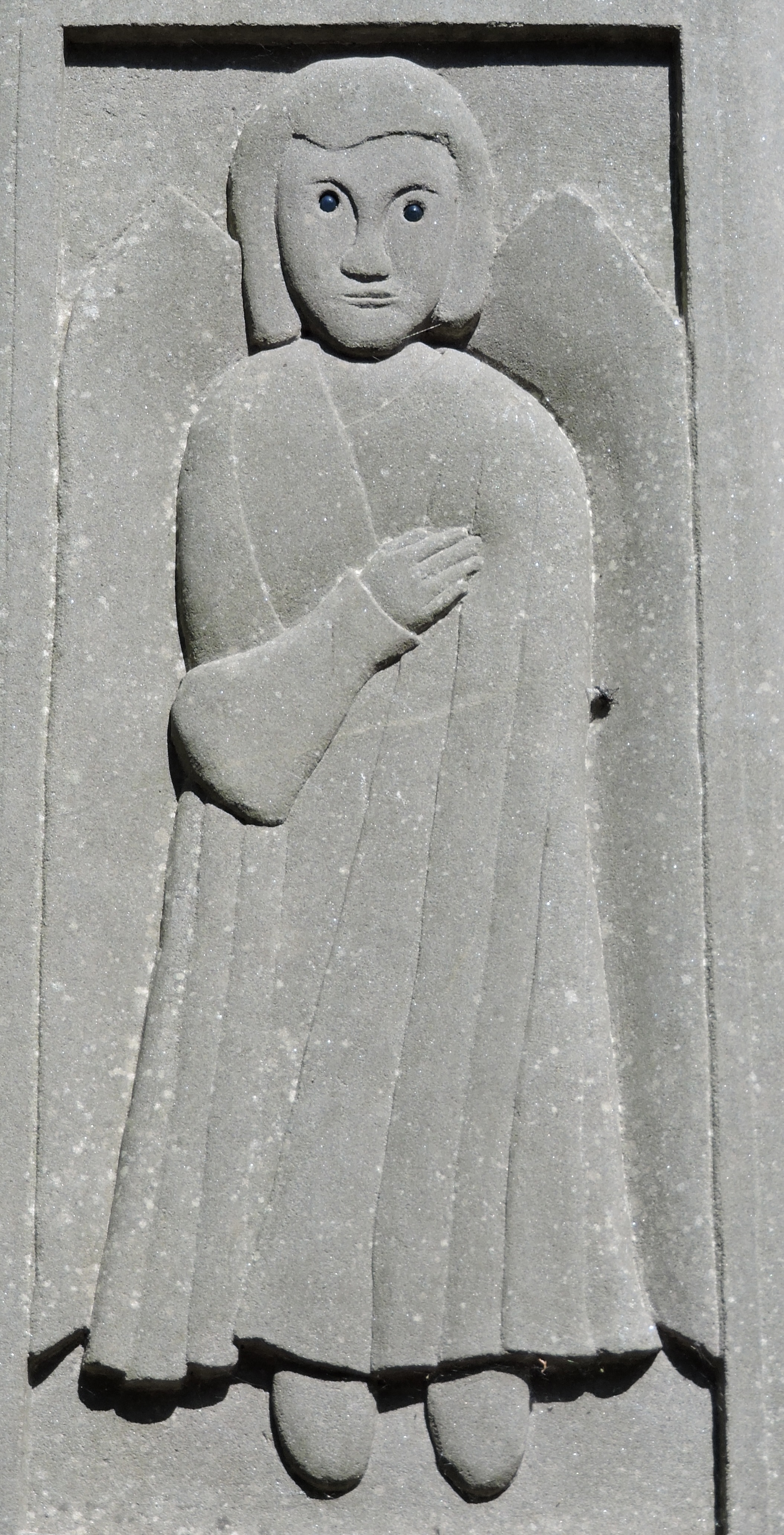
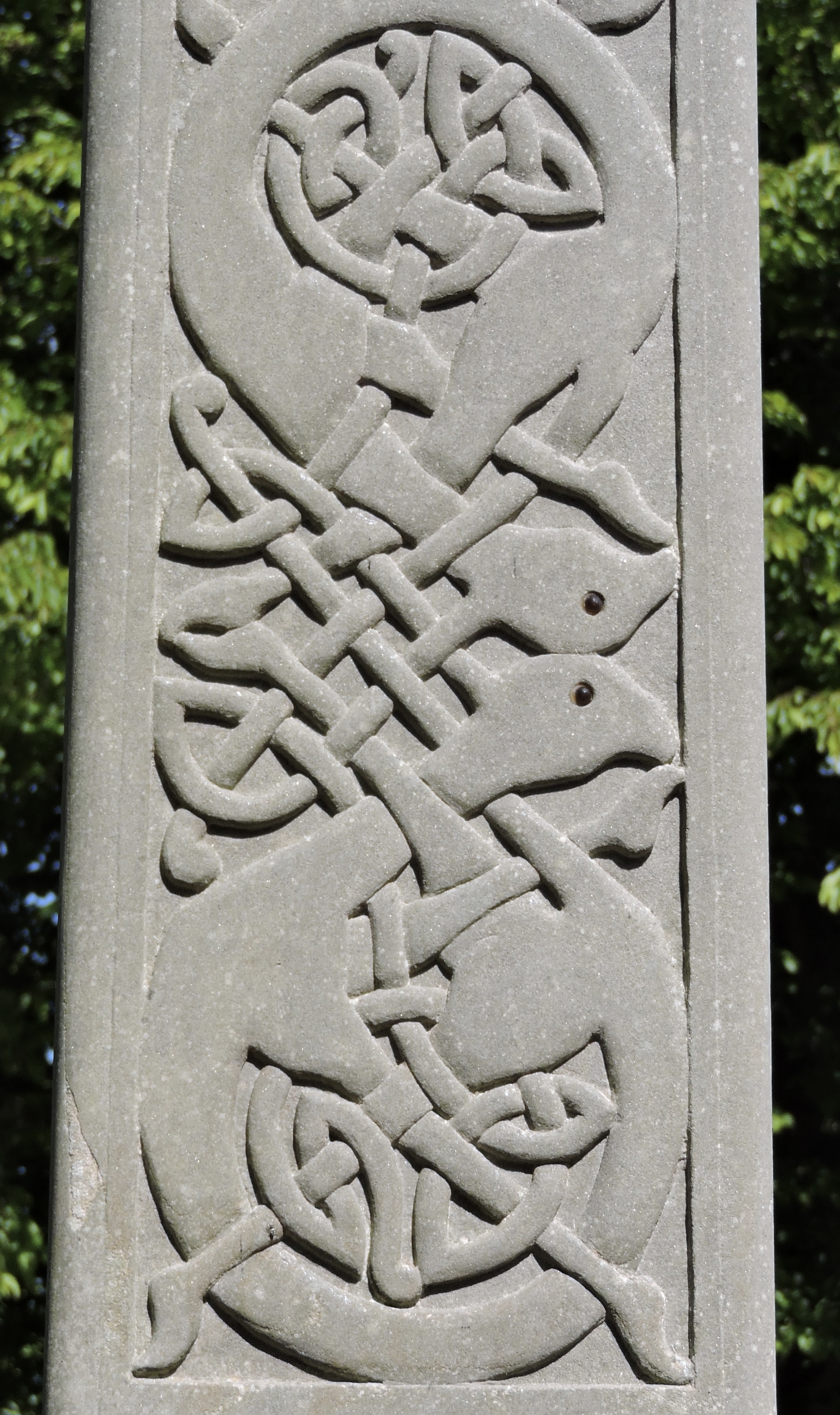
Back on the road through town we stop to admire the Memorial Garden which has a reconstruction of an ancient Anglo Saxon cross, a fragment of which was found in a garden wall adjacent to the kirkyard. The original would have been around 5 metres tall and carved with vine scrolls and seabirds.
That’s it! Time to go home.
Thanks for reading and especially thanks to people who have been taking the trouble to comment on these posts, especially as it seems that you have had to sign up to WordPress to do this. I’ve now disabled this setting – I hope! I’m still getting to grips with this new version of WordPress so let me know…..and don’t forget to let me know what you think those steps are for.
I’ve decided this one is ‘walk of the month’ for January. We walked it yesterday, having been confined to the house by the truly miserable January weather for a few days. We convinced ourselves that once we were out and about, all would be well – and it was. The sun came out followed by all manner of birds and beasts! I think there was more variety of wildlife on this walk than we’ve ever seen before in one walk!
I’ve recovered from the the dastardly mud and the humiliating tumbles on the Eildon Hills and, having been confined to the house for a couple of days by gale force winds, was keen to get out today and make up some miles. We decided to make for Duns and have a ramble through the grounds of Duns Castle and a climb to the top of Duns Law. It was cold and, as you can see the snow is still lying on the ground, but thankfully the wind has dropped and the sun managed to put in an appearance.
Route: From Coldingham village to Coldingham Sands, along the coast path to St Abbs and back to Coldingham via the Creel Path.
Distance: 6.39km/4miles
In 616AD Aethelfrith, first King of Northumberland, was killed in battle. His family, including his daughter Æbbe fled northwards finally settling on Iona where they were converted to Christianity. Later Æbbe established a community of monks and nuns at Kirkhill – now known as St Abb’s Head.
For those who don’t already know, the best news is that Mr RR and I have become Nanna and Papa RR whilst we’ve been away! A gorgeous little boy, born between Christmas and New Year and doing very well on his journey to becoming the Littlest RR.
Littlest RR has, of course, become my favourite subject of conversation but…..on to the walking – of which there has been very little in the last couple of months. Here I am though, determined to get fit (again) and starting over with the rambles. I’m not promising any great milage this year – there’s a lot of work to do on our new house and any walking will have to be fitted in around that – but hopefully I’ll be able to inspire you with a few ramblings around The Scottish Borders and Northumberland and later in the year we might be able to go further afield and see more of Scotland. Continue reading →
Mr RR and I took a trip to Trelissick for a look at the gardens, and found the hydrangeas, which are not really my favourite plants, looking lovely, especially the amazing Hydrangea peniculata ‘Burgundy Lace’ which is blooming in the round border outside of the house. If I was going to buy a hydrangea, this would definitely be the one! Continue reading →
After saying yesterday that the blackberries were not yet ripe at Mullion, I decided to take myself for a walk around the Penrose Estate and followed the top path which is lined with brambles, to see if things were any further on there. There were a few juicy ones to be had but it’ll be another couple of weeks I think before they’re really ready. I came back with just about enough for a pie though.
Enjoy reading
Rickety Rambler x
Porthleven circular via Penrose Top Path and Penrose Farm (4 miles)
You remember yesterday I was trying to discover why blackberries go from green to red and then black? Well today, quite by chance I found the answer! Isn’t it funny when things happen like that? I was really just trying to find out which berries these were:
Still not sure what this one is…..any ideas? Is it a type of Laurel do you think?
This is a hawthorn – the ends of the berries show where the withered remains of the flower persists.
when I found a whole section in my Reader’s Digest Field Guide to Trees and Shrubs about berries. So ……what it says is that the main evolutionary objective of plants (and animals obviously) is to develop efficient means of reproducing themselves. Trees and shrubs do this by producing seed bearing fruit for dissemination by the wind or other means. It’s the ‘other means’ which is important for us. When fruit turns red and then black, it draws the attention of birds and animals, which obviously eat the fruit and then redistribute the seeds! I knew that really!
As well as that, most berries are rich in sugars, starch and other nutrients and are eagerly sought out by wildlife. Those such as rowan and yew are eaten whole, the seeds they contain have hard outer coats and resist digestive juices, therefore passing intact through the animal or bird, usually landing far away from the parent tree so that it has a space of its own to grow in. Others, like cherry are not swallowed whole. Birds eat the fleshy covering and discard the stone containing the seed, again often away from the point of origin. Interestingly, the seeds of mistletoe stick to the birds beak and they wipe them off on branches of trees – on which they then grow! How clever is that!
Anyway, there you have it. Blackberries go red then black to attract the birds and animals that eat them, they swallow the seeds and then poo them out later! I did know that really…..
I walk on along the lane managing to gather a few ripe blackberries, enough for a pie anyway. I stop to look at the field of sweetcorn:
Sweetcorn
and I spot this little fellow, clinging on to a stalk and swaying in the brisk wind:
Bluetit in the sweetcorn field. Look at his little legs clinging on for dear life – he’s got a good view from there though.
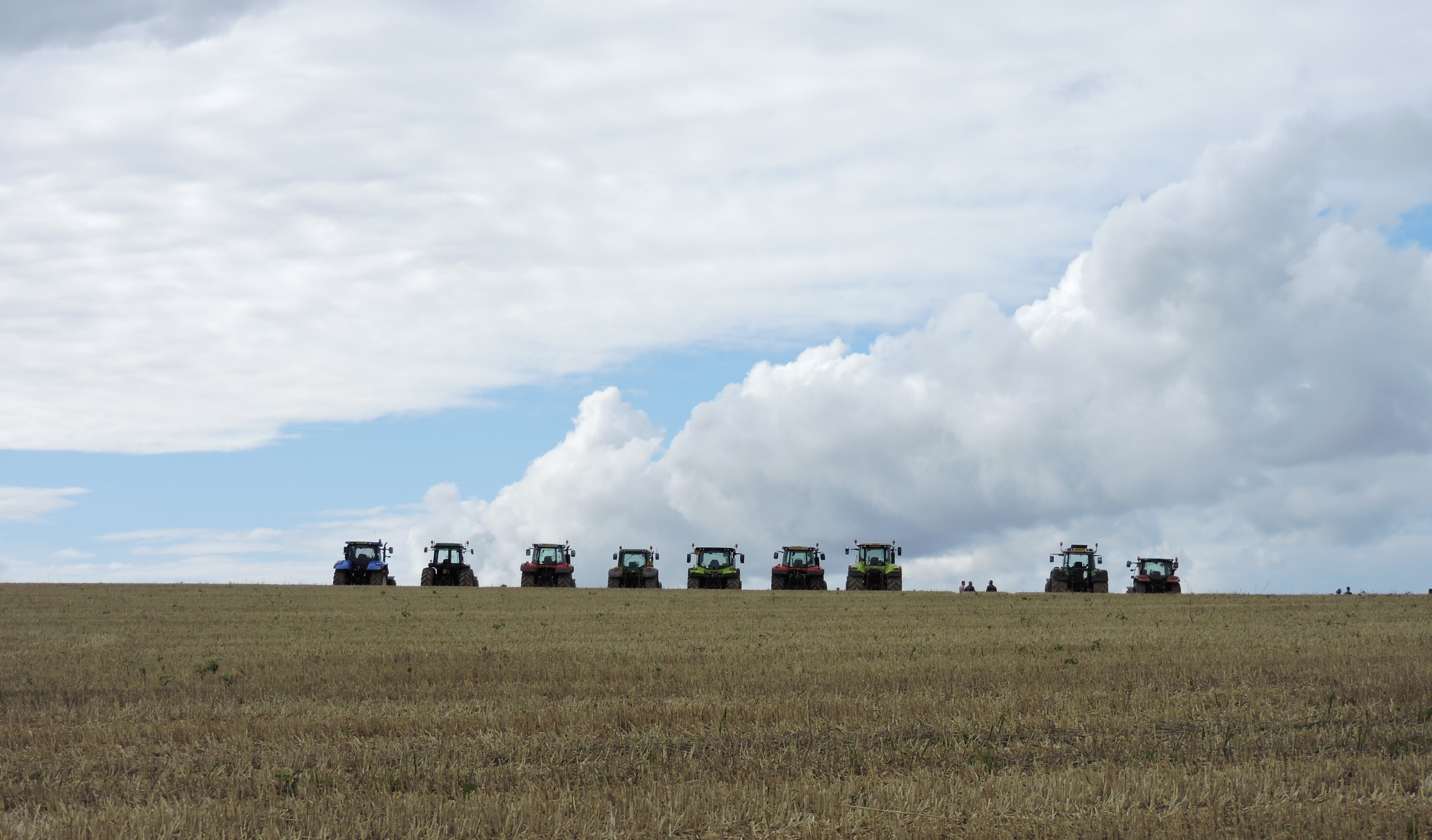
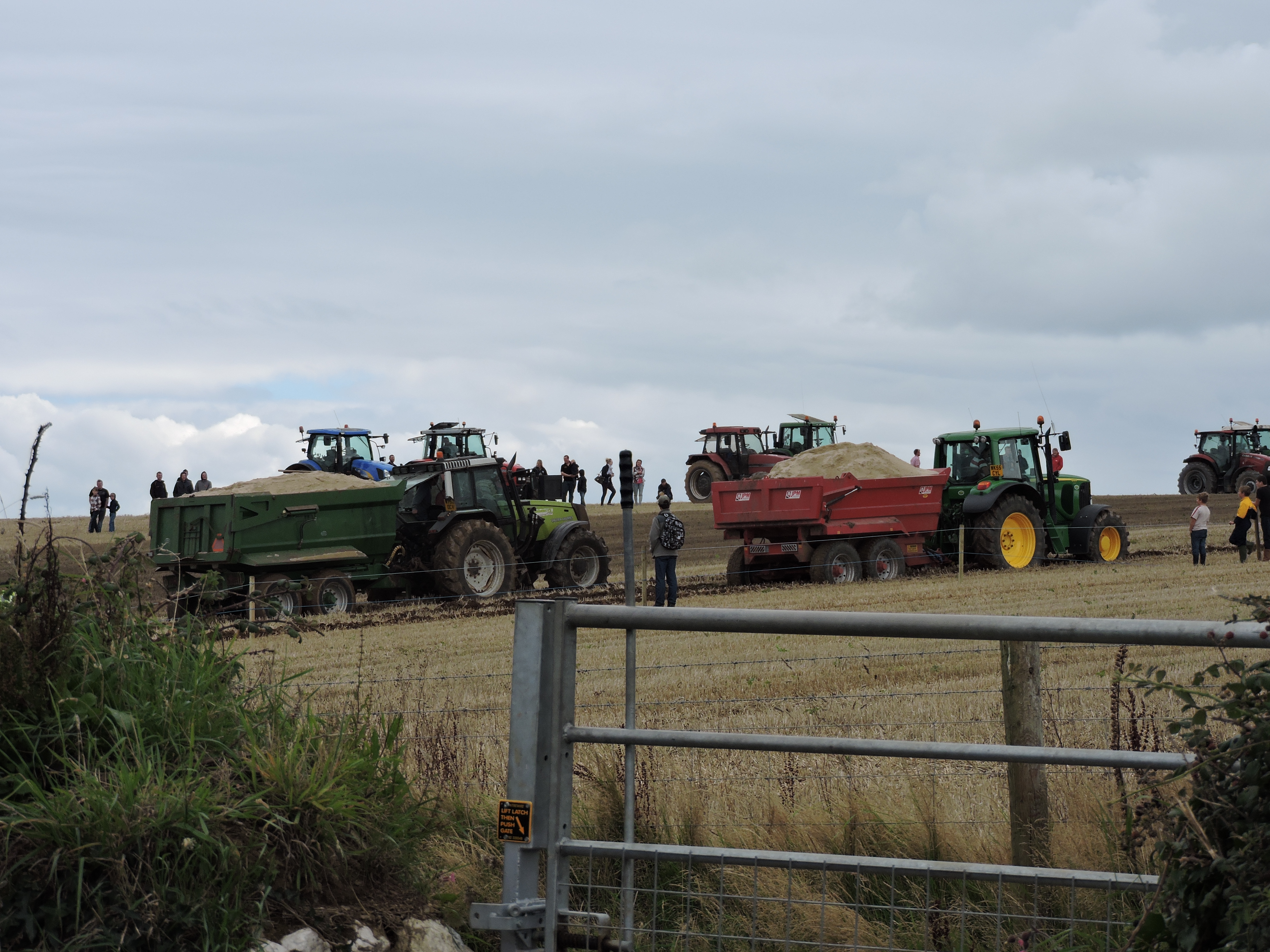
and then, as I turn the corner onto the farm lane I see a strange sight. In the field to my left are tractors – nothing strange in that you may say…….but there are loads of them:
At first, I think they’ve all gathered together to take part in the harvesting – but that’s odd because the hays already been cut. I walk on trying to work it out. As my view becomes clearer I can count up to 30, or maybe even more, tractors in this field, some with trailers laden with what looks like sand:
These two are having a race
Eventually I guess, when I see all the people watching them, that it’s a competition! It’s very well attended and everyone seems very excited.
Walking on past Penrose Farm I spot a marquee and a sign saying YFC Ploughing Competition and I realise that it’s the Young Farmer’s Club having a bit of a fun day. Although they probably wouldn’t thank me for calling it that – I think it’s serious stuff this tractor driving/ploughing competition thing.
The Helston and St Keverne Young Farmer’s Club (www.cornwallyfc.co.uk) is part of the Cornwall Federation of Young Farmers which was formed 77 years ago and has over 750 members – quite a lot of them being here today I think!
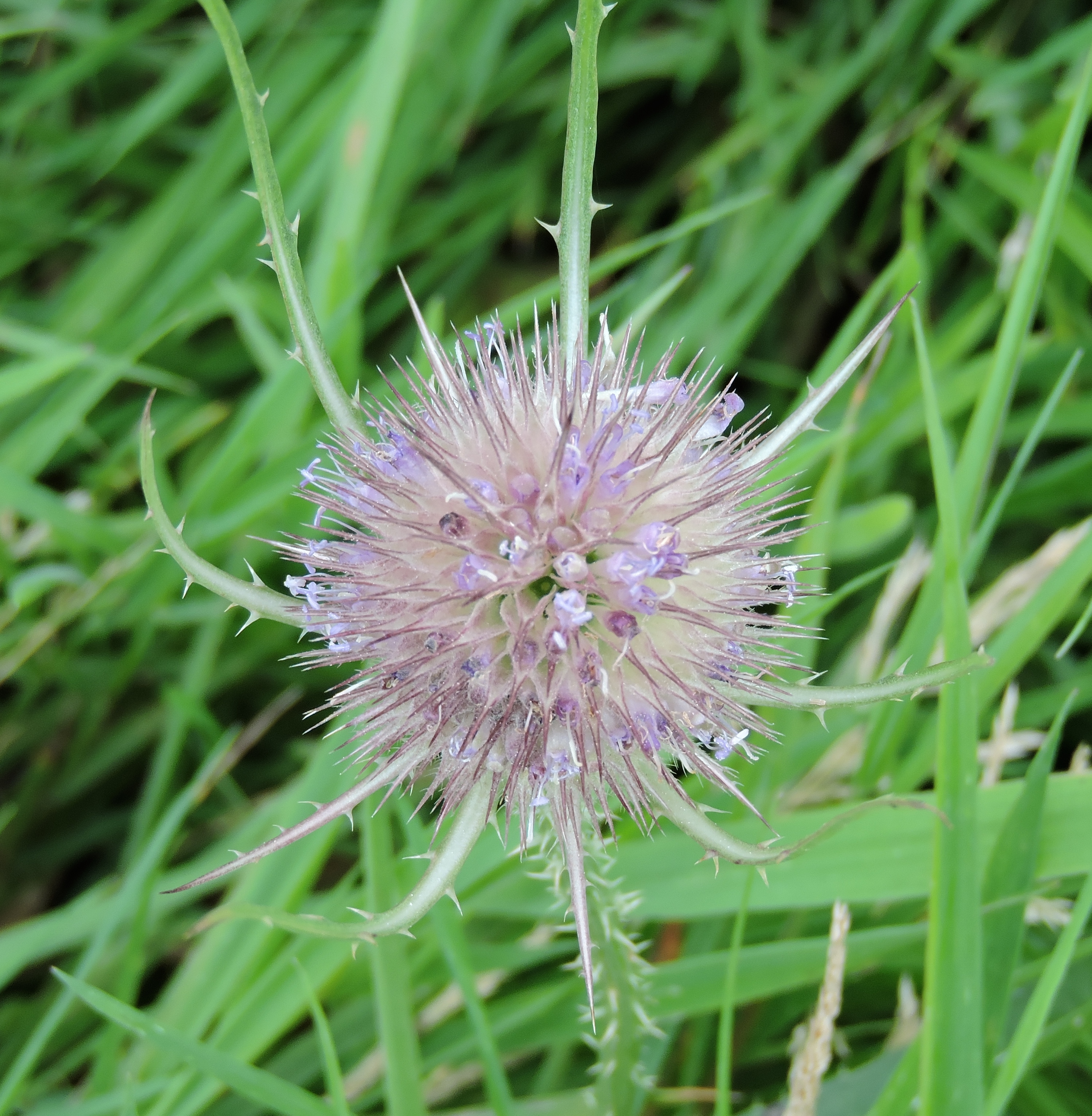
As I move on past the farm I see that the cotton thistles are just going over:
Cotton thistle – heraldic emblem of Scotland
and the Hedge Bindweed is in flower:
Convolvulus – traditional names include bindweed, hell weed, devil’s guts and devil’s garters.
Although it’s a very common plant, it is quite interesting. The flowers stay open all night apparently – but only if there’s a moon (and no, I am not staying up all night to check!) They don’t have any scent, but they manage to attract the hawk moth which uses its long tongue to extract nectar from the base of the flower and pollinates the plant.
Bindweeds once shared the generic name of Convolvulus – a reference to their ability to wrap themselves around stems and branches. In the 19th century a Scottish botanist, Robert Brown thought its distinctive structure justified gin gin it a new name and called it Calystegia derived from two Greek words, Kalyx – meaning cup, and stage – meaning covering.
In The Medieval Flower Book, Celia Fisher mentions that it was once used as a purge – but a dangerous one unless used in small quantities mixed carefully with sweeteners and spices. she goes on to say that, the artist of the Carrara Herbal described the plants ‘undeniable beauty’ and indeed it was encouraged to grow over arbours both in the Islamic gardens of Spain and here in 15th century England. Now of course, we spend a lot of time trying to get rid of its nightmare mass of underground roots!
I hurry on as, despite the promising start to the afternoon, it’s starting to rain and not only am I coatless, but I’m wearing just a sleeveless vest (and some shorts of course!).
Total miles walked this year: 563.5
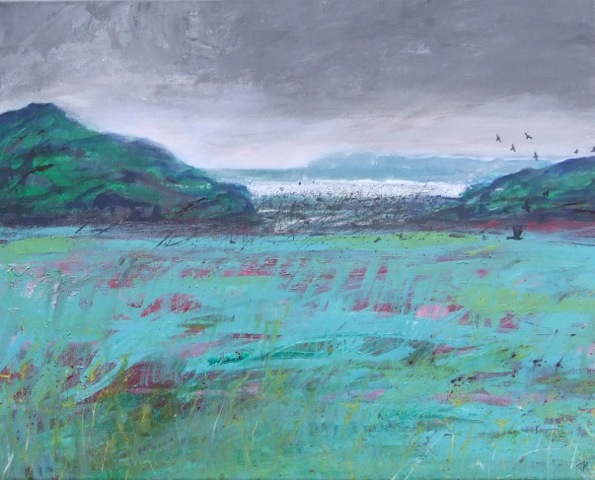
Across Penrose to Loe Pool – Mixed Media on Canvas
We left bonny Scotland today and travelled down the M6 towards our overnight stop in Cheshire. On the way we avoided the motorway service stations and instead made our way to Acorn Bank, about 6 miles from Penrith for a lunch break and a stroll around the gardens. This is a National Trust property described in their blurb as a ‘tranquil haven with a fascinating industrial past’ (www.nationaltrust.org.uk/acorn-bank/ ). They are right – it’s an interesting property which not only provided us with a much need coffee break and a tasty lunch, but a chance to walk in their gardens, orchards and acres of ‘wild garden’ – mostly woodland with a pretty river flowing through it. Continue reading →
After nearly a week of driving around Perthshire, Fife and The Scottish Borders we’ve finally found the one! So….fingers crossed all will go well and I’ll be blogging from Scotland by Christmas!
It’s been exhausting and stressful and we were desperately in need of a good walk by Friday. We started with a visit to the Lodge Forest Visitor Centre (scotland.forestry.gov.uk/forest-parks/queen-elizabeth-forest-park/the-lodge-forest-visitor-centre ) for an early lunch and then made our way along one of their clearly marked trails to the Red Squirrel Hide before driving the short distance to Loch Ard for a walk with views.
Lodge Forest Visitor Centre
Enjoy! – especially the Red Squirrels – they are so adorable! Continue reading →









 ricketyrambler