“Our fate flows with that of rivers, and always has”
Have you read this book? Is a River Alive? by Robert Macfarlane. I’ve just finished it. It took me a while and I’m a fast reader. It took me a while because it’s so beautifully written, so full of thought provoking narrative and ideas and reminders and comment that I had to keep going back and reading passages again and again. And I had to keep stopping to give myself time to think about all that was written there about rivers and nature and our relationship with those – individually, historically, politically and culturally.
Robert Macfarlane has written an extraordinary book about the concept of the river as a living, flowing, life-giving and life-affirming being who should be recognized in law to have rights. He follows the course of three rivers – in Equador, India and Canada – examining and explaining how rivers are alive and how and why they die and crucially how they can heal themselves given the opportunity:
“Rivers are easily wounded. But given a chance, they heal themselves with remarkable speed. Their life pours back”
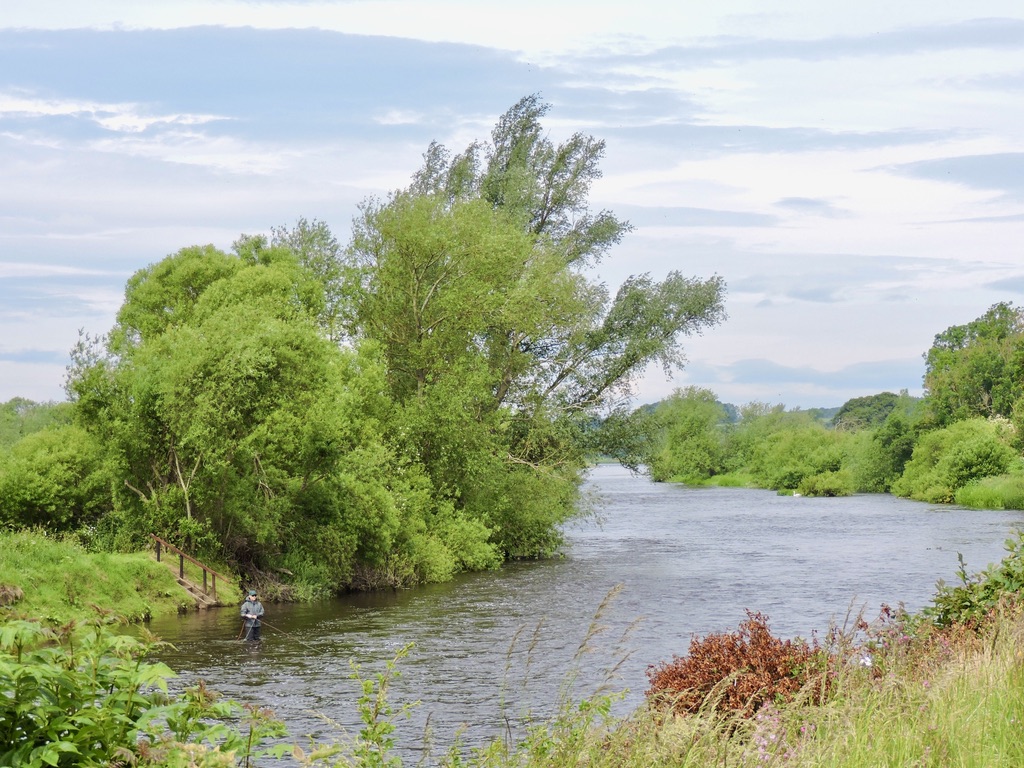
As we walked along the River Tweed on this walk, the book was on my mind. Not that I think the Tweed is an example of a dying river, less so anyway possibly than many other rivers in Scotland. Indeed the Tweed may be one of the lucky ones – the Tweed Forum (https://tweedforum.org/who-we-are/about-us/ ) having been working to conserve, enhance and restore the Tweed and its catchment area for around 30 years. It’s just that when you read this book, and then you walk beside a river you can’t help wondering how different the scene might have been before we polluted, drained, damned and altered the course to suit our own needs without thought for the needs and rights of the river.
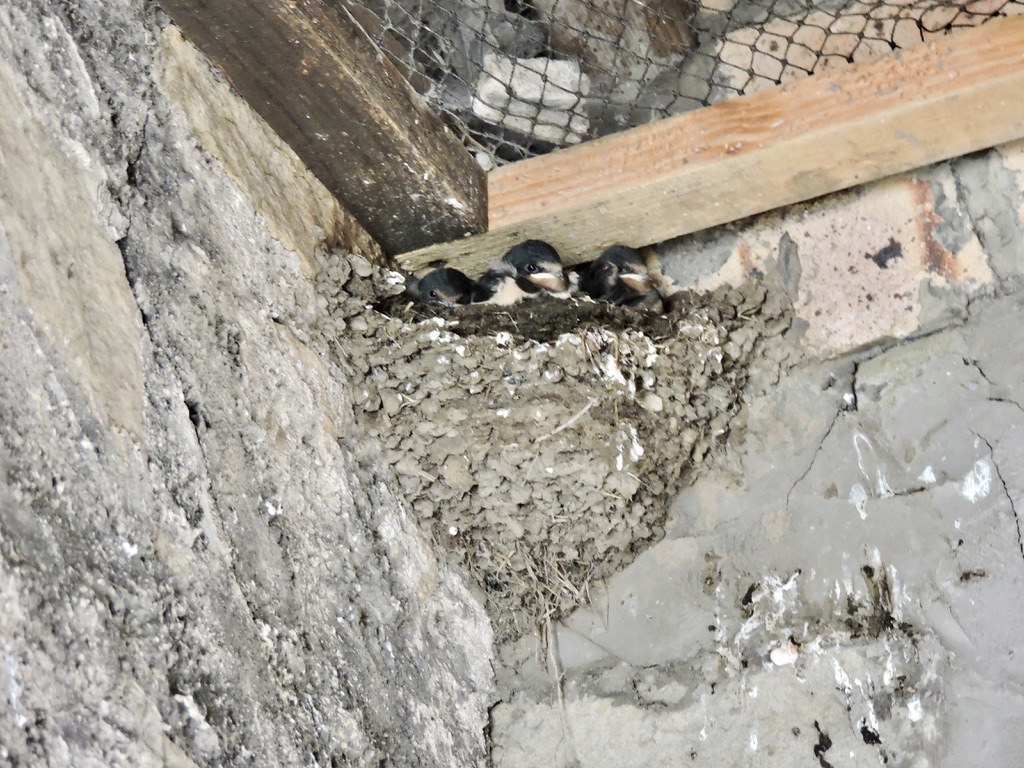
We began walking at The Hirsel (The Hirsel Country Park) where we spotted a swallows nest high up under an archway – 3 tiny baby swallows peering down at us. We walked around the lake and through the woods and rhododendron bushes to emerge on the main road which we crossed to enter the hamlet of Fireburnmill and head downhill to the river which/who (read the book) is high after the torrential downpours of the previous weekend.
We should not be fooled by this full and fast flowing river into thinking water is plentiful in Scotland. We are currently in a state of water scarcity – not as rare an event as you might think! (https://beta.sepa.scot/water-scarcity/)
On the opposite bank – in England in fact! – there’s a Gillie’s boat tied up. The Gillies know the river well, understand the conditions and support fishermen to find good spots for salmon fishing on the Tweed (and other rivers). If you’re interested in the life of the salmon and how Scotland needs the salmon, there’s an amazing film called Riverwoods which I saw locally a couple of years ago telling the compelling story of this fish that once lived in the forest. And how “Scotland’s Atlantic salmon – the King of Fish – is not only the ultimate angler’s prize, but a key building block in a complex forest ecosystem” https://www.riverwoods.org.uk/streams/thefilm/. I don’t know if you can still watch it anywhere but well worth a try.
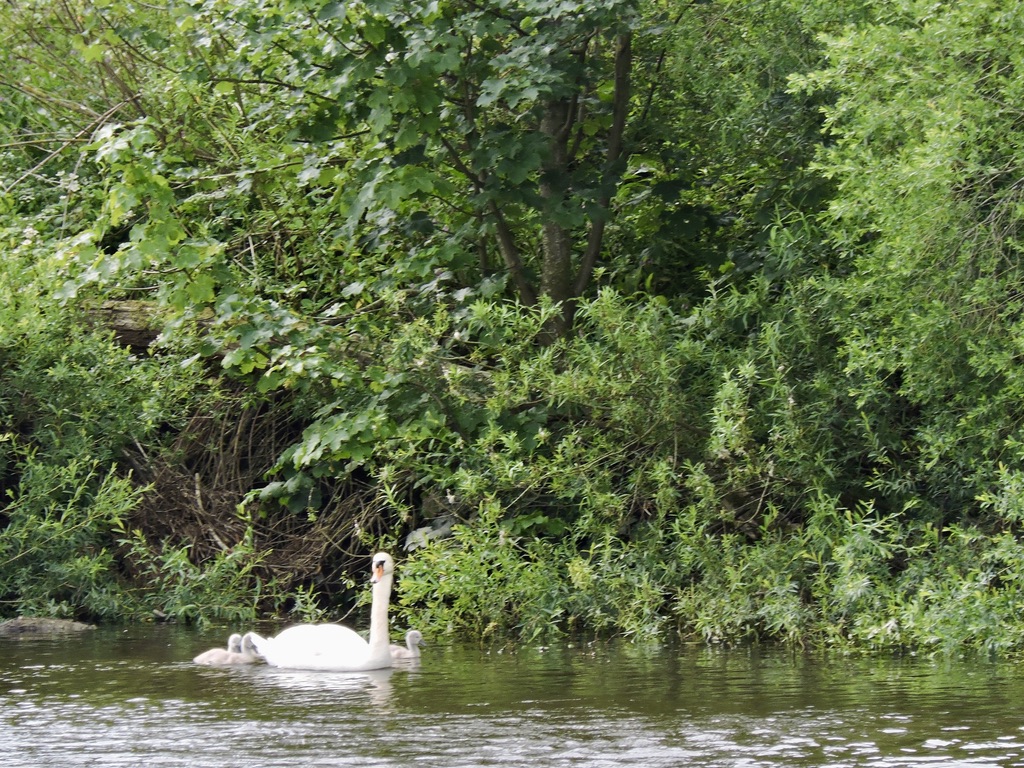
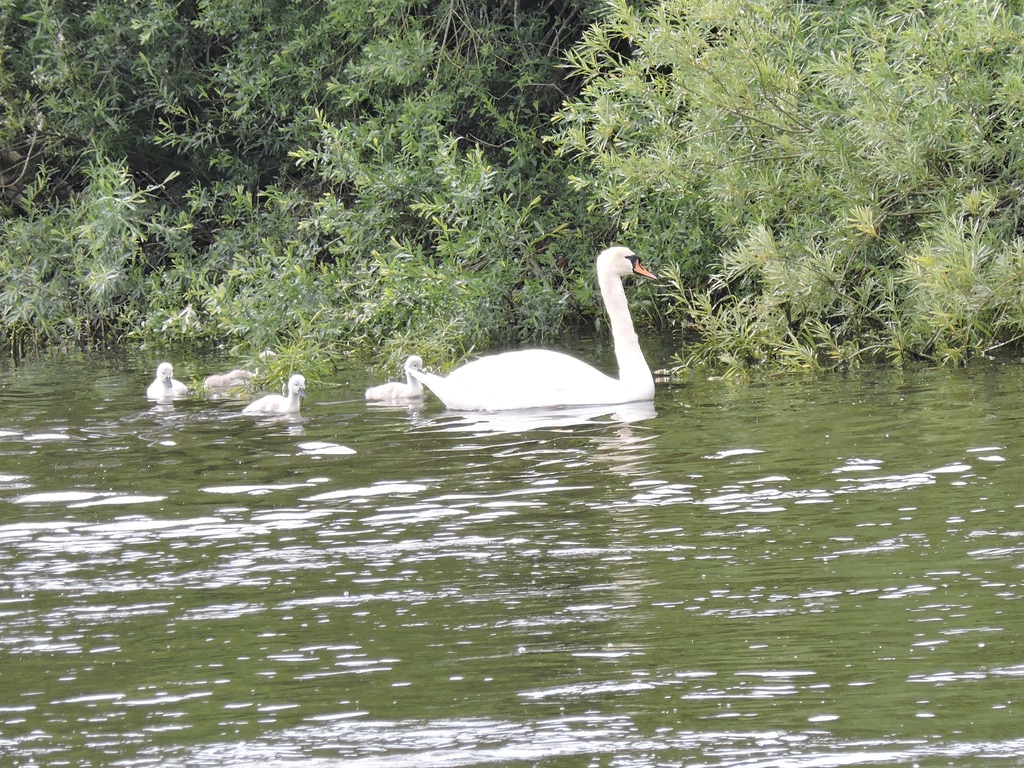
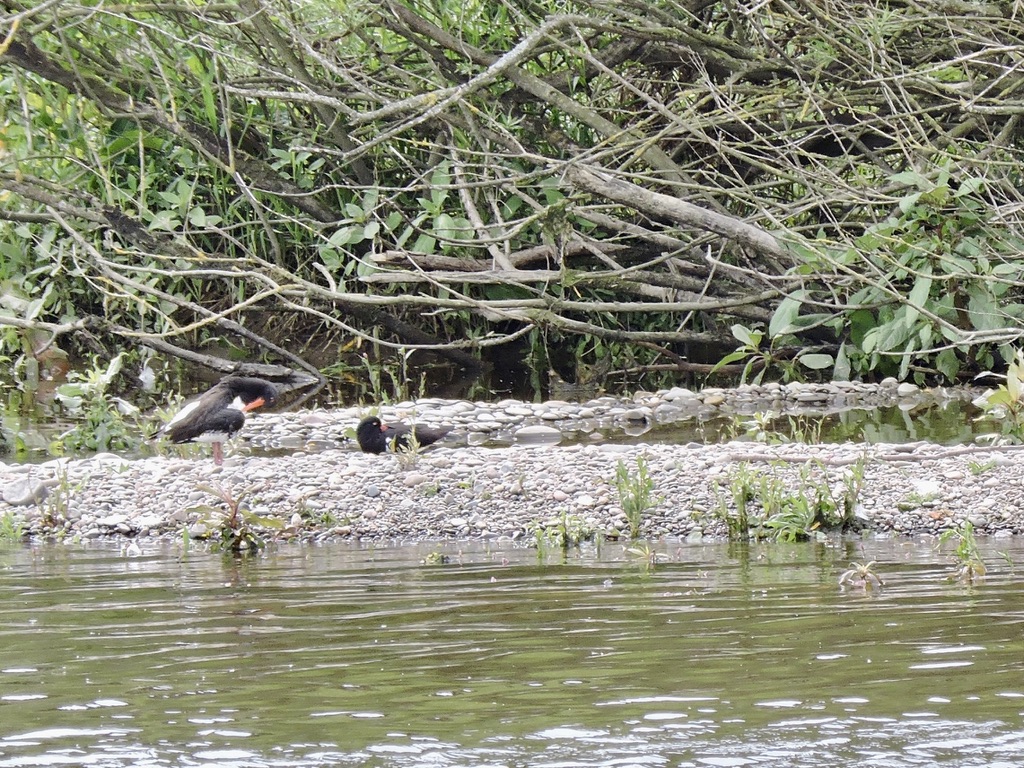
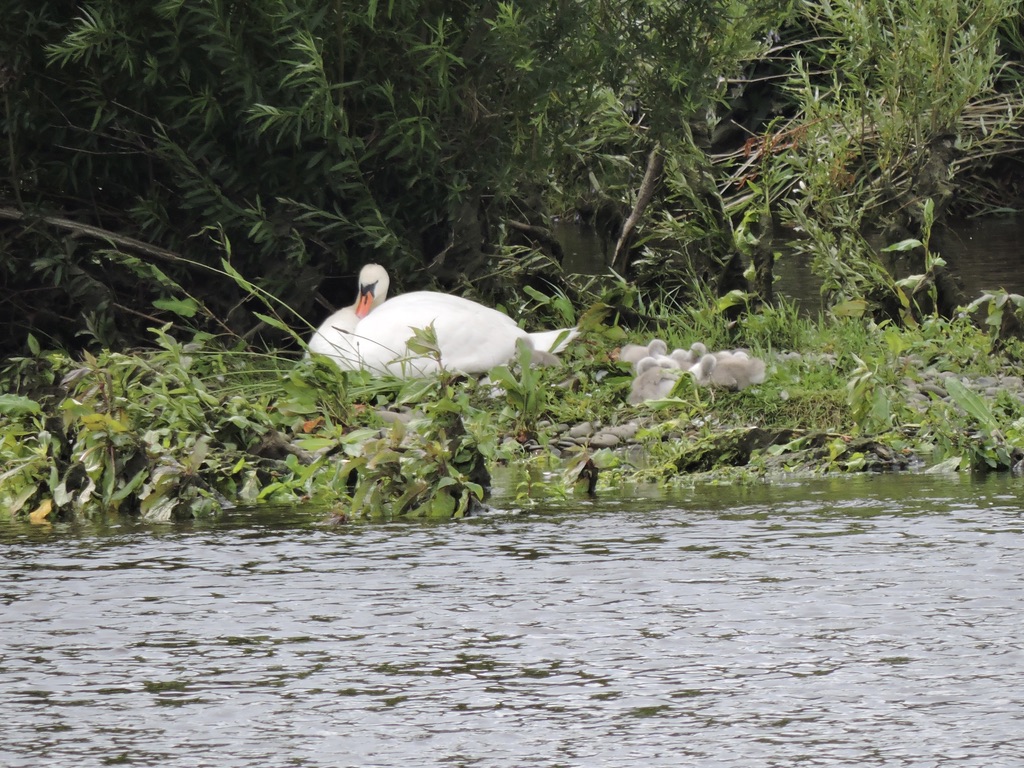
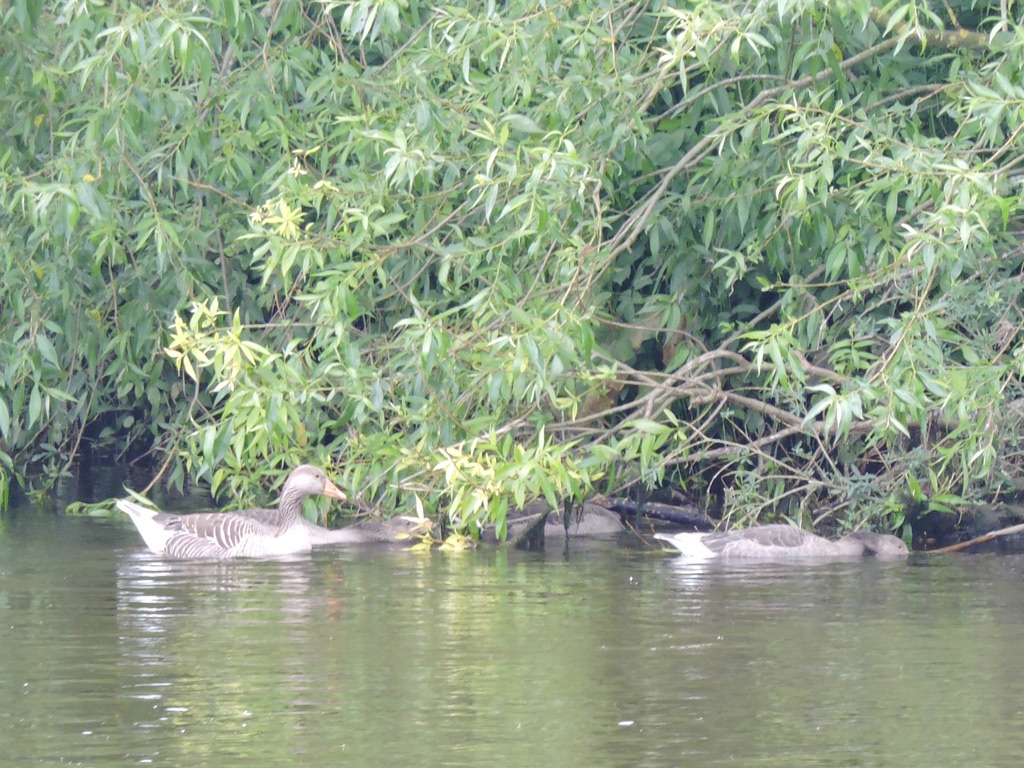
We see plenty of evidence of life on this river as we wander along, a pair of egrets, heron, oyster catchers, swans and cygnets, ducks and greylag geese. I remind myself that this river is only at the beginning of a journey to hopefully return to a state of wellbeing, their life pouring back. “Hope is the thing with rivers.” (Macfarlane 2025)
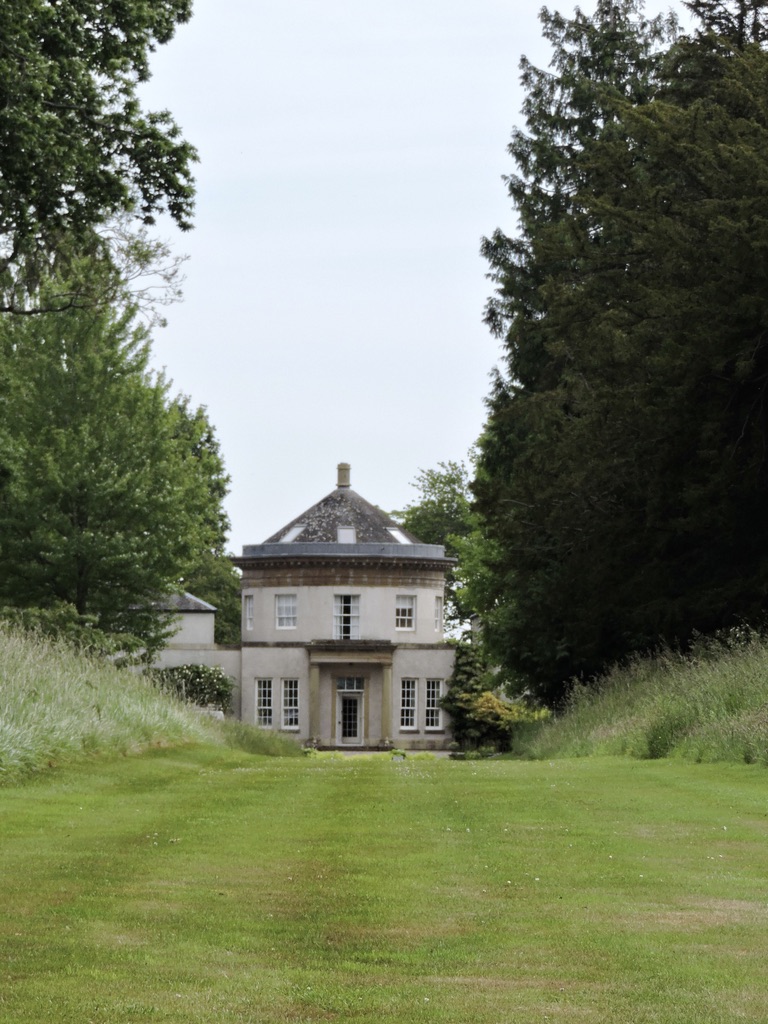
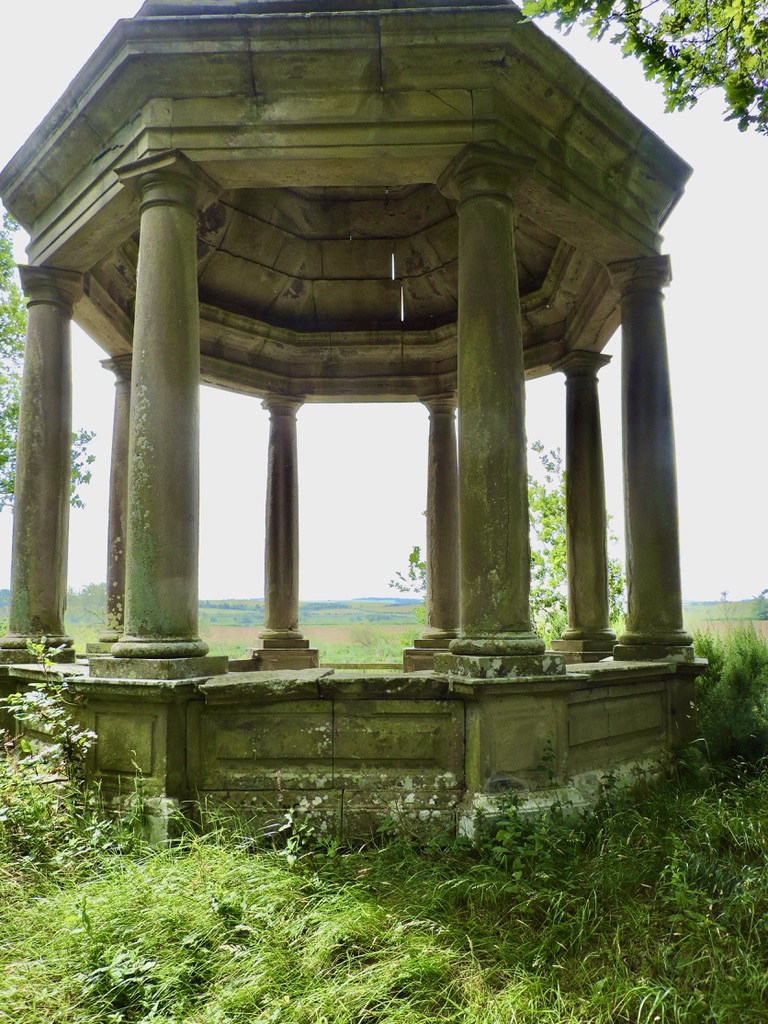
Eventually, after a mile or more we arrive at the Lees Estate with it’s roundhouse and temple. Originally recorded in 1576 the estate was acquired by the third son of the first Earl of Haddington who “by his riotous living, he dilapidated all, not only the lands but also great sums of money besides”. I have to wonder what damage the river, running innocently across his land, suffered from because of his lifestyle. The original house was replaced by the roundhouse in around 1976 and the Temple was built around the 1760s as an ornament in the garden overlooking the river, the stretch of river here becoming known to fishermen as Temple Pool.
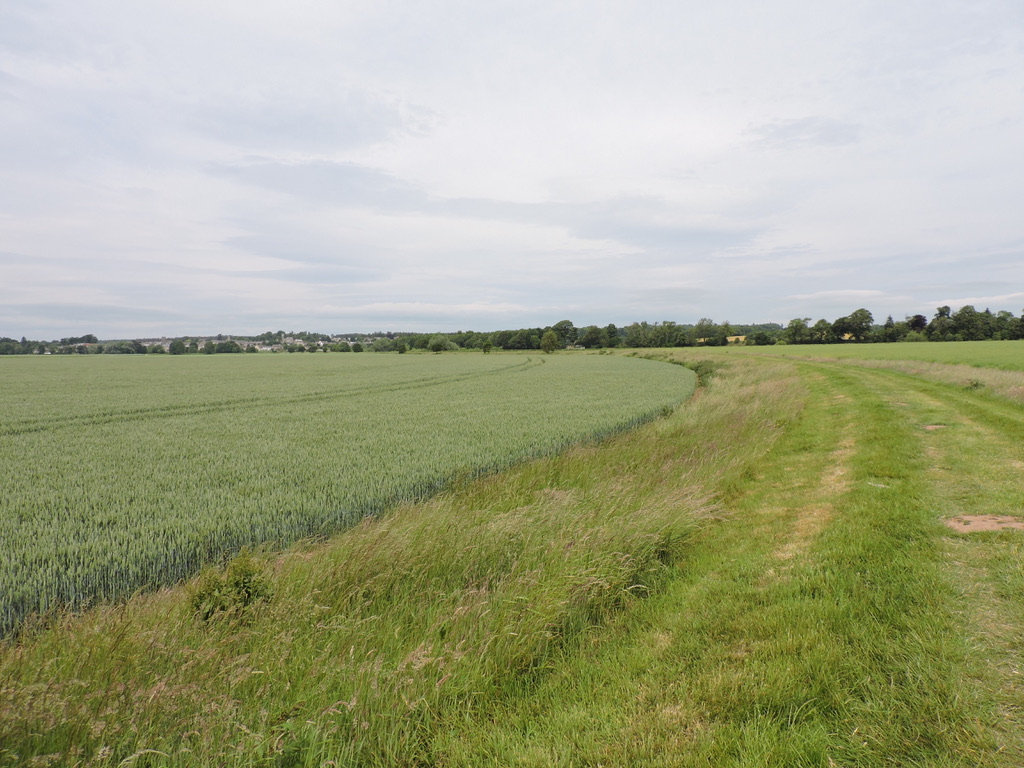
As we skirt the garden of the estate and emerge through woodland back onto farmland we follow the river around a huge ox-bow by walking along a raised bank.
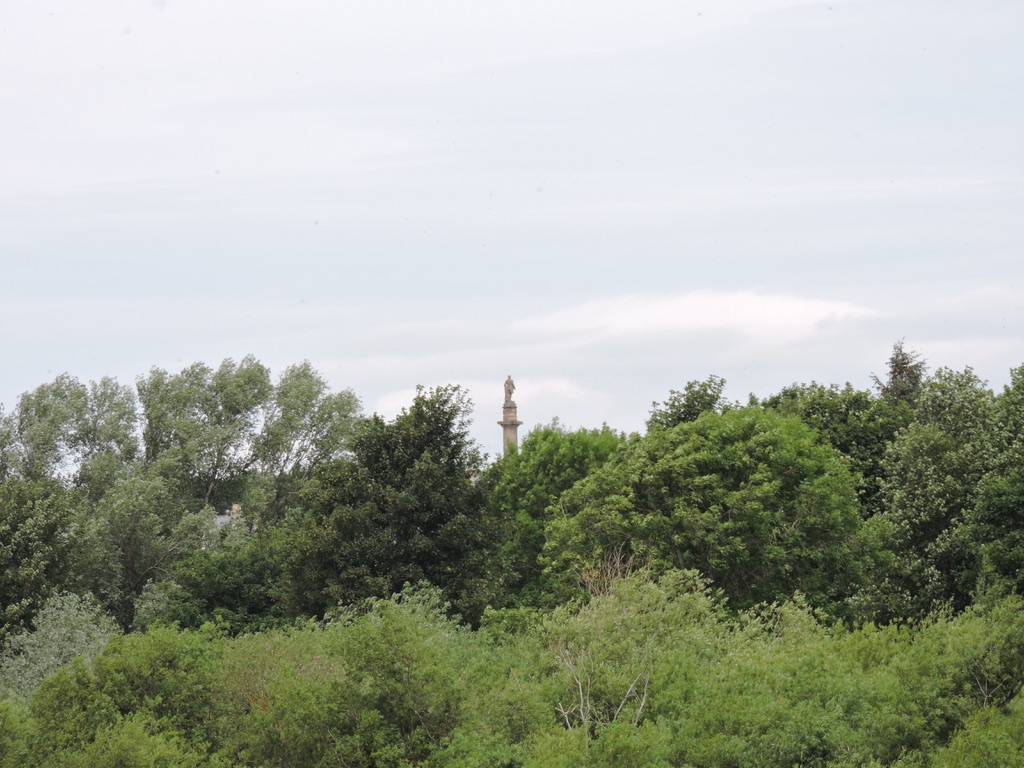
Fields of wheat and peas sit within the ox-bow and in the distance we can see the tall column dedicated to Charles Marjoribanks a liberal MP in 1832.
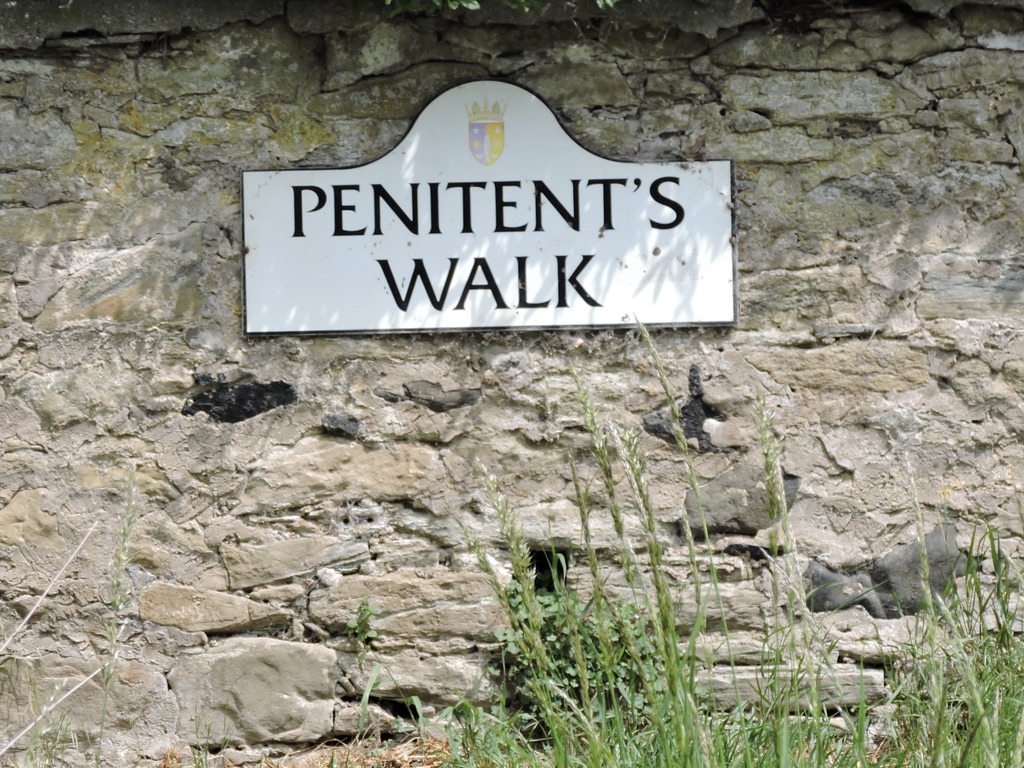
We cross a little wooden bridge over a burn and are back in Coldstream opposite the former Cistercian nunnery. The road to our right is Penitents Walk – the nuns are said to have carried the dead and injured from the Battle of Flodden along this way.
Then we just have to walk up the main road and along the very long straight driveway to return to The Hirsel.
“There are few things as powerful as an idea whose time has come. Over the past twenty years, energized by ecological emergency, the young Rights of Nature movement has repeatedly inspired new forms of future dreaming, and unsettled long-held orthodoxies by appealing to imagination as much as to law.”…………………..
“Rivers, above all, have become the focus for this movement.“
Two lovely Scottish names to pick apart today and two beautiful places to talk about. We visited the National Trust for Scotland’s Inveresk Lodge Garden which is near Musselburgh a couple of weeks ago before popping along the coast past some wonderfully named places – Prestonpans, Cockenzie and Longniddry to the lovely little town of Aberlady – one of my favourite places in East Lothian.
Inveresk:
Inver… meaning the mouth of a river and Esk being the name of the river – so Inveresk. Esk is the name of several rivers in England and Scotland and is probably from the Brythonic (Celtic) word – meaning “water”.
Aberlady:
Aber…..also meaning the mouth of a river or where the waters meet – also probably Brythonic – and “lady” probably was an earlier name for the West Peffer Burn which is the stream which flows into the Firth of Forth at this point. Interestingly “Peffer” also comes from the same language and means ‘radiant’ or ‘beautiful’.
So now you know – two places at the mouth of streams or rivers where they flow into the Firth of Forth.
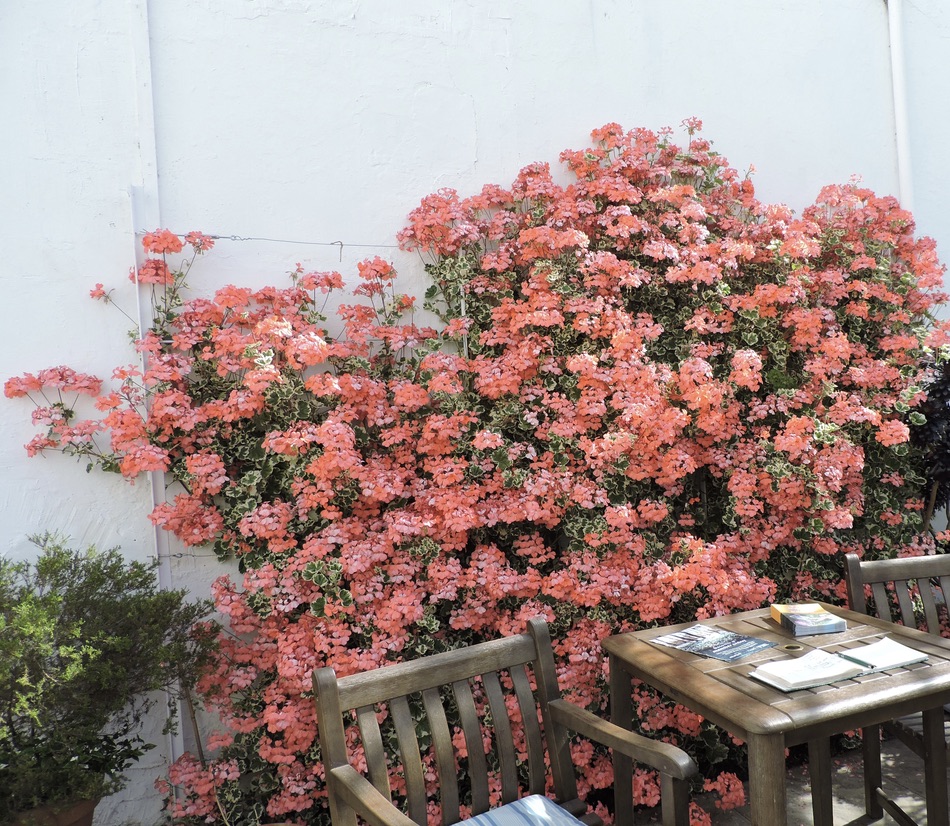
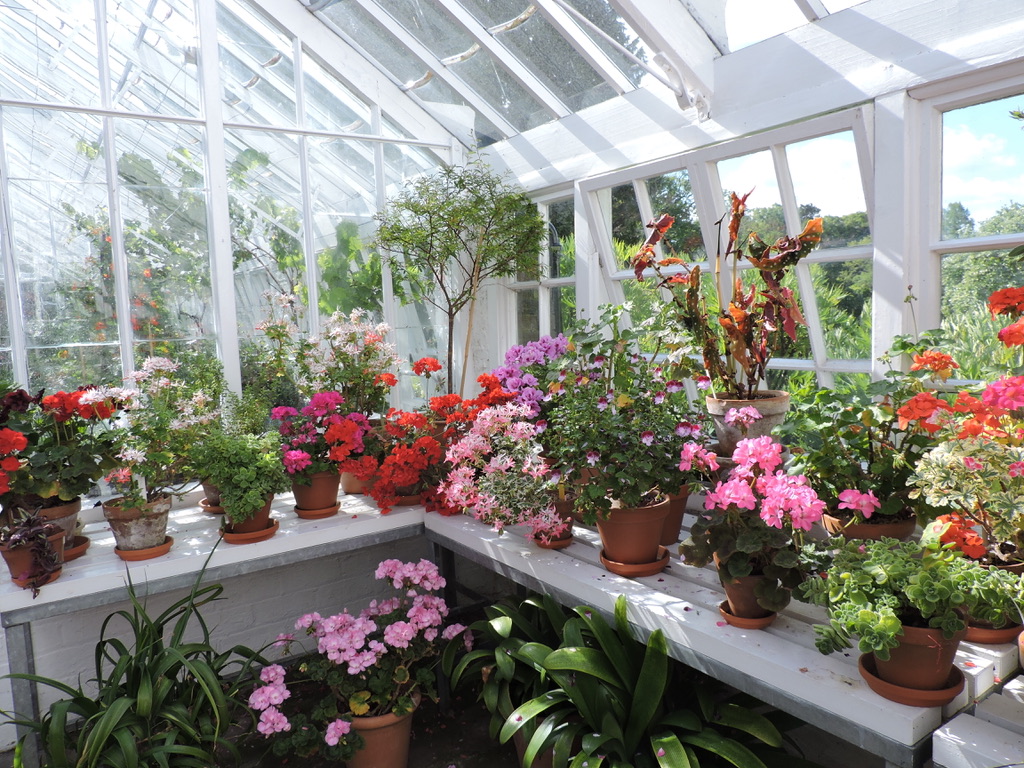
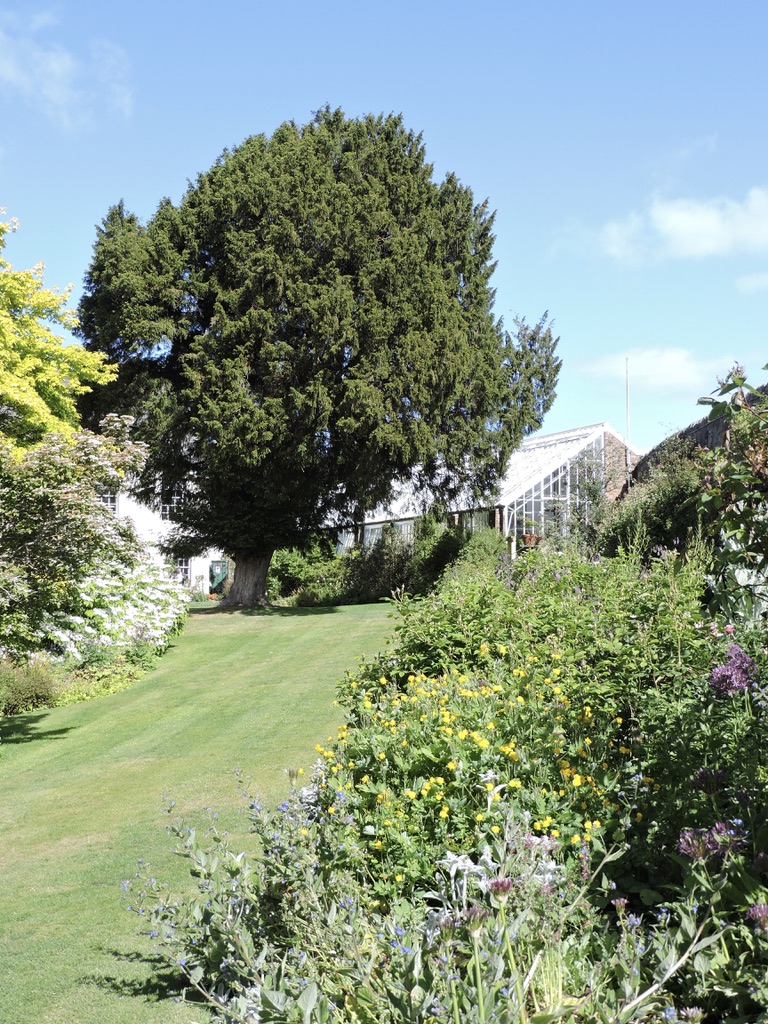
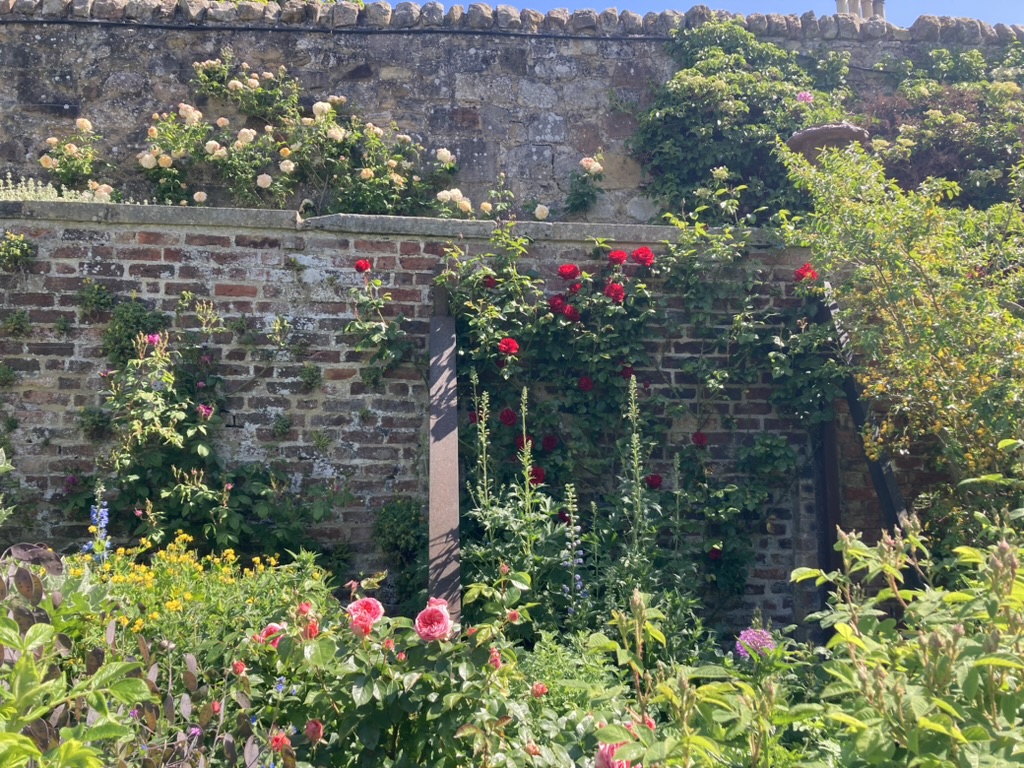
Inveresk is a pretty historic village which seems to be on its way to becoming a suburb of Musselburgh judging by the amount of house building going on on its outskirts. We may go back for a walk around the old village one day but this time we headed straight into the Lodge Gardens which are split into two areas – the greenhouses and lawned area with their pretty borders, and the wilder hillside woods, meadows and ponds. The greenhouse was notable for its astonishing wall of geranium – I’ve never seen a geranium climbing like this one before:
We wandered through the woods and meadows and around the ponds which contained millions of tadpoles, and then back up to the more formal lawned area.
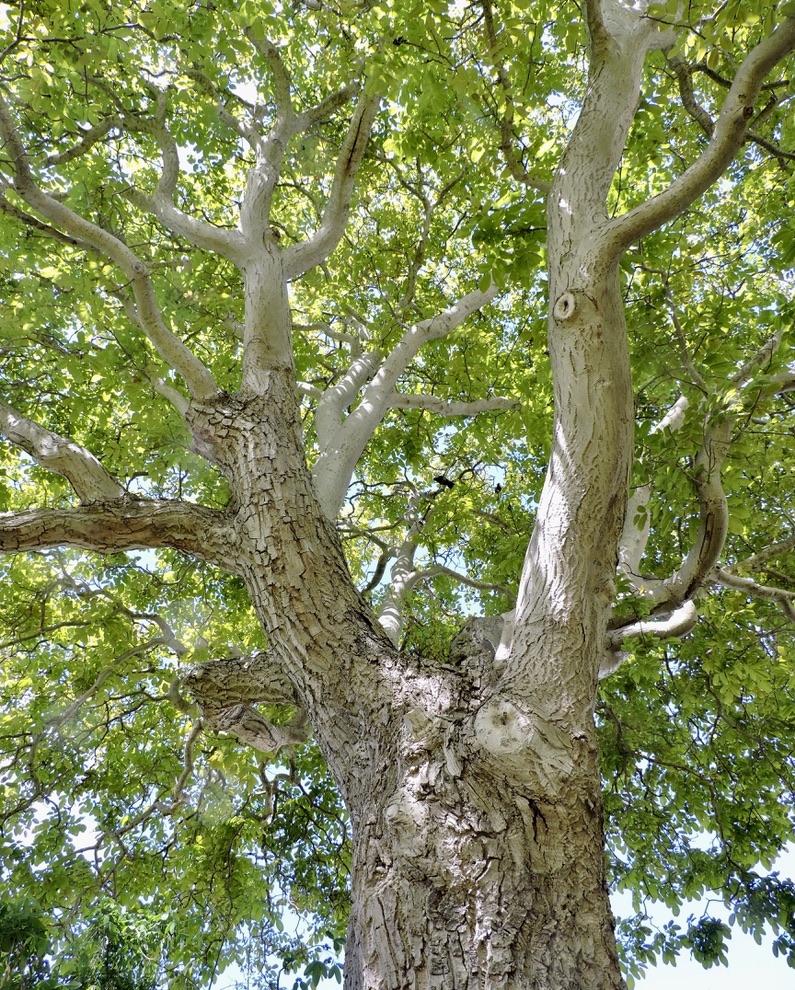
SundialHerb GardenWalnut TreeRose Border
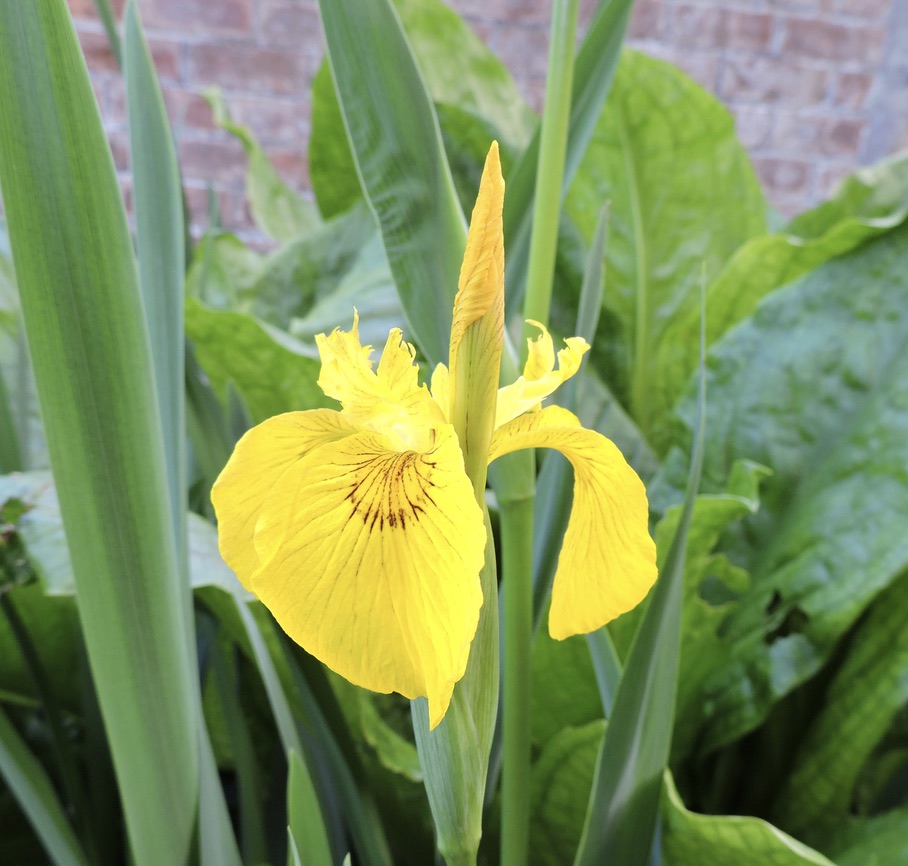
This beautiful flag iris was in the border, we have some in flower right now in our pond at home. I would nip out and grab a photo but some much needed torrential rain is happening and I’m not inclined to get that wet!
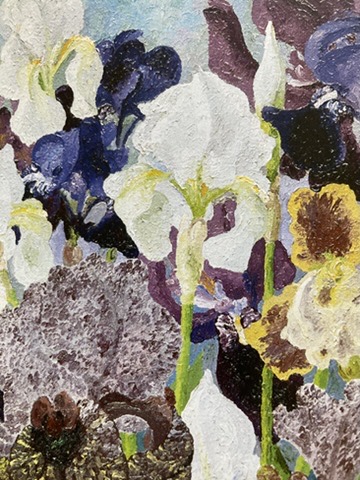
Talking about Irises and just digressing for a minute – today we went to Berwick-Upon-Tweed and saw an exhibition of work by Cedric Morris, a British artist and plantsman. He became obsessed with irises and bred bearded irises from seed – and then of course, he painted them. I’m not so good at the art appreciation stuff – but I quite liked his flower paintings – here’s a little bit of one taken from a card (May Flowering Irises – 1935).
Anyway – onward to Aberlady!
We were really ready for lunch when we got to the outskirts of Aberlady and we had been well-prepared and, checking online found a lovely farmshop and cafe…..except when we got there….no cafe!! This was disappointing to say the least because we knew that there were very few places to get lunch in Aberlady, however we had a wander through the main street and ended up in a lovely hotel garden with delicious scones and tea so all was not lost (though lunch would have been nice).
In the middle ages Aberlady was a port serving the old county town of Haddington, but it actually dates back much earlier than that to around the 7th century when it had a role is supporting pilgrims travelling between Iona to the North and Lindisfarne to the south.
After our scones we walked on along the road to the parish church with its well-tended grounds and walked through to admire the estuary from viewpoint.
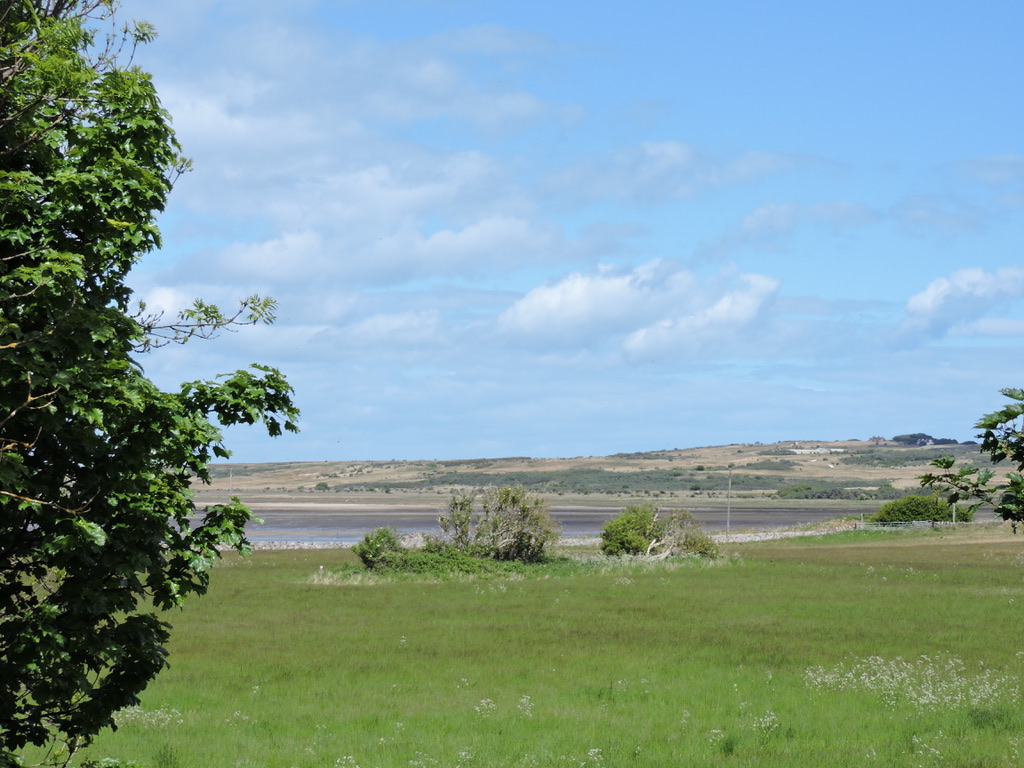
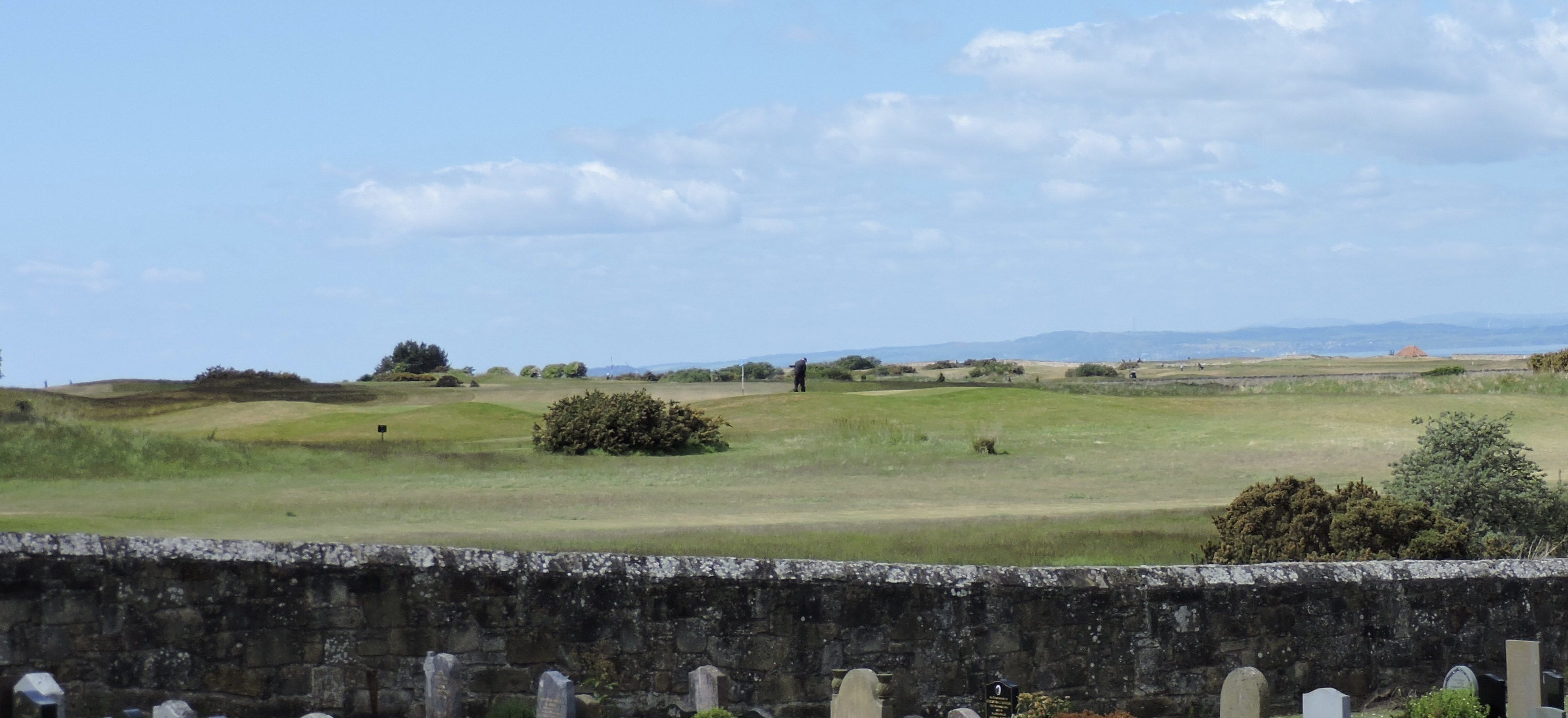
The view from the churchyard to the Firth of Forth across the golf course – this part of East Lothian is full of golf courses!
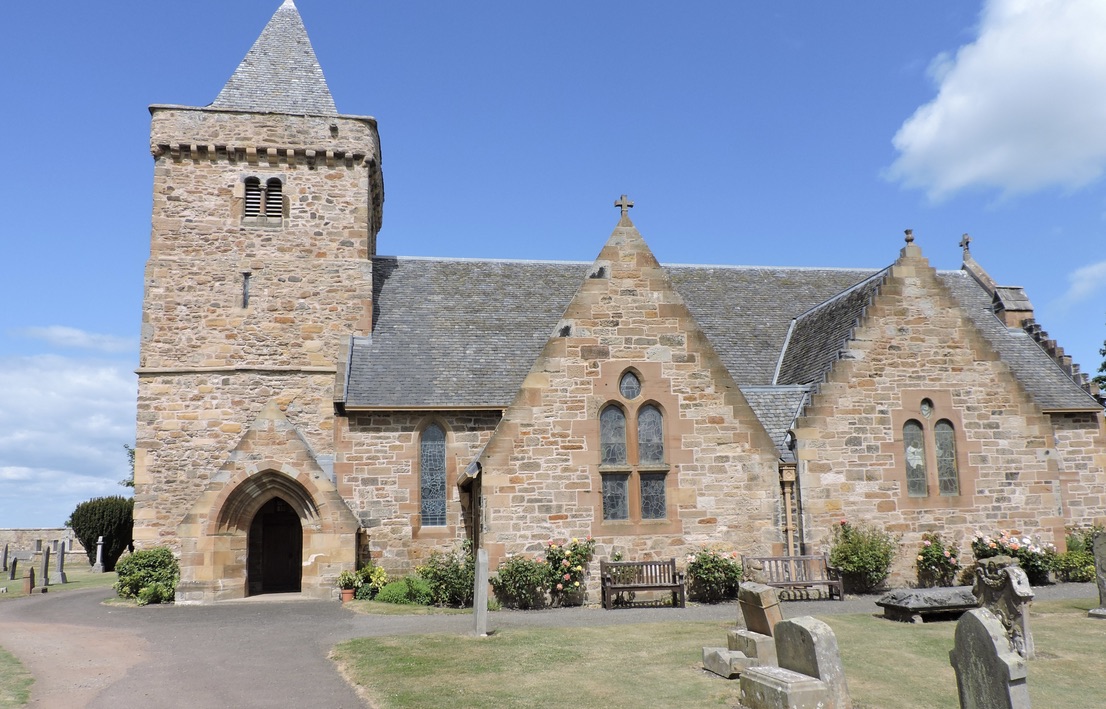
The very well looked after Parish Church of Aberlady
Right next to the churchyard is Coffin Lane (!) and we walked through here to walk back to the main road along the coast road.
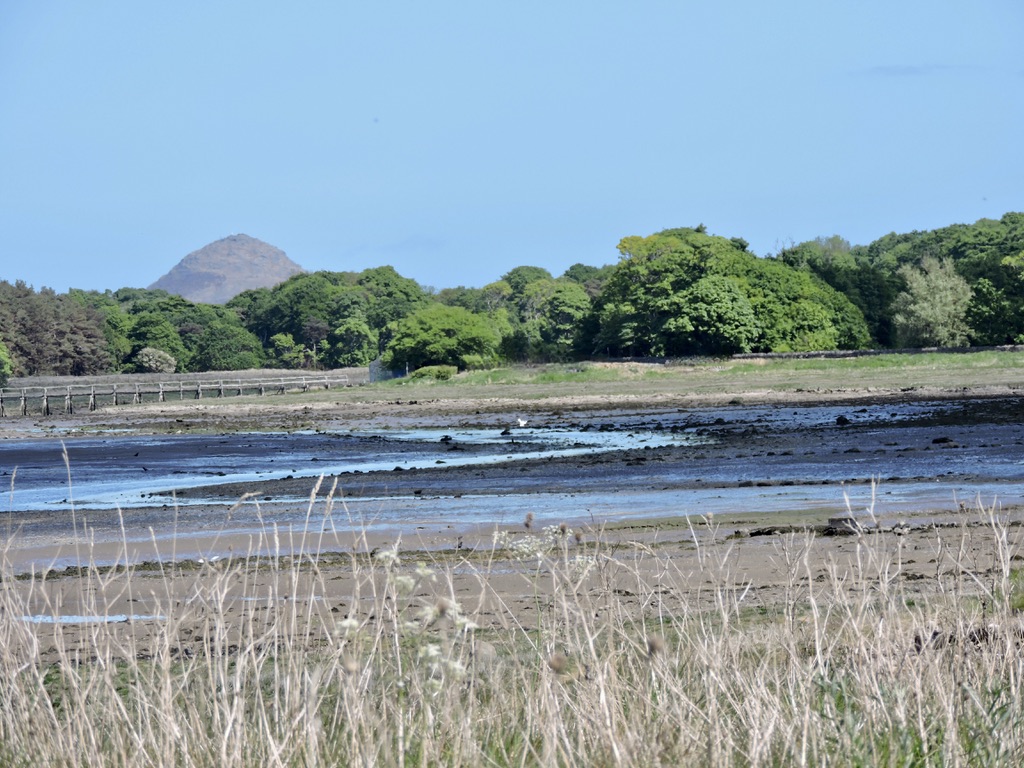
The view looking inland – the hill in the background is Berwick Law, a very steep hill that I have climbed once in the distant past. Maybe its time to try it again!
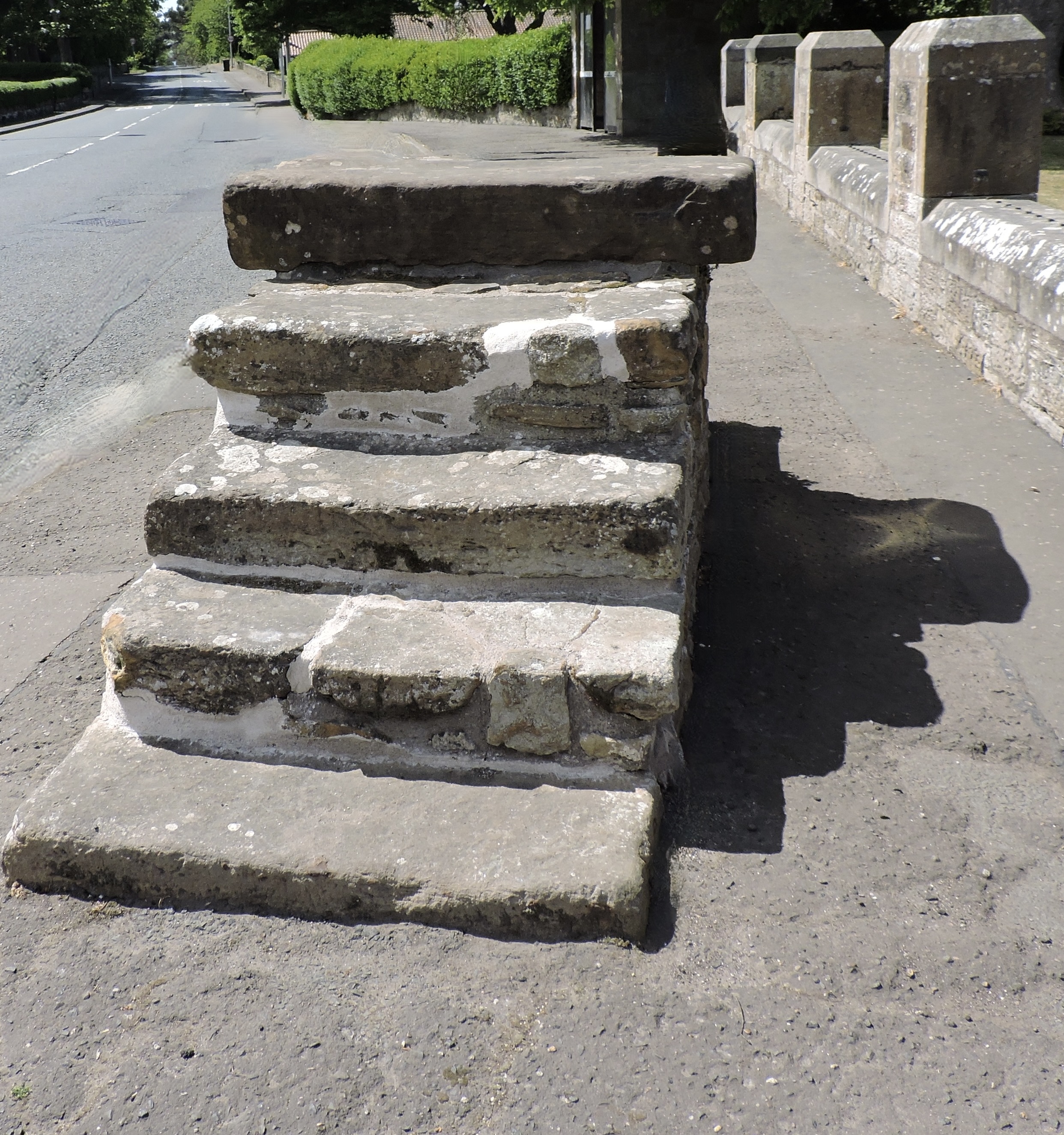
We follow the road out of town towards the Scottish Ornithological Centre at Waterston House passing this set of steps right in the middle of the pavement on the way – I know what they are but do you have any ideas what they are for? Comment below with your answer……
Blue skies had appeared by the time we arrived at the bird centre – this is a view of the pond taken from inside the viewing room.
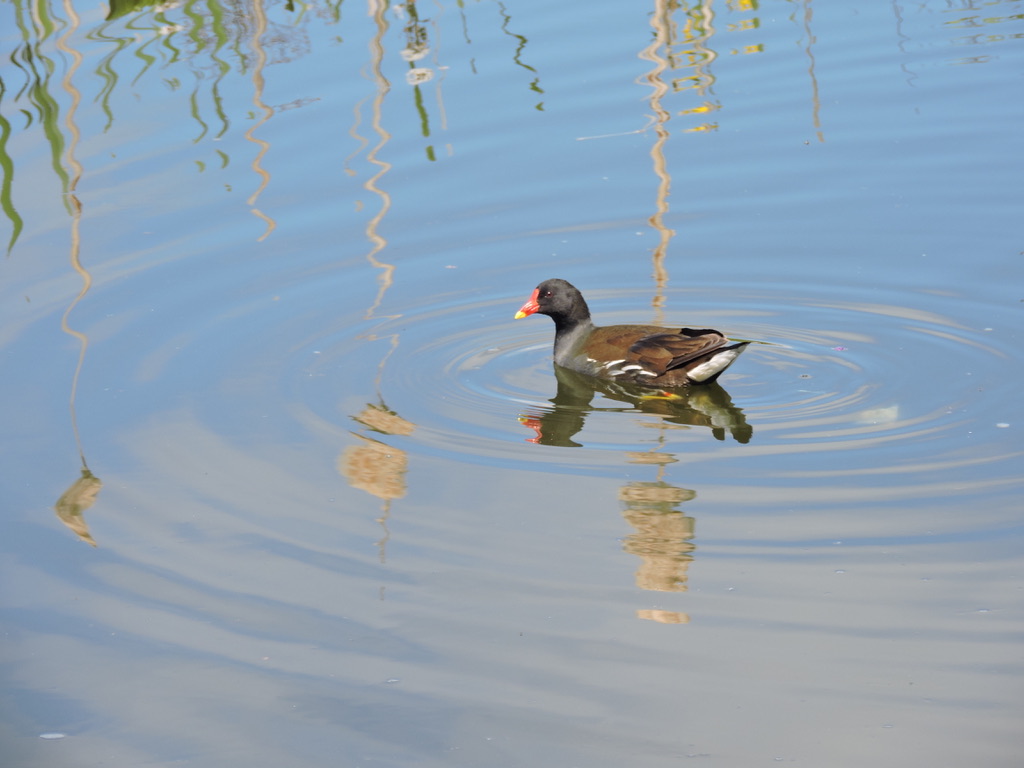
The only bird we saw though was a moorhen:
I love how his movement disturbs the reflection of the bullrushes!
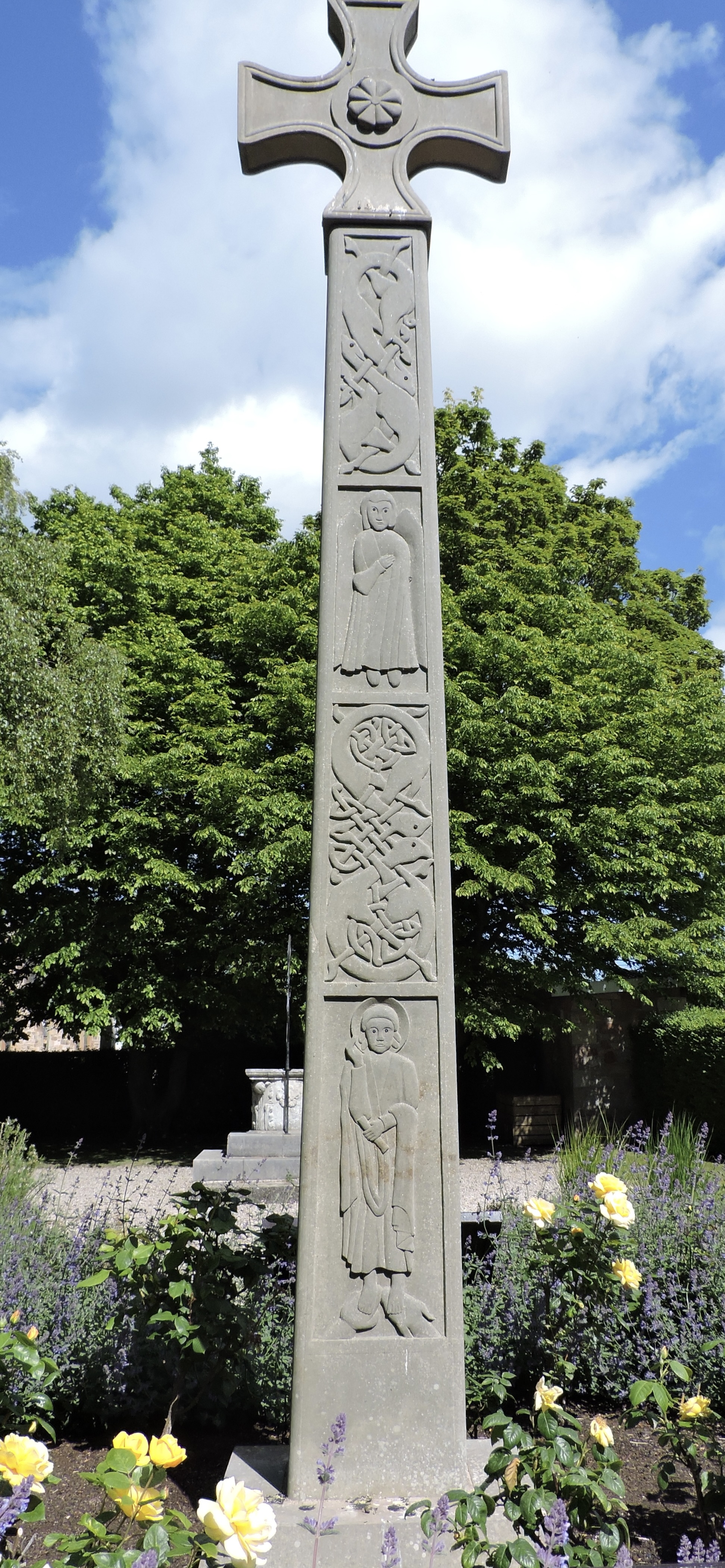
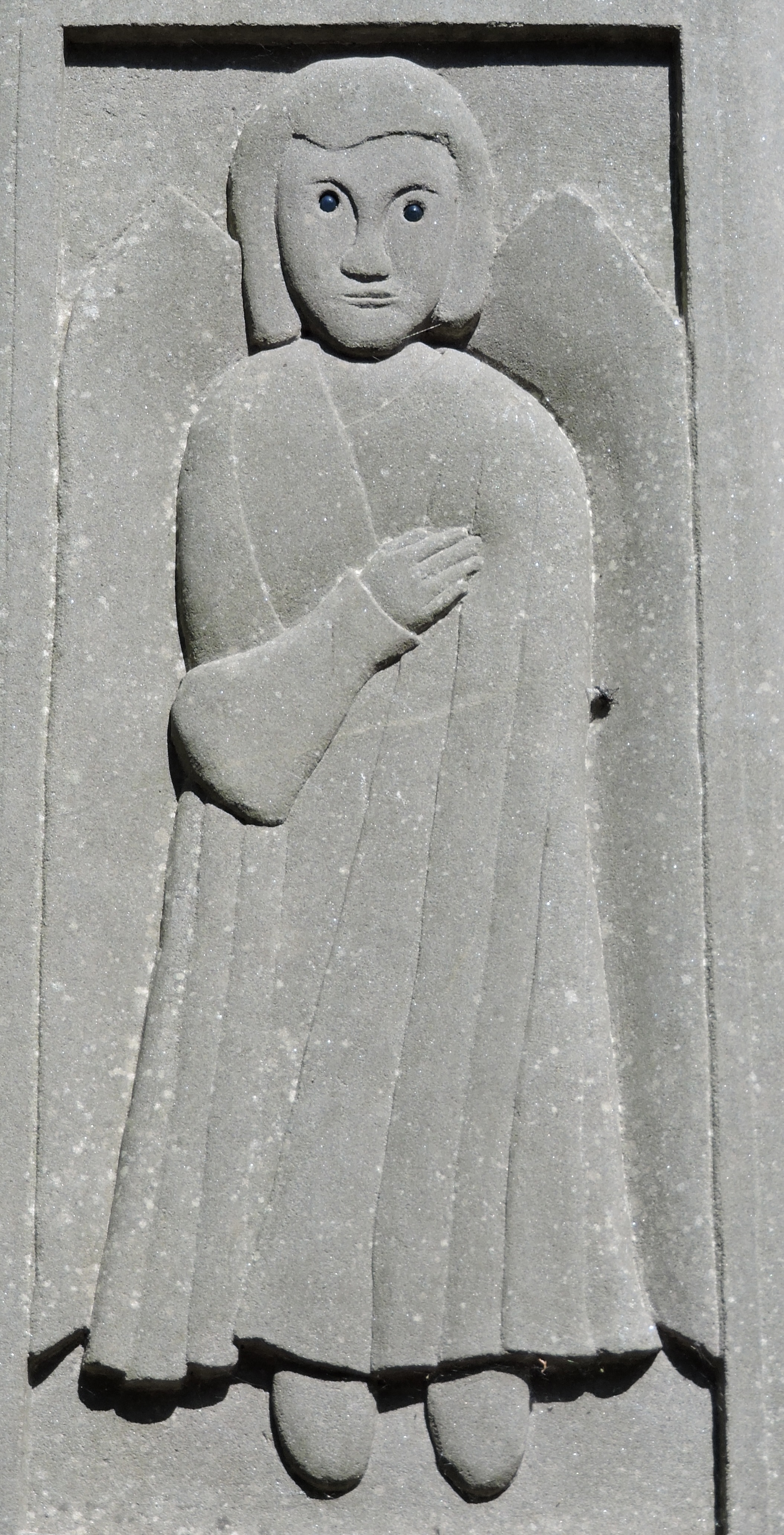
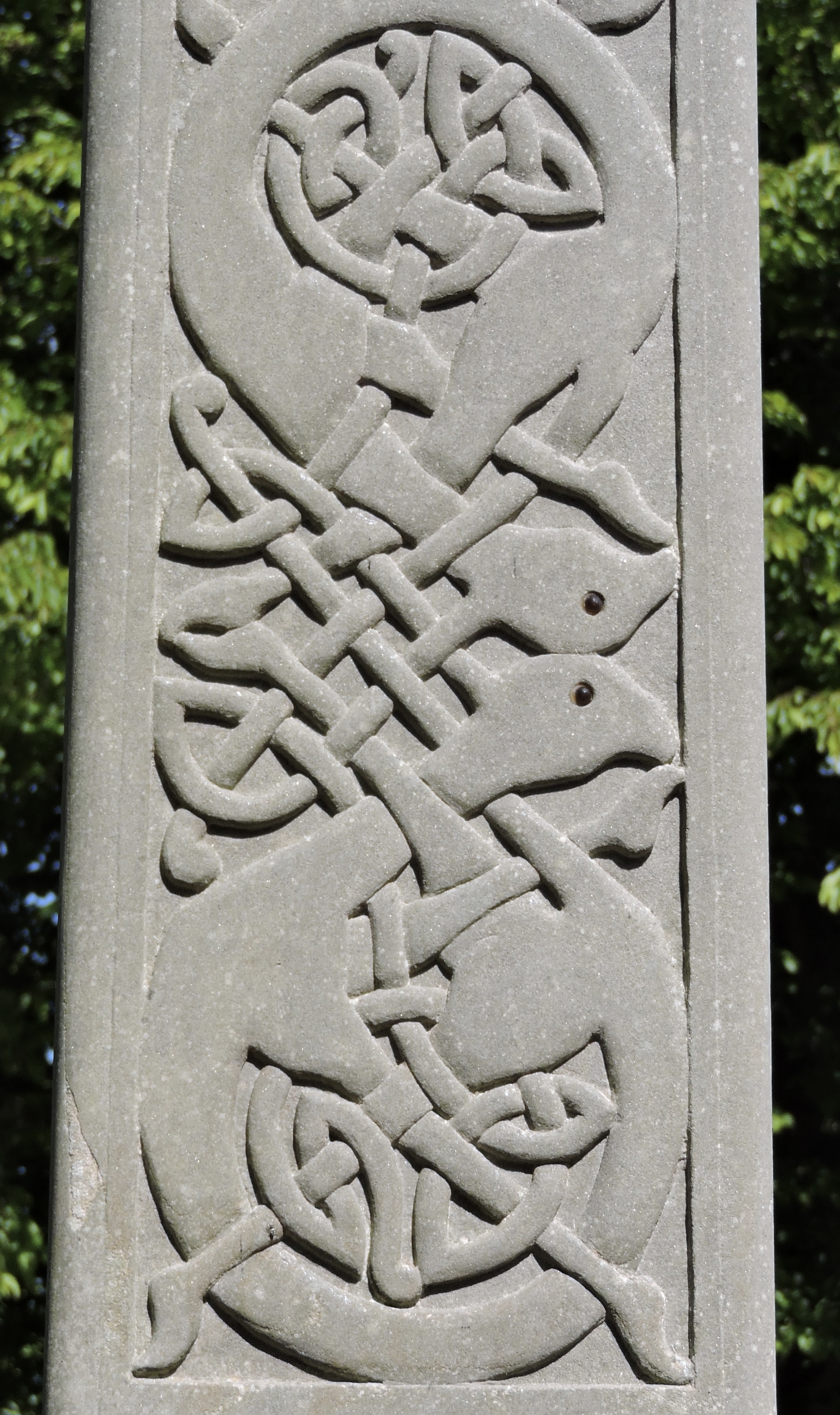
Back on the road through town we stop to admire the Memorial Garden which has a reconstruction of an ancient Anglo Saxon cross, a fragment of which was found in a garden wall adjacent to the kirkyard. The original would have been around 5 metres tall and carved with vine scrolls and seabirds.
That’s it! Time to go home.
Thanks for reading and especially thanks to people who have been taking the trouble to comment on these posts, especially as it seems that you have had to sign up to WordPress to do this. I’ve now disabled this setting – I hope! I’m still getting to grips with this new version of WordPress so let me know…..and don’t forget to let me know what you think those steps are for.
Be warned – I do complain quite a bit in this post!
We made 2 attempts to reach Belsay Hall which is about an hour and a half away in Northumberland straight down the A696. We’ve been there before – we know where it is and how to get there. There’s a lovely walk from Belsay Hall itself, through the gardens and along a ravine cut away in the rock which is lined with rhododendrons and other exotic specimens collected by previous owners.
About two thirds of the way there we started noticing ‘road ahead closed’ signs – worrying, but not disastrous – after all we were nearly there, it didn’t say how far ahead the road was closed and the diversion signs seemed to be in completely the wrong direction. Lesson 1 – Never ignore a road ahead closed sign! Suddenly – there it was – a barricade across the road!! We pulled off into a side road and came to a village where we stopped and asked directions from a group of walkers. It has to be said the village green was busy with people all sitting in their cars studying their maps and reconfiguring their satnavs. The next 2 hours was spent criss-crossing the moors, requesting directions in random shops, passing the same group of bikers several times – obviously also lost – and not getting where we wanted to go. Our satnav meanwhile was having a crisis – if I never hear that phrase – “make a U-turn if possible” – again it’ll be too soon. Nearly 3 hours into a drive around Northumberland, thirsty, irritable and desperate for a public convenience – we turn around and head home.
A week later we try again, different route, supposed to take only a few minutes longer. We do well, until we reach a town which is supposed to be not far from Belsay – and there it is again – “make a U-turn if possible”. We spend the next hour making U-turns and studying our newly purchased paper map before finally reaching Belsay with a huge sigh of relief.
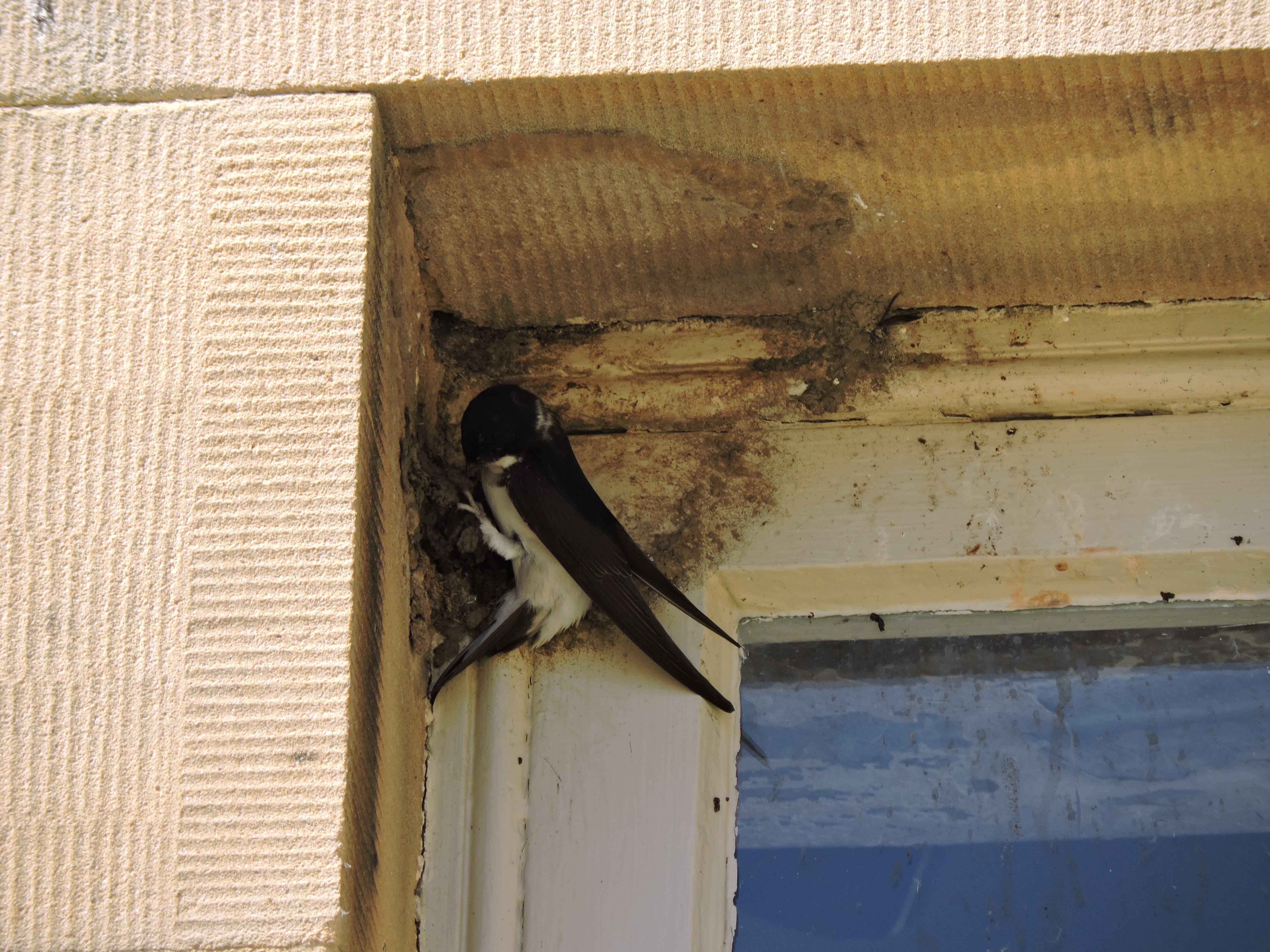
In the spirit of complaining – I’m just going to mention that, along with a new play area and cafe, Belsay have introduced pay and display parking! £4! In cash! Who carries cash anymore? Well luckily Mr RR does – so – fees paid, fortified by tea and coffee (in paper cups – I hate paper cups!) we head for the Hall, spotting a pair of swallows building their nest on the way. It always makes me feel better when I see how hard birds work to build a place to lay their eggs in a certain place, when all we did was sit in the car and turn up (more or less).
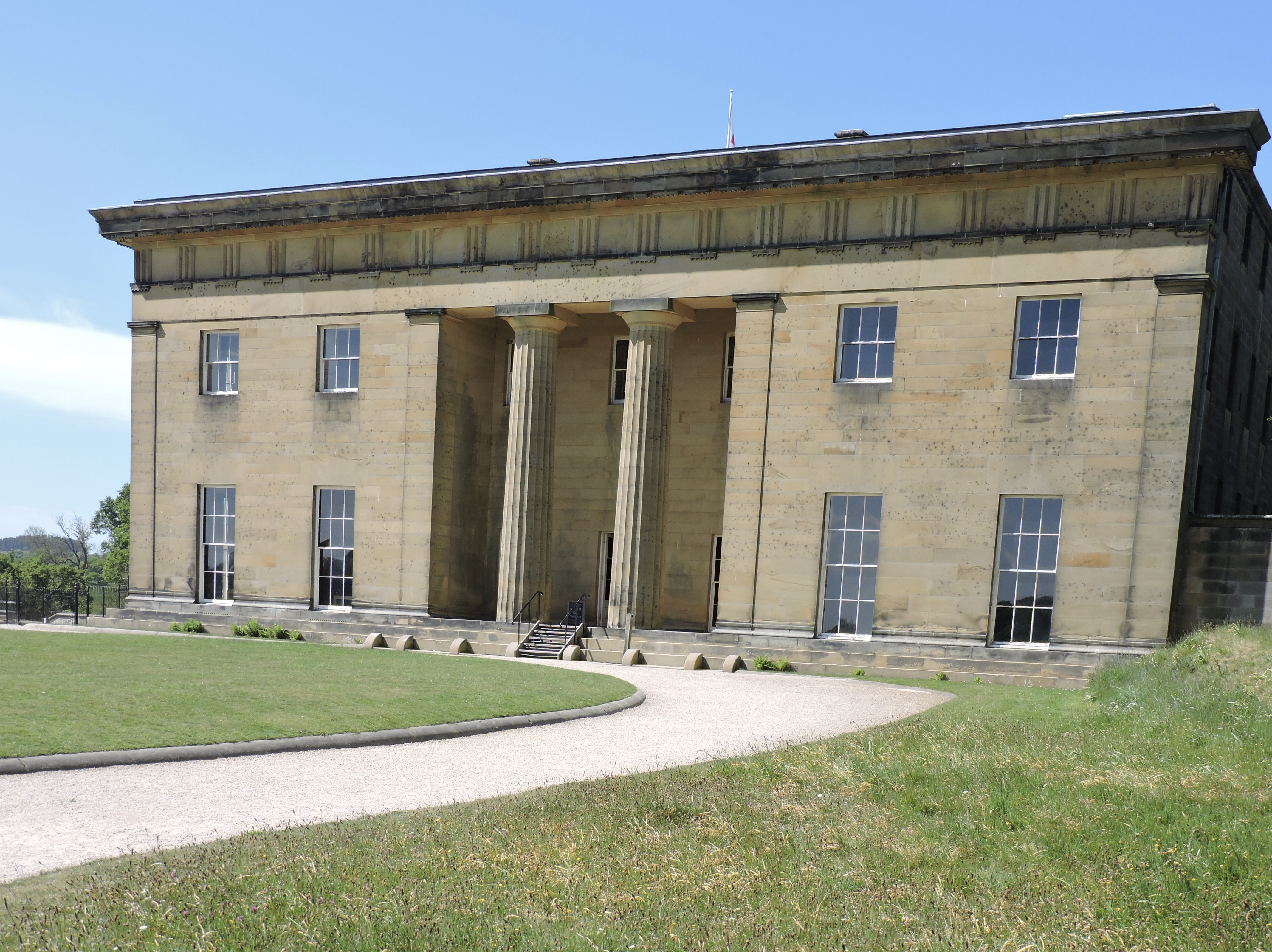
Belsay Hall is a Greek Revival Mansion built of sandstone blocks quarried from the estate, and is exactly 30 metres square. Sir Charles Monck began building it in 1807 having spent his 2 year honeymoon (!) in Greece. He was passionate about the design and architecture of bulidings and the local flora in Greece keeping detailed travel diaries. Later he travelled to Sicily and was inspired by what he saw there to plant the quarry garden at Belsay. The Hall has recently been restored by English Heritage.
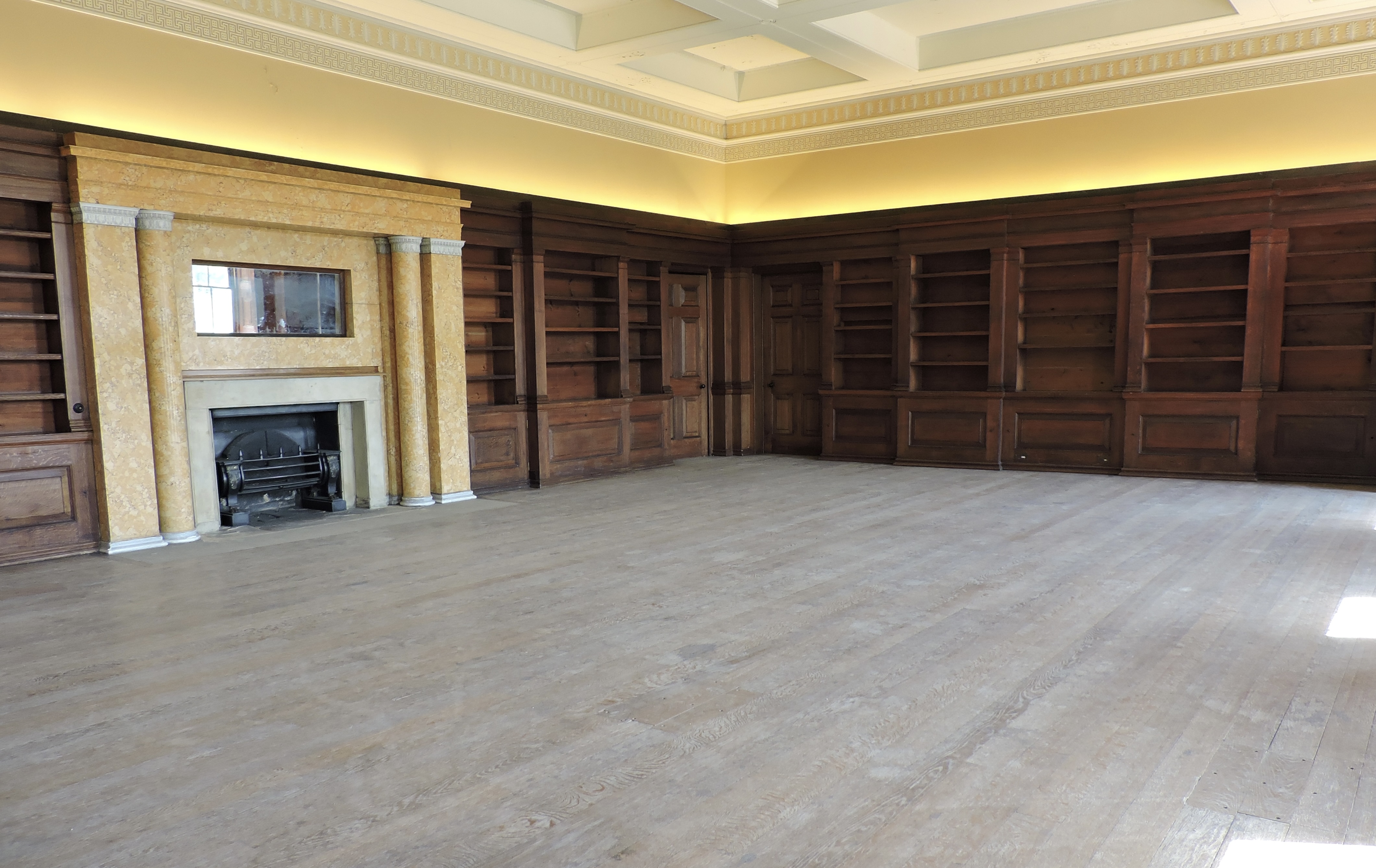
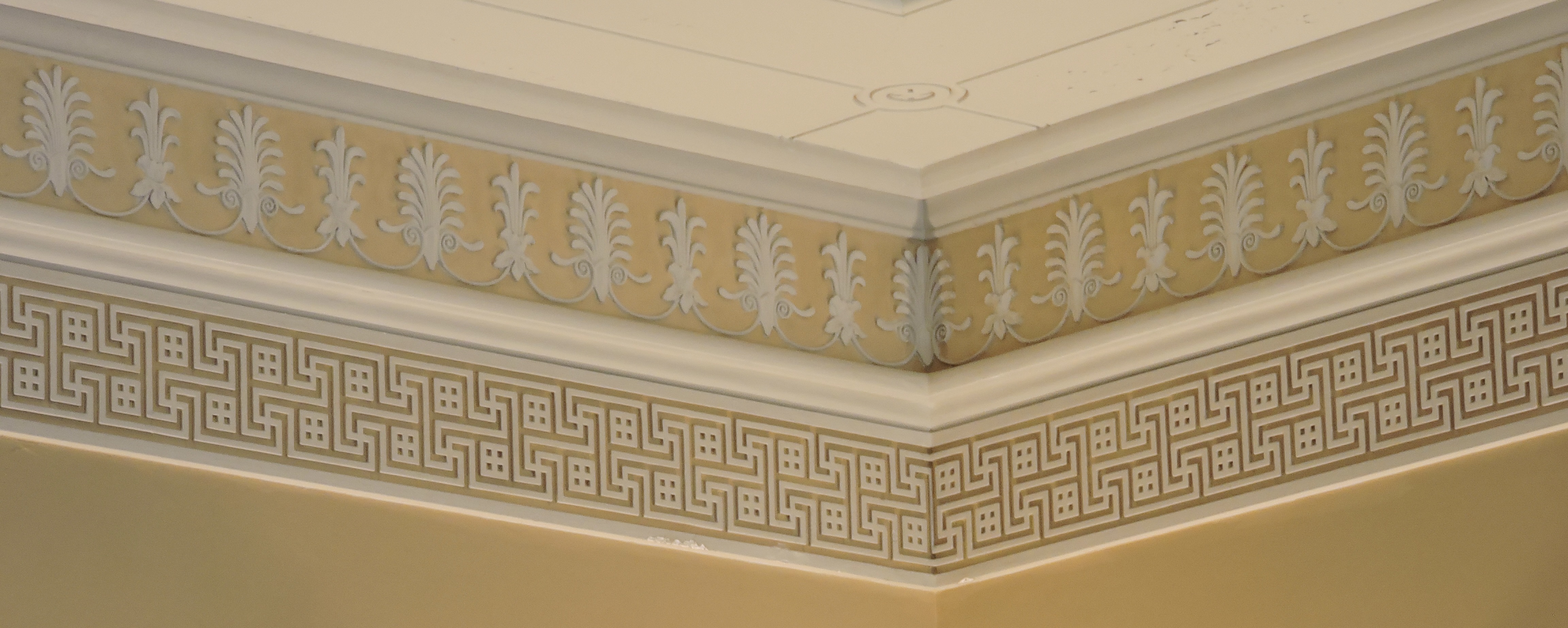
We had a look around the hall, which is empty of furniture and has unplastered walls and high pillars in the entrance hall so that it’s a bit like walking into an ancient temple. The Library which is now bookless has a frieze in a Greek Revival Key pattern
The formal gardens are lovely and well-kept…….
but it’s the quarry garden that steals the show….
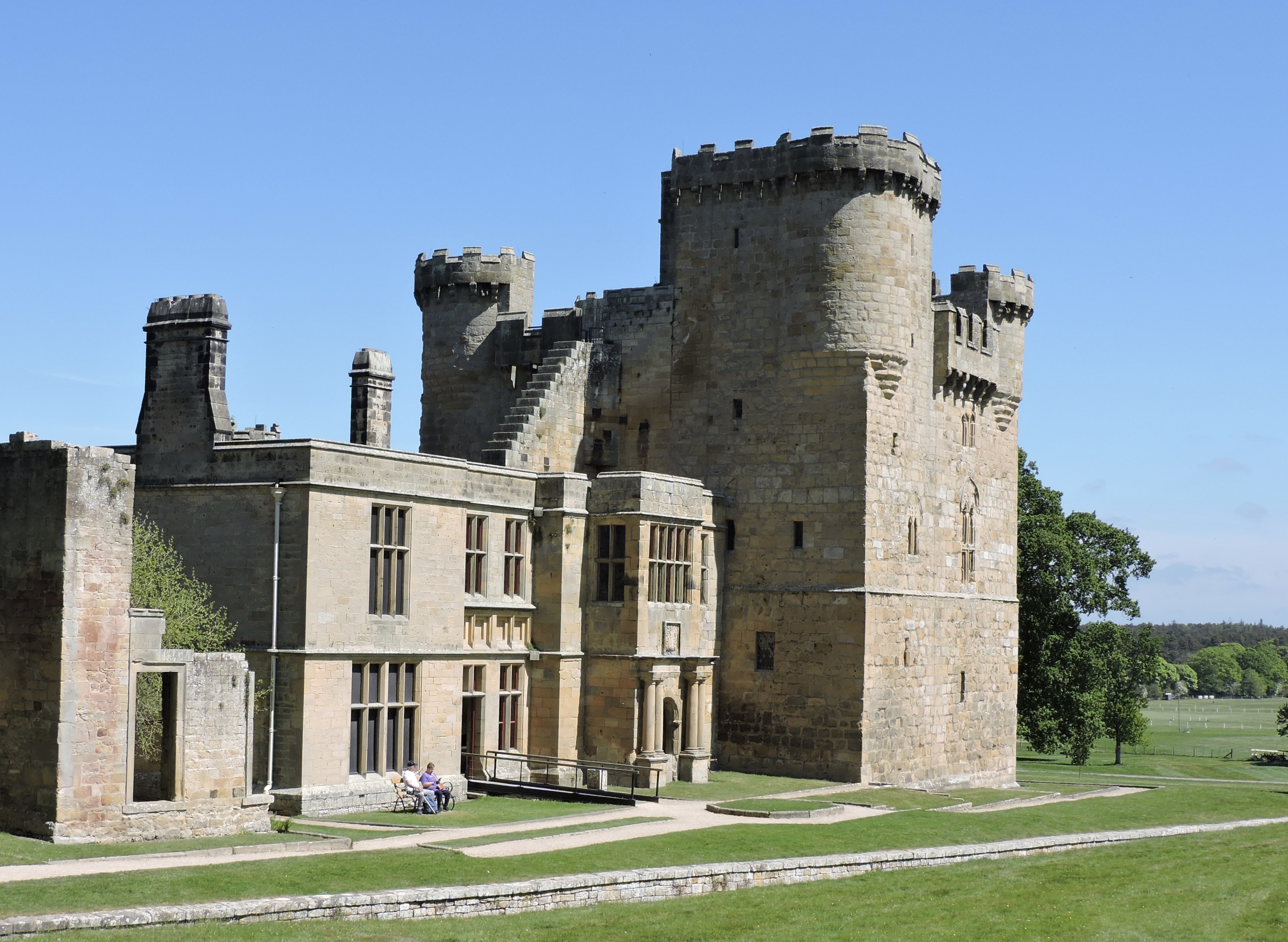
We emerge from the quarry path into the sunshine for a view of the medieval castle:
The Middleton family lived at Belsay continuously since the 13th century, although the estate was forfeited in in 1317 when Sir Richard de Middleton’s grandson John was executed for treason – disastrous for Sir Richard as he was Lord Chancellor to Henry III at the time! Luckily for them the estate was returned to the Middleton’s when one of his descendants managed to marry into the resident family.
Alongside the castle is the newly constructed “Wild Man” play area – named after a figure painted on the inside east wall of the tower. “Wild Man” is a medieval mythical figure present on the Middleton coat of arms. It’s one of several fragments of early paintings still visible including heraldic shields and a naval scene reflecting Sir John Middleton VII’s role as commander of fleets against the French in the 1480s.
Also nearby is the newly converted coach house and stables which is now a cafe beautifully done out with wooden beams and upholstered wooden seating. It all looks lovely. Sadly, the experience of having lunch in this lovely building was not so lovely. Lunch was delivered to our table in a cardboard box with a sellophane lid, drinks were in paper cups, and we hacked at our jacket potatoes with flimsy wooden disposable cutlery, whilst reading information on photo boards telling us how proud English Heritage is of its ethical and sustainable practices. I’m not sure whether we just visited on the day the dishwasher broke down or if this was normal – whichever it was, it sort of spoiled the experience for us.
Going back to the Middleton’s for a minute – Sir William Middleton II died in 1757 leaving the estate in debt and everything had to be sold off – but the fortunate Middleton’s again managed to marry into the right family – Sir William’s nephew (also William) wed Jane Monck, a very wealthy heiress. It was William and Jane’s son Charles (who changed his name to Monck so that he could inherit some land in Lincolnshire) who was the passionate Classicist and had the greatest impact on Belsay.
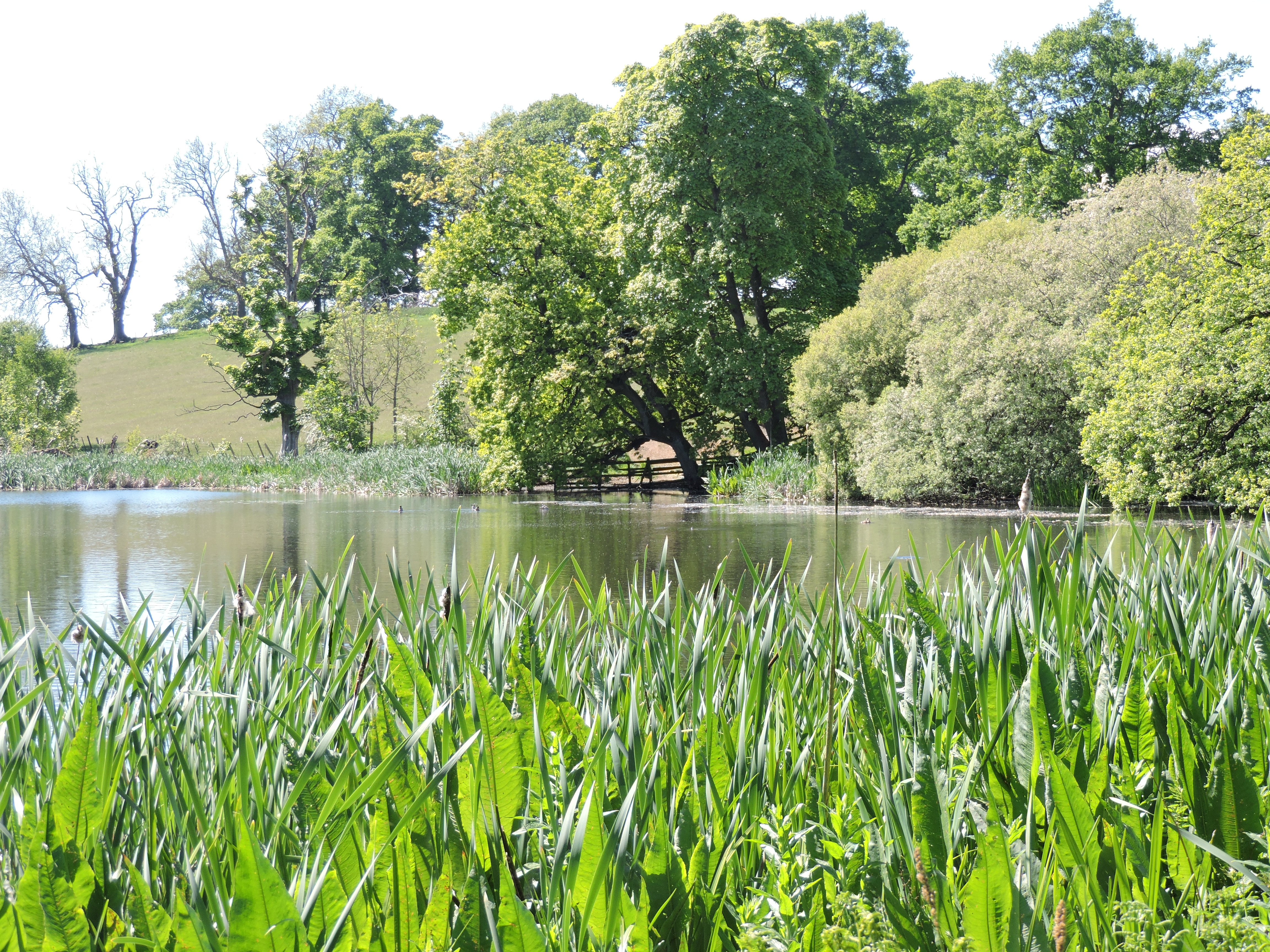
As well as the formal and quarry gardens, Charles planted exotic conifers, Scots Pine and other hardwood species to form Crag Wood to the south of the house and its here we venture next, passing the manmade lake:
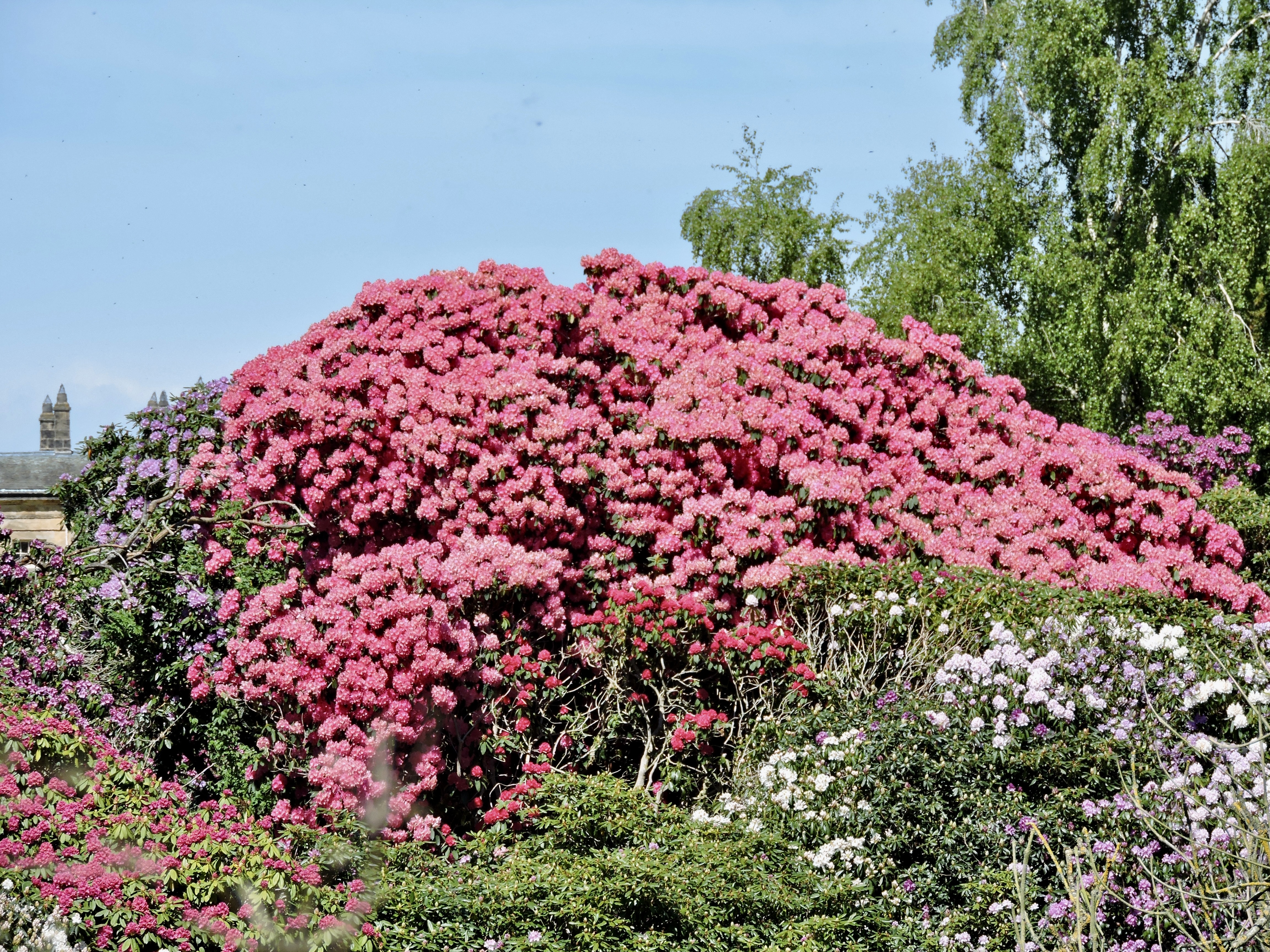
and heading uphill through the woods. As we pass the back of the hall we have a good view of the rhododendron and what are apparently ‘deer shelters’:
I did puzzle over the provision of shelters for deer – but I’m wondering now if these are shelters for people to hide in whilst they try to spot the deer – so they can shoot them of course! What do you think?
Rhododendron to the south of the hall
We were quite enjoying the ramble through the woods with it’s view of the lake until a flying insect launched itself at me and stung me in the eye! Oh my word, that hurt! No first aid kit of course although a plaster wouldn’t have been much help! Luckily after a sit down on a nearby bench and a few deep breaths we headed back to the Hall where we were hoping there would be some sort of first aid if it was needed. By the time we got back it was feeling better, but I’d had enough by then – time to find our way home.
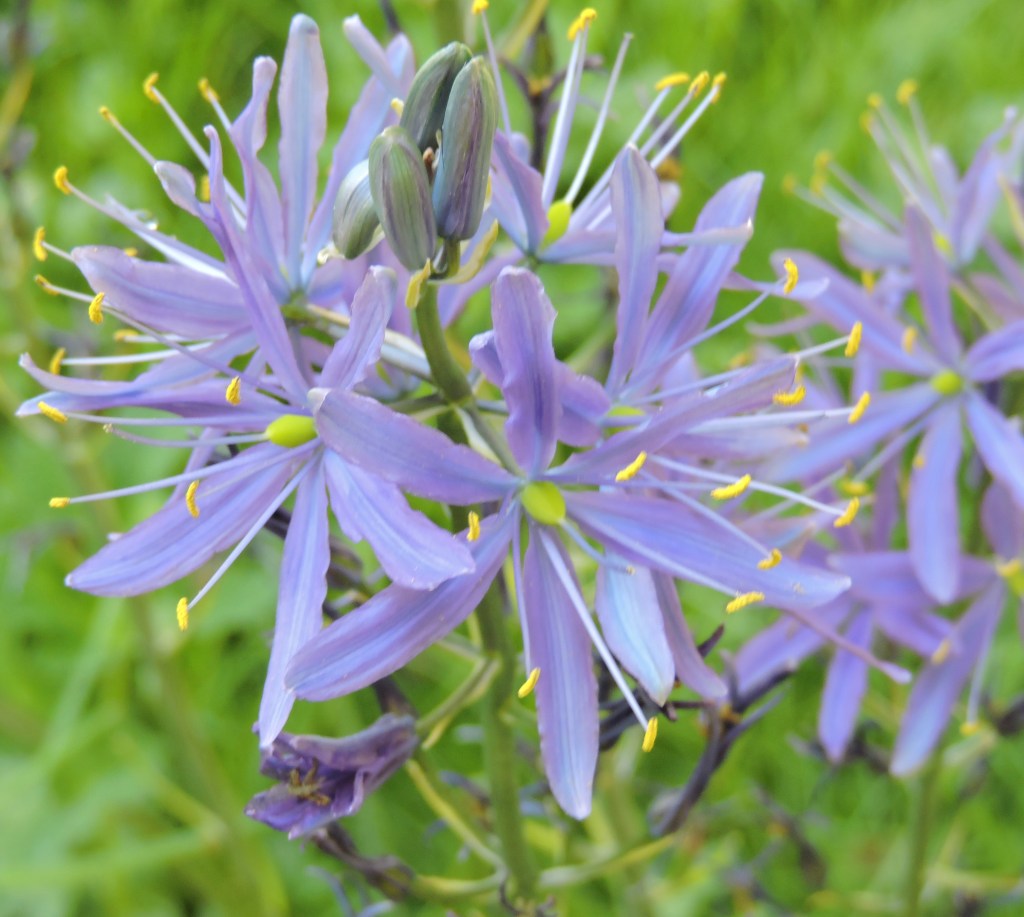
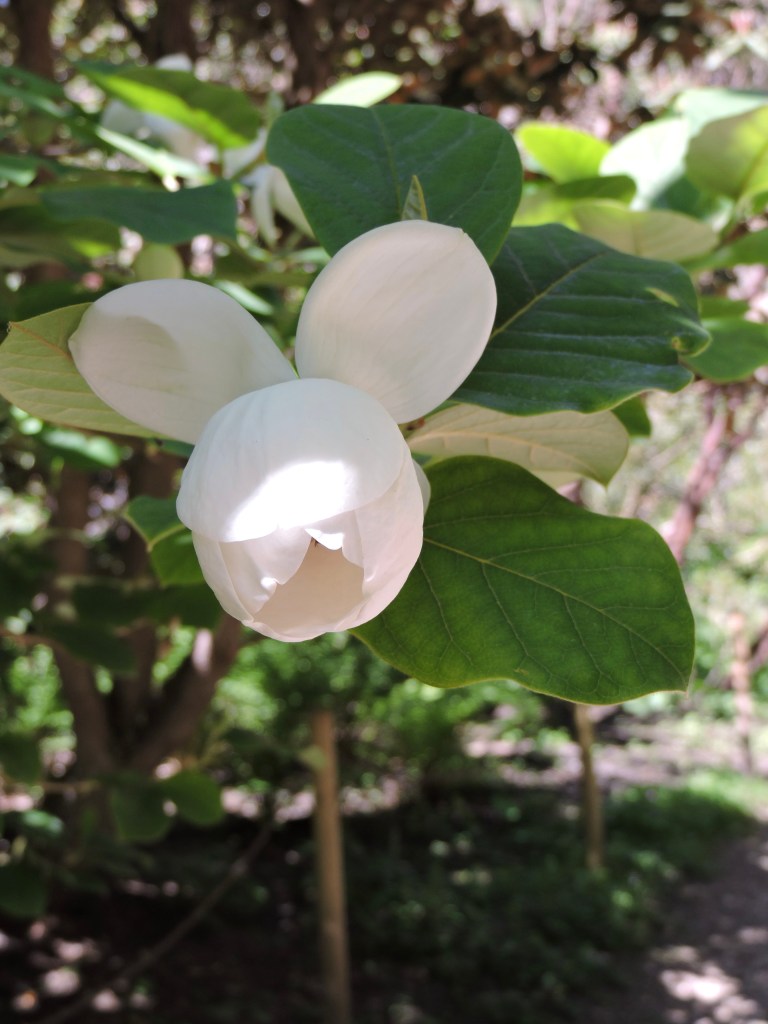
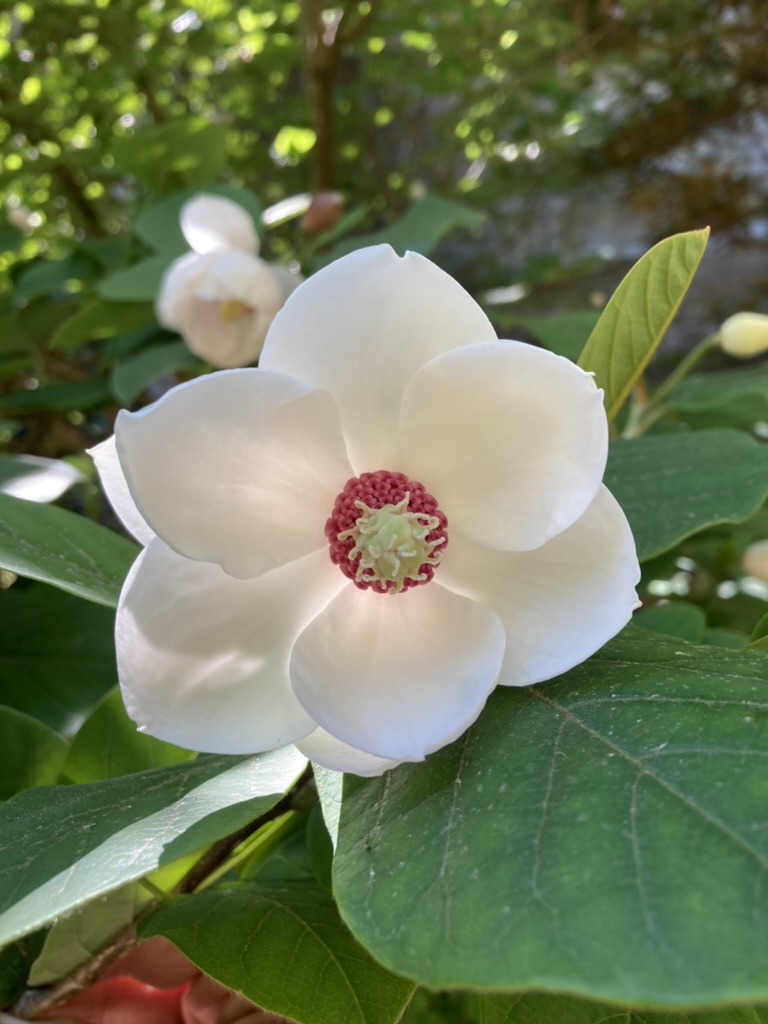
Here’s my favourite flower of the day – Calycanthus chinensis – a stunning tree covered in these beauties:
From Howick Hall Gardens you can walk to the coast and along the English Coast Path before turning inland and back to the gardens. Including walking around the gardens we did around 6 miles on a beautiful day in late April.
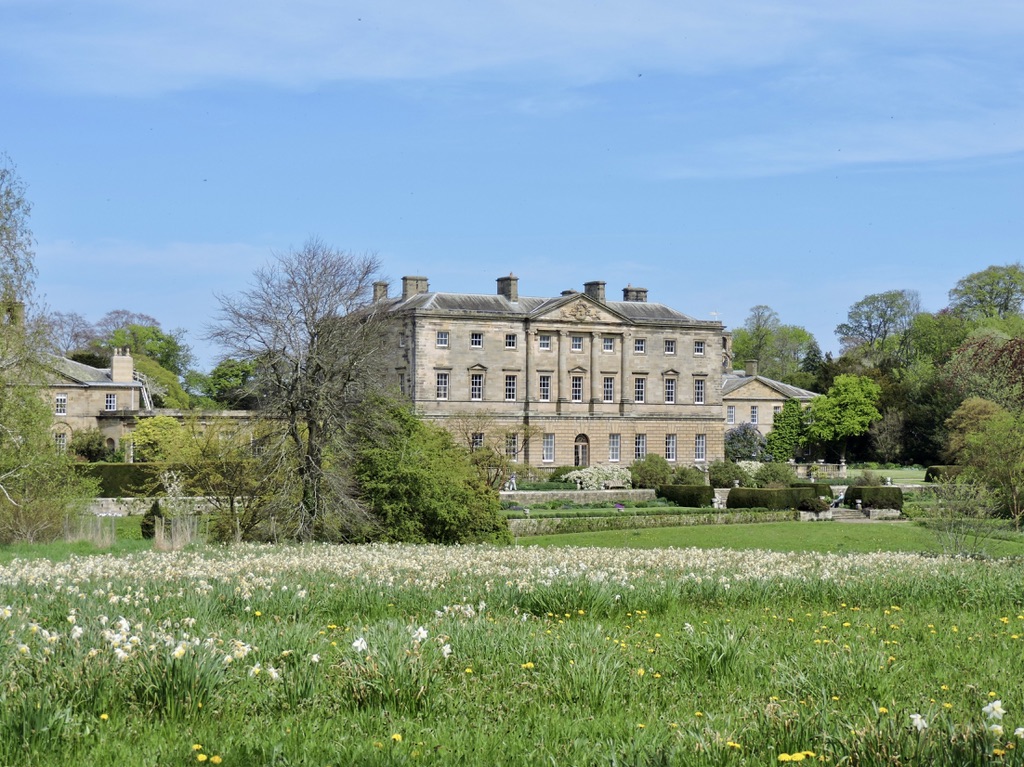
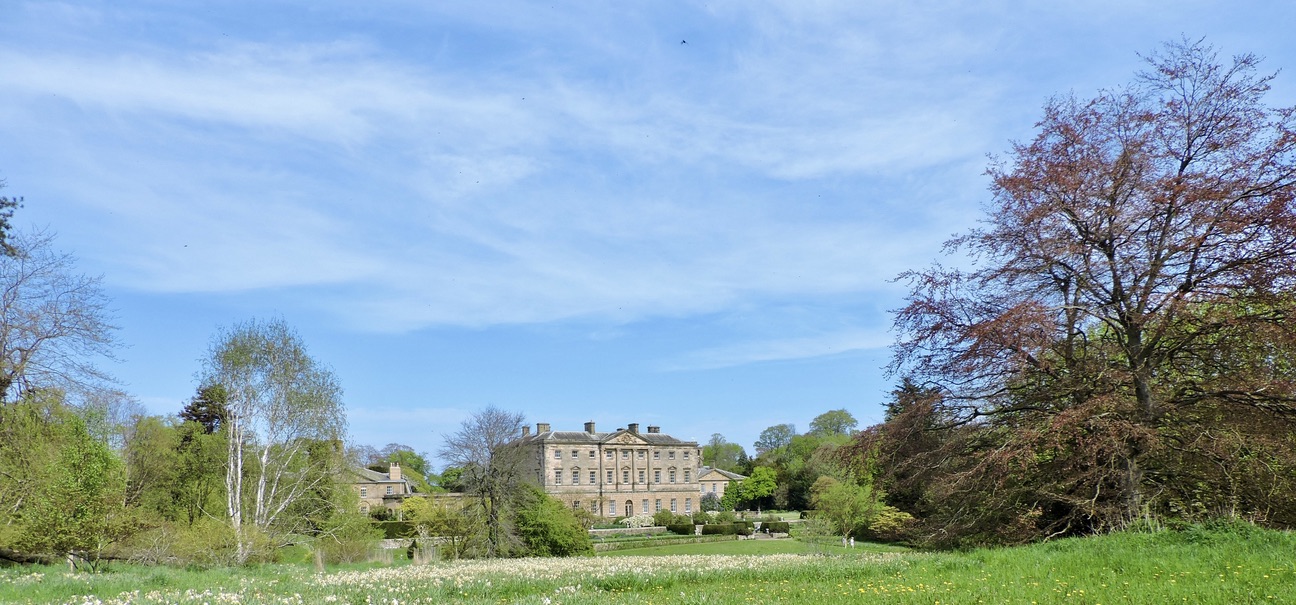
Howick Hall is near the Northumberland coast not far from Alnwick. [ https://howickhallgardens.com/ ] The house, built in 1782, is the birthplace of Earl Grey Tea! The tea was blended by a Chinese mandarin for the 2nd Earl Grey from the spring water at Howick using Bergamot and was so popular that Twinings marketed it for sale all over the world (apparently the Greys were not so business minded and didn’t register the trademark before Twinings got their hands on it, so they’ve never been able to claim any royalties!). Howick was the home of the Grey family from 1319 until the 5th Earl Grey left it to his daughter Lady Mary Howick in 1963. The present Lord and Lady Howick live in the West Wing. The house has a couple of rooms open to the public but mostly its worth visiting for the gardens and arboretum.
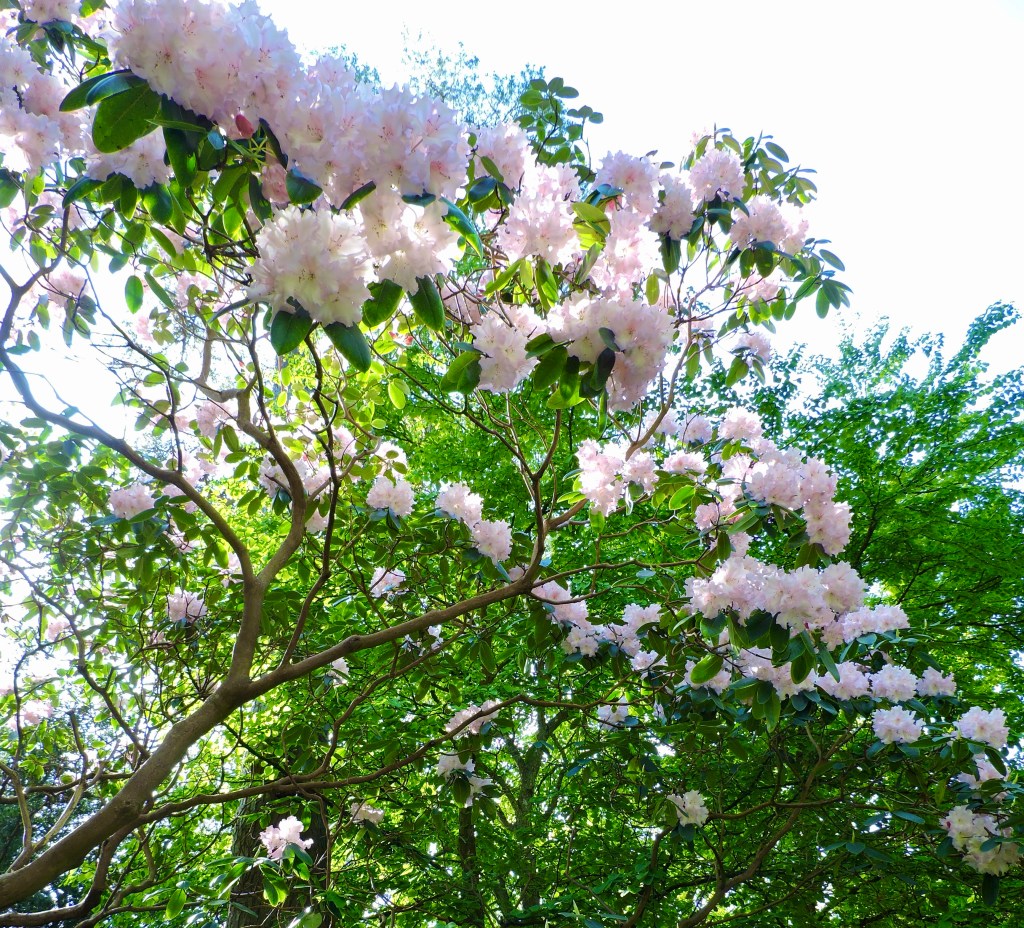
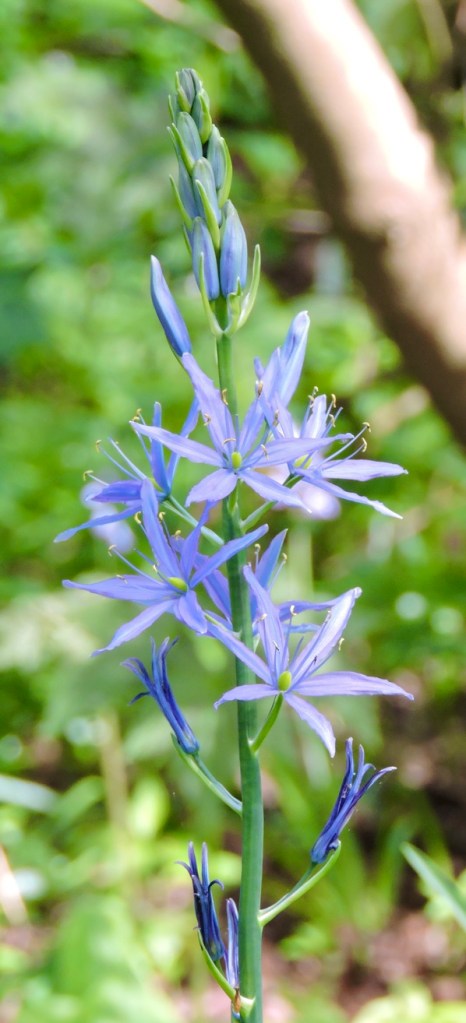
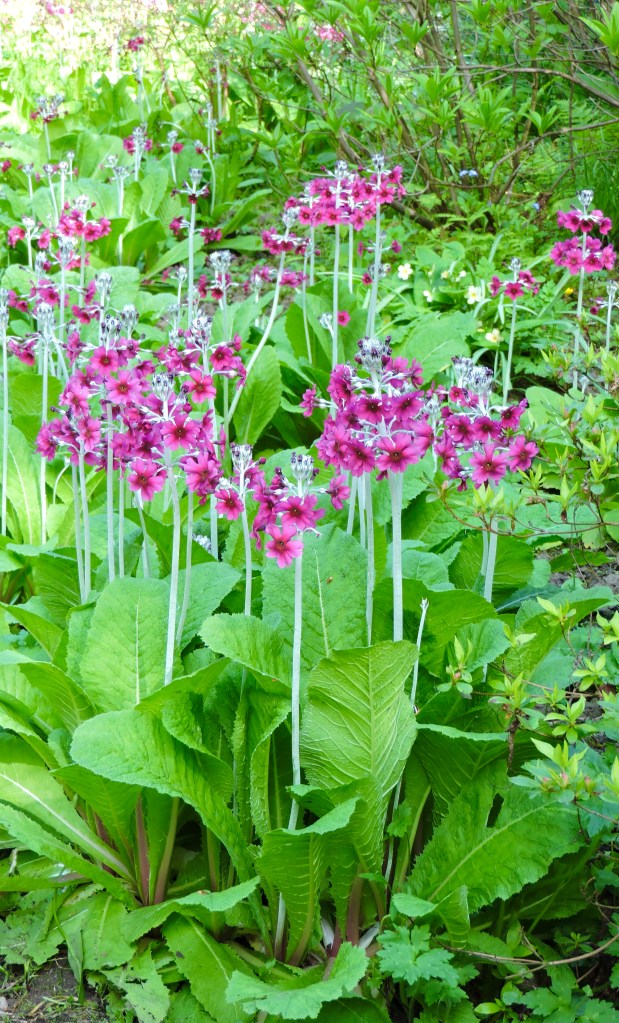
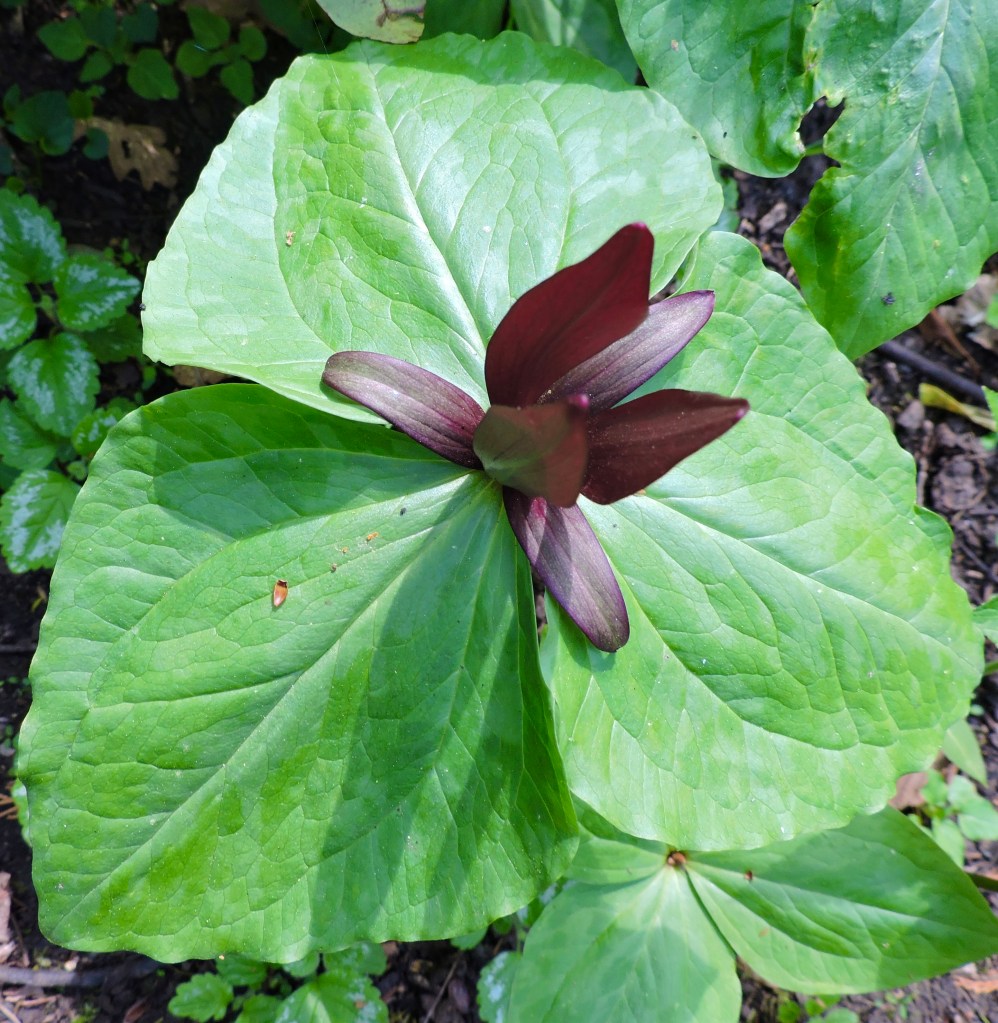
RhododendronTrilliumCammassiaCandelabra PrimroseTrillium – close up!
We ambled around the woodland gardens before heading for the church which sits within the grounds. The Church of St Micheal and All Angels is an early Victorian building which apparently used to have a Gothic marble canopy – which is like a stone carved decoration usually over the altar – but the 5th Earl disliked it so much that personally took a hammer and chisel to it!
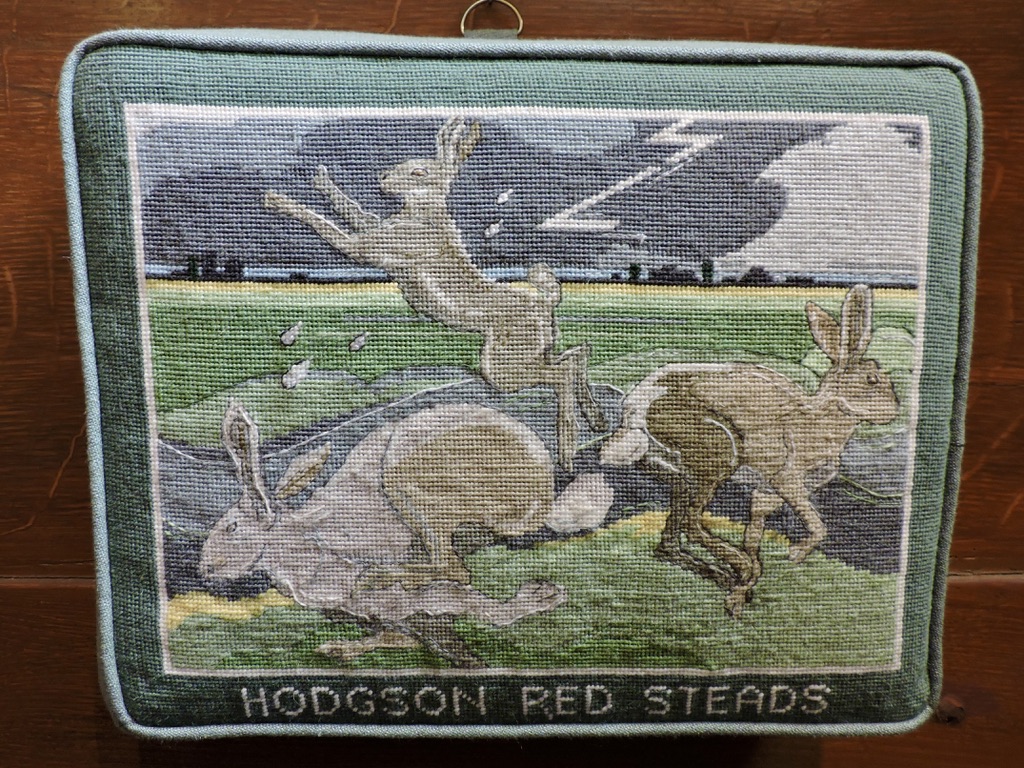
The most interesting part of the church as far as I’m concerned are the Howick Kneelers. A display of nearly 90 hand-stitched kneelers, all designed and produced by local people as part of a community project. Made in 2018-19 the kneelers depict local history, architecture, nature and landscapes and 150 local people were involved in this project. Impressive! Here are just two – they are all just as lovely.
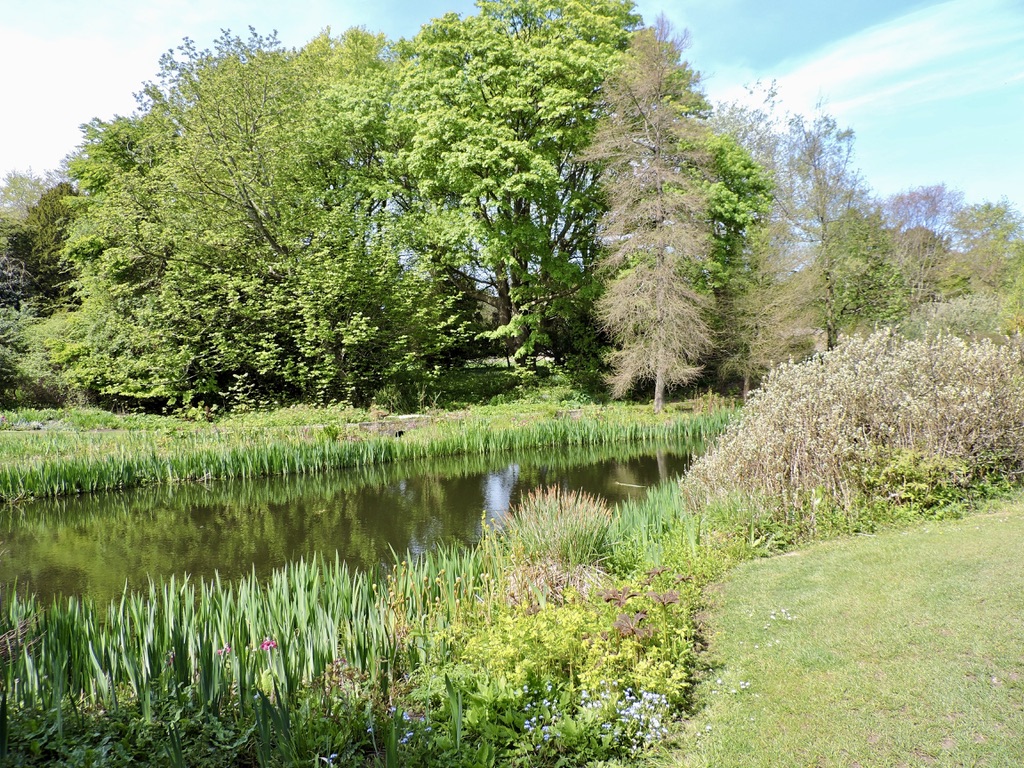
From the church we headed back towards the house for a cuppa and then on to the bog garden which will be at its best in a couple of weeks once the irises are in flower
A little further along is a beautiful, sensory garden designed for the National Autistic Society. It’s been developed for those with autism but anyone can go in – its worth a visit to feel how peaceful it is and marvel over how creatively its been designed.
After walking on through meadows and fields of daffodils we had a quick sit-down to admire the view before heading towards the ‘The Long Walk’.
“The Long Walk” is a one and a half mile path through woodland following the Howick Burn to the sea. It does feel like it’s never going to end. And be warned – once you go through the turnstile about three quarters of the way along there is no going back! To return to the gardens (and your car) you have to take the coast path and follow a farm track to the main road which is about a 2 mile walk. We’ve done it before so were prepared with a picnic to eat once we reached at the beach.
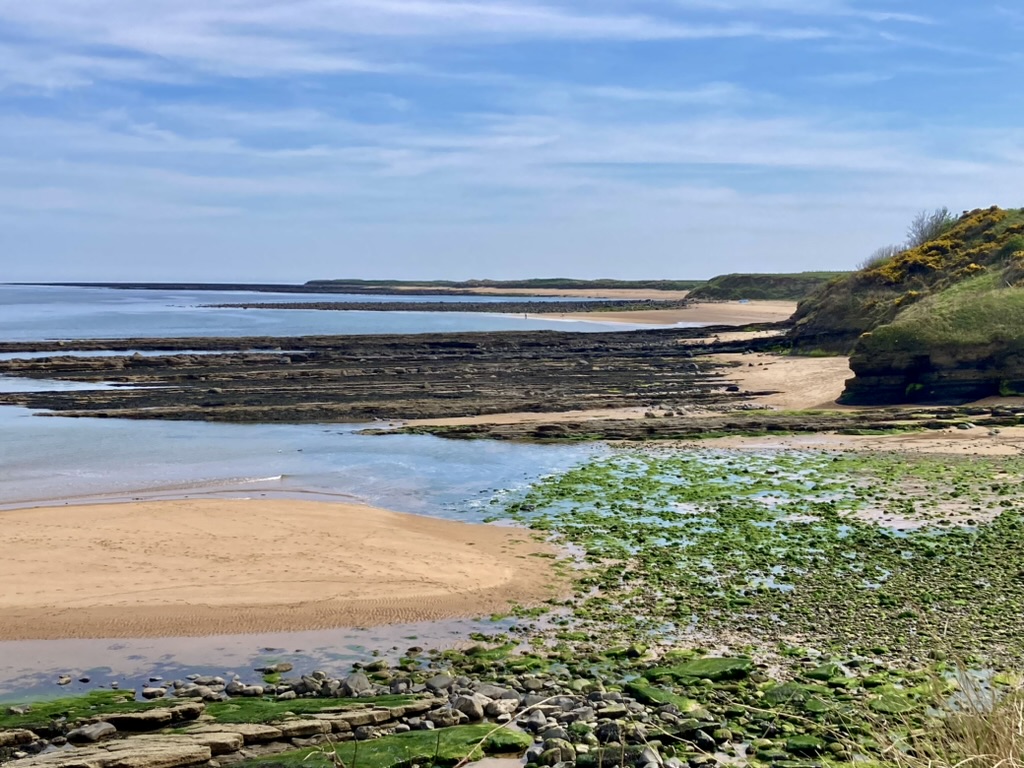
The tide is out!
We sit on the seawall and eat lunch watching some diving birds – maybe Tern – plunging face first into the water for their lunch. The coast path is lined with gorse with glimpses of a calm sea where we can see Eider Ducks floating.
It’s great to be back by the sea so we take our time along the coast path before turning inland for the long road walk back to the gardens where we treat ourselves to ice-cream!
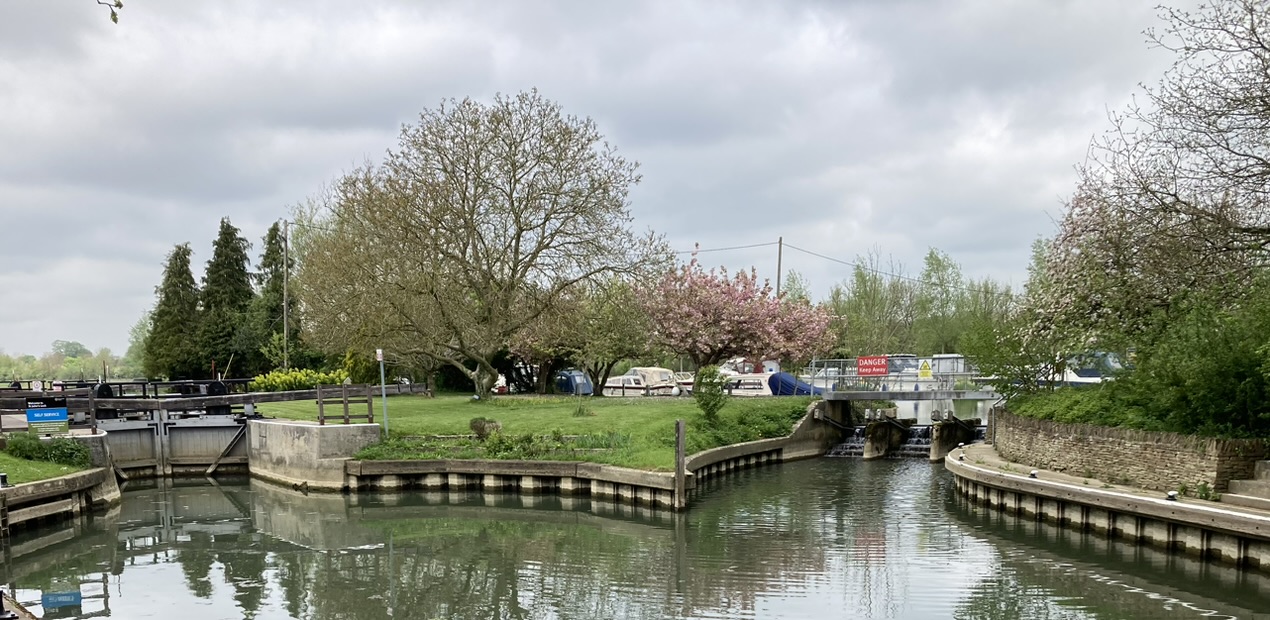
A recent visit to The Cotswold with Ms B, staying in the lovely little village of Langford gave us a chance for a 4 mile circular tramp – a lovely, flat walk through the floodplains alongside the River Thames, starting in the small market town of Lechlade in The Cotswolds. After a stroll through the churchyard of St Lawrence’s Church we walked along a wooded path, across a very busy road bridge and down steps to St John’s Lock – the furthest upstream lock on the River Thames.
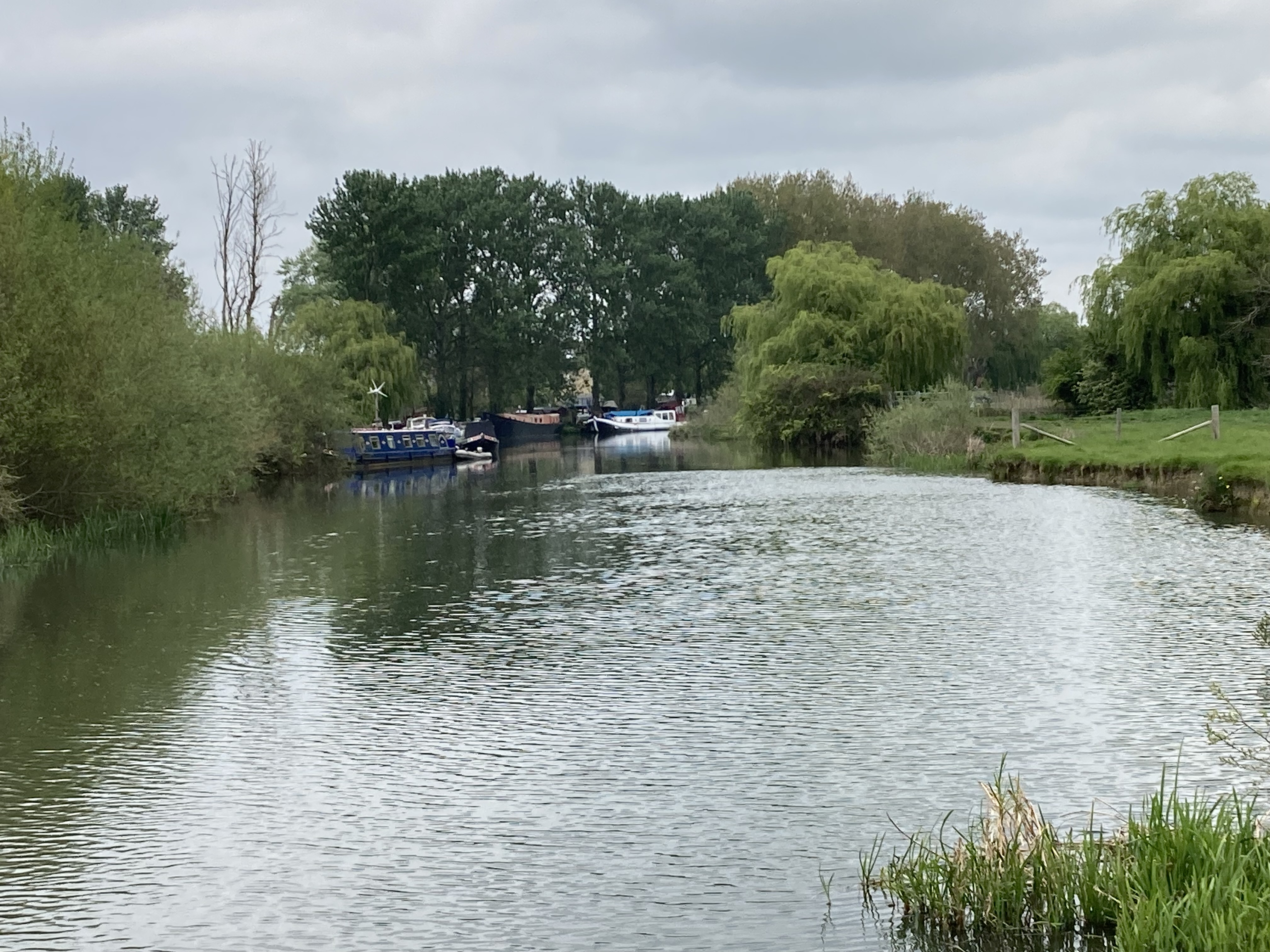
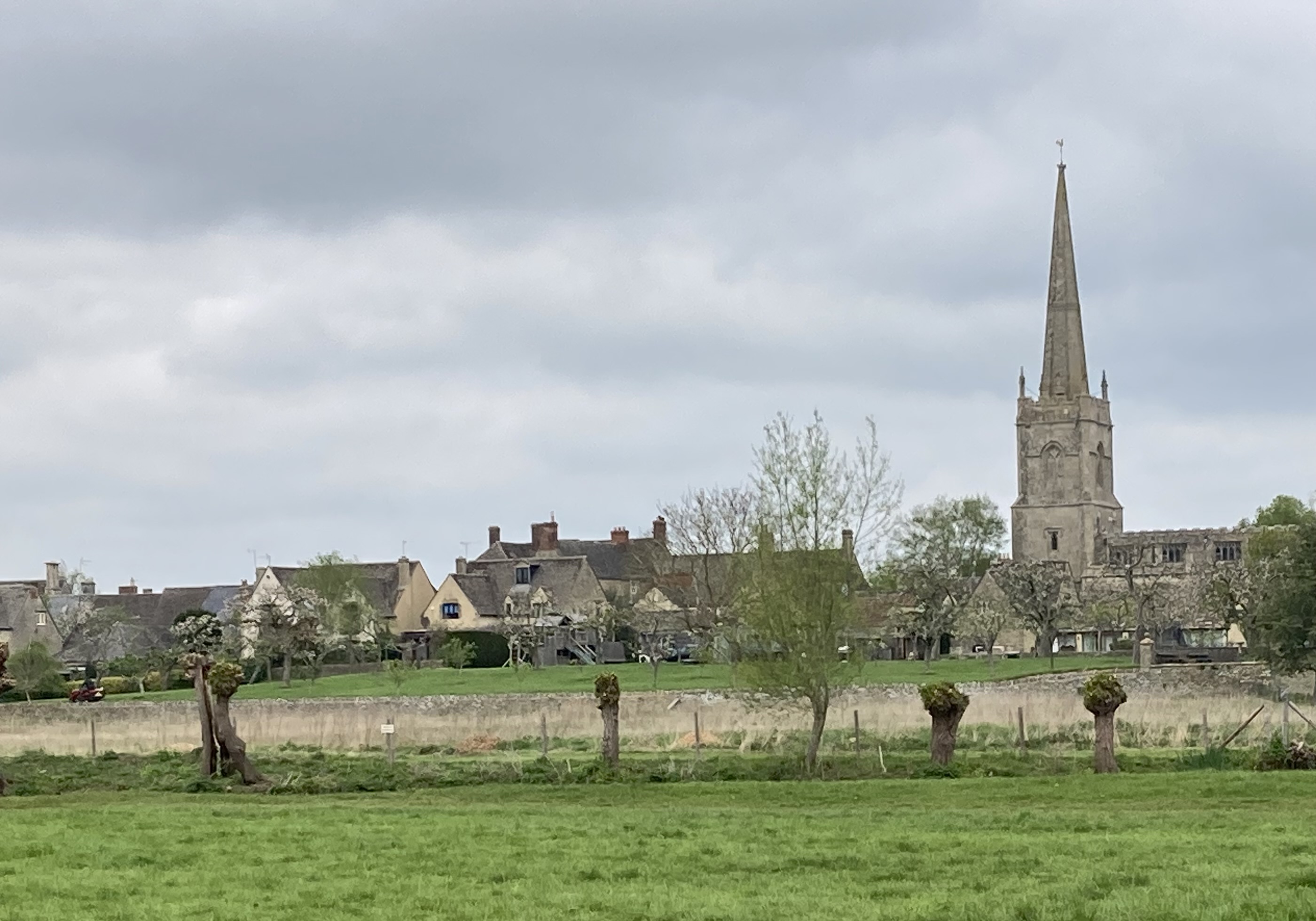
Glad to be away from the road we followed the river through fields and meadows, keeping the church in Lechlade nearly always in view.
An information board early on tells us that if we kept walking we could be in London in 10 days! Deciding not to bother with the trek on this occasion, we carried on following our planned walk under the stone Ha’penny Bridge and across a stream with the Inglesham roundhouse in the distance.
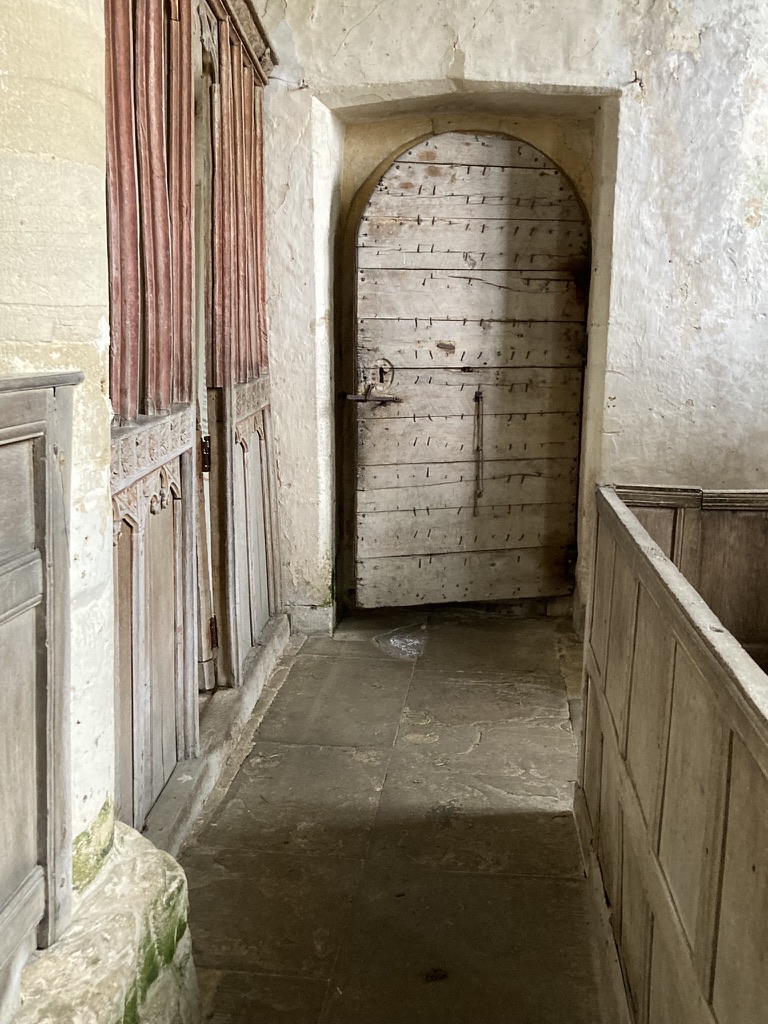
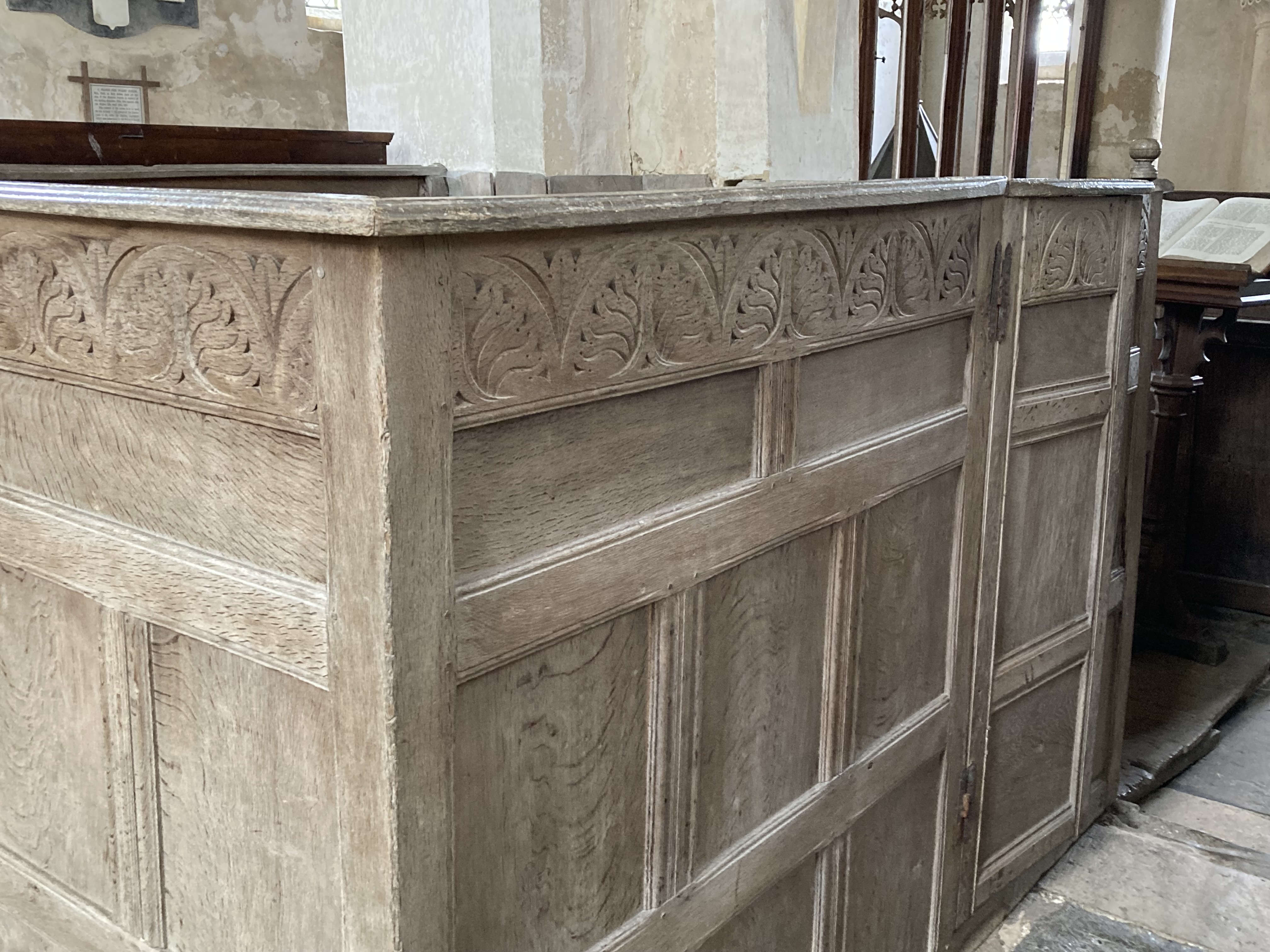
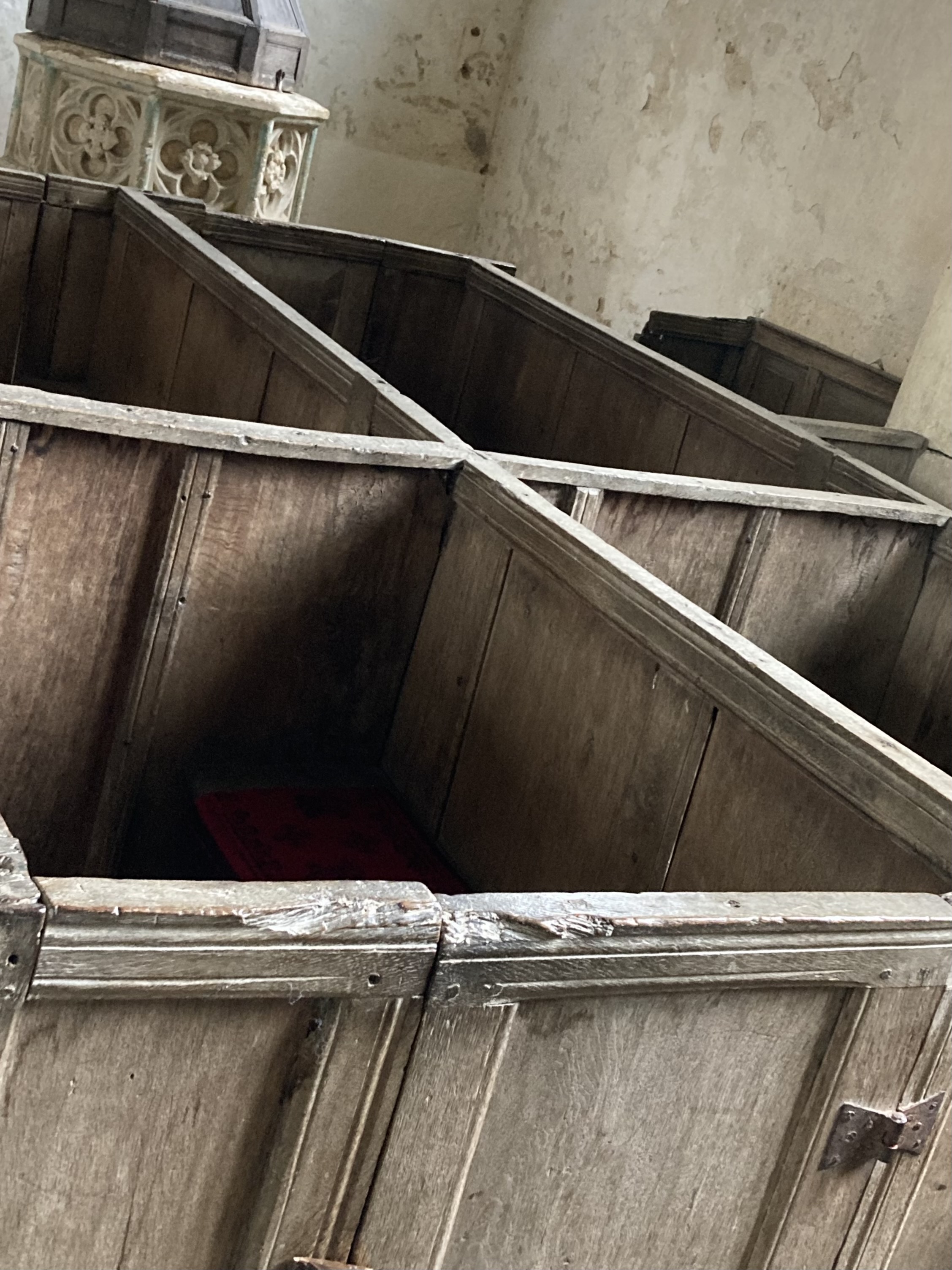
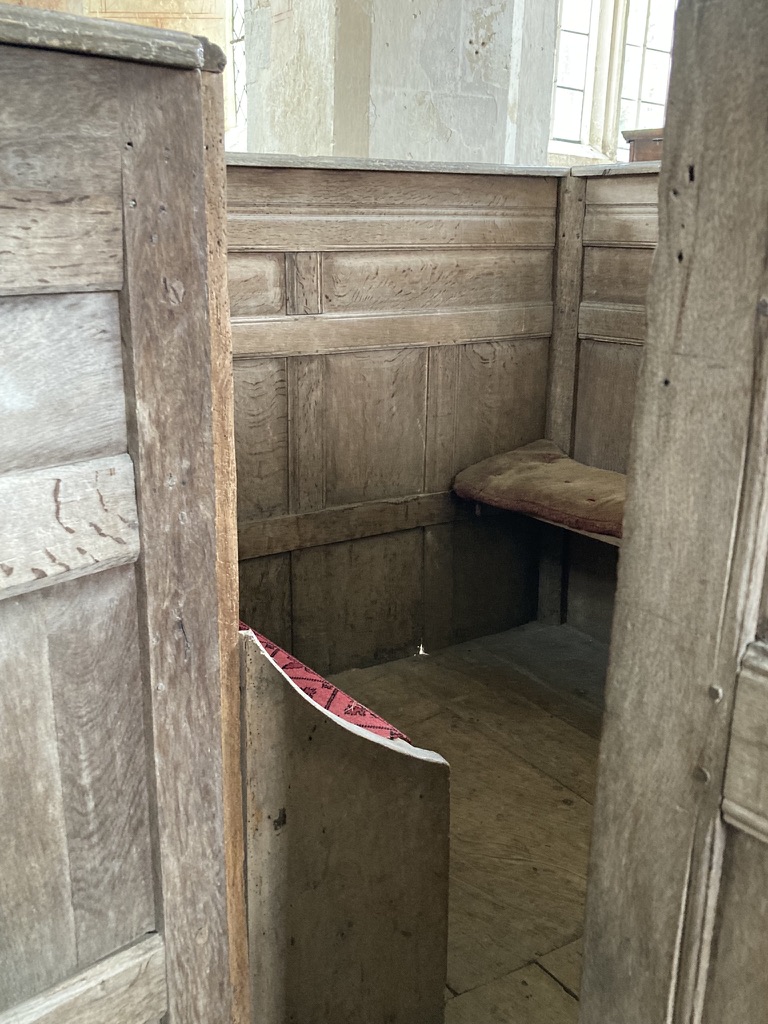
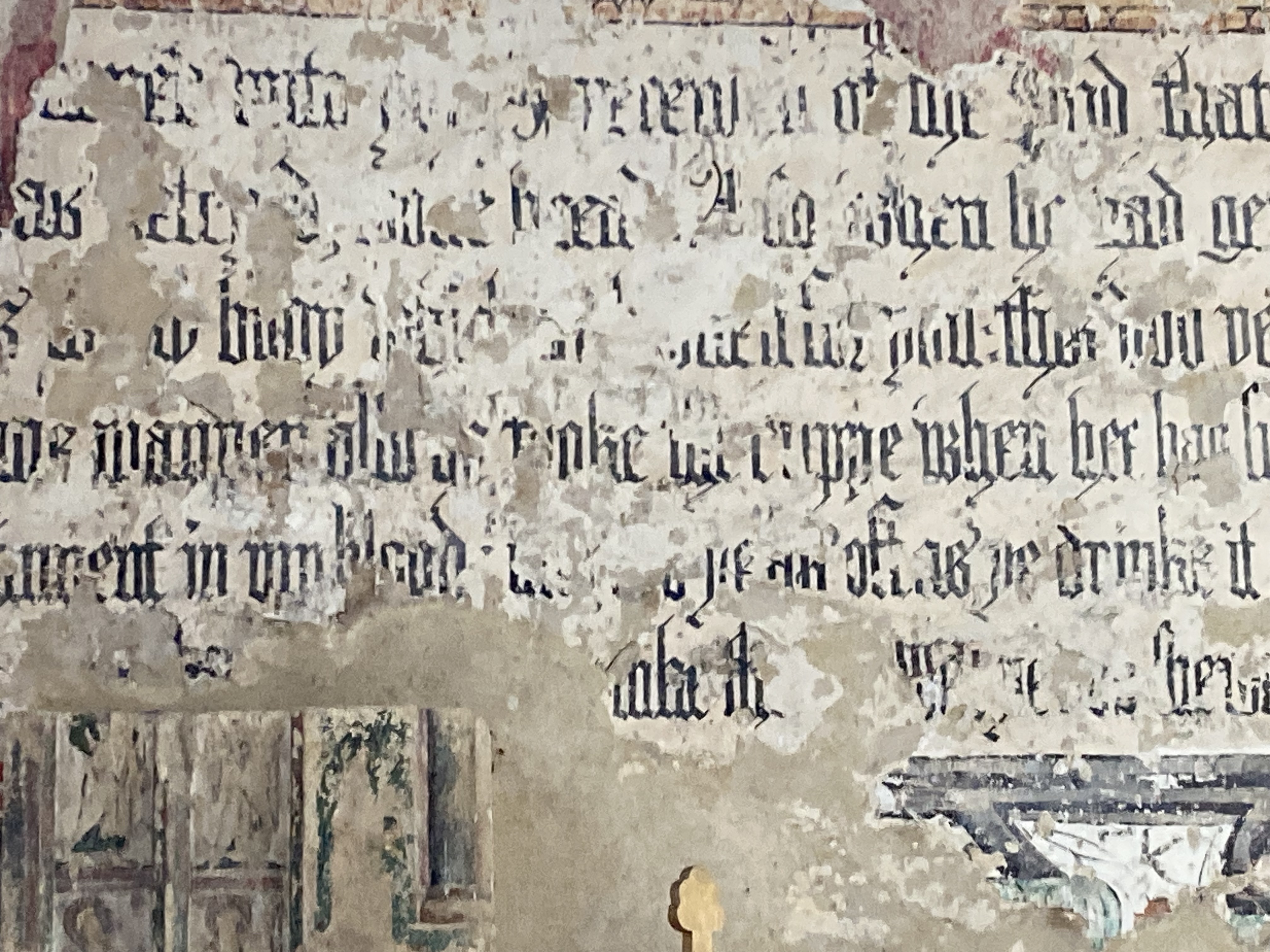
At the roundhouse we took a diversion away from the river to visit what turned out to be the highlight of the walk – the ‘ancient, painted wonder’ of the Church of St John the Baptist with its Saxon carving, 13-19th century painted walls and 17-18th century box pews. This rare example of an unrestored church had us gasping in amazement as soon as we pushed through the ancient wooden door. I’ve never been inside a church that hasn’t been restored in some way before – and I don’t think I’ve ever seen box pews and wall paintings like these.
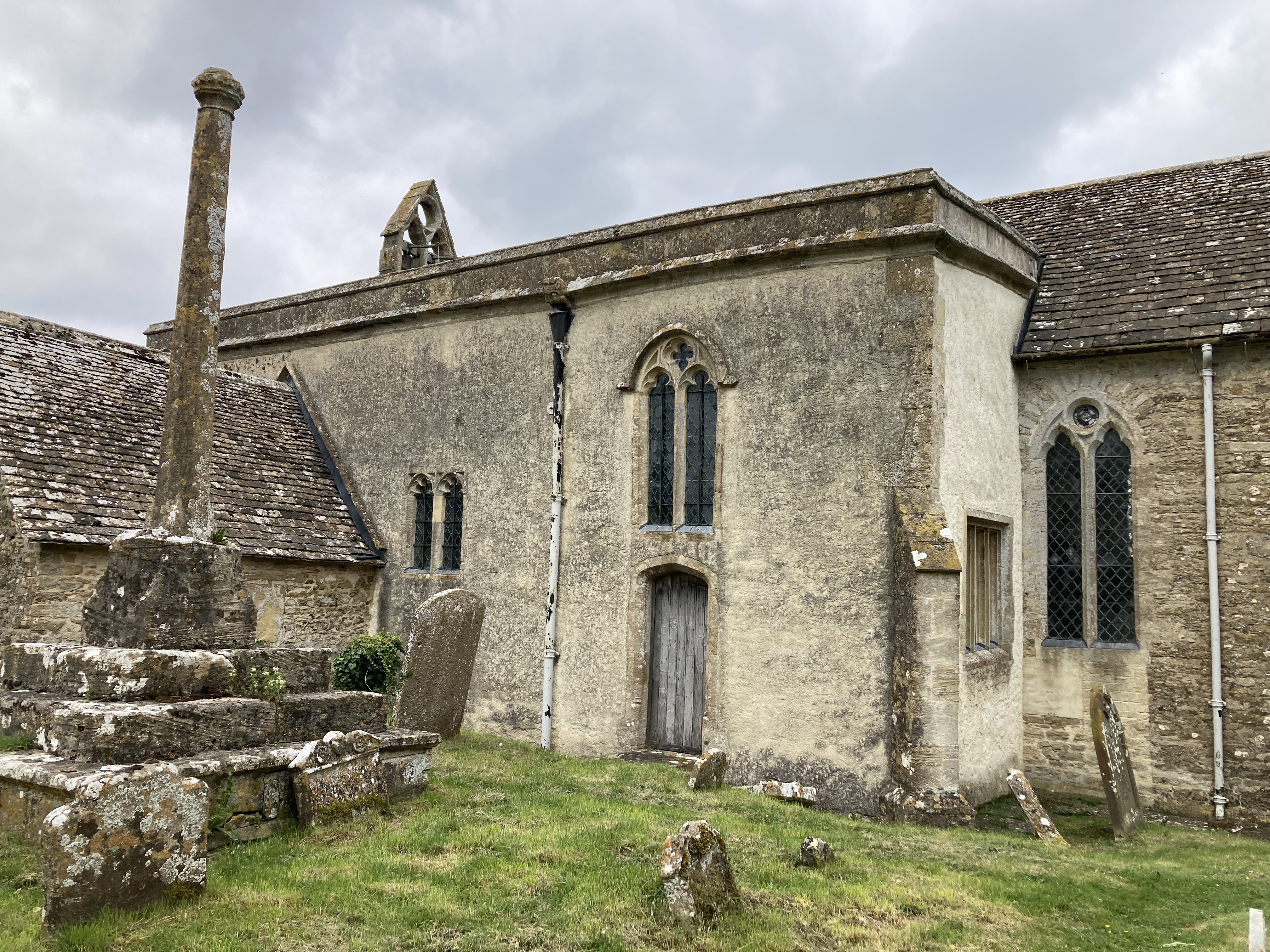
The North Door dates from the 14th century
Before the 13th or 14th centuries seating wasn’t usually provided in churches but as sermons became longer so the need for seating became urgent, not surprisingly! The box pews here seem a bit higgledy- piggledy, in some churches they are in orderly rows. The surrounds are shoulder high and the seating narrow. They can’t have been very comfortable but in some places they even contained a fireplace as churches were very cold places. Many pews were owned by farming families and occupied by them for services.
The walls are covered in paintings, many dating from the 14th century and are seven layers deep in places.
A huge stone with an indentation of an unknown knight set into the uneven floor
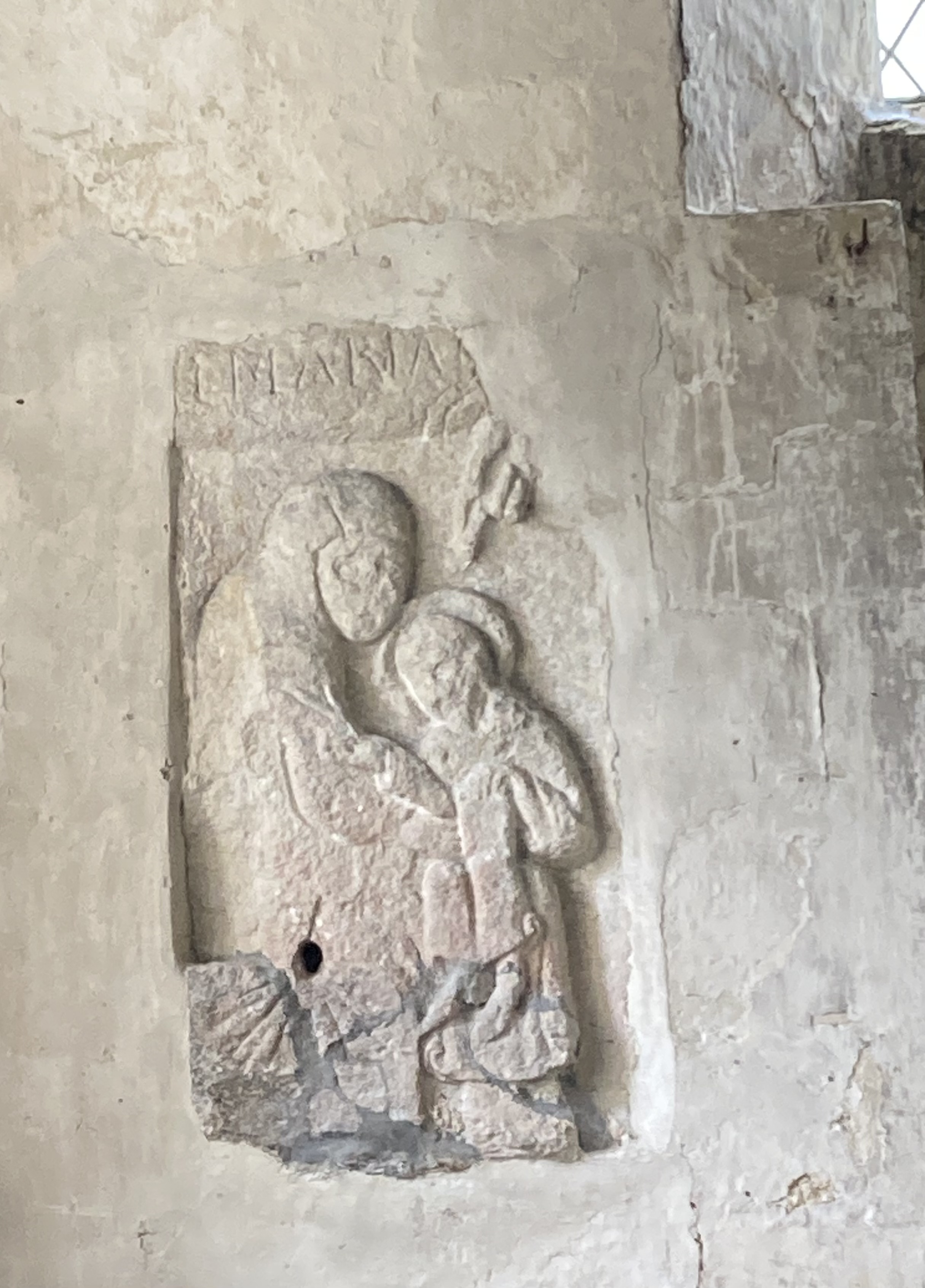
A Saxon carving of the Mother and Child blessed by the hand of God
William Morris – textile designer and conservationist recognised the importance of this church and in 1887 raised a funds for essential work to prevent the building falling into ruin. Now the church is under the care of The Churches Conservation Trust [ https://www.visitchurches.org.uk/ ] and conservation of the wall paintings has been ongoing for 23 years. There is recent damage from water ingress after the lead flashings were stolen from the roof so lots of work – and money – is still needed to protect this ancient monument.
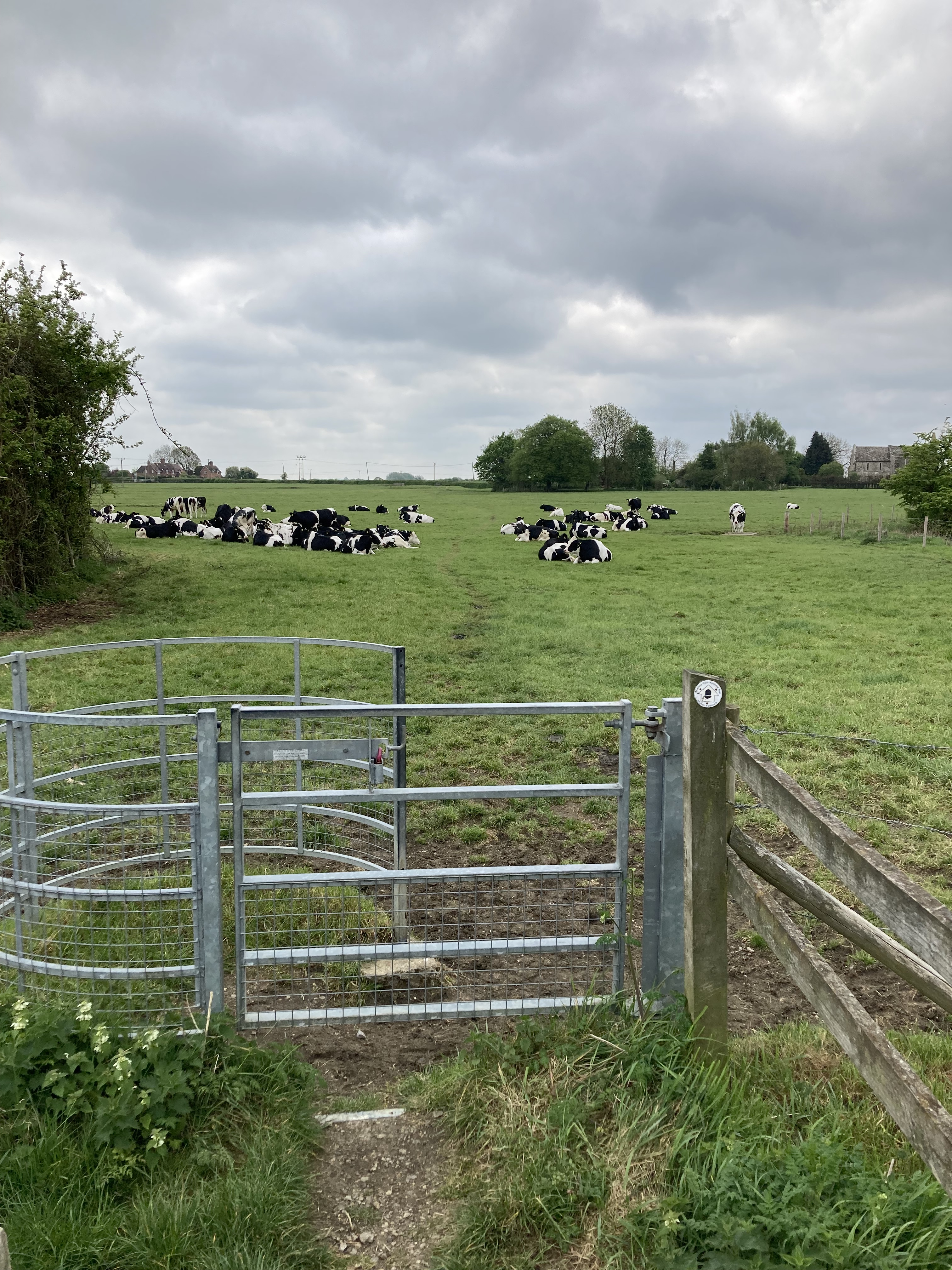
When we took the diversion away from the Thames Path, we had to walk through a field of cows. I am a cow coward! Ms B. had to talk me through them whilst I held on to her coat sleeve and sweated my way across with my eyes closed! On the way back to the river we had found our common sense and walked all the way around the edge of the field to the wooden bridge over the river. It has to be said that the cows seemed completely unconcerned about us whichever way we were walking!
The final mile or so of our walk took us through meadows on the other side of the river and back into Lechlade.
We used directions from Walk 04 in the April 2025 edition of Country Walking magazine. We stayed at Garden Cottage in Langford – perfect cottage, perfect location (airbnb). We ate at The Bell Inn, Langford ( https://www.thebelllangford.com/ ) delicious food, friendly pub and at The Five Alls, Filkins, just 2 minutes up the road https://www.thefiveallsfilkins.co.uk/ again, delicious food!
I’ve just read Night Swimmers by Roisin Maguire – set on the coast of Northern Ireland during lockdown – such a lovely book!
Next time – Howick Hall and Gardens in Northumberland and a walk along the coast.
I’m back. It’s been a long time, lots has happened while I’ve been away – but here I am, maybe just for one or two posts….who knows! Depends on loads of stuff, especially whether I feel like writing/rambling/taking pictures. Anyway here I am for now – send me some inspirational words if you have time.
Last November my lovely friend, Ms B, and I took a short break in London. She lives in Cornwall, I live in Scotland….so we don’t see each other often except on What’s App, but we’ve managed to keep in touch since I left Cornwall nearly 10 years ago and I love spending time with her when we can get together. We used to go out walking in Cornwall back in the good old days, and we were chatting over a glass or two of wine one evening about how much we miss those walks – and I found myself agreeing to a challenge in 2025…..its that 1000 mile thing again, that thing that I’ve always said I’ll do and have never quite achieved! I’m almost afraid to post this ….1000 miles in 2025 – boots-on walking, meandering barefoot, ricketyrambling along the road – it all counts!
I started on 1st January and its been tough going so far – the weather was shockingly miserable to start with, it was a long, dark and cold winter, Storm Eowyn blew in causing havoc, and I sprained my ankle in week 1! I’m plodding on, not meeting my monthly target but hoping I can catch up now the weather is improving. So get your boots out and your sunhats on and join me – send me a message so I can spur you on – set your own goal and get walking!
You can sign up for the actual Walk 1000 Miles challenge with Country Walking Magazine and join all the Facebook groups and get badges and stickers and things if you are inclined. I’m just going it alone with Ms B cheering me on and joining in from Cornwall – or walking with me on those occasions that we can meet.
Here are some photos to get us going – I managed between 45 – 48 miles a month in the first 3 months and then last month nearly 70 miles! But really I need to be doing about 100 miles a month from now on…..eek!
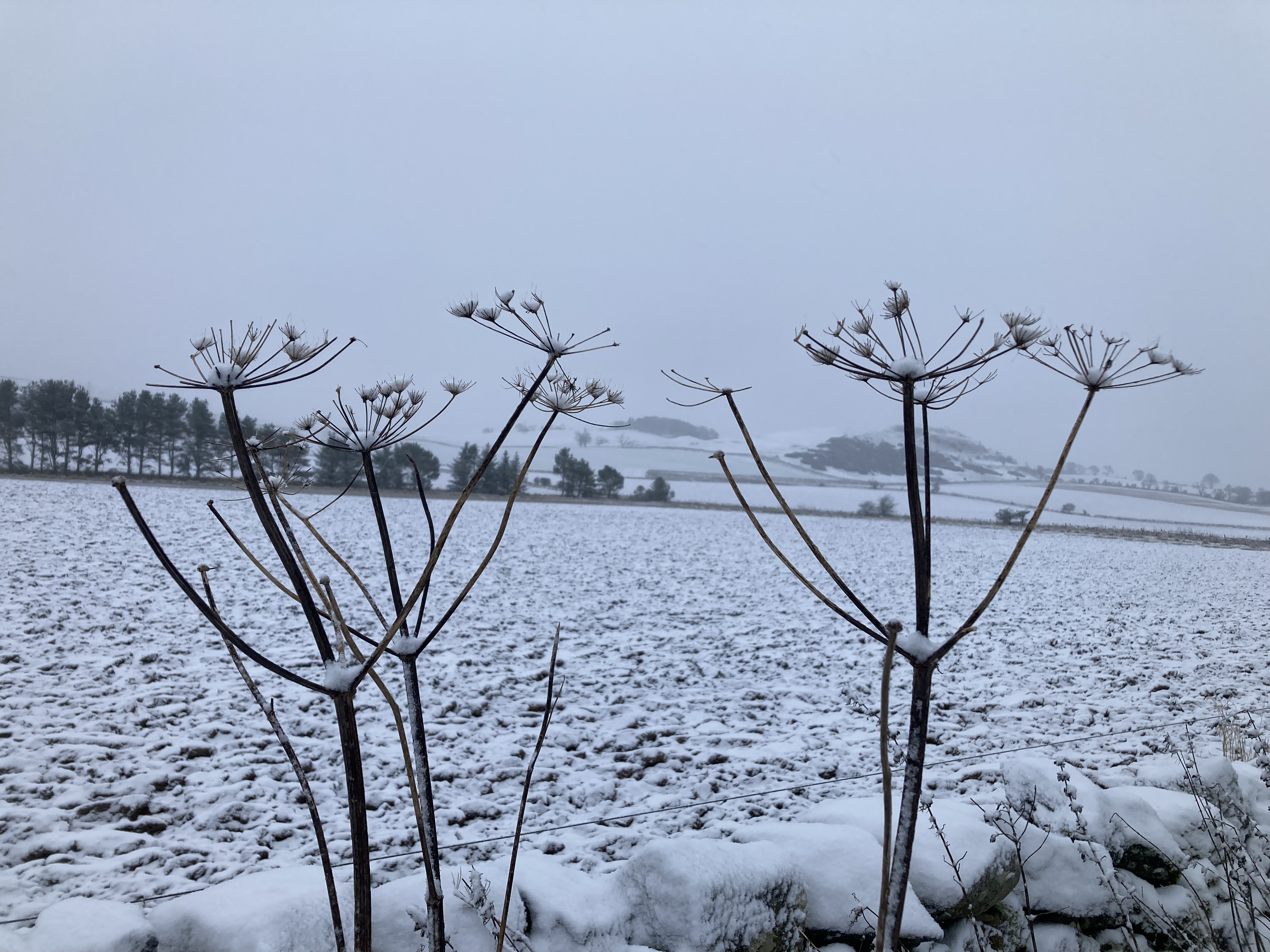
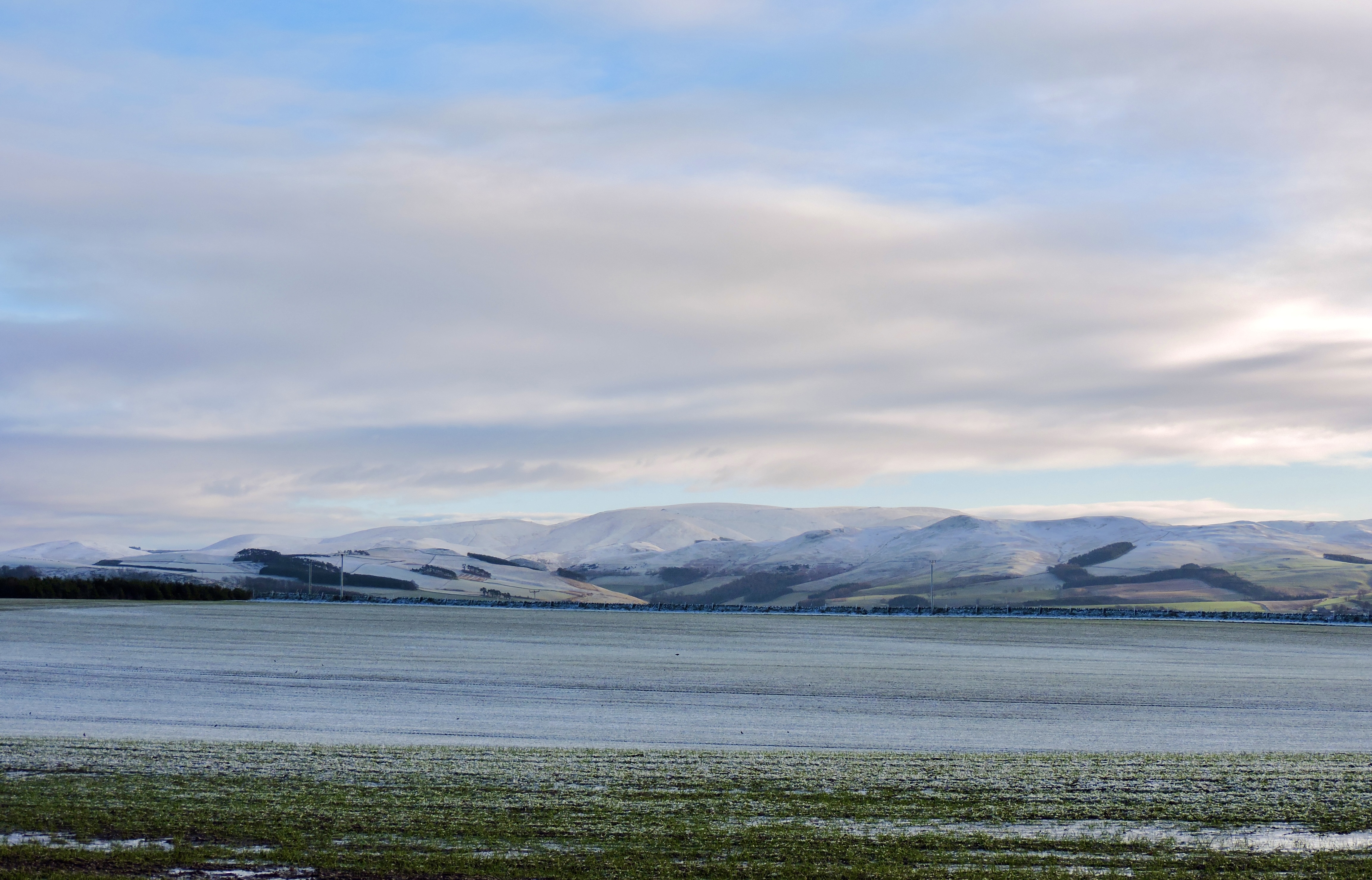
January – Snow on The Cheviots
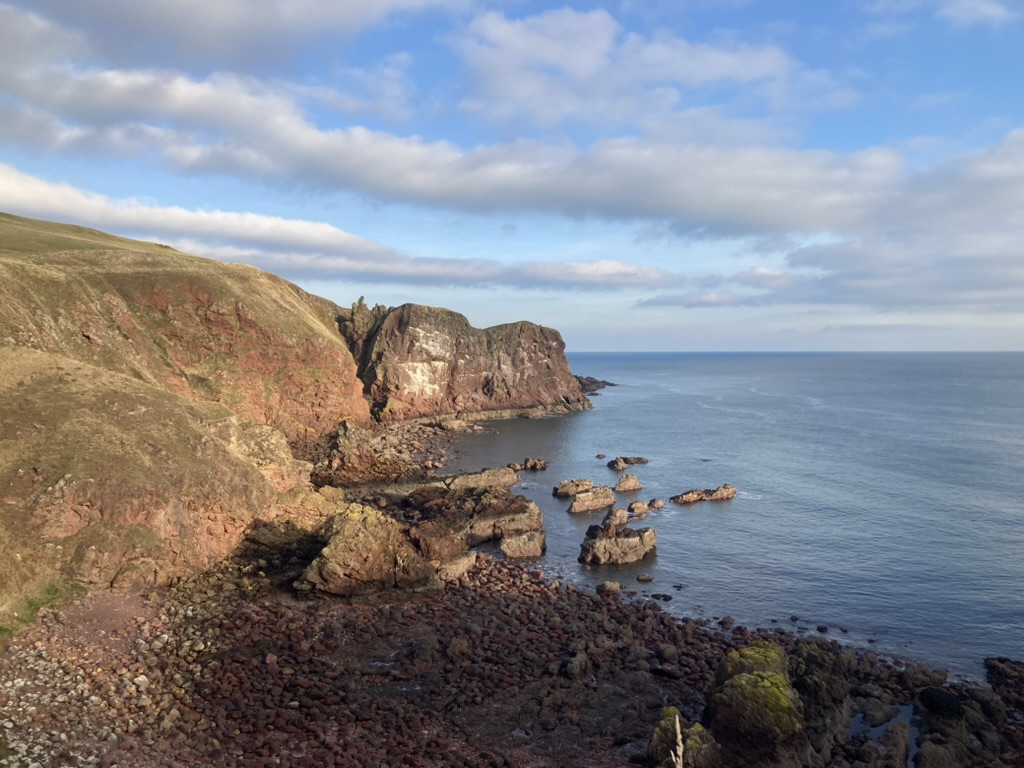
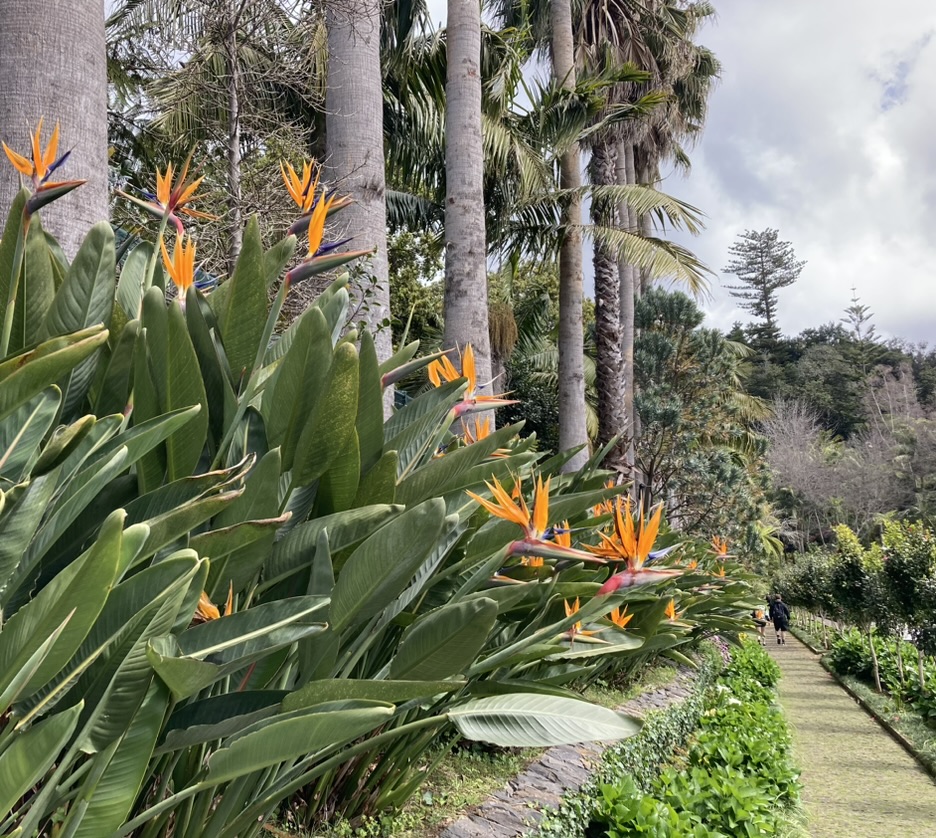
St Abbs in February – not so dark but pretty cold! March – Walking in Funchal!
So …… having said all that – Ms B and I have just had a lovely few days in The Cotswolds……and you’ll be hearing about that next.
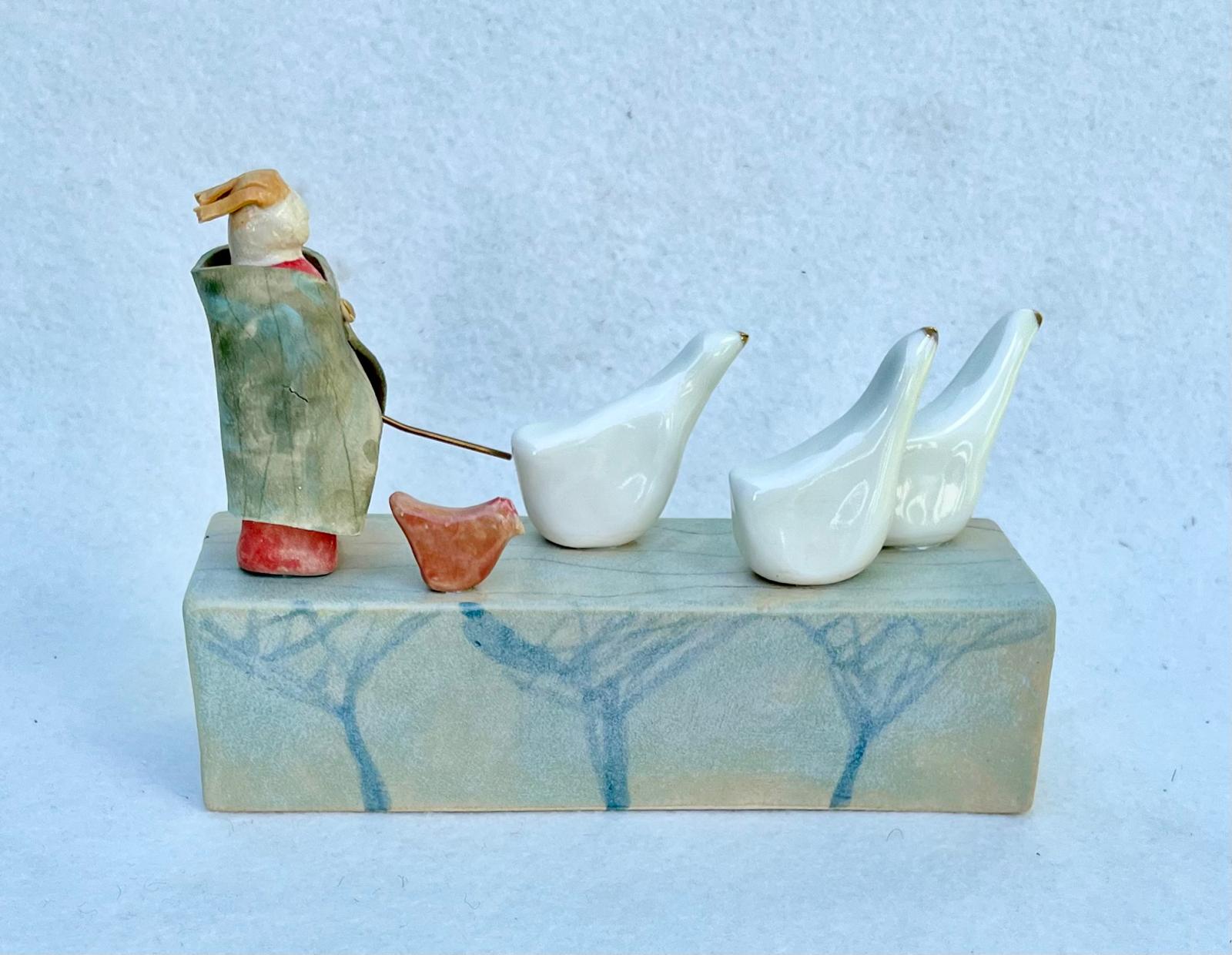
And next weekend Mr M will be at Art@Ancrum in the Scottish Borders – https://www.artatancrum.org.uk/ with his amazing quirky ceramics – so if you’re local or visiting – drop in and say hello!
“Even when the world around us is a dark place, the birds still sing, they still migrate – they’re just being there, being, in a way that perhaps we all aspire to be ourselves”
Bird Therapy by Joe Harkness
This week is a strange one. It’s annual leave for me, that means I get to take time off from my paid jobs – which I love – to stay home and do my unpaid ones – about which I’m slightly on the negative side of ambivalent. Luckily, the young Ms RR remains in residence and came up with the idea that I should go out! Another strange thing – going out….. We are of course, in Scotland, in Phase 1 of ‘returning to normal’ which means that unless you’re shielding, you can go out within about 5 miles (or not so far that you need to use a toilet in another persons house). Of course going out, when you’re a carer usually involves a lot more than just…..well, going. However, I currently have live-in help in the form of Ms RR, so after considering all of the reasons why I shouldn’t go and failing to come up with a logical one, I went. Alone. On my own. Yet another strange thing.
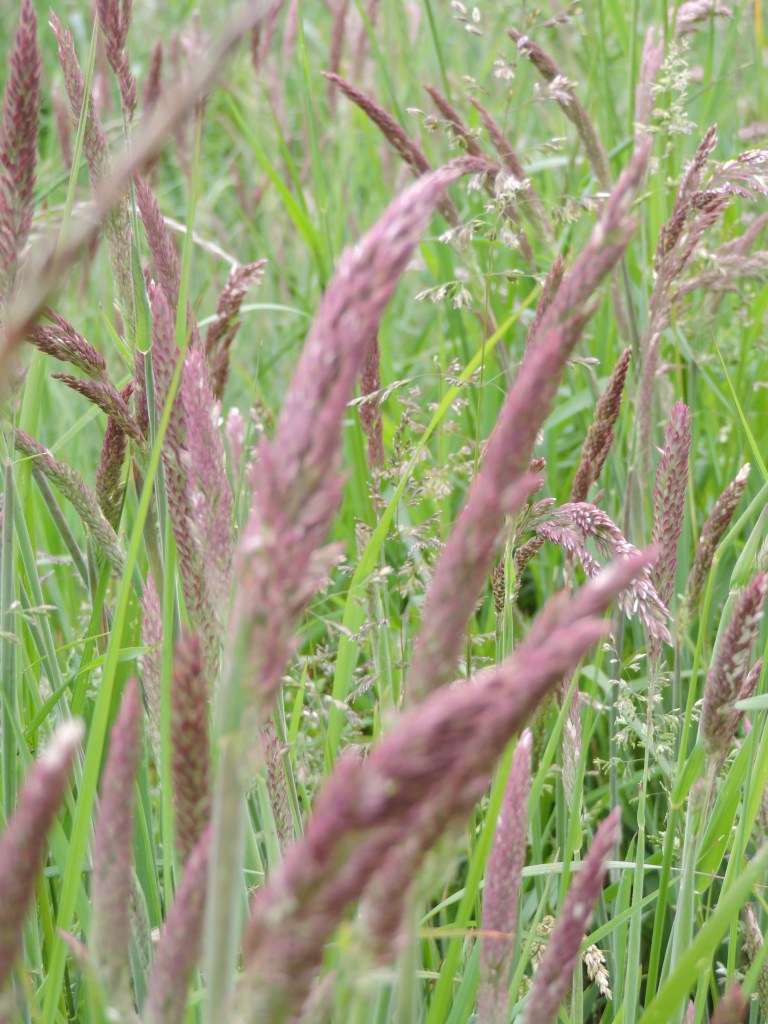
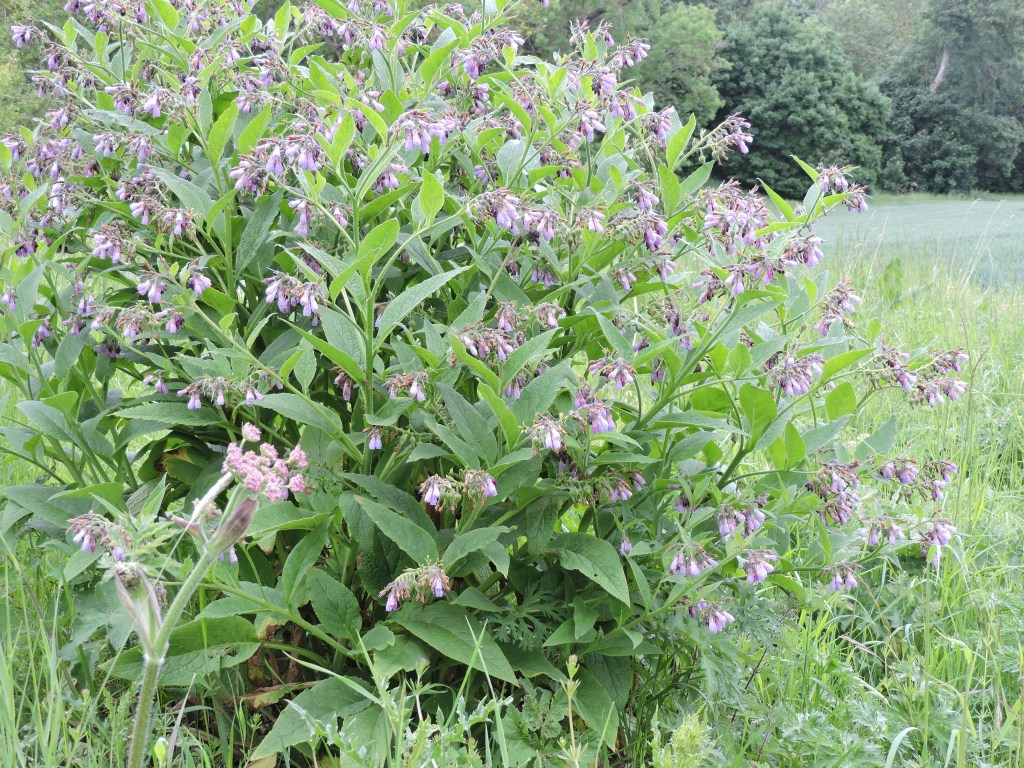
So, there I was, out, alone. With my walking boots, my book, a flask of tea, a chicken sandwich and a vague sort of plan to walk along the River Tweed from Dryburgh. At the weekend we had a picnic lunch on the banks of the Tweed and then walked a little way along through the meadow grasses – they were stunning, those pink tinted grasses interspersed with white umbellifers and surrounded by beautiful clumps of Russian Comfrey. I decided then that I wanted to come back and here was the perfect opportunity.
Russian Comfrey
I stopped on the way at Scott’s View, just because it is such an amazing view.
The view from Scott’s View
And that’s when it happened! The first thought – that this was silly, that this was a bad idea, that I couldn’t walk along the river bank alone, sit and have lunch alone. Now, for those that know me, this isn’t such a surprising thing – there are lots of reasons why I shouldn’t do this thing on my own, not least of which is that I have a well known propensity for falling down! I’m always falling over, I’ve lost count of the times I’ve arrived home bruised and scratched from taking a tumble into thorny bushes, or down a flight of muddy steps. What if I fell into the river! Or, heavens above landed in a bush and couldn’t get up! Even worse – what if someone saw me!! As well as this possible calamity, there was the ongoing problem of the foot pain, some days a mile is all I can manage without the burning incapacitation of pain in my feet. What if I got to the river and then couldn’t walk back! Also, though I used to walk a lot on my own, when we lived in Cornwall…..things have changed since we moved North and I seem to have had my ability to venture out on foot alone eroded. All this thinking flew through my brain in nanoseconds as I contemplated the view and listened to Alexander Armstrong on Classic FM. What could I do?
In the end, what I did was, start the engine and drive a little further on. I thought that if I got to Dryburgh and strolled just a few yards to the river, that would be enough. I could eat lunch in the company of the ducks and then stroll back again. So it was with some surprise that I found myself pulling into the car park for the viewpoint from the Wallace Statue – a fair walk from Dryburgh – and steeply downhill at that. But here I was. No-one else in the car park, so safe to leave unnoticed, if I changed my mind.
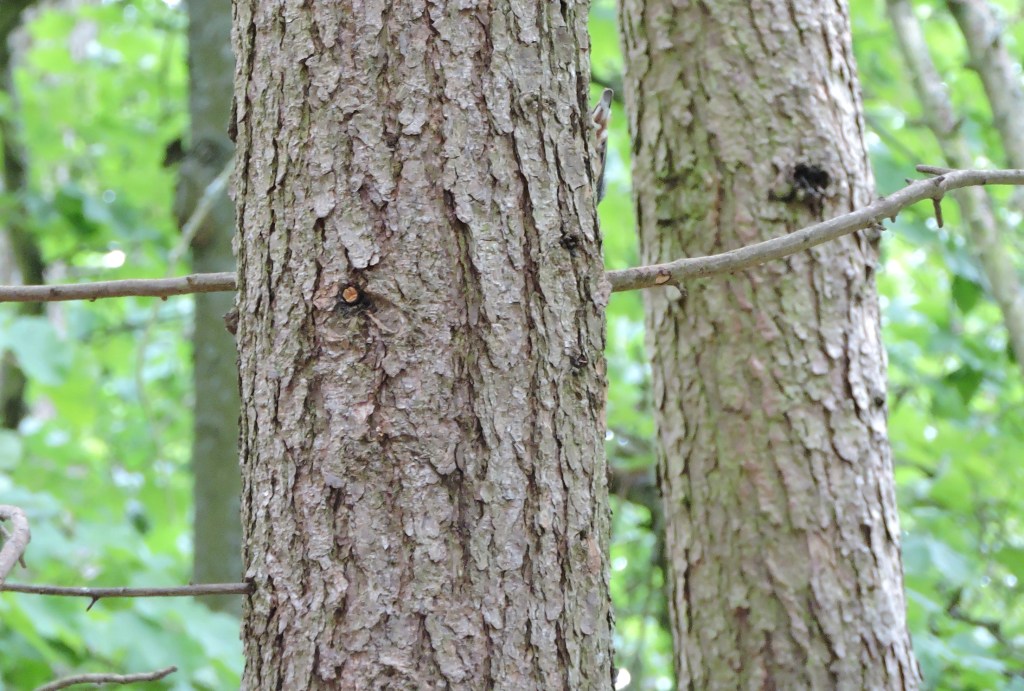
And so it was with some trepidation and a few palpitations that I stepped out of the car, changed into my walking boots and hoisted my backpack onto my shoulders – you’re not a real walker unless you’re carrying a backpack! Off I set, into the woods…..all the while I was telling myself that I only needed to get to the first bench, sit with my cup of tea and then drive on to the next viewpoint. And then…..not 100 steps into the wood, I spied a bird with a long pointed bill working its way in a hopping action up and down a tree trunk! I stood and watched, and I saw another….Tree creepers I thought. Oh how jealous Mr RR was going to be!! I watched them flitting about, every now and then flying off to a further tree and then back again. It occurred to me that they were feeding young, although I could see no nest in the further tree. I stood and watched and tried to catch a photo for many minutes until a sound somewhere nearby sent them skitting away.
Spot the bird!
It wasn’t until today, that I checked the little bit of bird that I’d managed to capture on camera that I realised – not tree creepers at all, the tail is all wrong and these birds were going up and down the tree – tree creepers only go up! The only British birds that go down the tree headfirst are Nuthatches – elusive, and according to the RSPB website, only rarely seen in southern Scotland, they are found in deciduous woodland and nest in natural holes in trees.
Whatever they were, the standing and the watching and the silence had calmed me and I set off determinedly for the river.
“Jon Kabat-Zinn, whose work most modern, mindful stress-reduction therapies are based around, defines mindfulness as ‘paying attention, on purpose, in the present moment, and non-judgementally’. When applied to birdwatching practice there are evident correlations. You pay attention in a particular and focused manner, not just on birds, but also on the wider environment. It’s very much a purposeful pastime, as it can be accessed almost everywhere. It grounds us in the present moment – here and now……”
Bird Therapy by Joe Harkness
The path from here down to the pretty village of Dryburgh used to be bordered with dense woodland, but much of this has been thinned now letting in light and air.
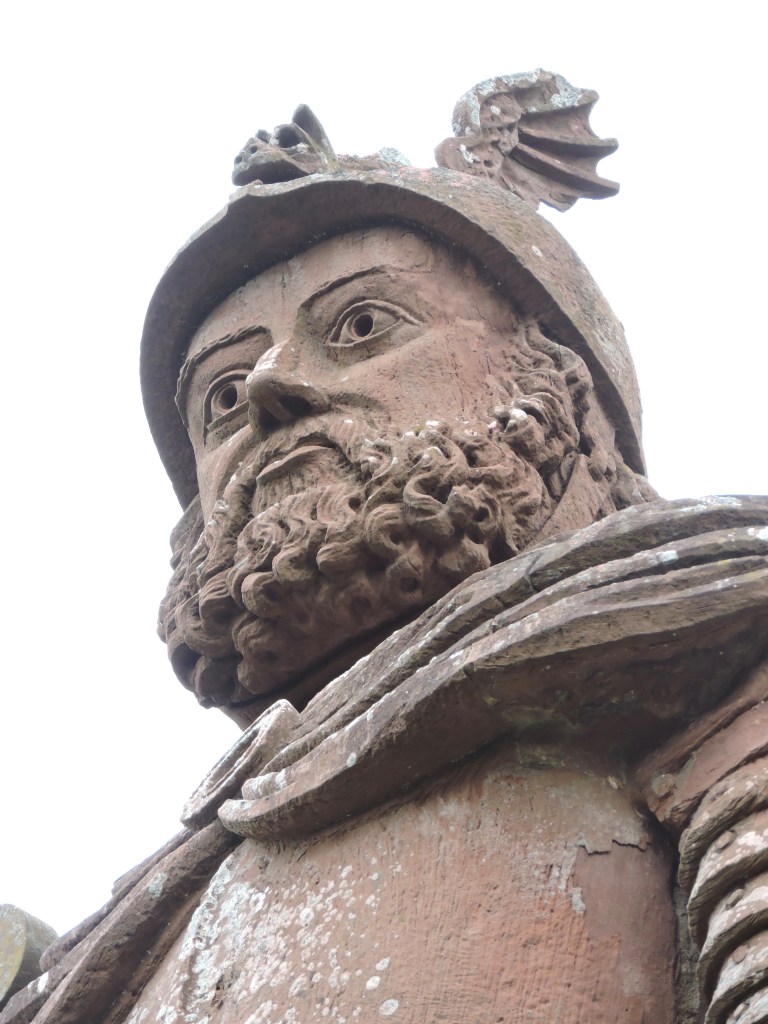
Much of the woodland used to screen the William Wallace statue from view before you actually came upon him, but now I can see this massive memorial ahead staring out over the valley towards the Eildon Hills.
Sadly for him, his huge eyes are empty and he stares unseeing at the countryside laid out before him….
From here its downhill along a steep path softly carpeted with beech nut shells, more wood clearing has gone on and the sun is shining through the remaining branches. Through the village and past the currently closed Abbey, and then along the path towards the river. It’s going well!
There’s ploughing just started in a nearby field and in the air, the smell of the newly furrowed earth. As I pass this field, ahead of me I spot a deer, just its head visible above the crops, I stand and watch as it saunters towards a line of trees.
And then I’m on that path alongside the river, walking between the wild flowers and grasses.
I decide that I’m going along as far as the Mertoun Bridge which is about a mile or so and then, if I feel like it, I’ll cross over the bridge and continue to walk along in the same direction looking for somewhere to stop for lunch.
After the meadow, there is a hill up through more woods and then I’m high above the river looking down through the trees on the sand martins and oyster catchers far below. In the field, right next to me as I stand and stare, a dunnock is having a bath in an old water-filled trough. I stay still until he’s finished but then he hops onto a nearby rock and starts drying and preening himself. Joe Harkness talks about dunnocks in his book, he says they are:
“the archetypal ‘little brown job’ which is a term that birdwatchers tend to assign to any small, nondescript and (obviously) brown bird. If you take your time and study one properly, you’ll actually see a deep palette of colours and markings taking shape. Delve further into their detail and you’ll begin to realise just how intricately marked they are.”
Personally, I feel I’ve noticed enough details for now, I’m getting hungry, so selfishly, before he’s halfway dry I decide to move on, finally startling him out of his own meditation and sending him fluttering to the nearest tree.
To get to the Mertoun Bridge I need to descend some roughly cut steep steps and as I approach them I know instinctively that this is danger time! If I’m going to fall….it’s going to be here. The top two steps are completely worn away meaning there’s a huge crumbly leap down to the first safe-looking standing place. Here’s where I turn back…..except without even a hesitation I hang on to a wooden post and lunge down, inelegant but achieved! I manage to come to a stop on the third step with only grumbling knees to show. Ha! Today is not a falling day! Down I go, one slippy slidey step after another until I’m on the road, a big silly smile on my face. Luckily there’s no-one to see and no traffic to bother me as I walk on across the bridge to the footpath on the other side.
The view from Mertoun Bridge…I’m heading for the path in the right hand corner.
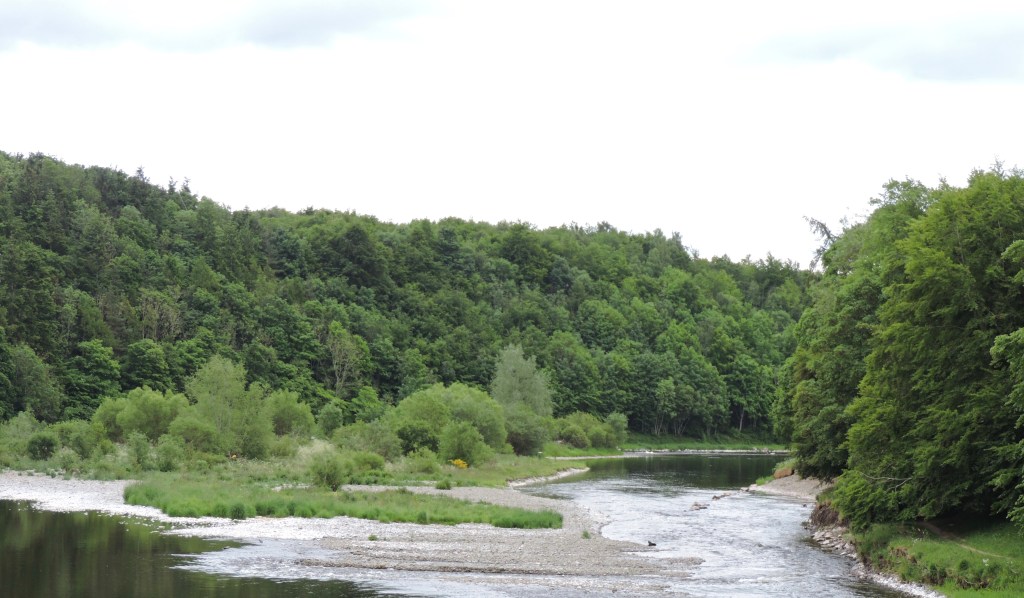
More steps down on this side, but safer ones, built out of wood. And then I’m in the woods again walking along beside the river keeping an eye open for a good lunch spot. The path diverts away from the water for a while as the river bank is eroding but its soon back alongside and in the distance I can see a pebbly shore just right for a sit down.
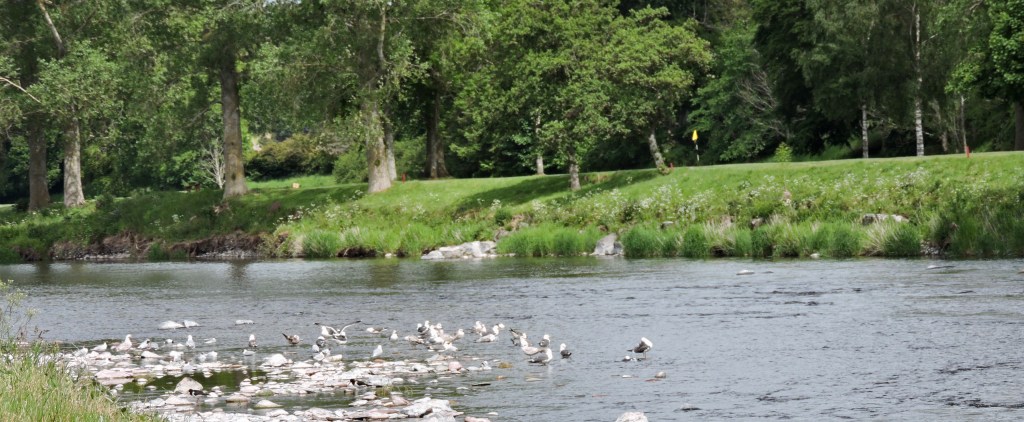
I stay and eat. Across the water a pair of swans and oyster catchers, mallards and gulls. And in the air hundreds and hundreds of sand martins in their continual insect catching flight. I stay for an hour or so just watching.
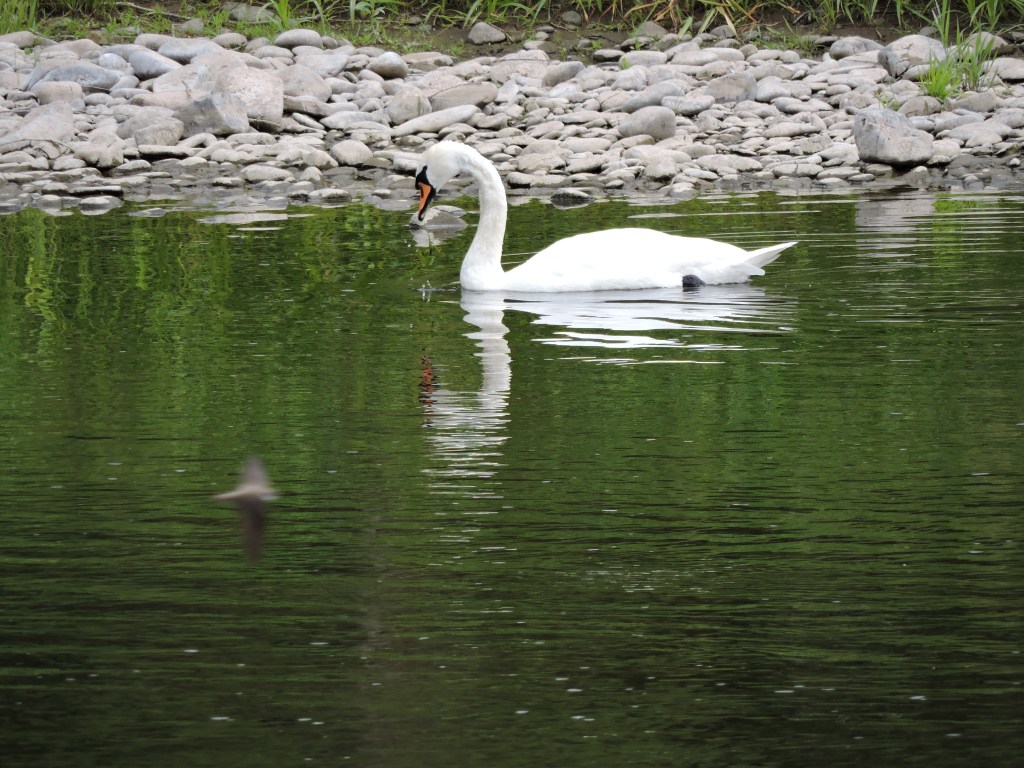
This swan floated along meditatively for the whole time I was there, oblivious to its surroundings, to the frantic flights of the sand martins (that’s the blur in the foreground) and the high pitched call of the oyster catchers….just all in its own world.
Decision time now….go back the way I’ve come or walk on the other bank of the river through the golf course and into St Boswell’s and back via the chain bridge. The golf course is busy and I’m reluctant to be ducking out of the way of golf balls and not feeling like nodding hello to golfers, so I go back the way I’ve come.
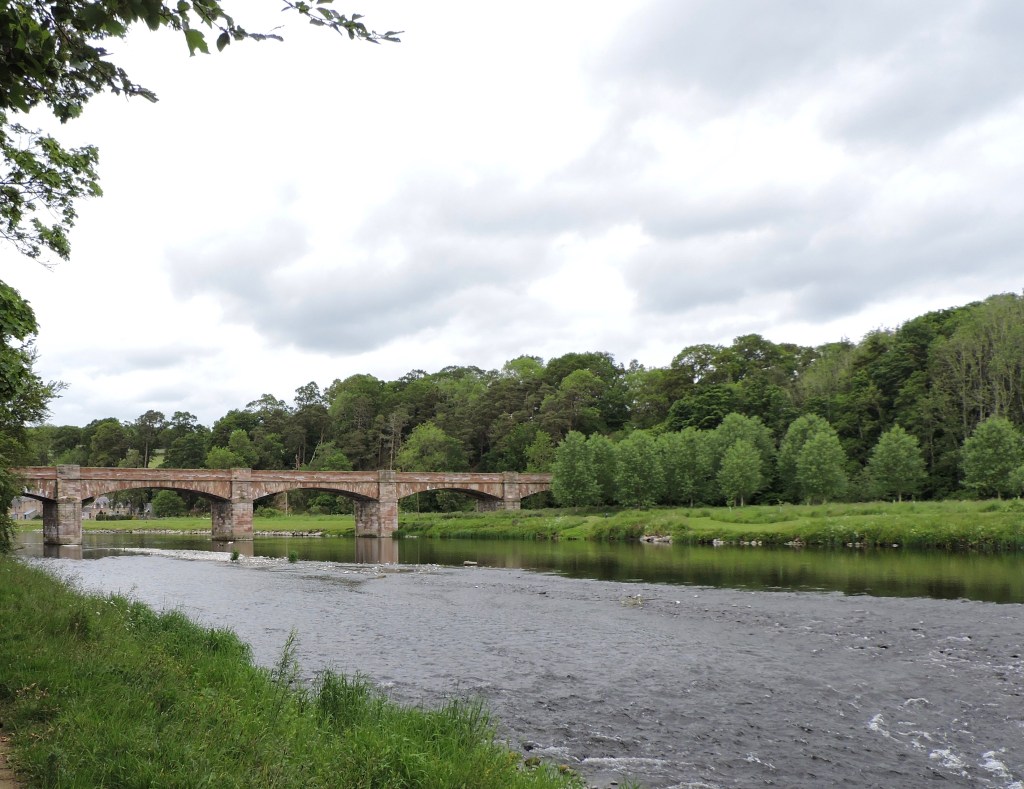
Mertoun Bridge on the way back.
Back up the wooden steps, knees creaking, across the bridge and make for the crumbly steps. I’ve deliberately not thought about getting back up till now, I have to do it so I just keep going. My feet slide under me a couple of times and then its a clamber up to the top over the missing step on hands and knees – even more inelegant! But I make it and set off across the field and back down through the woods, spotting a woodpecker on the way.
It’s a lovely afternoon so instead of heading back through the village, I find a place on the river bank and take out my book. It’s quiet, just the sound of the golfers shouting whatever it is they shout every now and then, and the oyster catchers calling their calls. And then about 20 minutes in…….a huge flock of gulls descend. Time to go!
The timing is right, I’m in need of a cup of tea and because the sun is shining families are coming to the river to paddle and play. I wander back slowly up the hill, past William Wallace and through the woods to the car, feeling quite pleased with myself…..I may do it again one day!
Bird Therapy is a lovely book by a guy who writes about his struggle with his own mental health and how connecting with nature and in particular with birds has helped him in his journey to wellbeing.
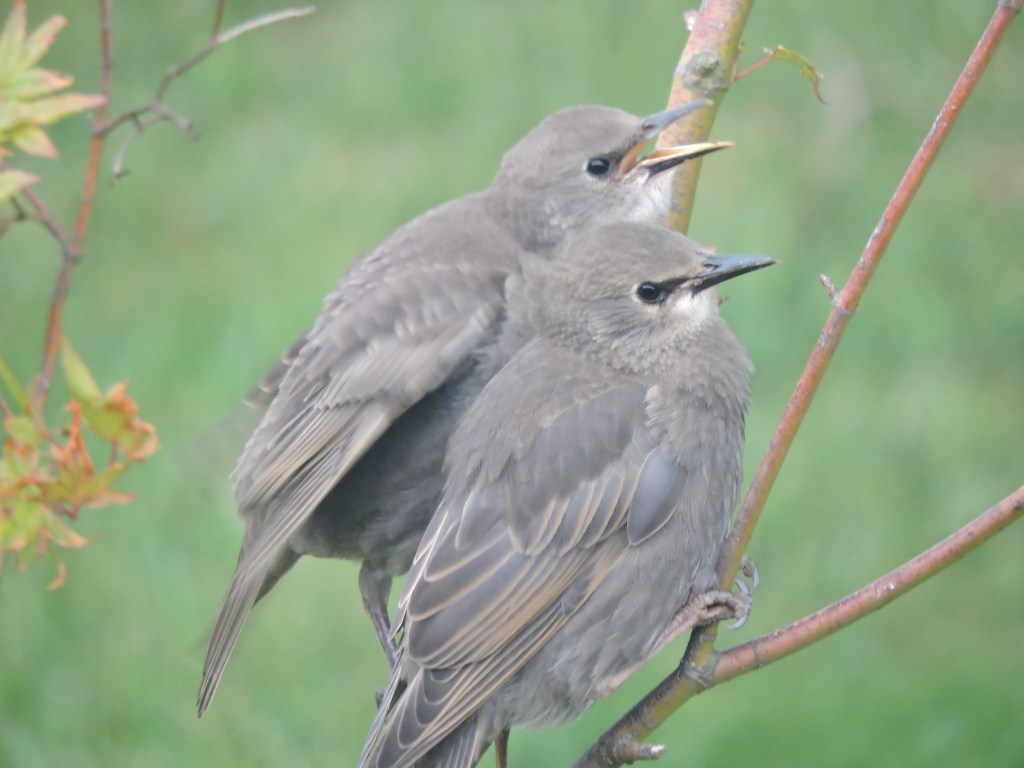
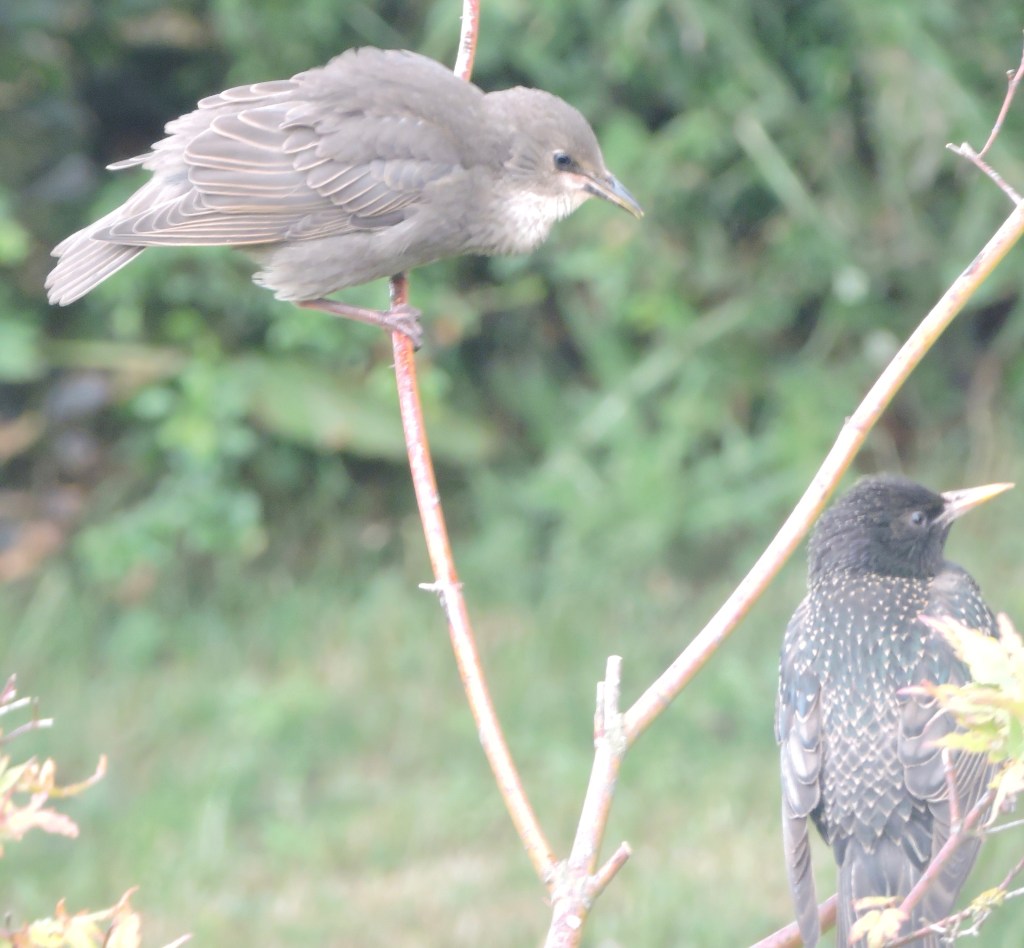
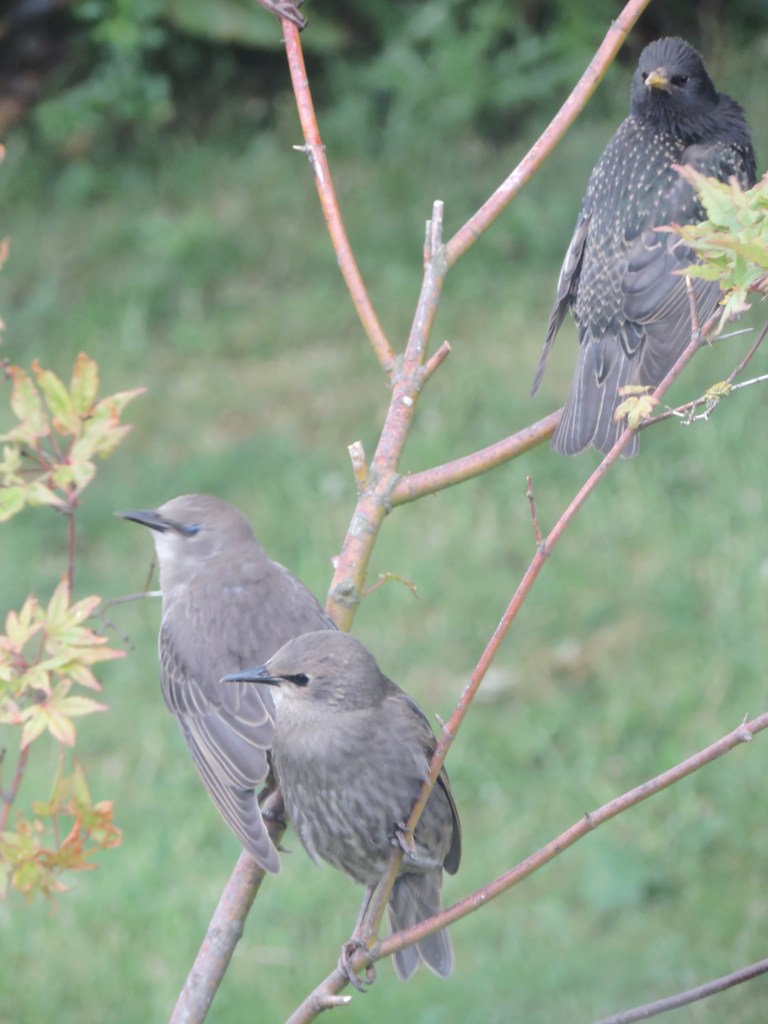
In the book Joe talks about a morning when he was ‘awoken at seven by a witch-like din of screeching and cackling from the back garden’. What he finds are ‘eleven shimmering starlings writhing across my feeders, jostling and snapping at each other….’ Well I know just what he means. We have our own ‘murmuration of starlings’ in our back and front gardens. Even as I write this, there must be 50 or so adult and juvenile starlings all trying to crowd onto the single bird feeder in the back garden and a similar cacophony happening in the front! All of the babies are fledged, and all of them are shrieking and screaming and demanding to be fed! Even the cat has retreated indoors and is sulking on the sofa!
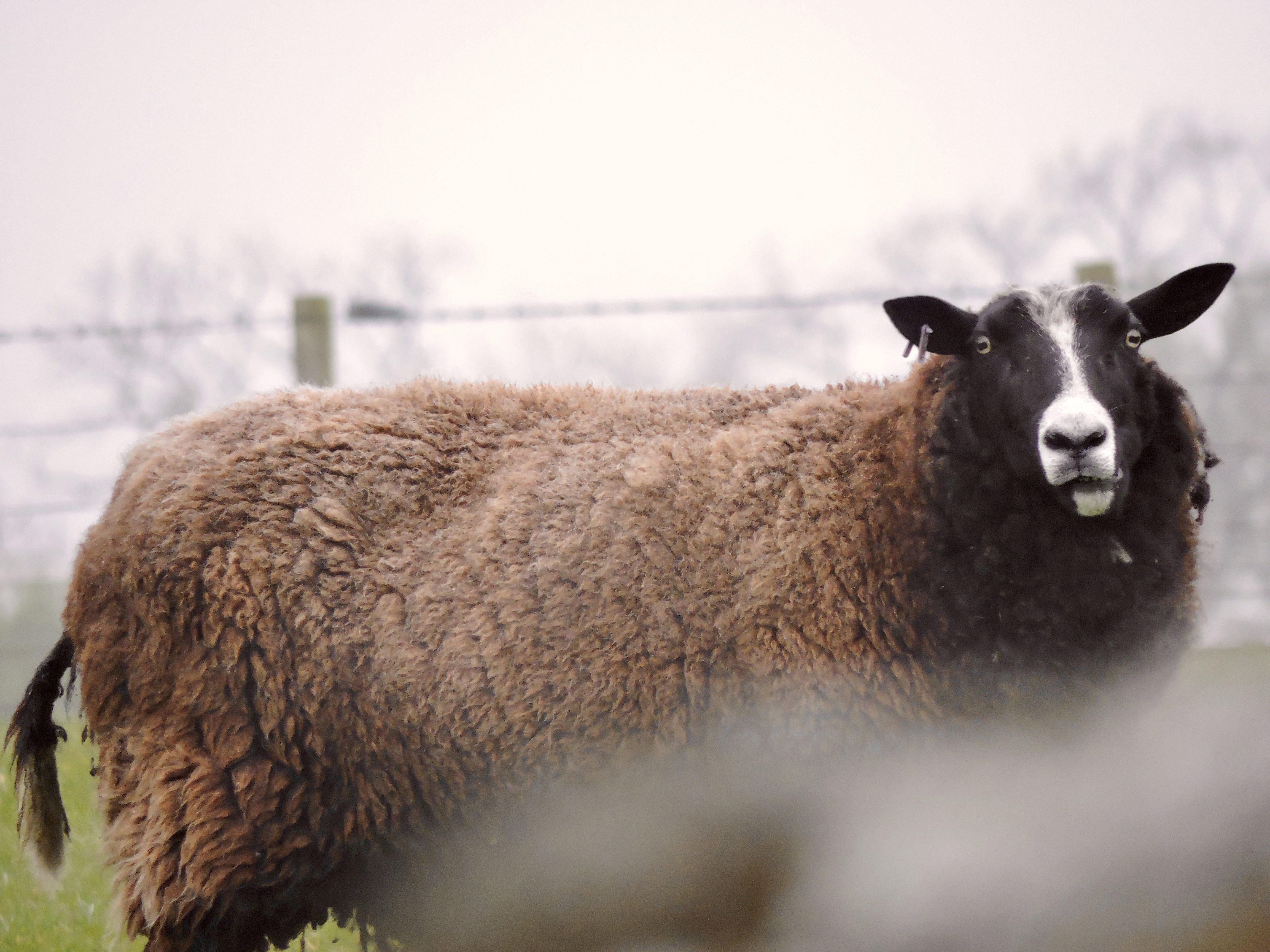
One of the neighbour’s Zwarbles – not delighted to see me so early in the morning!
I’ve been reading ‘Losing Eden: Why Our Minds Need The Wild’ by Lucy Jones. It’s an exploration of how and why we need to connect with nature to maintain our physical and mental health. I don’t think I’ve ever doubted this, but its interesting to read about previous and recent research that is proving that we need to be out of doors, and in touch with the natural environment, to stay healthy.
There’s one particularly fascinating chapter called ‘Equigenesis’ which is a discussion of whether improving our connection with nature can reduce socio-economic inequalities. Lucy Jones argues that alongside the ecological destruction of Planet Earth that we are all participating in “there is a deep inequality in access and connection. And this is a stain on our society”. She backs this up by citing research from Professor Mitchell at Glasgow University who suggests that greener neighbourhoods may “reduce the health gap between rich and poor and lead to a better, more equal society”.
All very inspiring and thought provoking – and with that in mind, I wondered why I’ve been reluctant to get out this week when it’s really so easy for me – even in these extreme times. I’ve been busy with work and of course, all of that is online or on the phone at the moment. I said last time that the focus and anxiety this causes is exhausting – and I’m not alone – so I’ve been looking for ways to relieve this a bit, to gain some energy and enthusiasm. Coincidentally, or maybe not given the numbers of people suffering in this way, this article appeared on the BBC website.
So…I introduced a plan to take a short break before and after every Zoom meeting or online chat. It does work – I might just make a cup of tea, put the washing out or walk around the garden for a few minutes – but it definitely helps. Of course I don’t get as much done….but then I’m not being very effective when I’m so tired anyway.
Anyway – get outside is what I’m saying! If you can of course, or look out the window, or listen to the birds singing – whatever you can do.
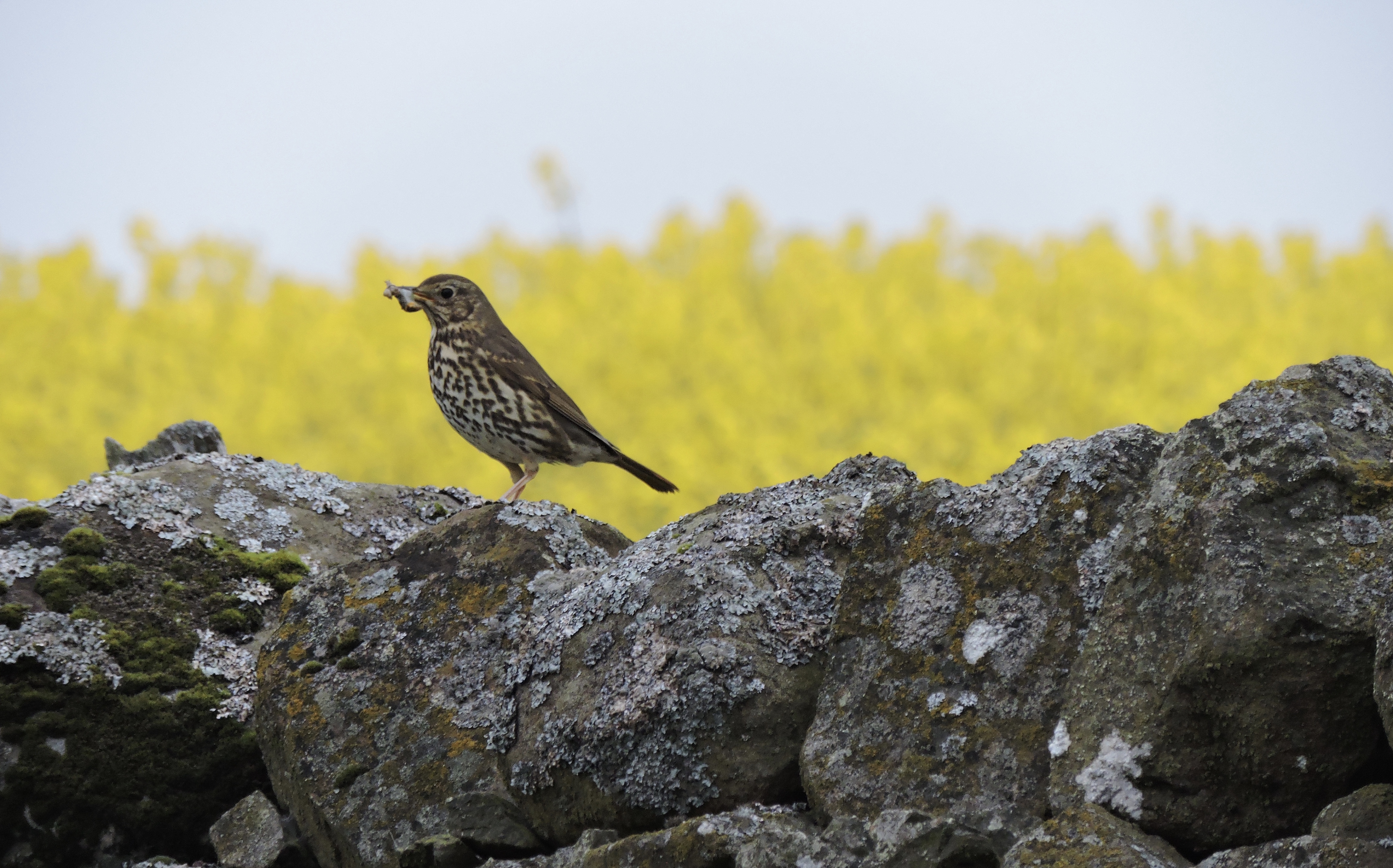
I was awake early this morning and took a walk up the hill towards the village. It was a damp, misty morning and I didn’t really expect to see much. However, just a few yards up the road sitting on a neighbour’s wall was a thrush pleased as punch with himself for catching a worm.
We used to have a couple of thrushes in the garden, but sadly one flew into the studio window one sunny day and died, the other one disappeared after that.
My neighbour tells me that thrushes have a hundred different songs and that they sing each one 3 or 4 times before moving on to the next. This one wasn’t singing as it was full of worm! Have a listen next time you see or hear one.
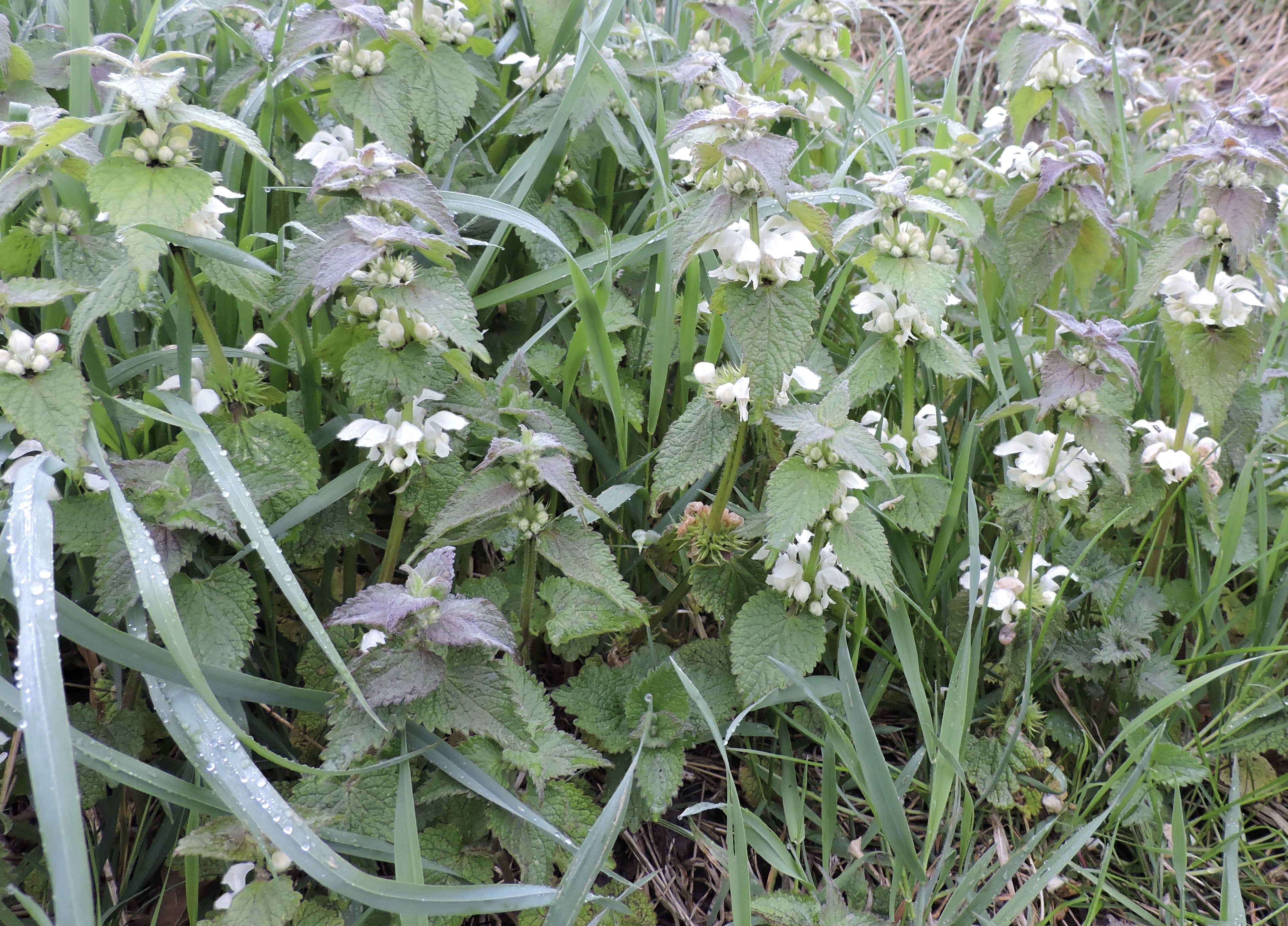
The White Dead-nettles are in flower – loved by pollinating insects especially the bumble bees. Apparently if you suck on the flower you get a drop of delicious nectar – get there early before the bees though! These are not the stinging variety – and you can eat the young leaves and stems before they flower, raw or steamed or in soup.
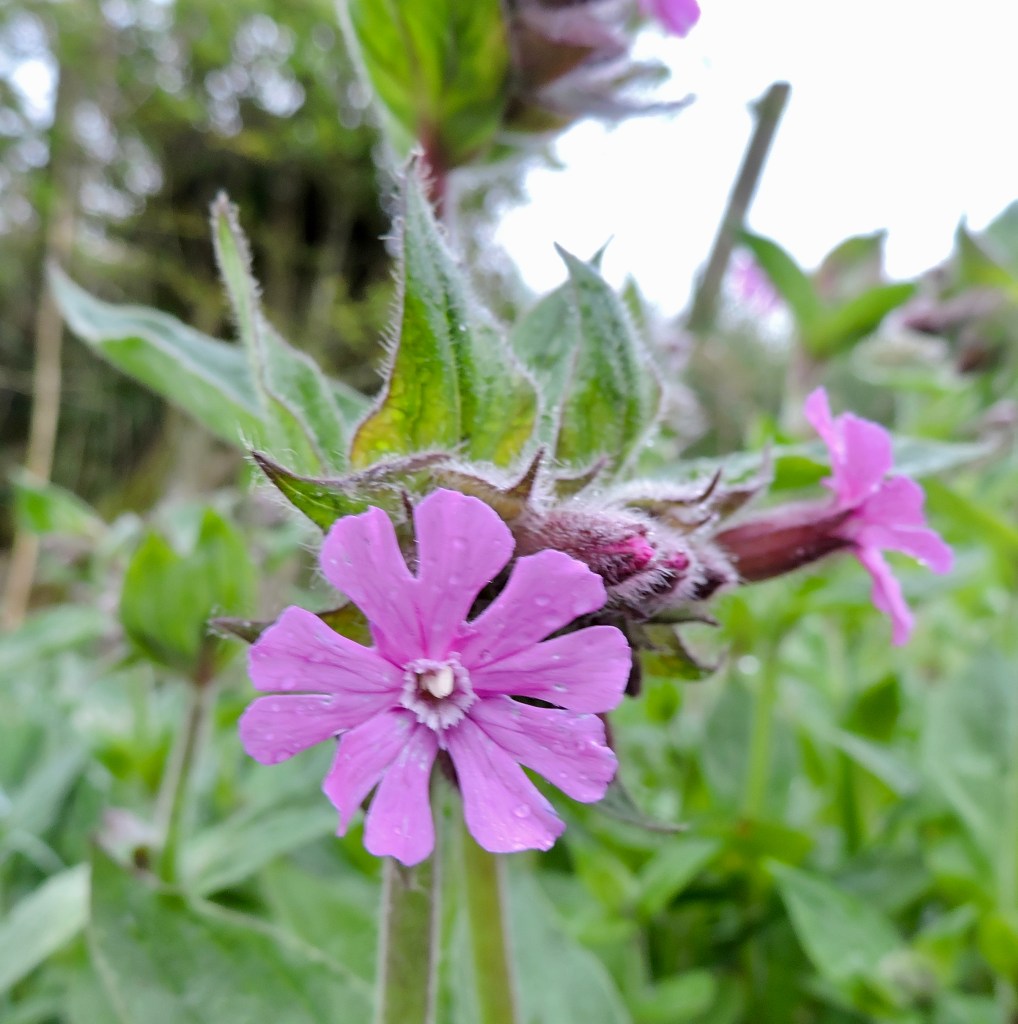
A single clump of red campion has appeared on the roadside. According to my medieval flower book this herb was often found in medieval gardens and appears in the borders of 15th century manuscripts.
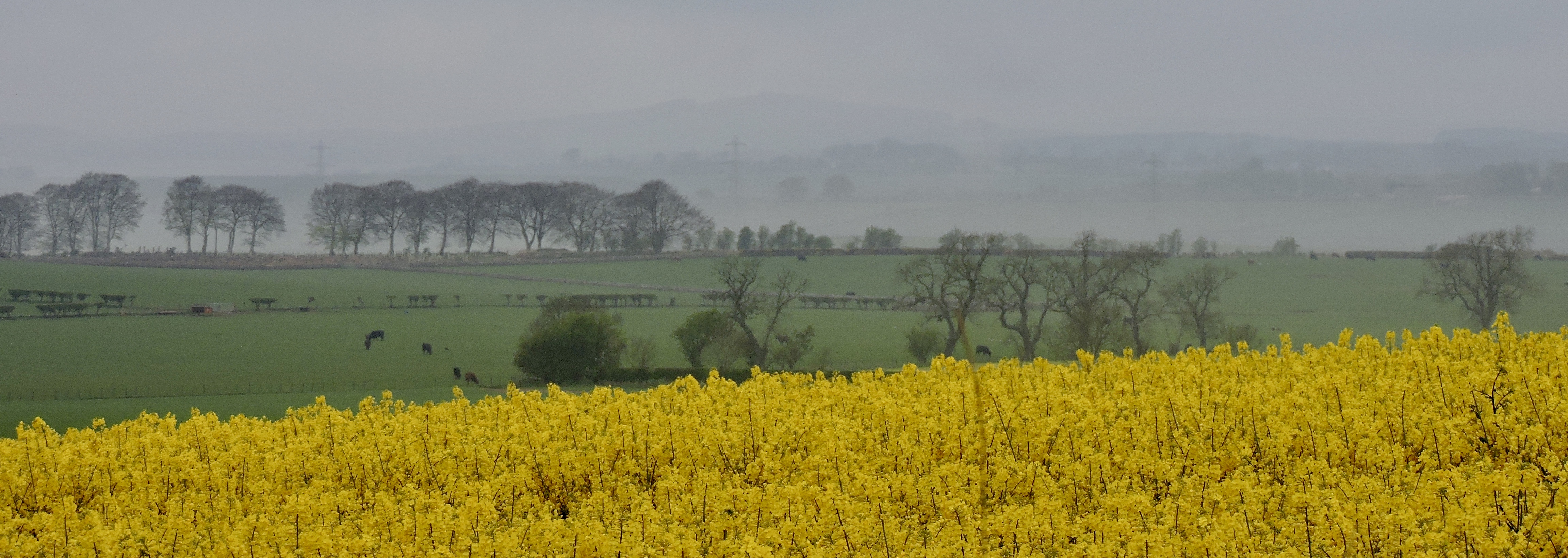
I saw lots of hares but none of them wanted their picture taken today so I had to be content with views of the misty hills over the field of rapeseed.
Just a little stroll – enough time for everyone else to get up and for Ms RR to produce some delicious sour-dough pancakes for breakfast!
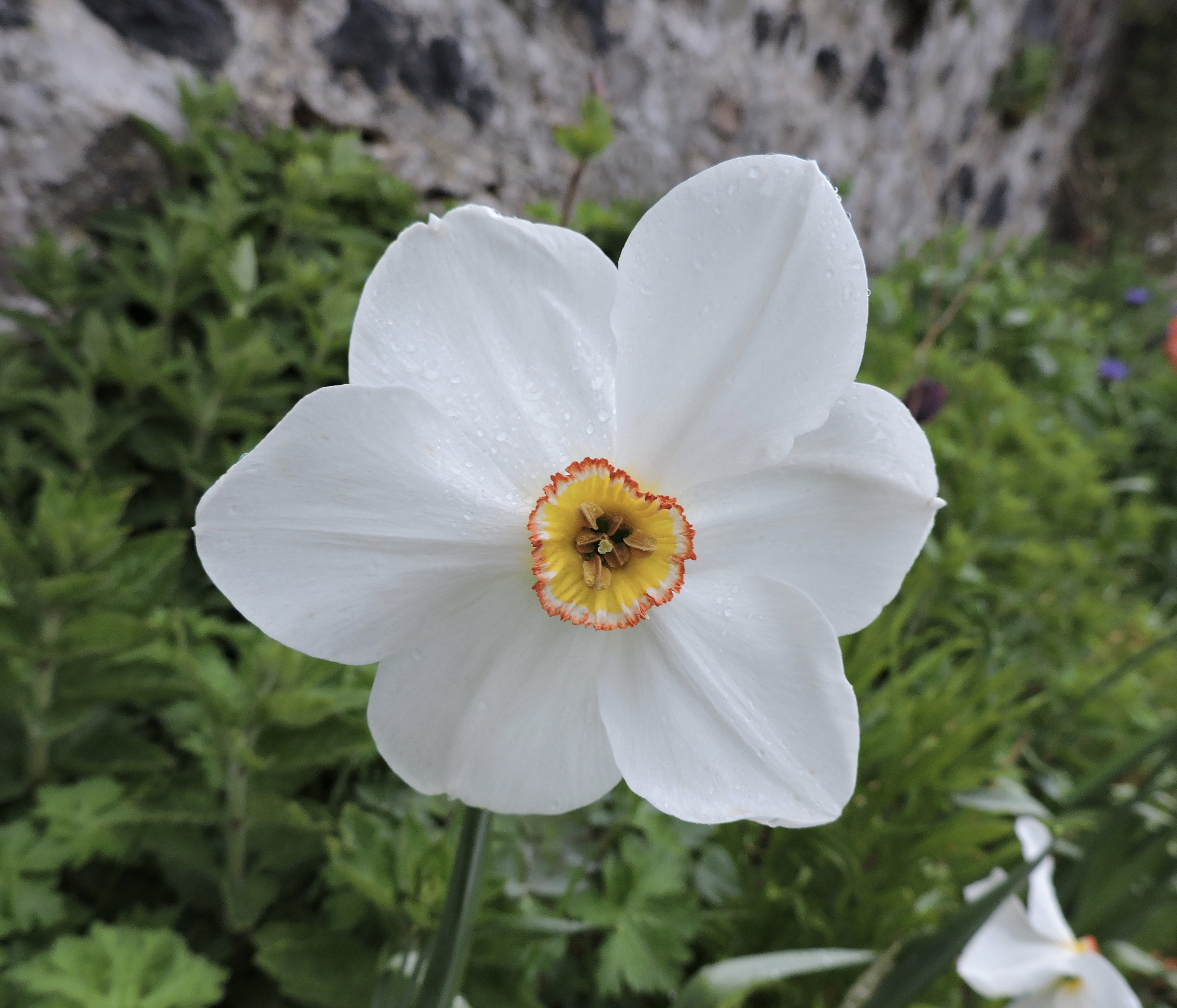
Most of the daffodils are over now – but not these – the exquisite Pheasant Eye Narcissus.
An early English citation of ‘this too shall pass’ appears in 1848:
When an Eastern sage was desired by his sultan to inscribe on a ring the sentiment which, amidst the perpetual change of human affairs, was most descriptive of their real tendency, he engraved on it the words: – ‘And this, too, shall pass away.’
(cited by Julia Samuel, 2020)
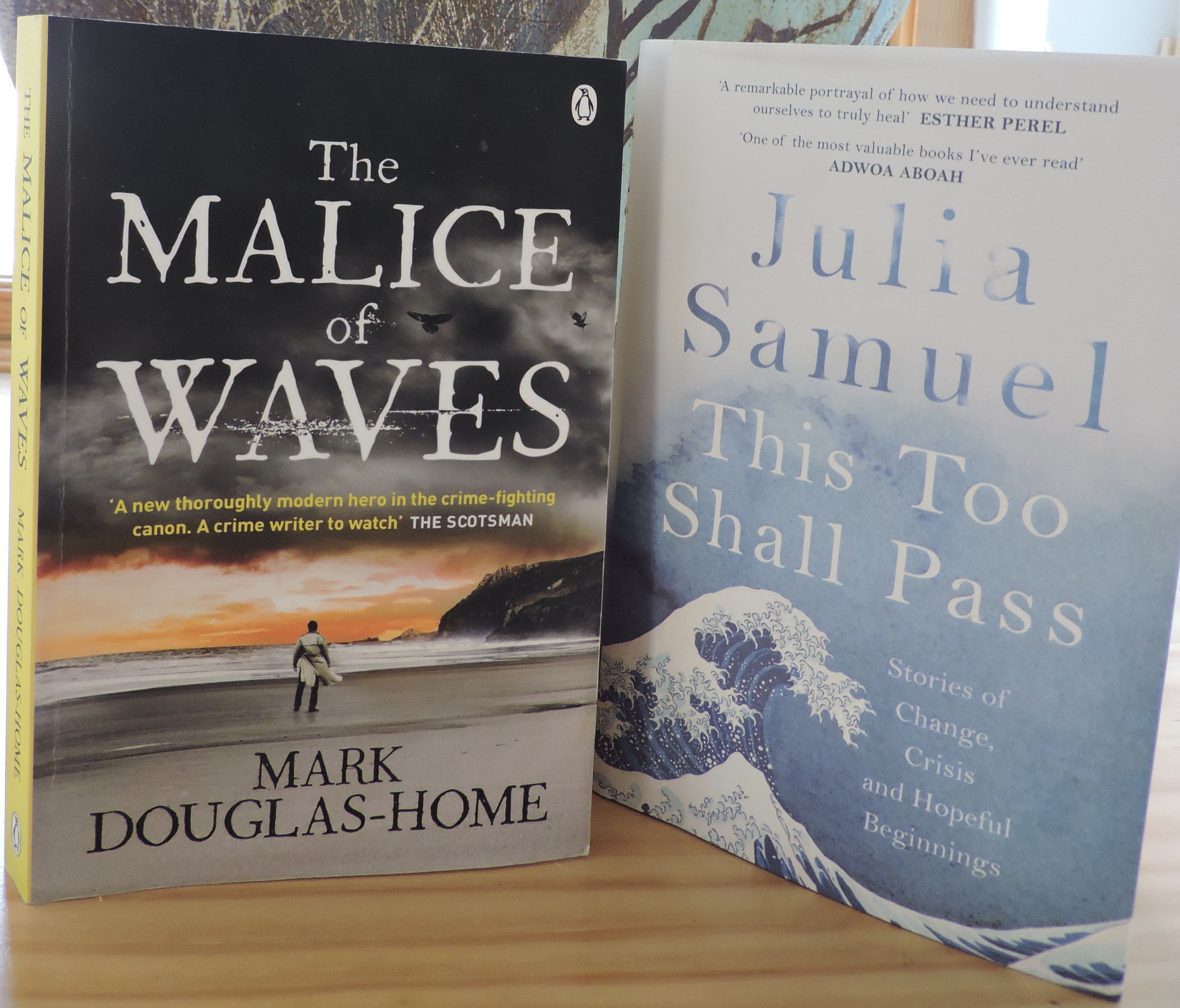
I’ve just started reading Julia Samuel’s ‘This Too Shall Pass’ – Stories of Change, Crisis and Hopeful Beginnings which is newly published with commendably appropriate timing.
Here we are in week four of our crisis – I hope you are all doing ok.
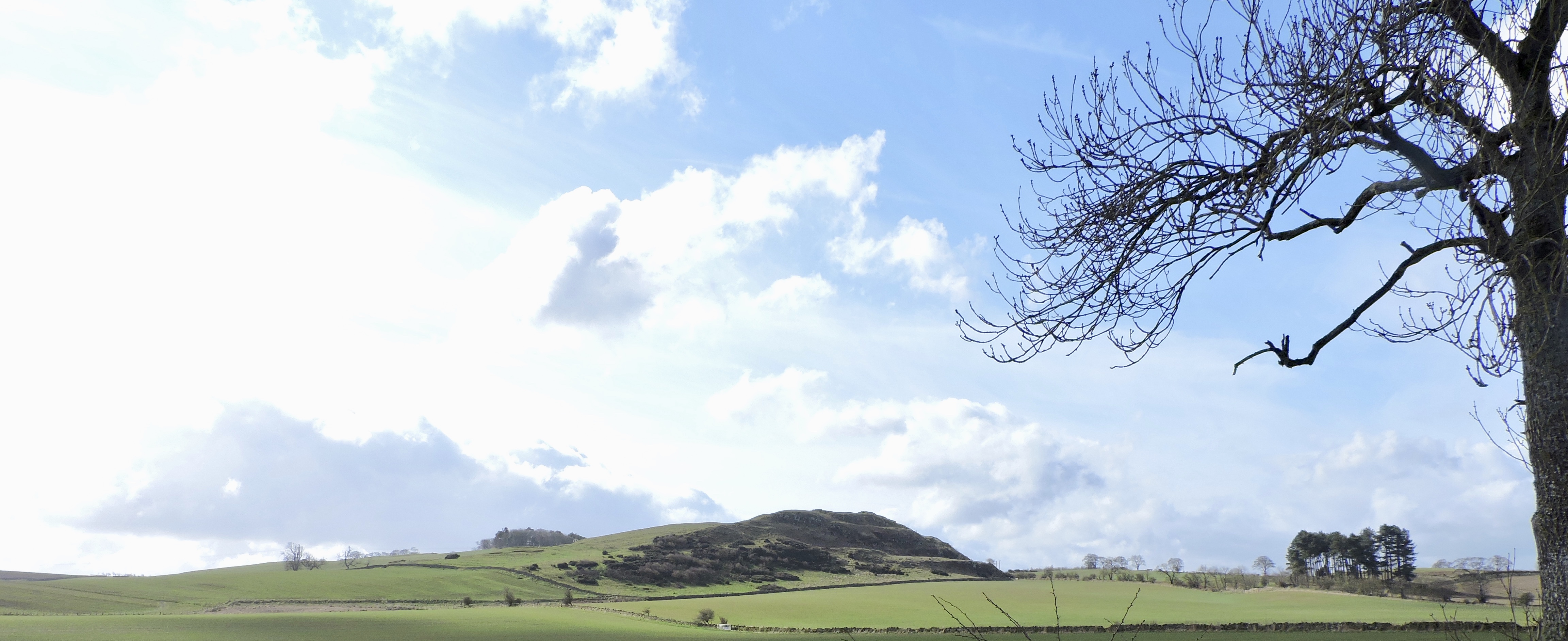
Hareheugh Crags – the view from our house
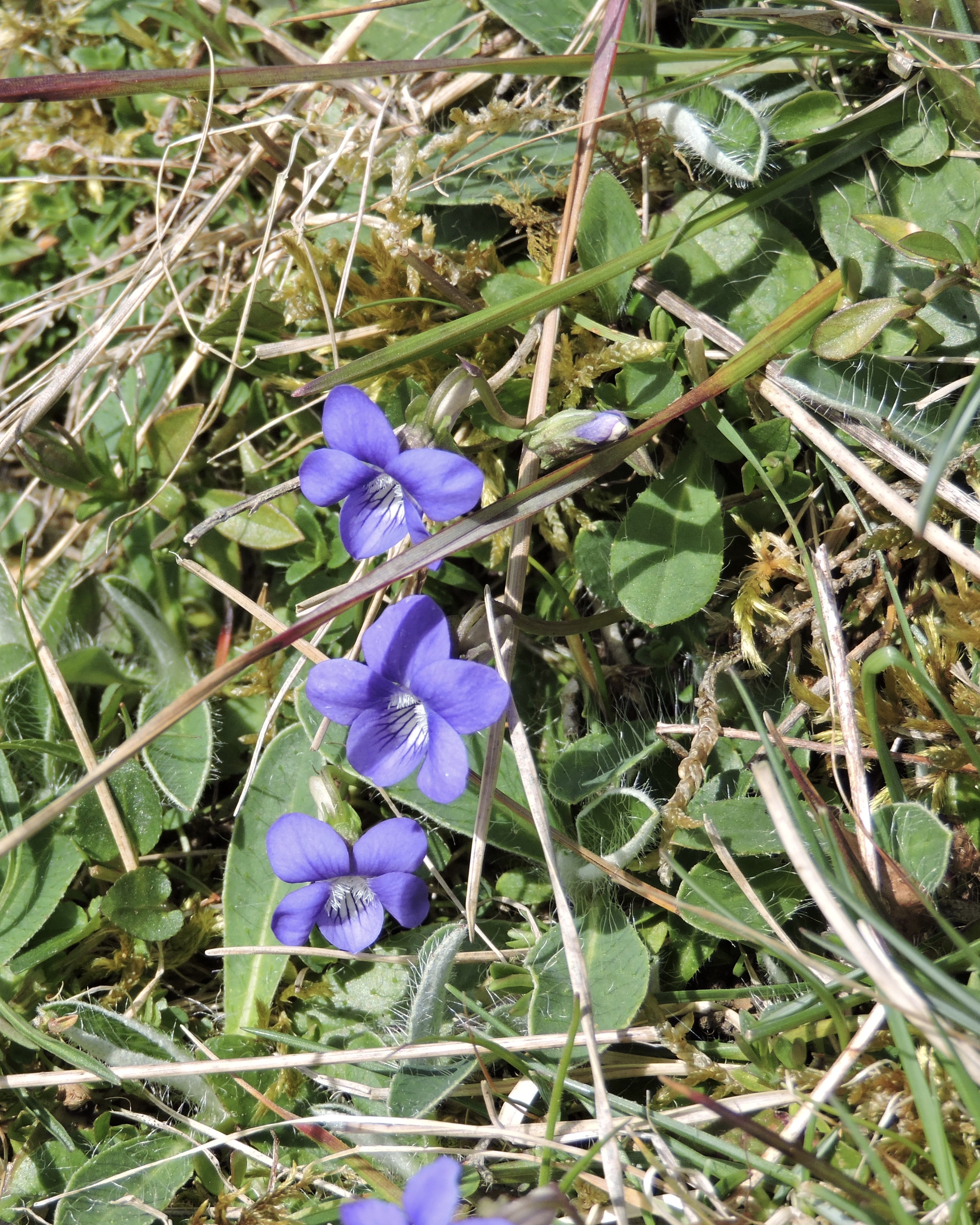
Yesterday we went for a short walk up to Hareheugh Crags, it was not a bad day here, cold wind but some sunshine as well. We can see the Crags from the house – they are a ‘prime example of a volcanic plug with an unusual rock composition’ and a Site of Special Scientific Interest and the rare Northern Brown Argos Butterfly can be seen there. Plenty of butterflies about on our walk but not that one. There are also some quite ‘locally important fauna’ if you go at the right time, which is around now. The only wild flowers we found apart from buttercups and dandelions were these which I think are Wild Pansy………
Sarah Raven says the Wild Pansy has declined due to the use of herbicide and fertilisers.
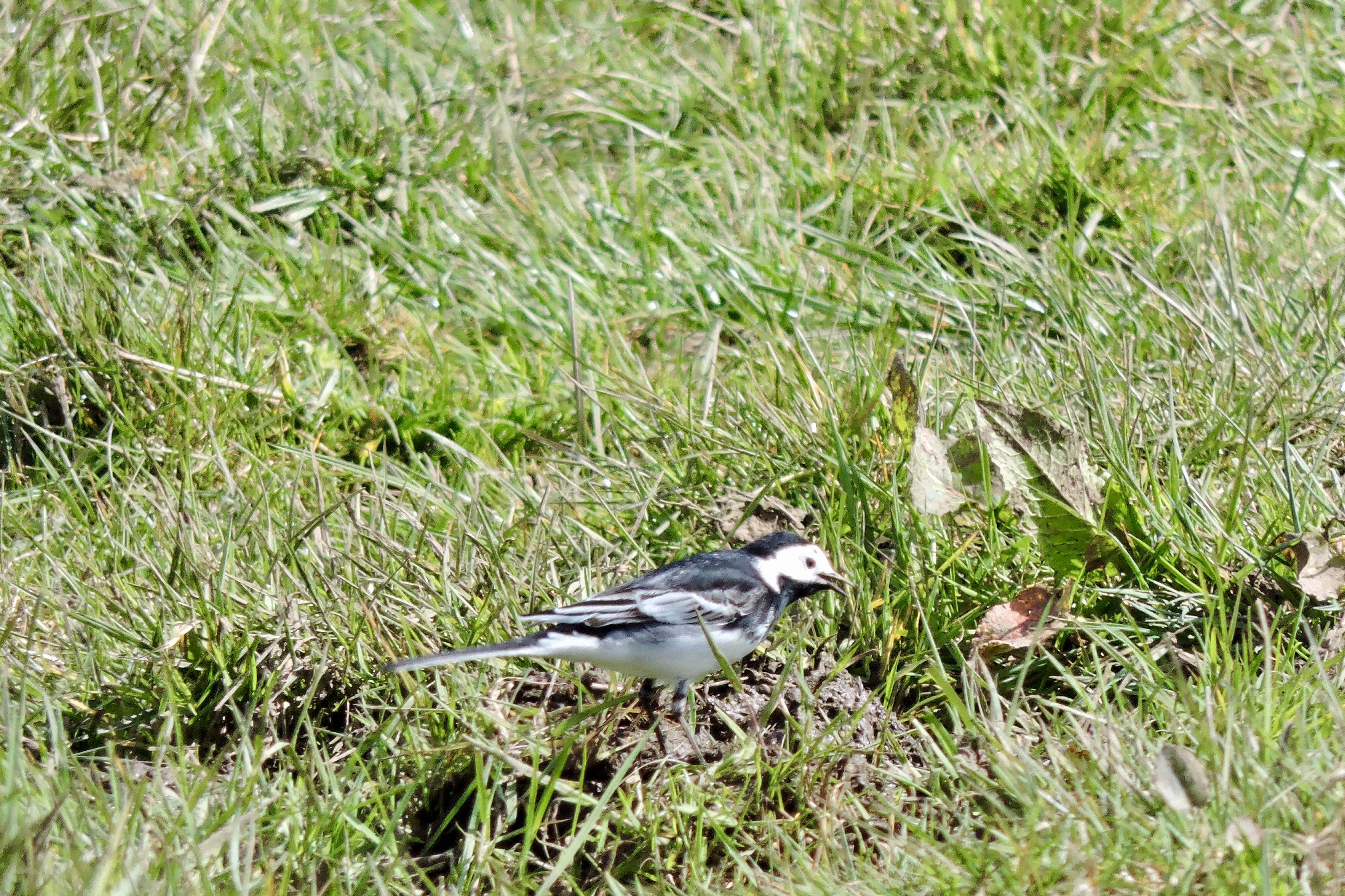
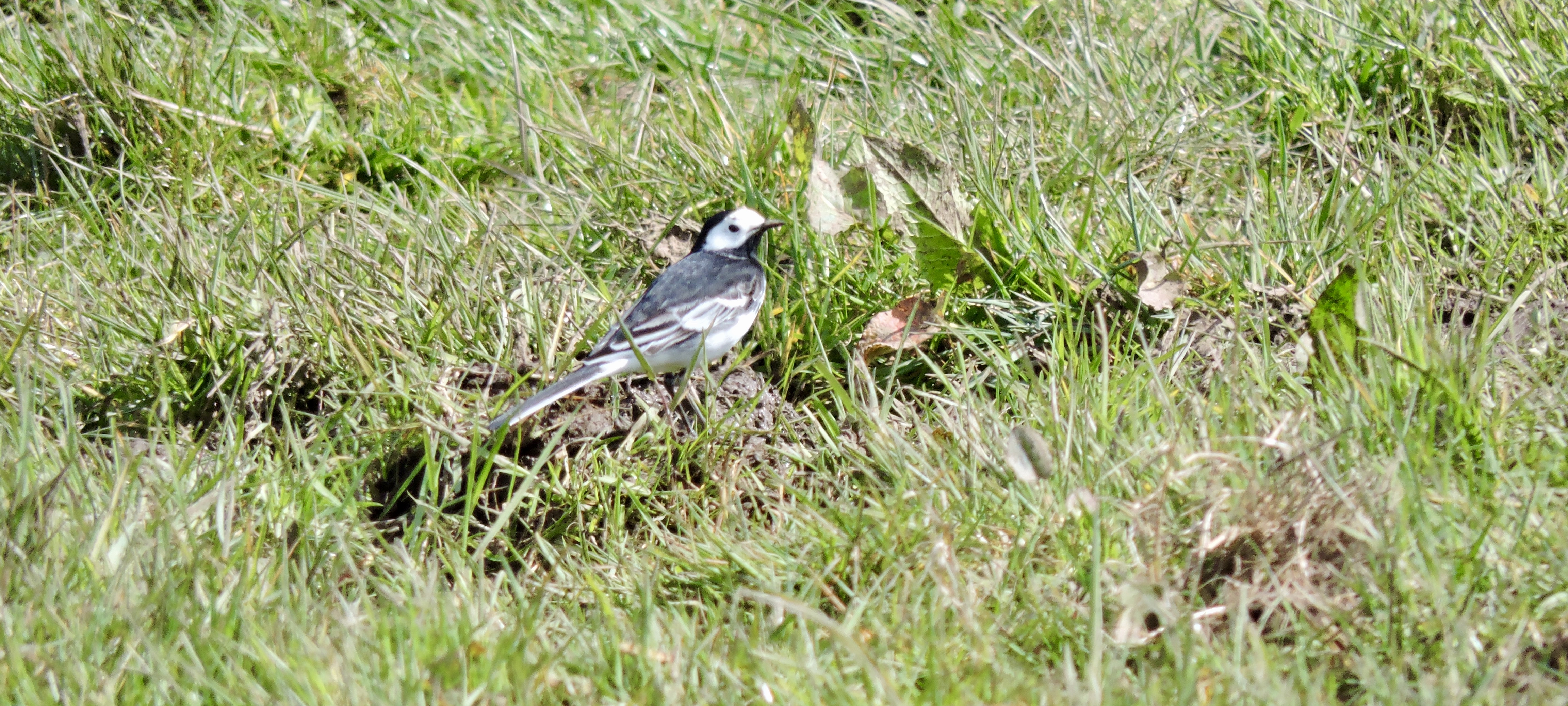
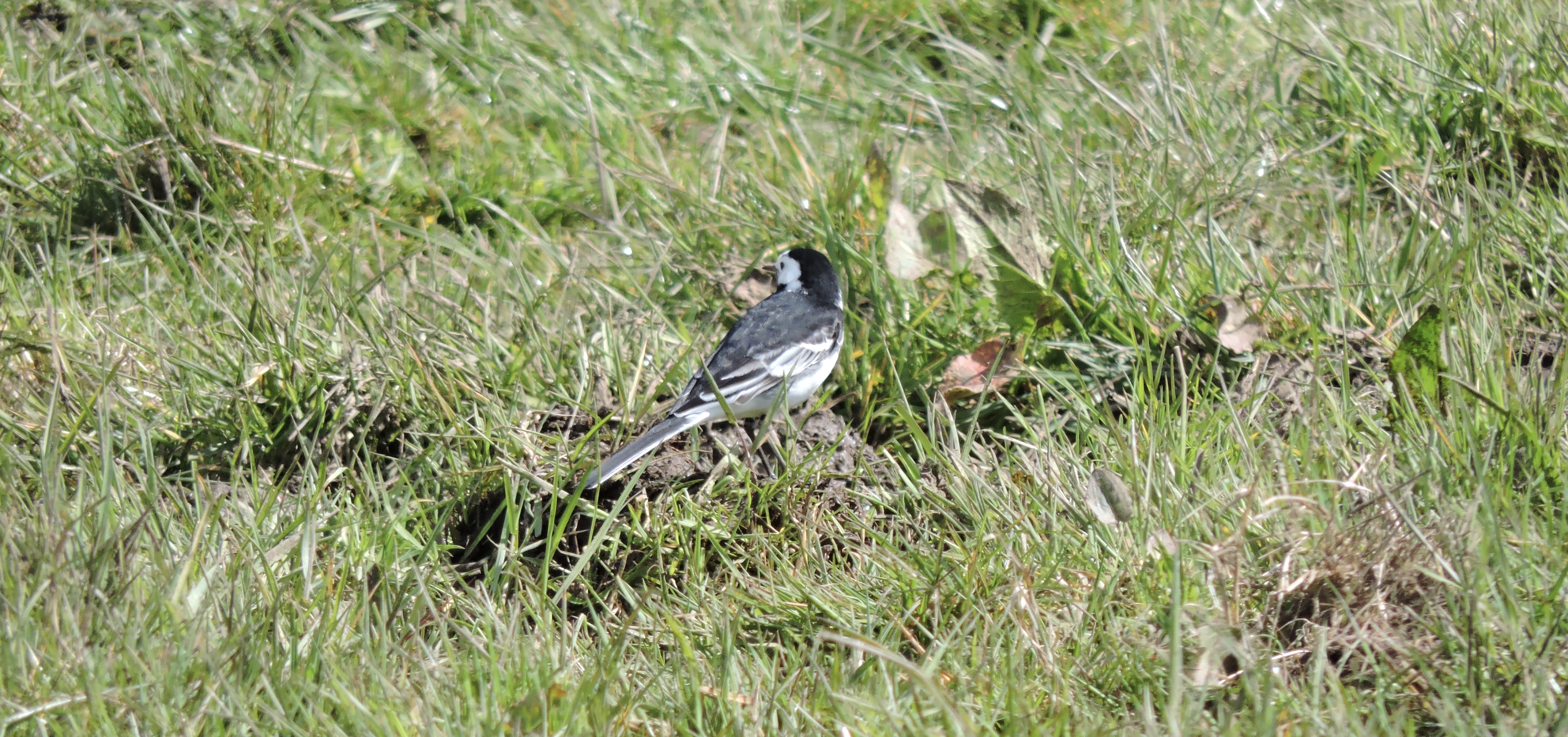
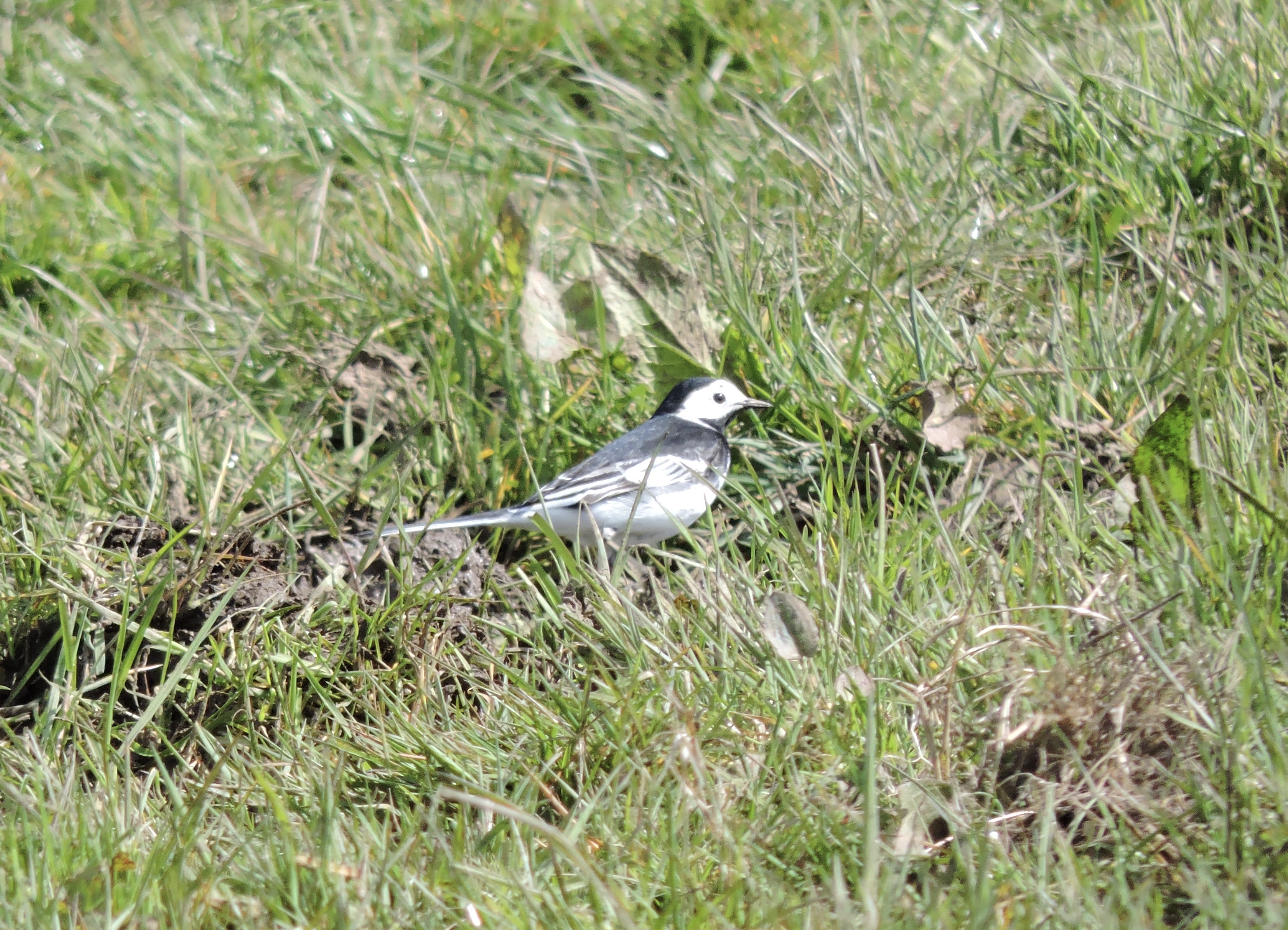
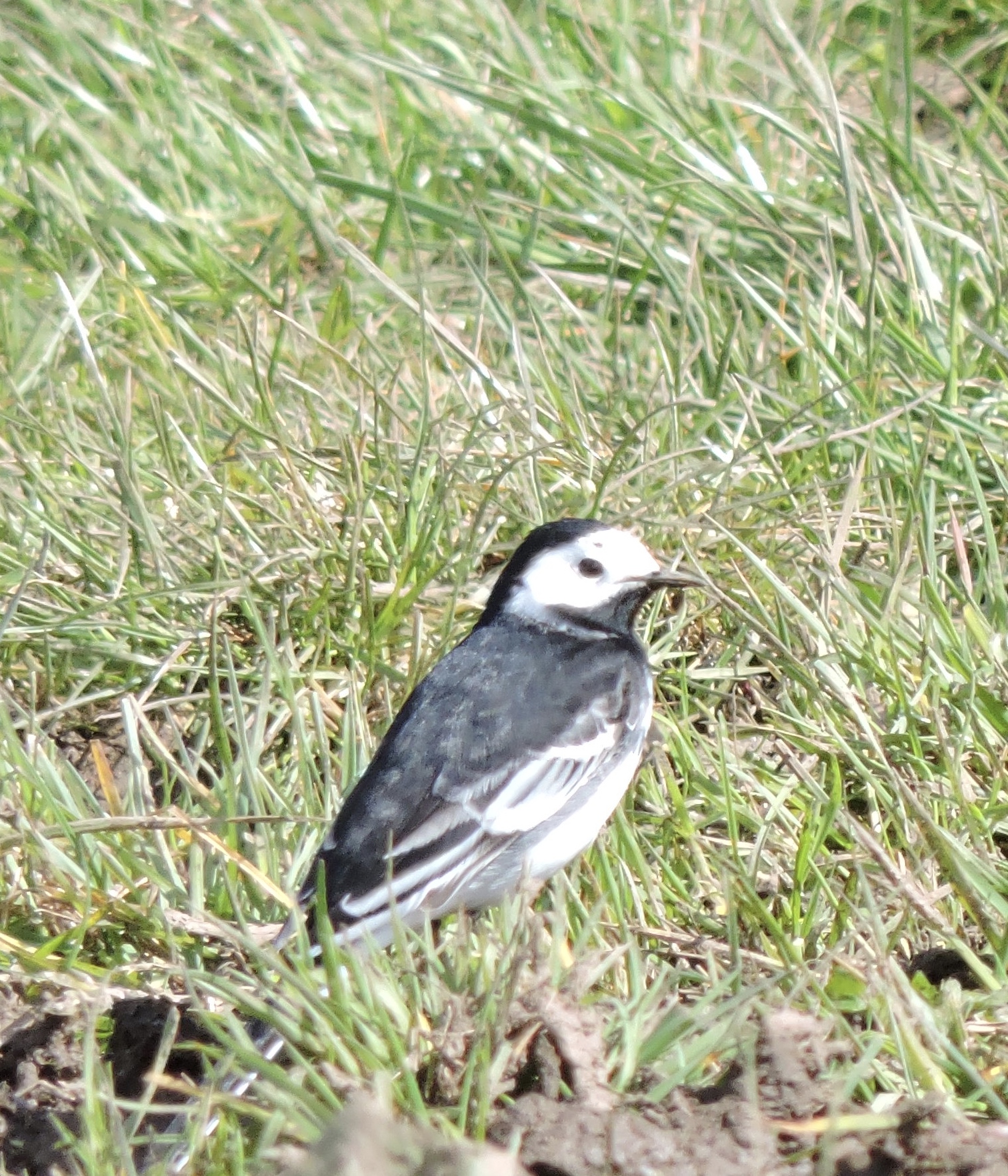
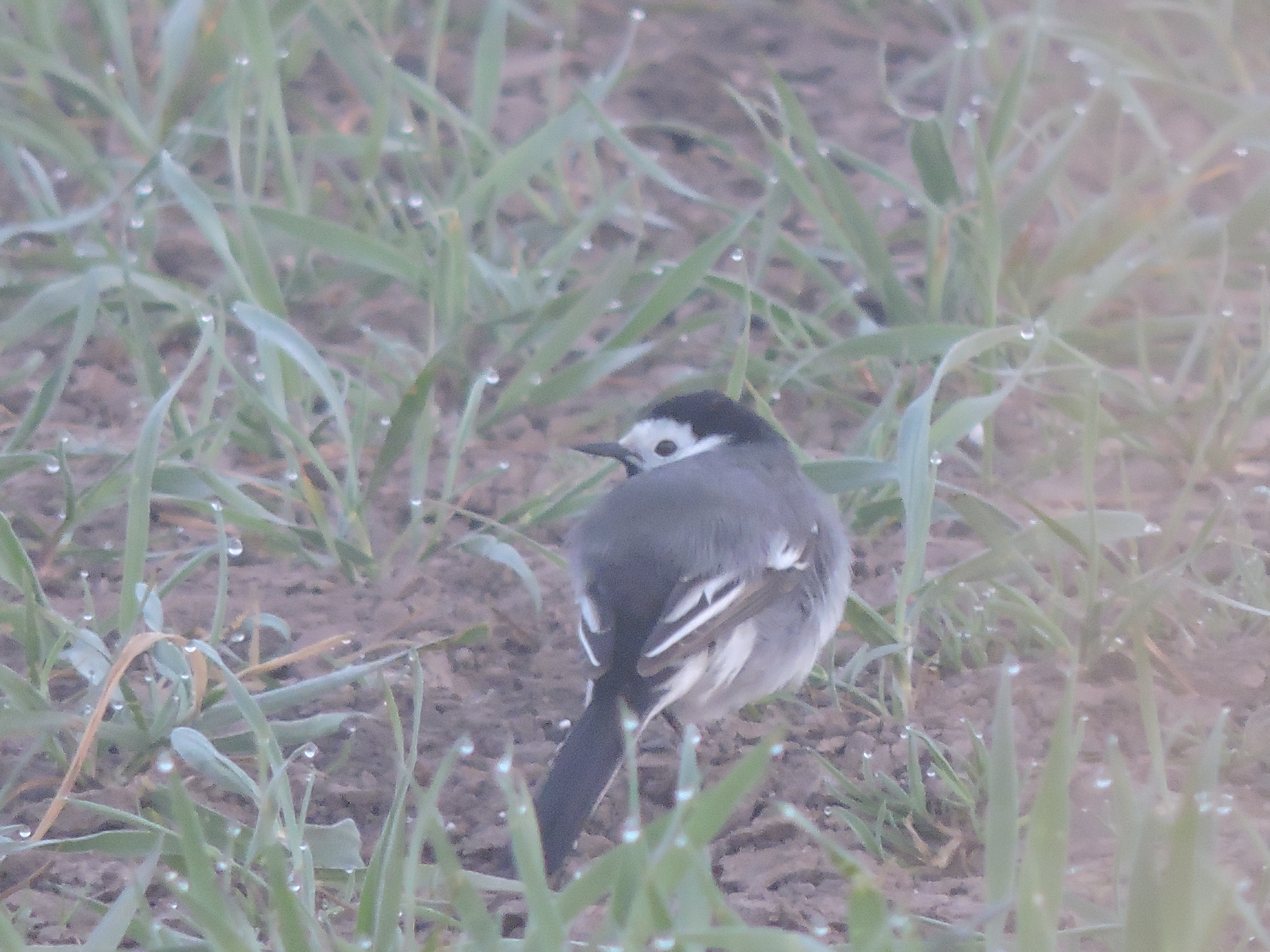
On the way to the Crags we spotted a Pied Wagtail and I managed to get some photos.
This one was alone as far as I could see but we often see a pair on the hedges and field near the house. Now – Pied Wagtails apparently roost in communes of up to 3,000 – 4,000! I’ve only ever seen one or two at a time – but when they are together they are called a Volery of Wagtails. I looked up volery – it means ‘a flock of birds’!! Haha!!
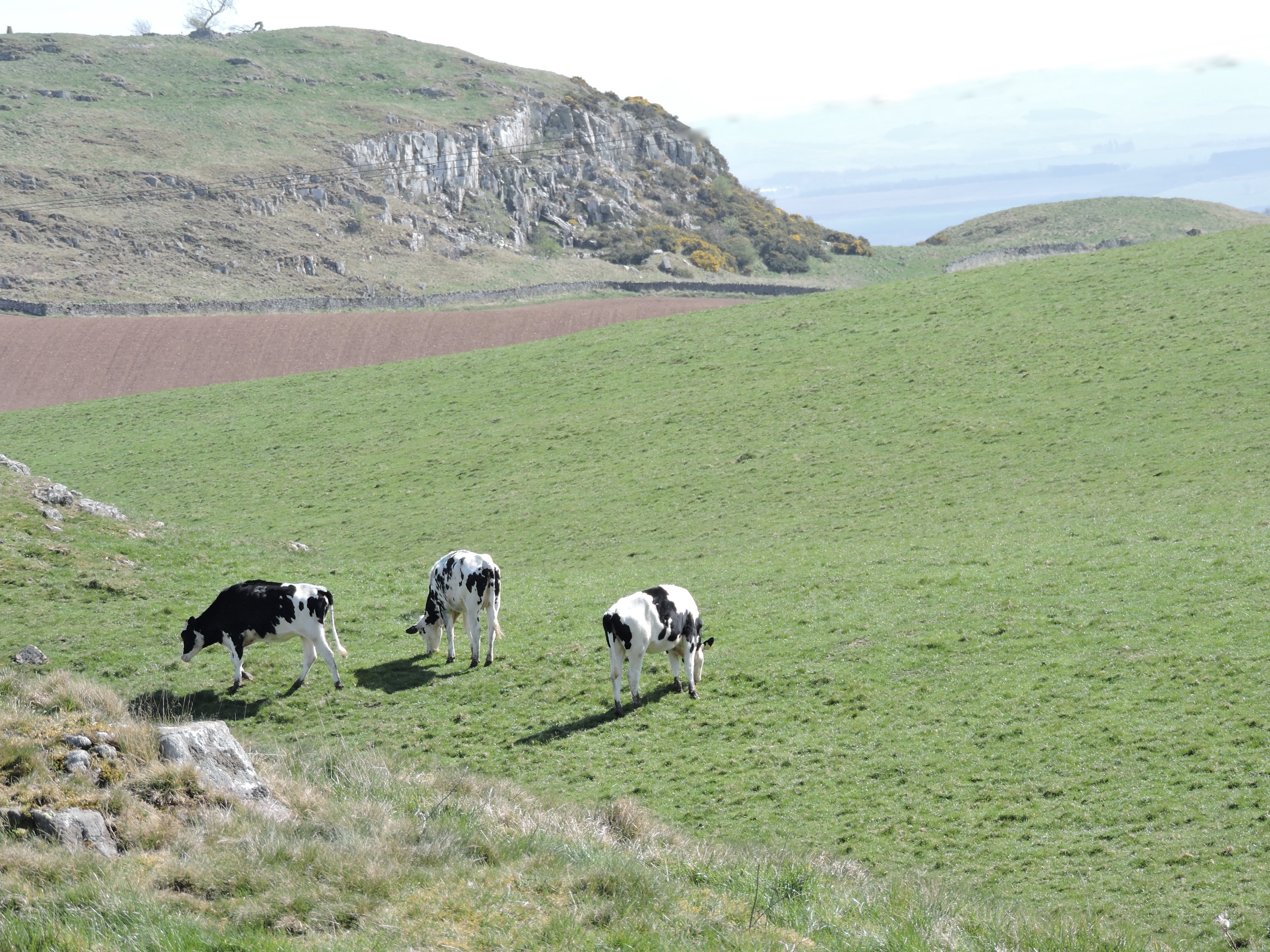
We sat for a few minutes and looked across to Sweethope Hill and watched the cows grazing before heading home.
This morning I headed out for a very early morning walk. It’s not just that I love walking in the early mornings, its that if you don’t go straight out once you are up, Mojo gives you no peace! She won’t go out on her own at the moment because the blackbirds are nesting in the holly hedge and if they spot her alone, they dive bomb her and she’s such a scaredy cat! So we have to take her out, if I walk along the road she’ll have a run along with me but she gets nervous if I go too far so she goes home and sits on the wall waiting:
You can see that the mist descended pretty quickly….
There was a lovely light and low lying mist which was just a white cloud in the distance when I started out but soon completely enveloped me so that I turned back. Not that I was worried about getting lost – there’s only one road – but I had been hoping to spot a trio of deer that Mr RR saw yesterday and the mist put paid to that.
By the time I’d got home and had a cup of tea it had cleared! Anyway I saw one of the wagtails,
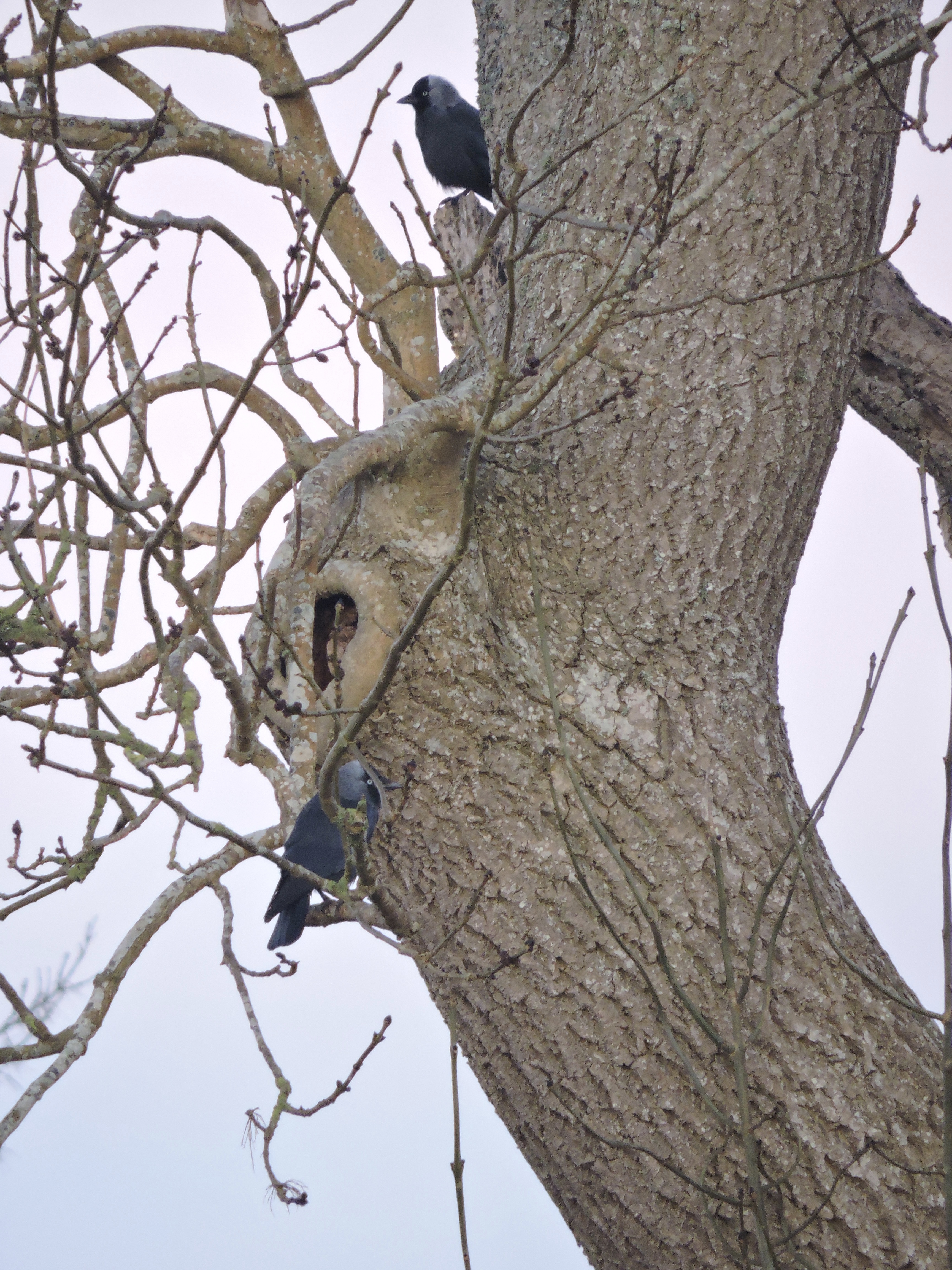
a pair of jackdaw which are, I’m fairly sure, nesting in a hole in a tree and I took some pictures of the trees in the mist.
The Jackdaws have been visiting our garden this year as well, I’ve been watching them feeding from the plate of seed and hanging on for dear life to the feeder.
We’ve had some excitement in the field this week as more and more new lambs arrive. Number 20 is proving particularly troublesome, he’s a good climber and has managed on a couple of occasions to climb over the wall and been unable to get back – leaving his mother bleating consistently on the other side while he runs up and down looking for the way back in. Have you ever tried to catch a lamb? It takes some skill I can tell you – and we don’t have it! After a couple of attempts a neighbour opened the field gate and reunited the pair. Actually talking about trying to catch the lamb reminded me of the time that we were walking on Dartmoor with our lovely friends Mr and Mrs B – when we spotted a sheep with its head stuck in a bucket! Mr RR and Mr B spent a hilarious half hour trying to catch it before we had to give up! I tried to find some photos of that but we have hundreds, if not thousands of photos all over the place! That might be a project one day!
What else for this week?
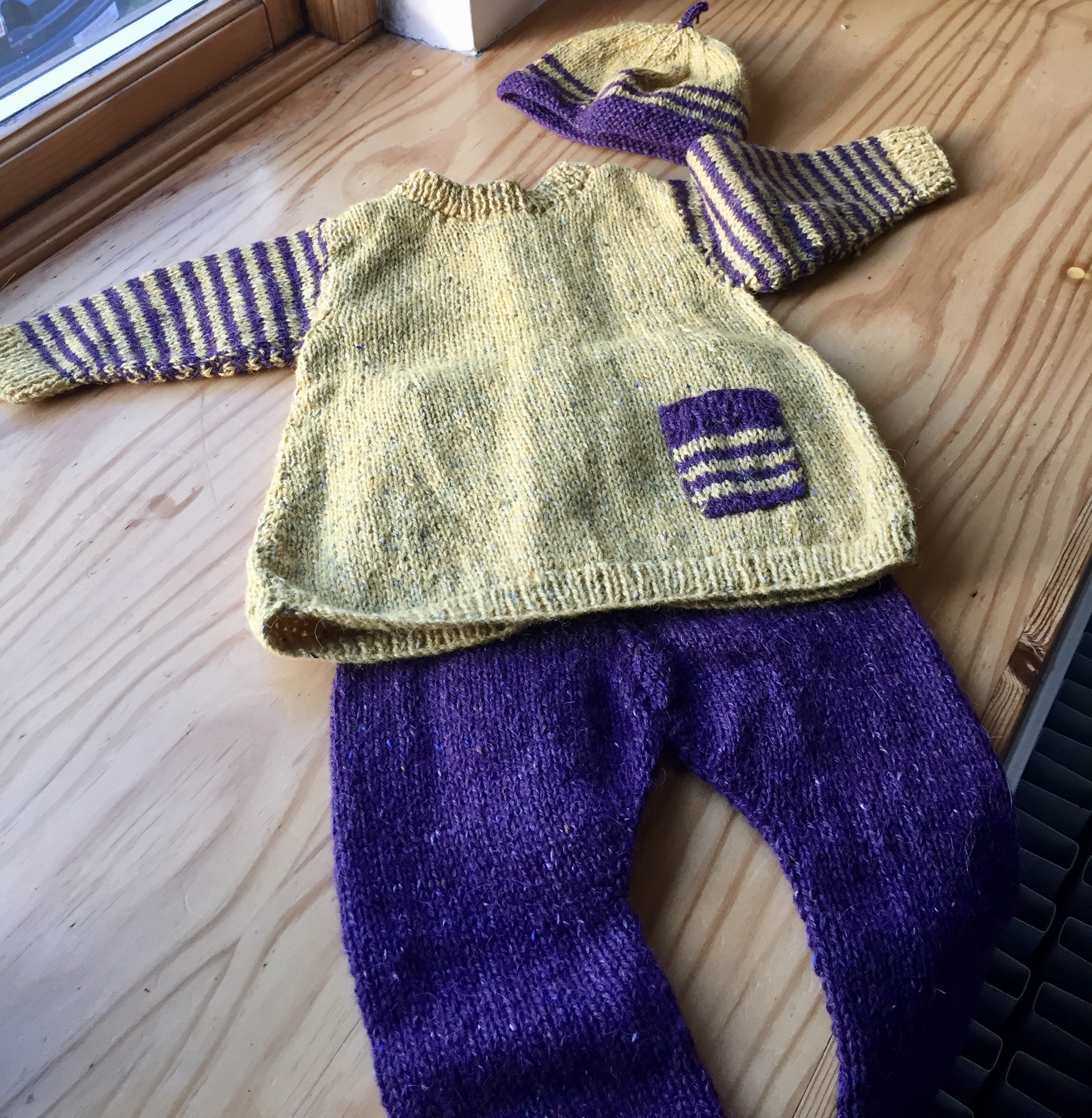
Finished a little outfit for the youngest member of the family.
Sorted out my herb garden – I might actually grow some herbs in it this year!
We actually sat in the garden with a glass of wine one evening this week – a rare event requiring a blanket for me!
Made a slide show of a children’s story book so that I can read to little Master RR online tonight and he can see the pictures. I’m not telling you which book in case I’ve breached some sort of copywrite law – but it involves a famous park keeper.
I’m rereading The Malice of Waves by Mark Douglas-Home, a Scottish author. I’ve read all three of his books and really like his writing – I’m sure its time he published a fourth.
I must tell you that as well as all this other stuff – I am working from home which is much more time consuming and exhausting than you might imagine! I have had to learn to zoom, chat online and host virtual drop-ins, and this week I’m apparently going to learn how to use a graphic design app! 🙈
Here are some more of todays early morning photos – from our wildflower patch – a wild teasel loved by our Charm of Goldfinches and Lily of the Valley, named from the Song of Solomon ‘I am a flower of the field and a lily of the valley’.
Wild Teasel – loved by Goldfinches of which we have a Charm
Lily of the Valley – named from the Song of Solomon ‘I am a flower of the field and a lily of the valley’
Anyway – Mr and Ms RR have gone out for a cycle ride so I’m off for a quiet sit in the garden with a cup of tea, a piece of freshly made chocolate flapjack and my book!
Keep well, stay safe and remember – This Too Shall Pass.
So – that was week three of lockdown…how was it for you? Thanks to all of you who commented on last week’s ramblings. It’s lovely to hear from you all.
Highlights for us this week: lots more lambs born and brought to the field, I’ve lost count now but I’m watching them from my window running around amongst the chickens and there are a lot! Hares….what a lot of hares there are at the moment. I went for an early walk one morning and saw six in one field, the cat found one hiding amongst the daffodils in the garden – luckily it was too quick for her and escaped unharmed, and as you’ll see in a minute we watched a couple on our walk yesterday. A few days ago a deer appeared in the field opposite us. It looked a bit bewildered, the field has recently been ploughed and planted and I think it had lost the way out, we watched it for quite a while before it finally made its way across the burn and up the hill back to the woods.
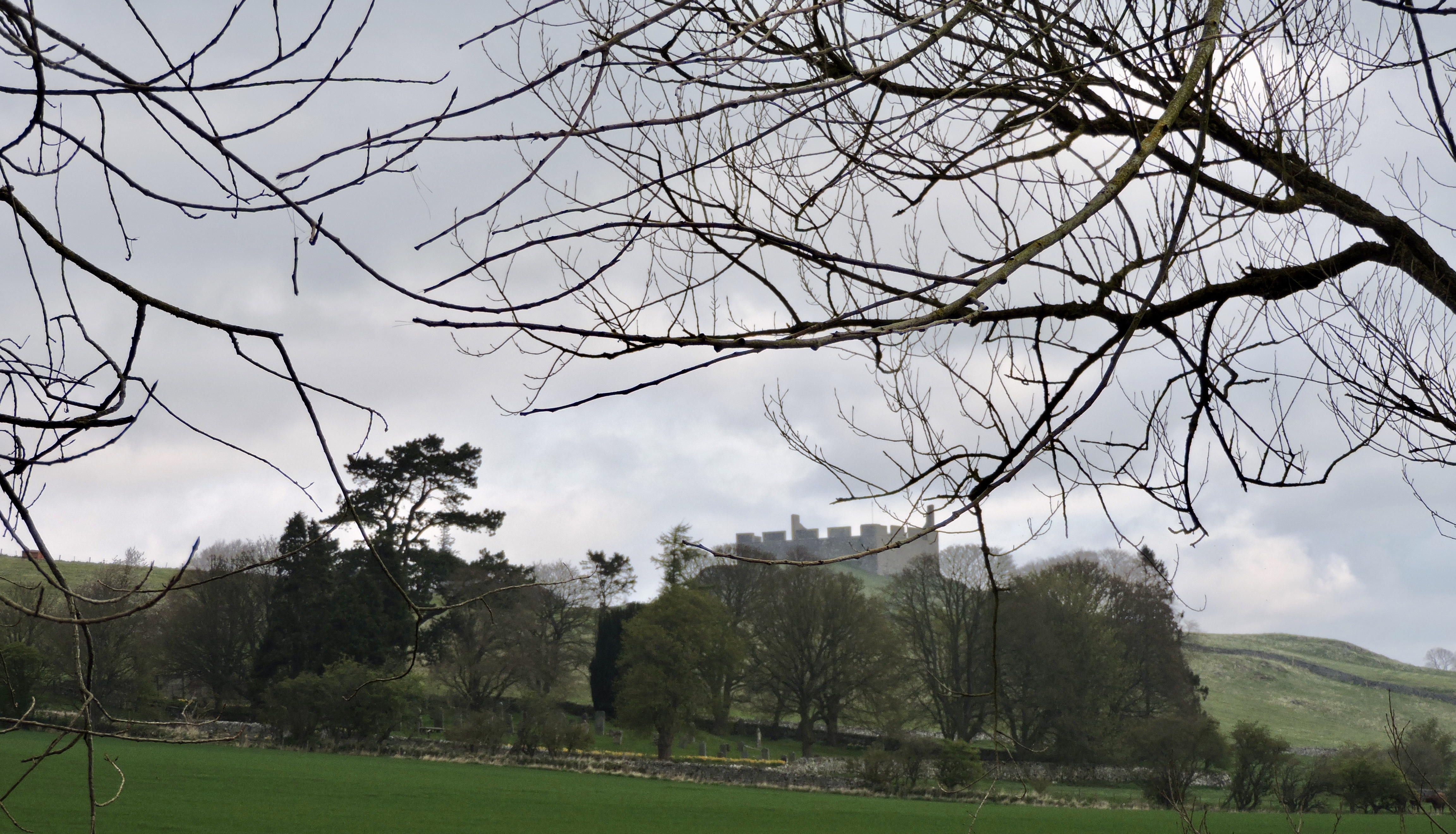
We haven’t had the sunshine that many of you have had recently, although its not so cold at the moment – just a bit grey. Yesterday morning we repeated last week’s walk, but backwards….makes a change and the views are different! You can see Hume Castle nearly all the way from different angles.
We started out in bright sun but by the time we got to the garden gate grey clouds had arrived again! There were a few exciting moments – I managed to get my first photo of a yellowhammer (Emberiza citrinella)!
I’m very pleased about this one, they’re quite flighty and difficult to capture but we spotted this one alone in a tree as we walked towards the farm. Lovely bright yellow head – although I’ve seen brighter ones than this one – my RSPB book says that in winter the yellow is obscured by greenish-brown streaks so I suspect this one is still changing its plumage or it’s a juvenile. They are found throughout Britain but are red listed due to a recent decline in numbers mirroring that of other farmland species – loss of wide field margins, autumn planting and use of herbicides impacting breeding. We have a flock of yellowhammers just along the road from us, and the other day after the field opposite was planted I spotted one in our hedge which then flew down to help itself to the new seed, but apart from that one I haven’t seen them venture this far along the road before.
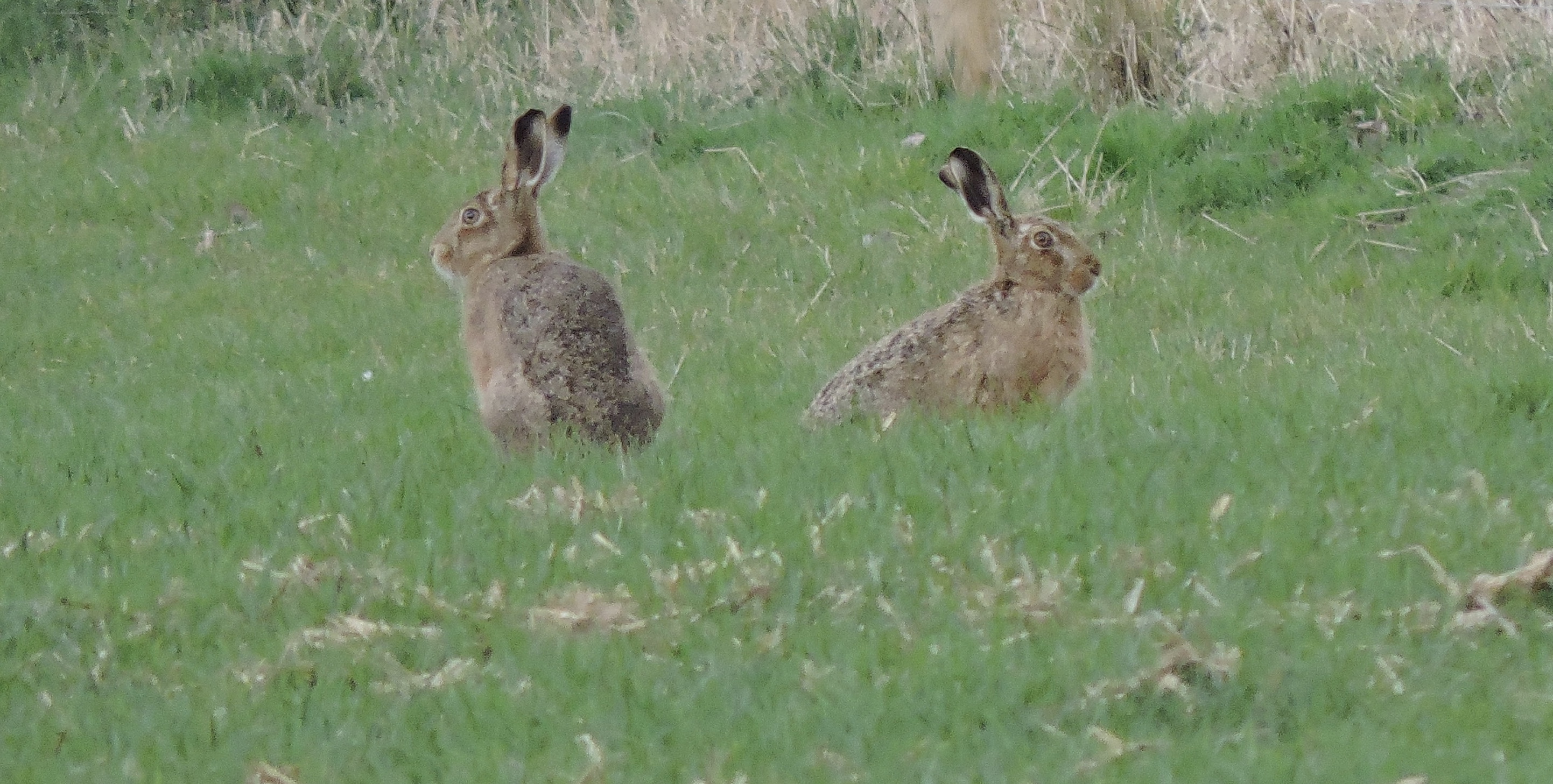
A little further along the road we saw this pair of hares sitting in a field, we watched them for a little while – as long as you’re quiet they don’t notice you.
Apparently their eyesight is not good but their hearing is. Which explains why out walking in the early mornings they often lollop towards you getting quite close before noticing you’re there.
Remember the Swiss sheep with the curly horns? – they’ve taken their coats off:
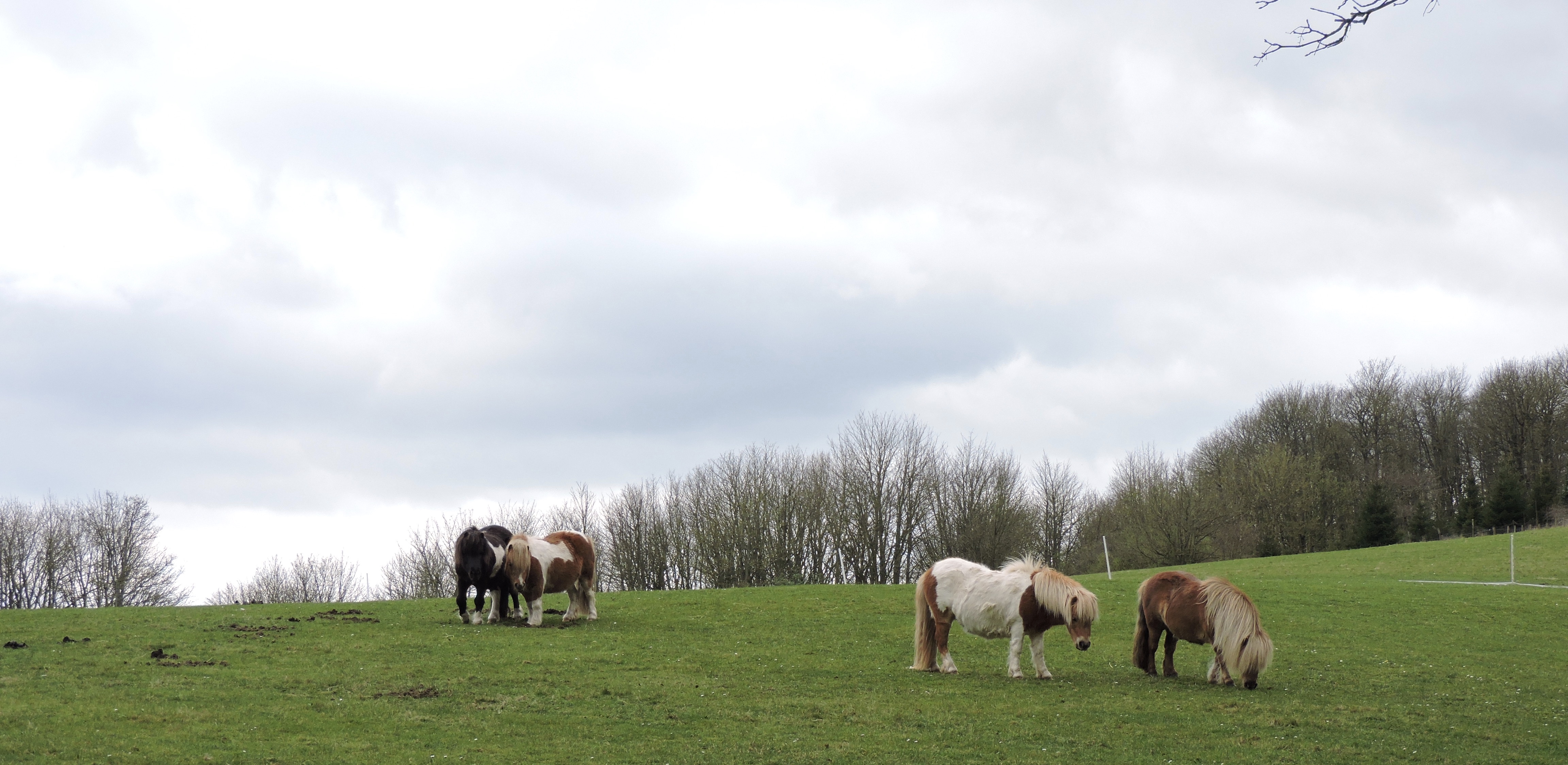
and the pony with laminitis has moved back in with his mates:
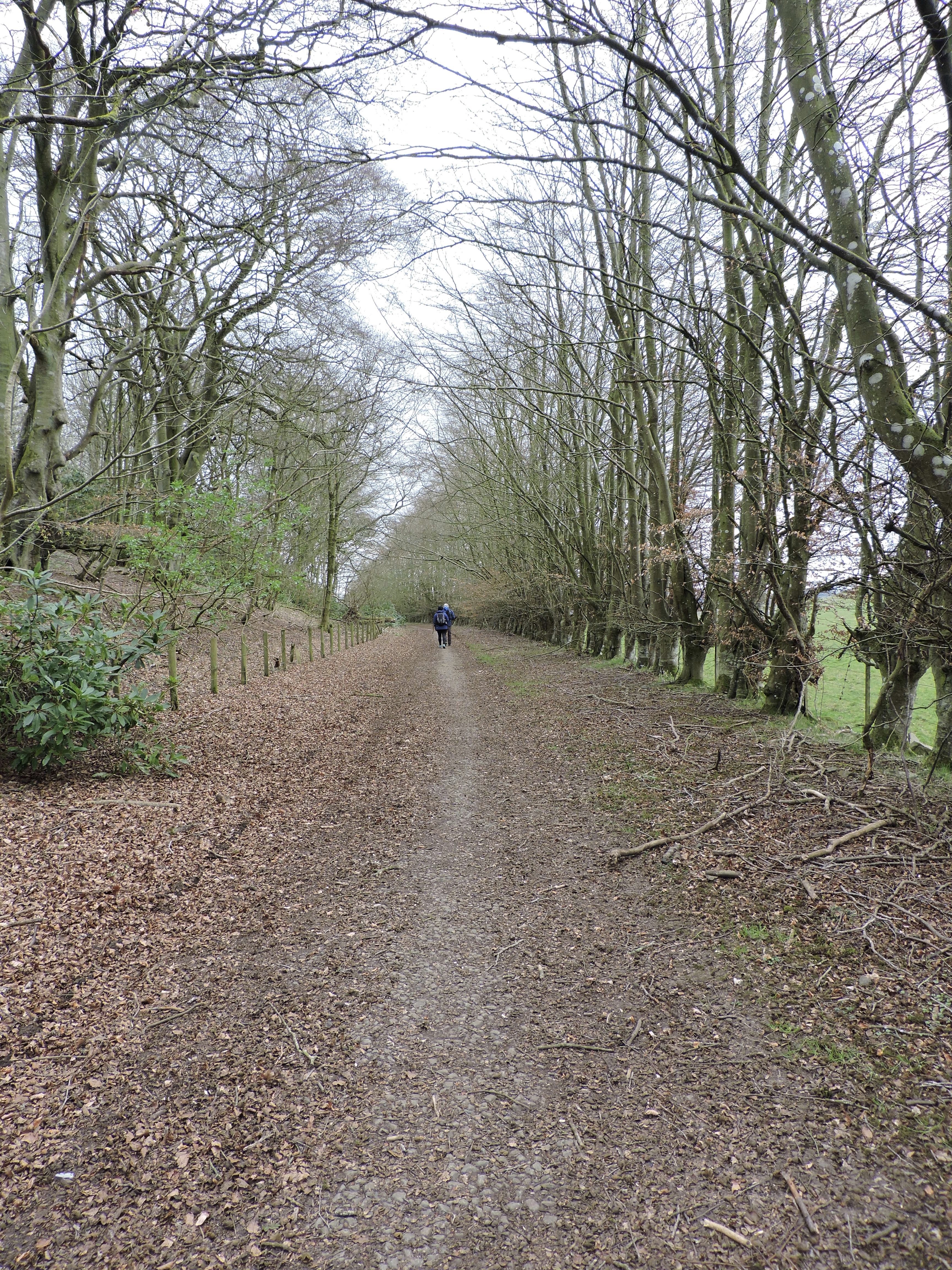
It’s a lovely walk along this track, there’s a woodland on one side and views of Sweethope Hill on the other, I love woods like this with gnarled old trees and mossy logs,
although I do think my companions are taking social distancing a bit far!
Wait for me!
We spotted a kestrel near the end of the track, hovering and diving, obviously after its lunch, but I couldn’t manage to get a photo.
Walking this way round means we have to go up a long steep hill, my feet were really painful by this point so we took a rest on a mossy boulder and ate chocolate flapjacks – another highlight – the young Ms RR makes delicious flapjacks from an adapted Nigel Slater recipe, they have quickly become my favourite snack!
Perfect for taking a quick break to rest the sore feet. A flock of sheep watched jealously:
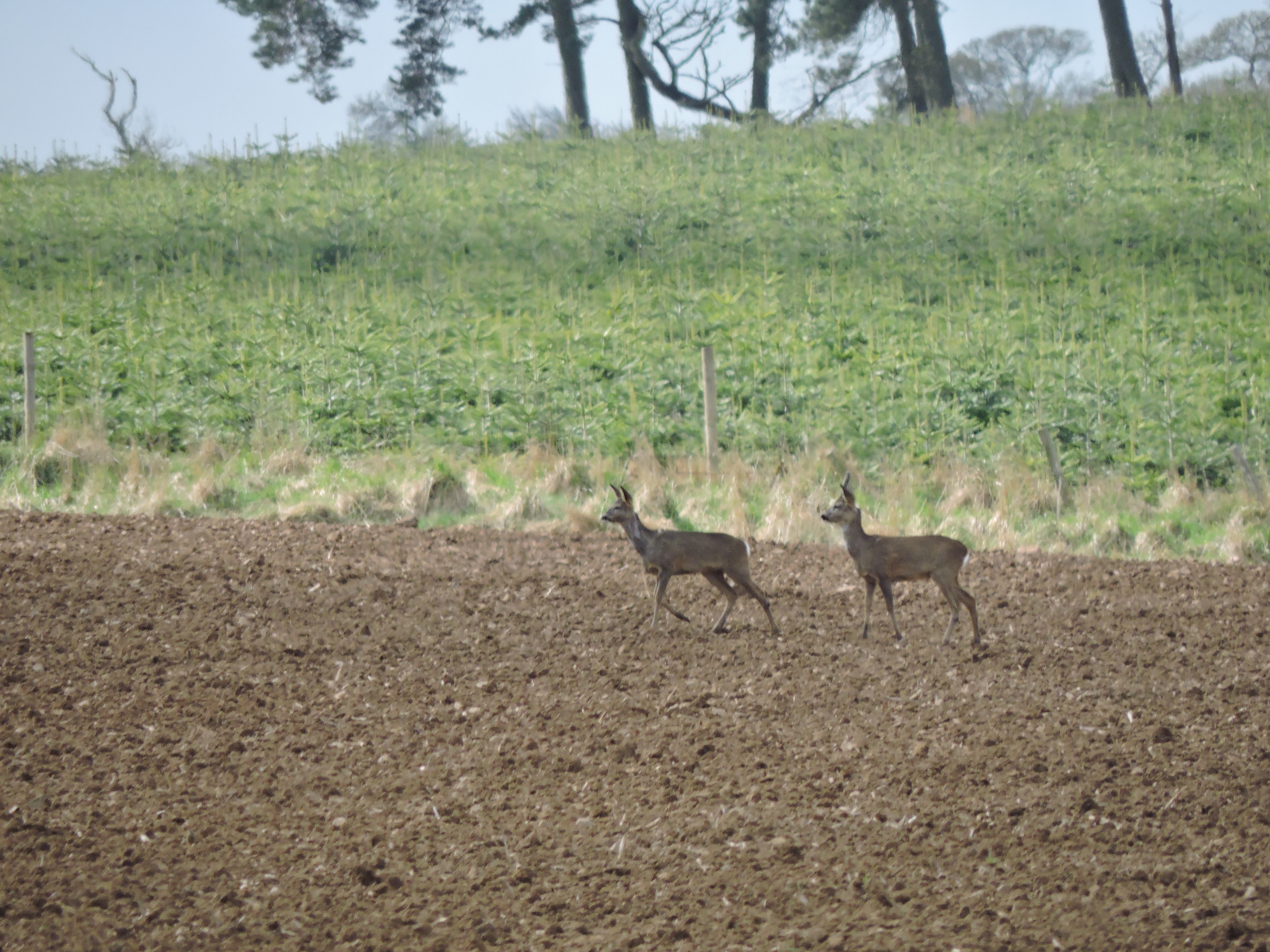
As we got to the top of the hill more ploughing in progress plus the spreading of some very pungent fertiliser! Earlier we’d seen a deer hoof print in the mud and as we walked by all the activity we saw a pair of deer, panicked by the machinery trying to find their way to the woods. They made several false starts before suddenly making a run for it and escaping.
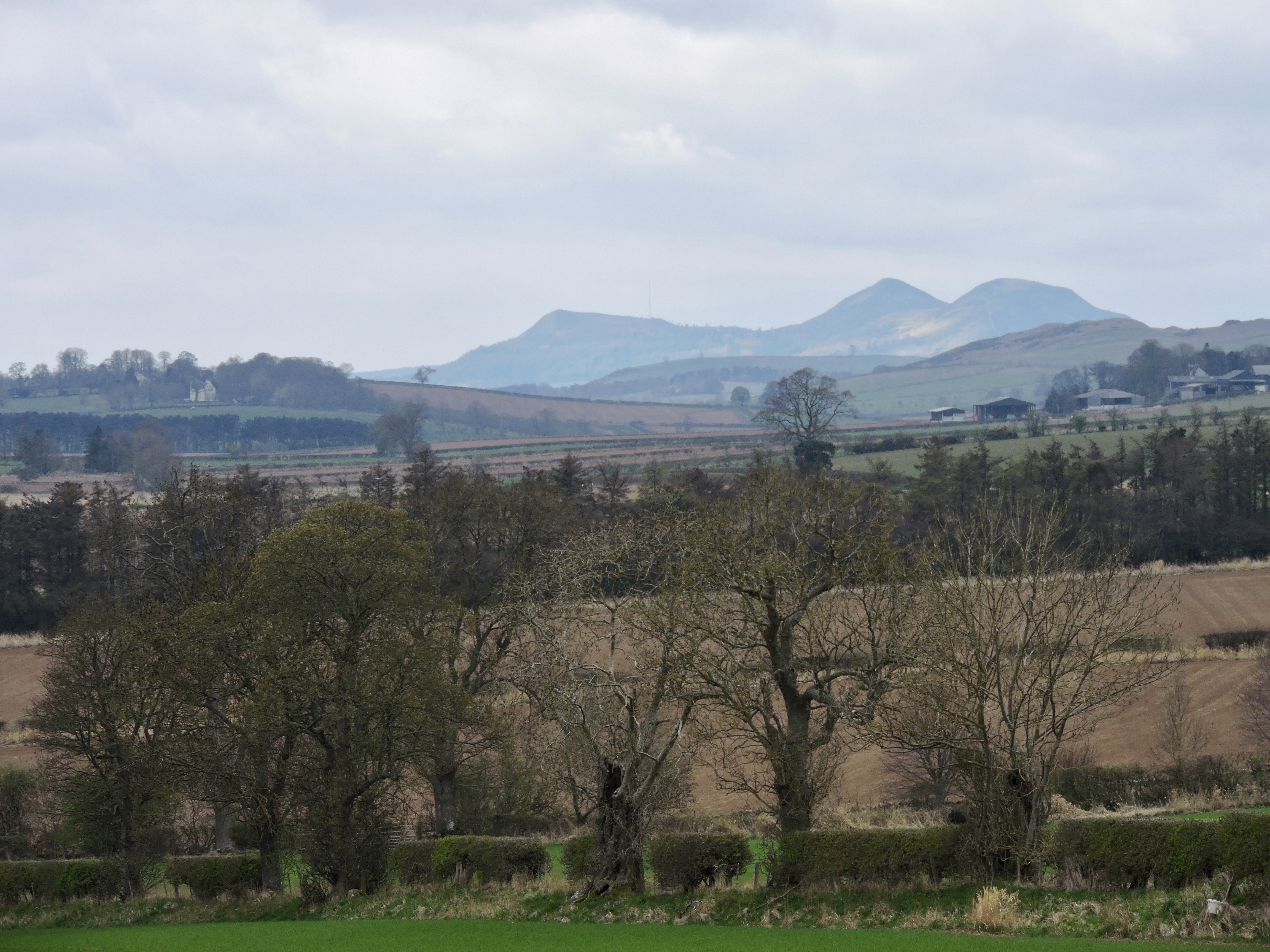
Turning the corner to head downhill towards home, we could see lovely views of the Eildon Hills….
…..and a beautifully mown field – I love a pattern!
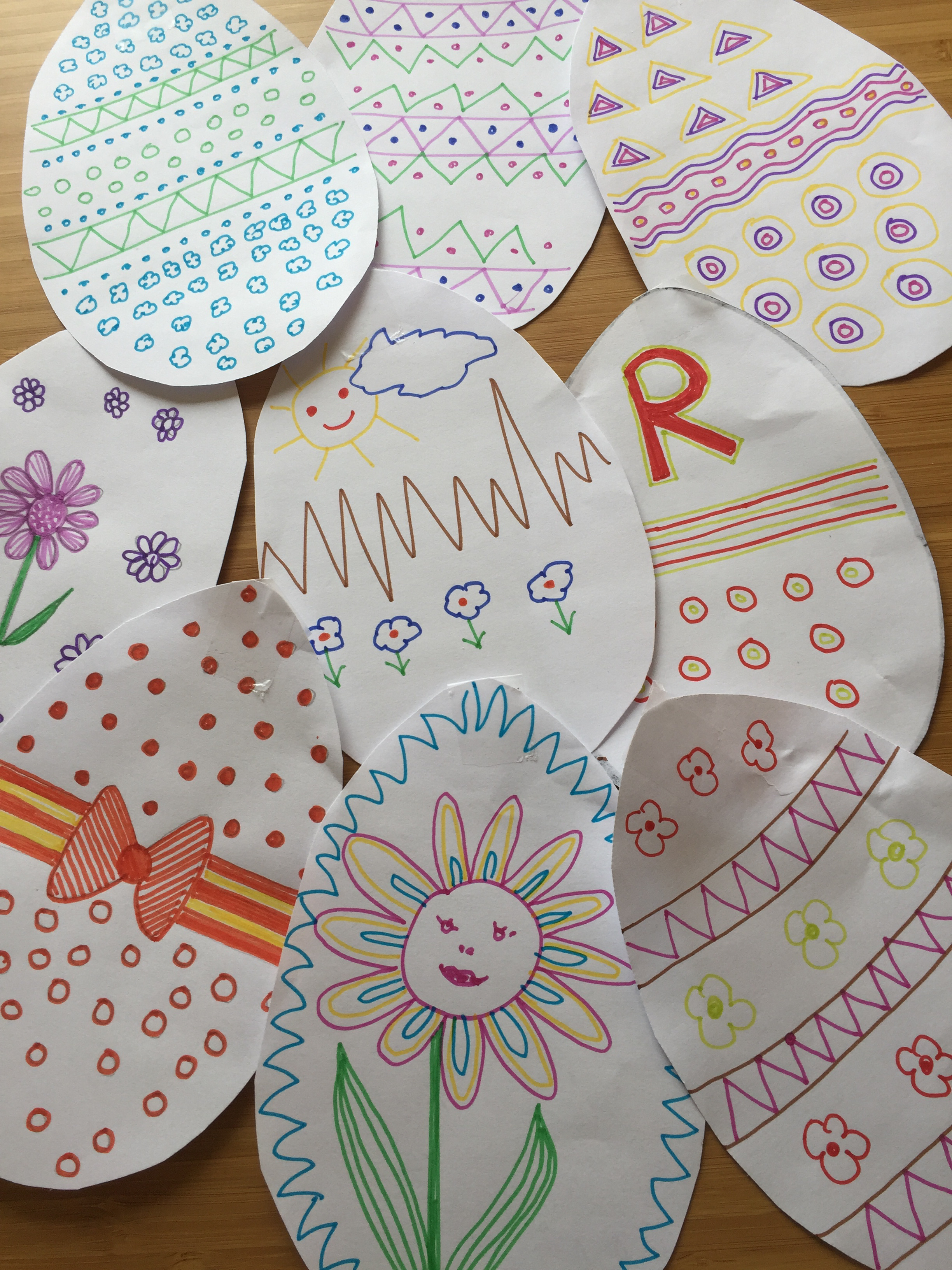
There were more highlights to come: A virtual Easter Egg hunt via Zoom with our grandson – we stuck paper eggs up around the room:
and he got a real ‘chocolate ball’ when he answered the clue and found the eggs; he seemed to enjoy it anyway! Also a surprise Easter Egg hunt of our own devised by Ms RR;
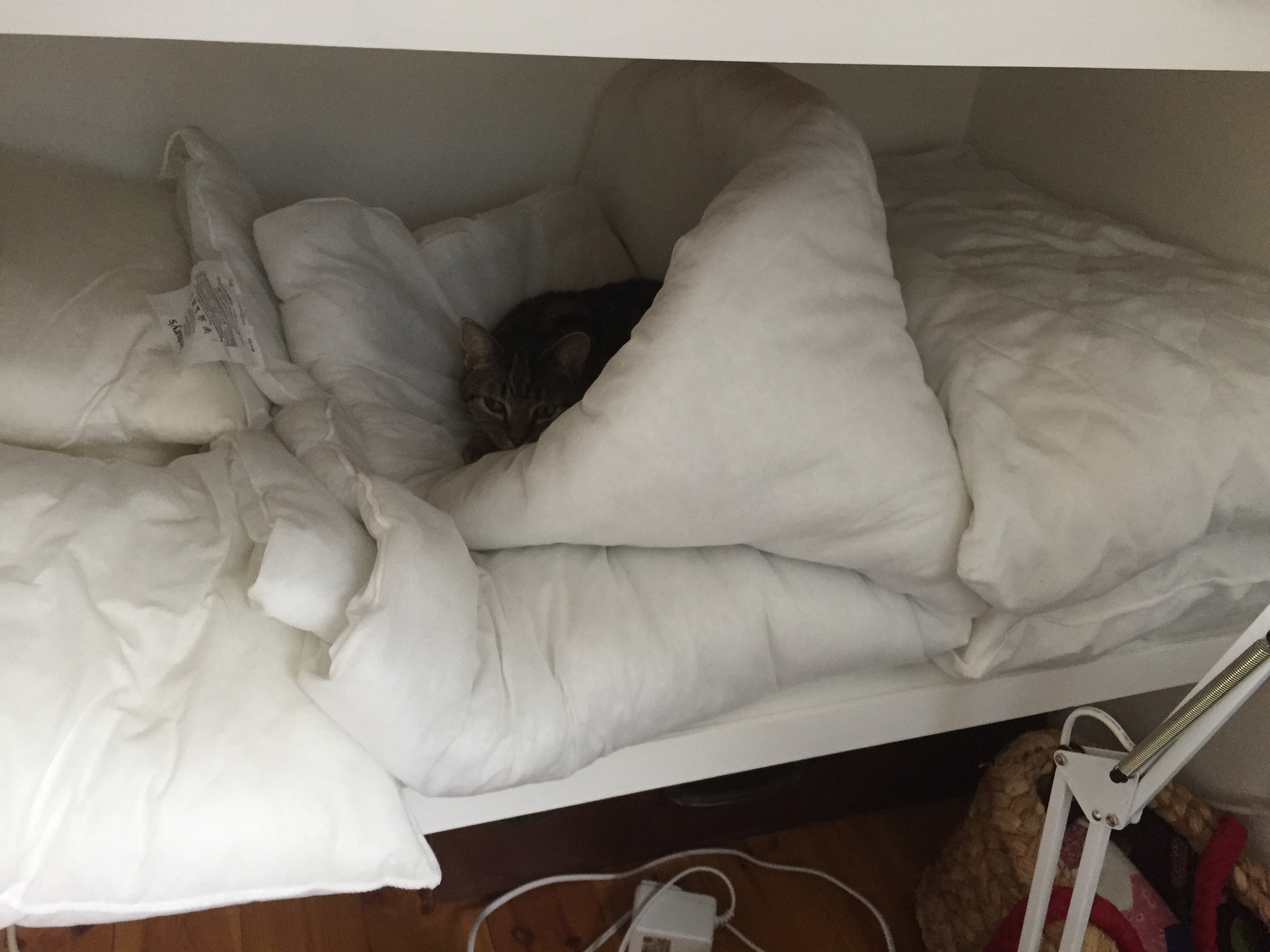
and a half eaten mouse left specially for us by Mojo! I decided not to take a picture of it….but here’s the culprit in hiding:
Makes of the week – not so much knitting and sewing this week although I did start a rainbow which needs sewing together. Managed to produce some hot-cross buns although they don’t look much like the real thing, they taste alright. Plus a chocolate sponge cake as I didn’t buy any Easter Eggs – which I made before remembering that Ms RR does not like sponge cake!! More for me then 😁!
Maybe see you next week! Let me know what you’re reading at the moment…I need a good book! I hate choosing books online, it’s just not the same as picking it up and flicking through.








































 ricketyrambler