Inveresk Lodge Garden and Aberlady

Two lovely Scottish names to pick apart today and two beautiful places to talk about. We visited the National Trust for Scotland’s Inveresk Lodge Garden which is near Musselburgh a couple of weeks ago before popping along the coast past some wonderfully named places – Prestonpans, Cockenzie and Longniddry to the lovely little town of Aberlady – one of my favourite places in East Lothian.

Inveresk:

Inver… meaning the mouth of a river and Esk being the name of the river – so Inveresk. Esk is the name of several rivers in England and Scotland and is probably from the Brythonic (Celtic) word – meaning “water”.

Aberlady:

Aber…..also meaning the mouth of a river or where the waters meet – also probably Brythonic – and “lady” probably was an earlier name for the West Peffer Burn which is the stream which flows into the Firth of Forth at this point. Interestingly “Peffer” also comes from the same language and means ‘radiant’ or ‘beautiful’.

So now you know – two places at the mouth of streams or rivers where they flow into the Firth of Forth.

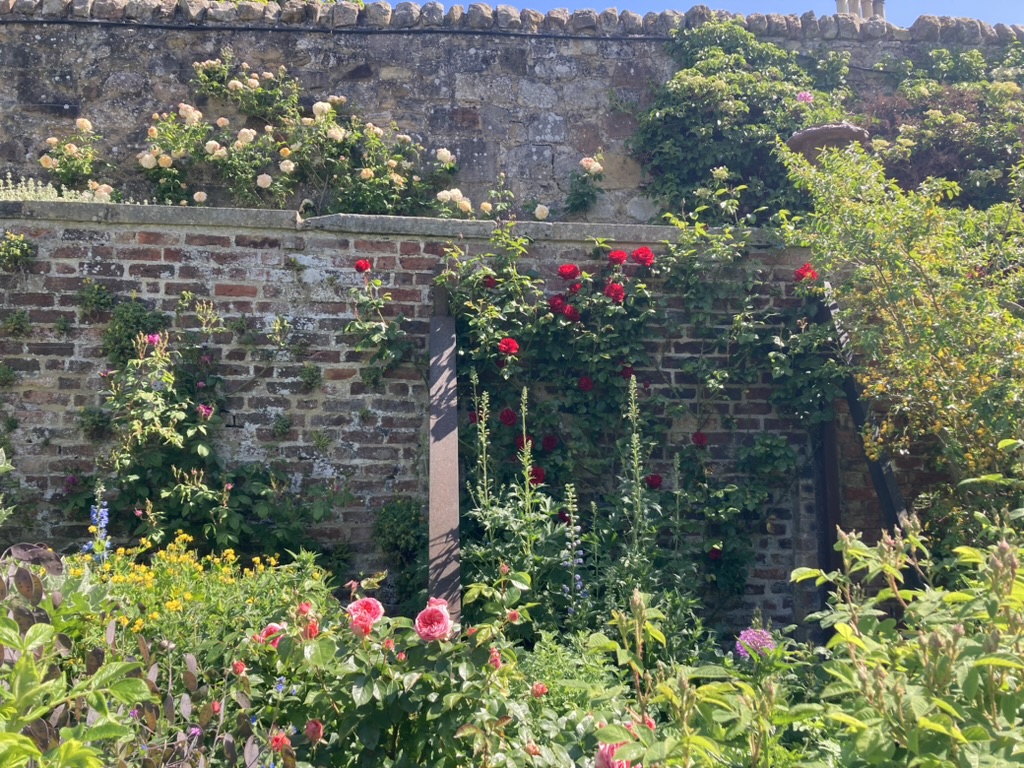
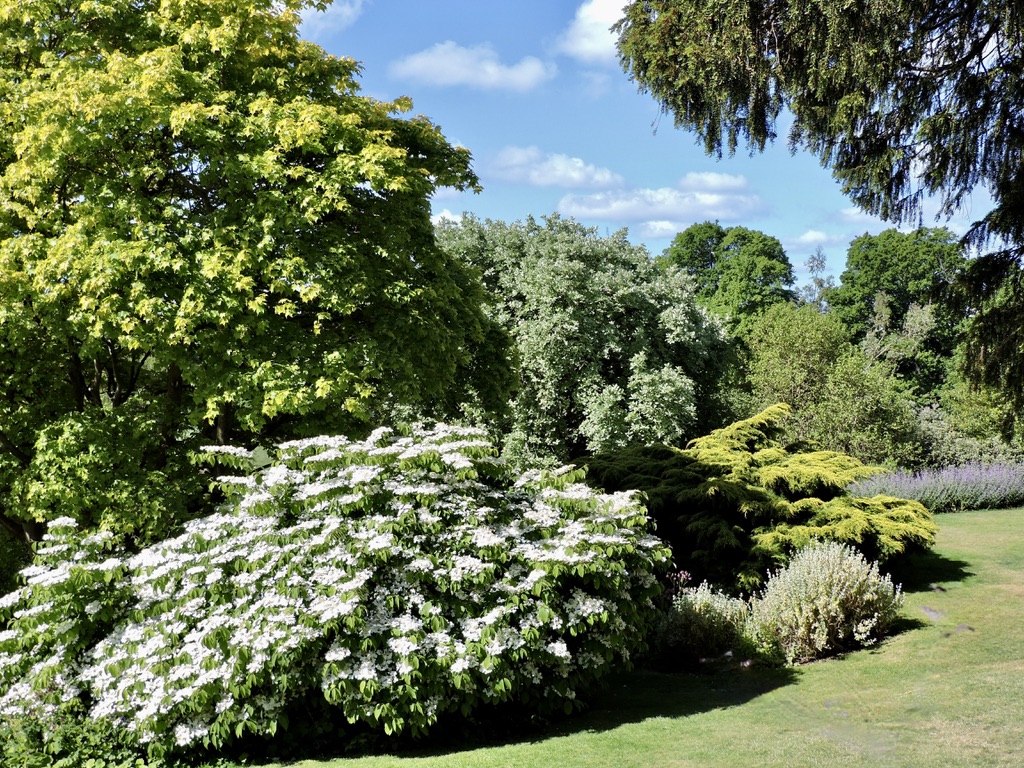
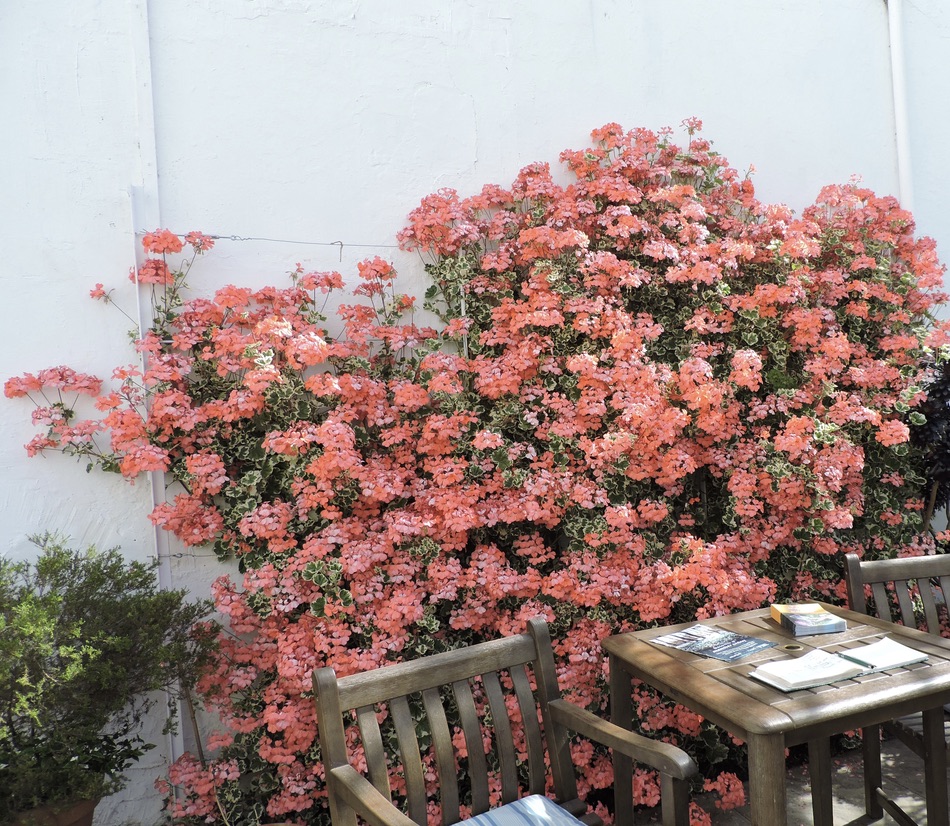
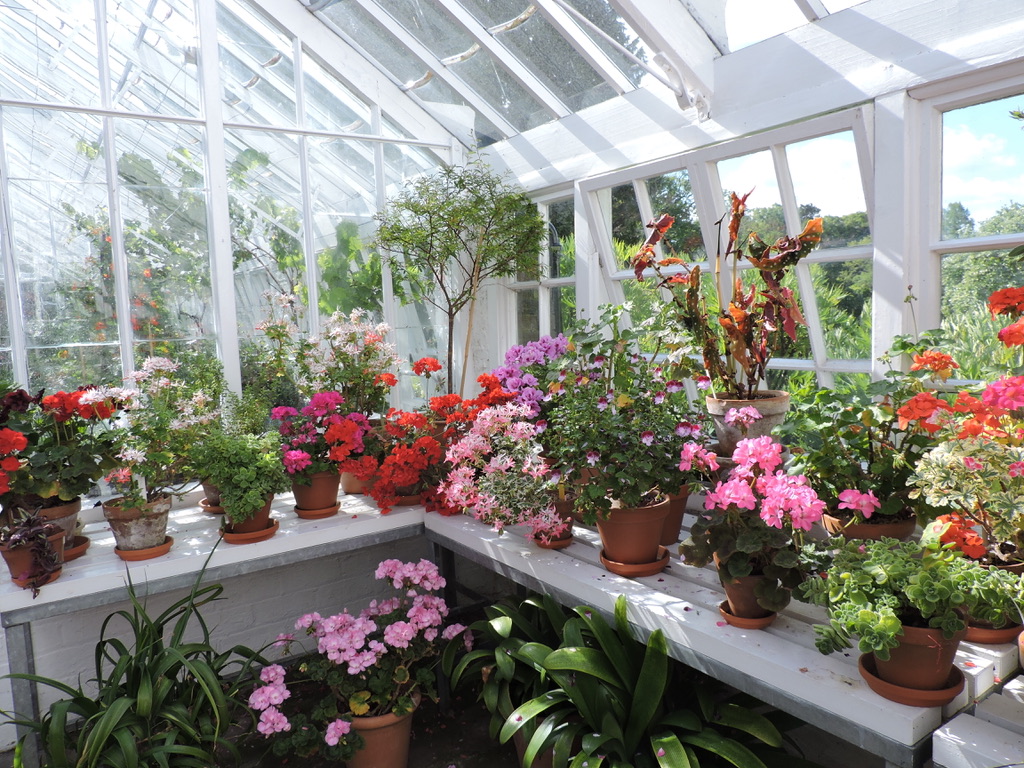
Inveresk is a pretty historic village which seems to be on its way to becoming a suburb of Musselburgh judging by the amount of house building going on on its outskirts. We may go back for a walk around the old village one day but this time we headed straight into the Lodge Gardens which are split into two areas – the greenhouses and lawned area with their pretty borders, and the wilder hillside woods, meadows and ponds. The greenhouse was notable for its astonishing wall of geranium – I’ve never seen a geranium climbing like this one before:
We wandered through the woods and meadows and around the ponds which contained millions of tadpoles, and then back up to the more formal lawned area.
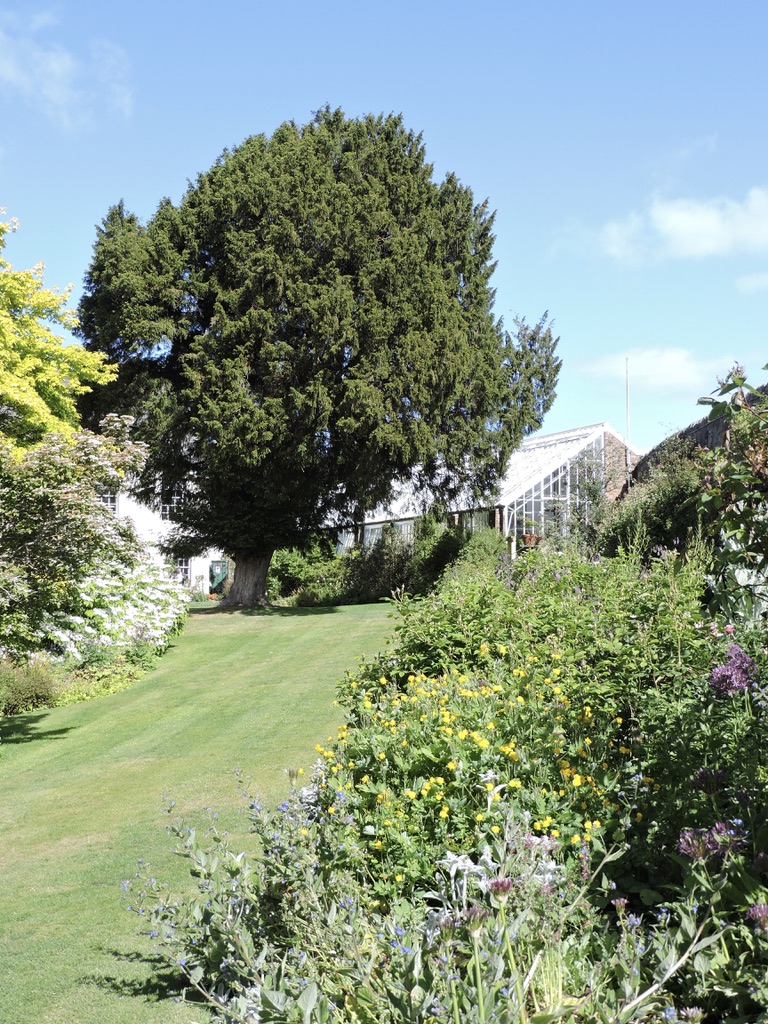
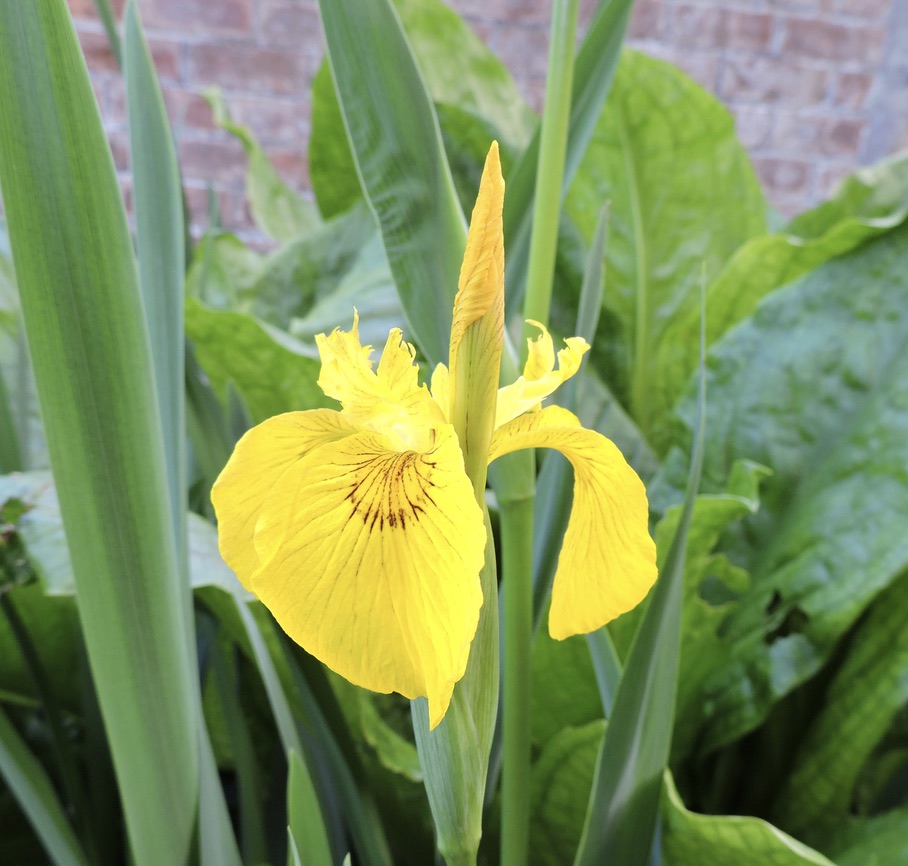
This beautiful flag iris was in the border, we have some in flower right now in our pond at home. I would nip out and grab a photo but some much needed torrential rain is happening and I’m not inclined to get that wet!

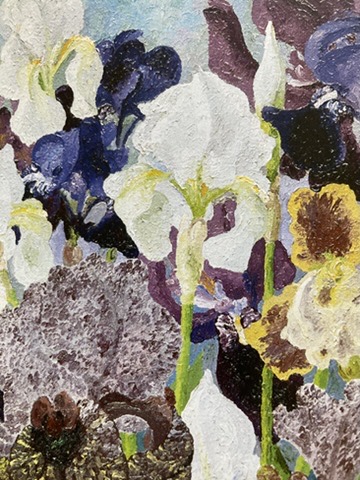
Talking about Irises and just digressing for a minute – today we went to Berwick-Upon-Tweed and saw an exhibition of work by Cedric Morris, a British artist and plantsman. He became obsessed with irises and bred bearded irises from seed – and then of course, he painted them. I’m not so good at the art appreciation stuff – but I quite liked his flower paintings – here’s a little bit of one taken from a card (May Flowering Irises – 1935).
Anyway – onward to Aberlady!

We were really ready for lunch when we got to the outskirts of Aberlady and we had been well-prepared and, checking online found a lovely farmshop and cafe…..except when we got there….no cafe!! This was disappointing to say the least because we knew that there were very few places to get lunch in Aberlady, however we had a wander through the main street and ended up in a lovely hotel garden with delicious scones and tea so all was not lost (though lunch would have been nice).

In the middle ages Aberlady was a port serving the old county town of Haddington, but it actually dates back much earlier than that to around the 7th century when it had a role is supporting pilgrims travelling between Iona to the North and Lindisfarne to the south.

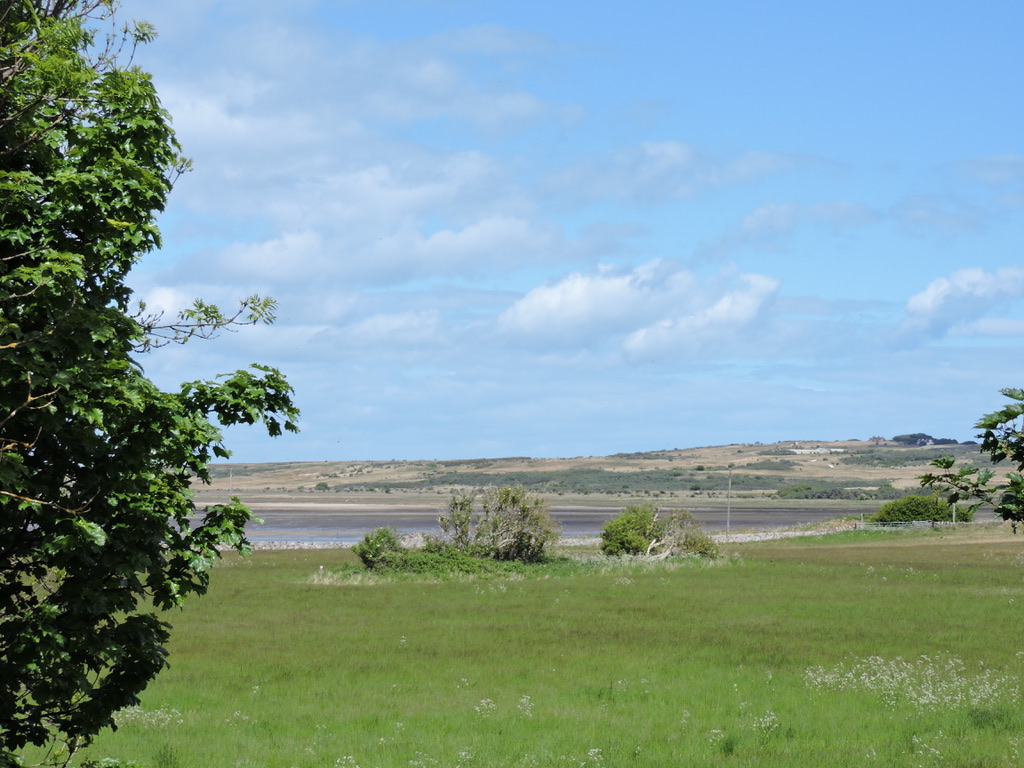
After our scones we walked on along the road to the parish church with its well-tended grounds and walked through to admire the estuary from viewpoint.
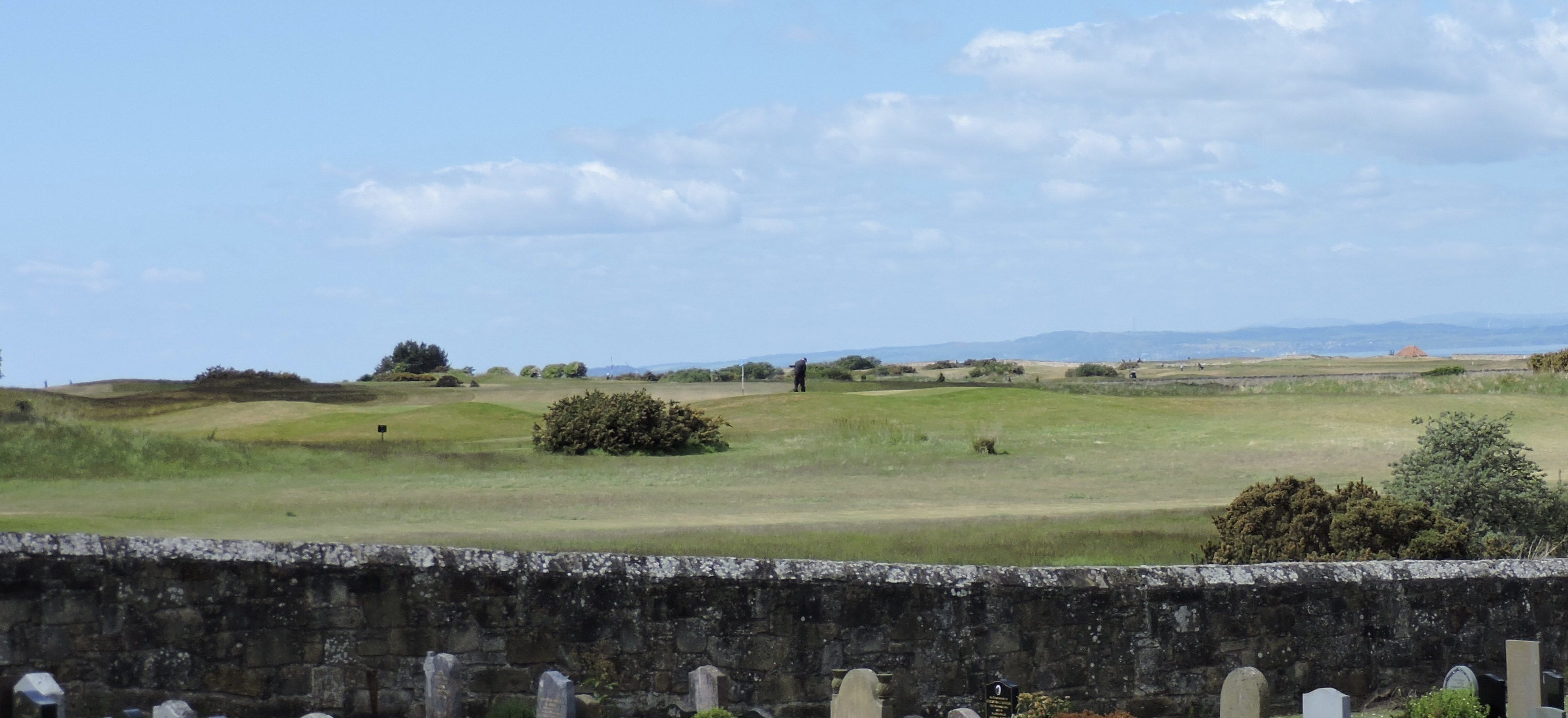
The view from the churchyard to the Firth of Forth across the golf course – this part of East Lothian is full of golf courses!
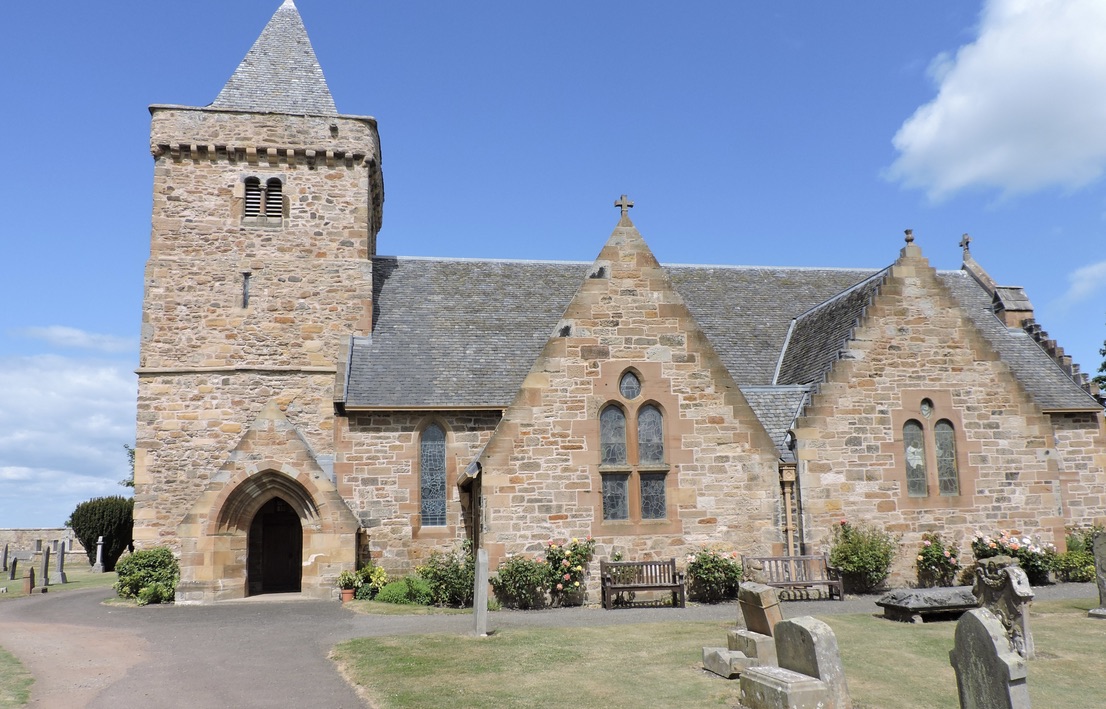
The very well looked after Parish Church of Aberlady

Right next to the churchyard is Coffin Lane (!) and we walked through here to walk back to the main road along the coast road.
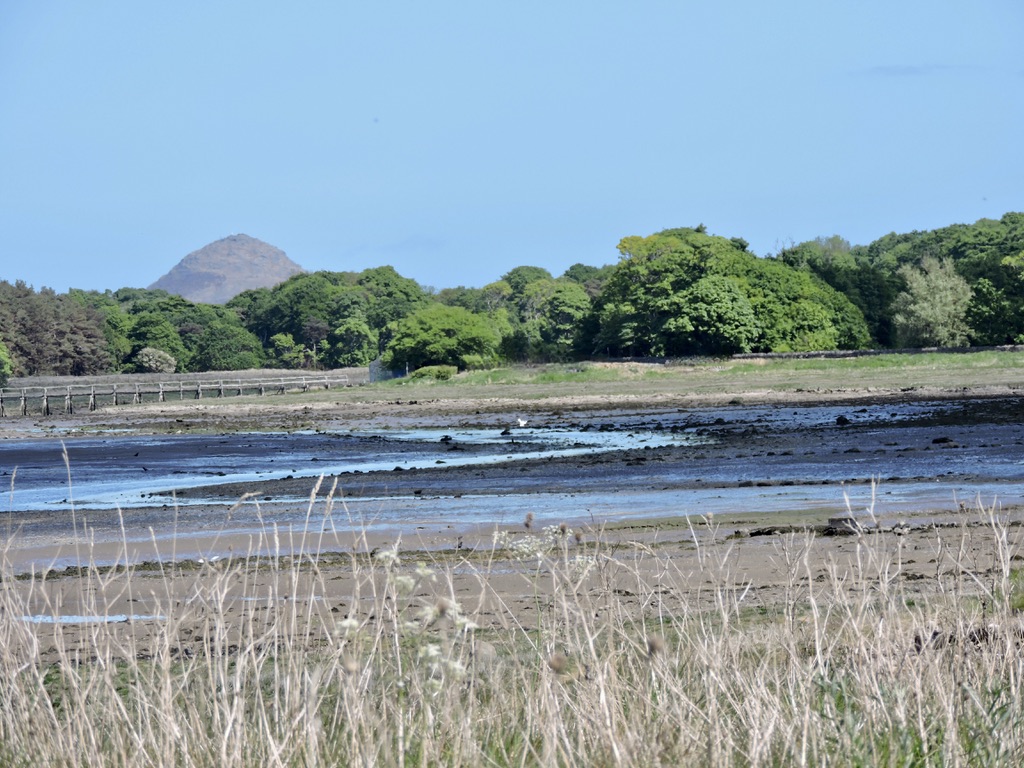
The view looking inland – the hill in the background is Berwick Law, a very steep hill that I have climbed once in the distant past. Maybe its time to try it again!

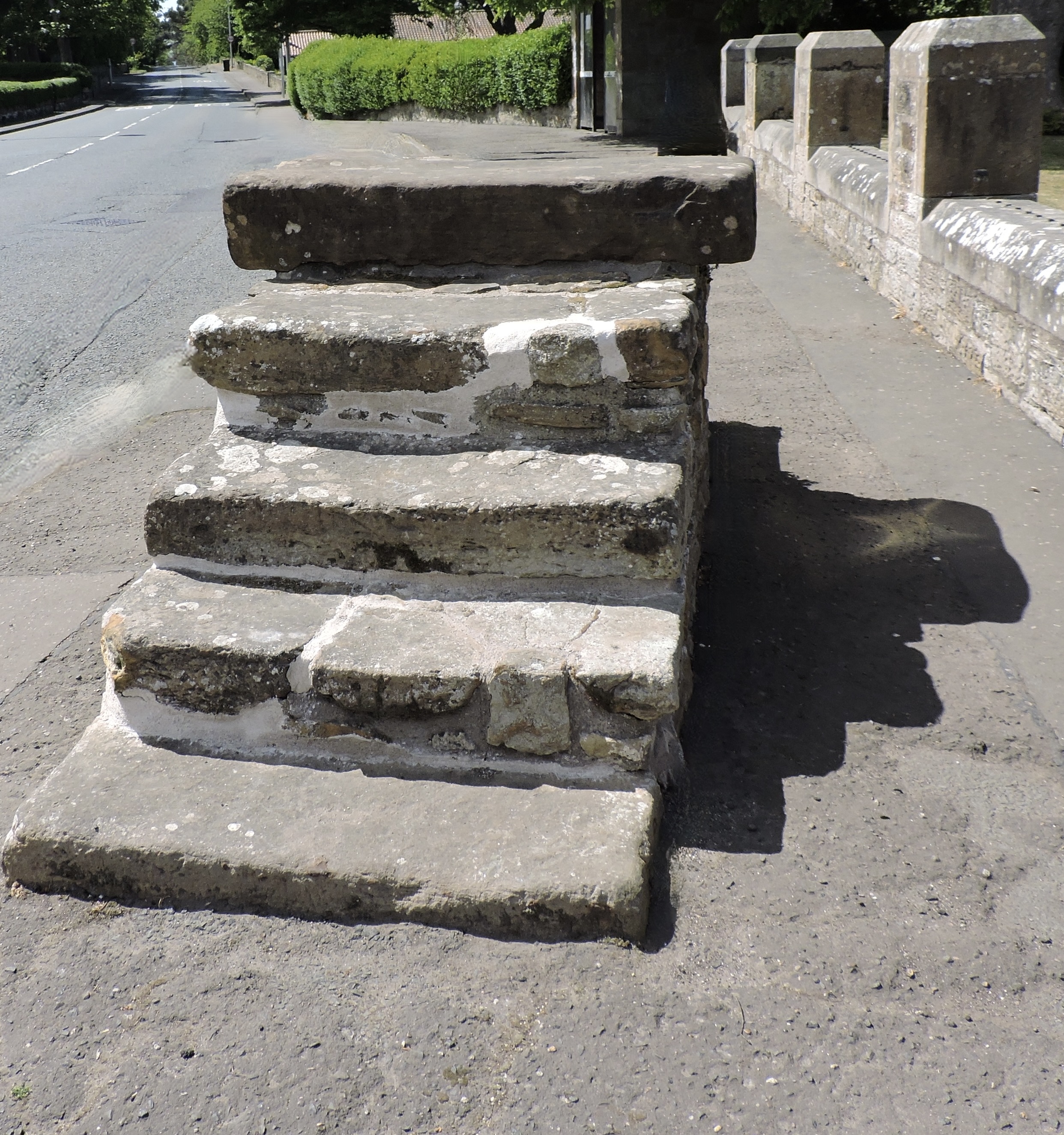
We follow the road out of town towards the Scottish Ornithological Centre at Waterston House passing this set of steps right in the middle of the pavement on the way – I know what they are but do you have any ideas what they are for? Comment below with your answer……
Blue skies had appeared by the time we arrived at the bird centre – this is a view of the pond taken from inside the viewing room.

The only bird we saw though was a moorhen:
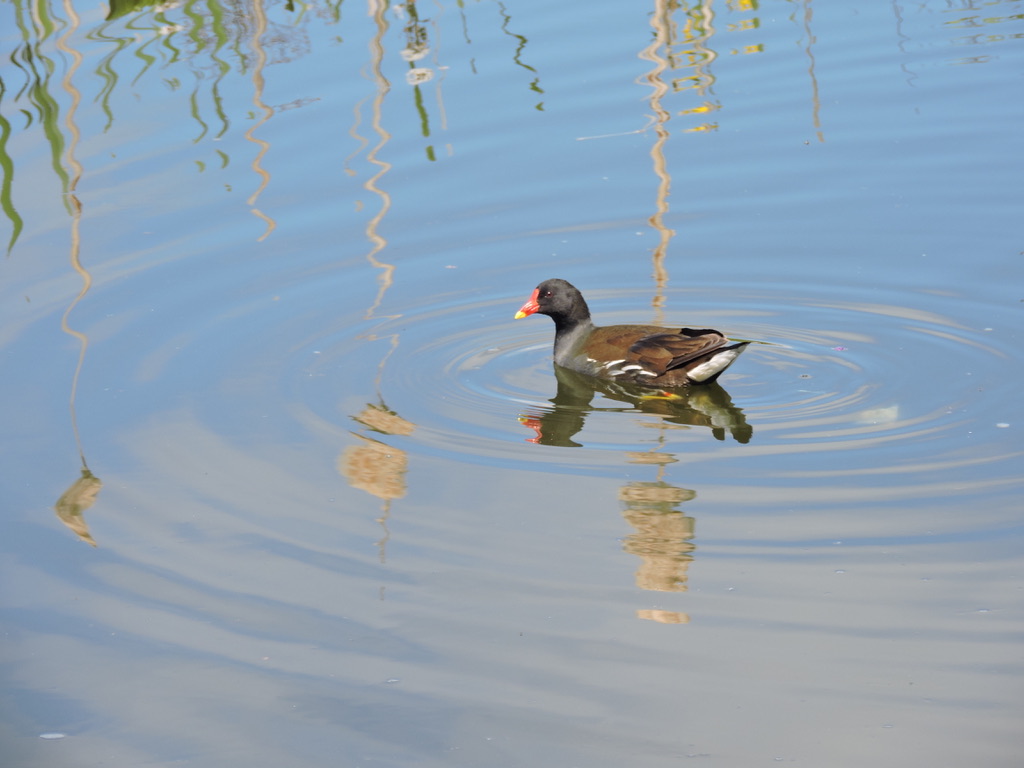
I love how his movement disturbs the reflection of the bullrushes!

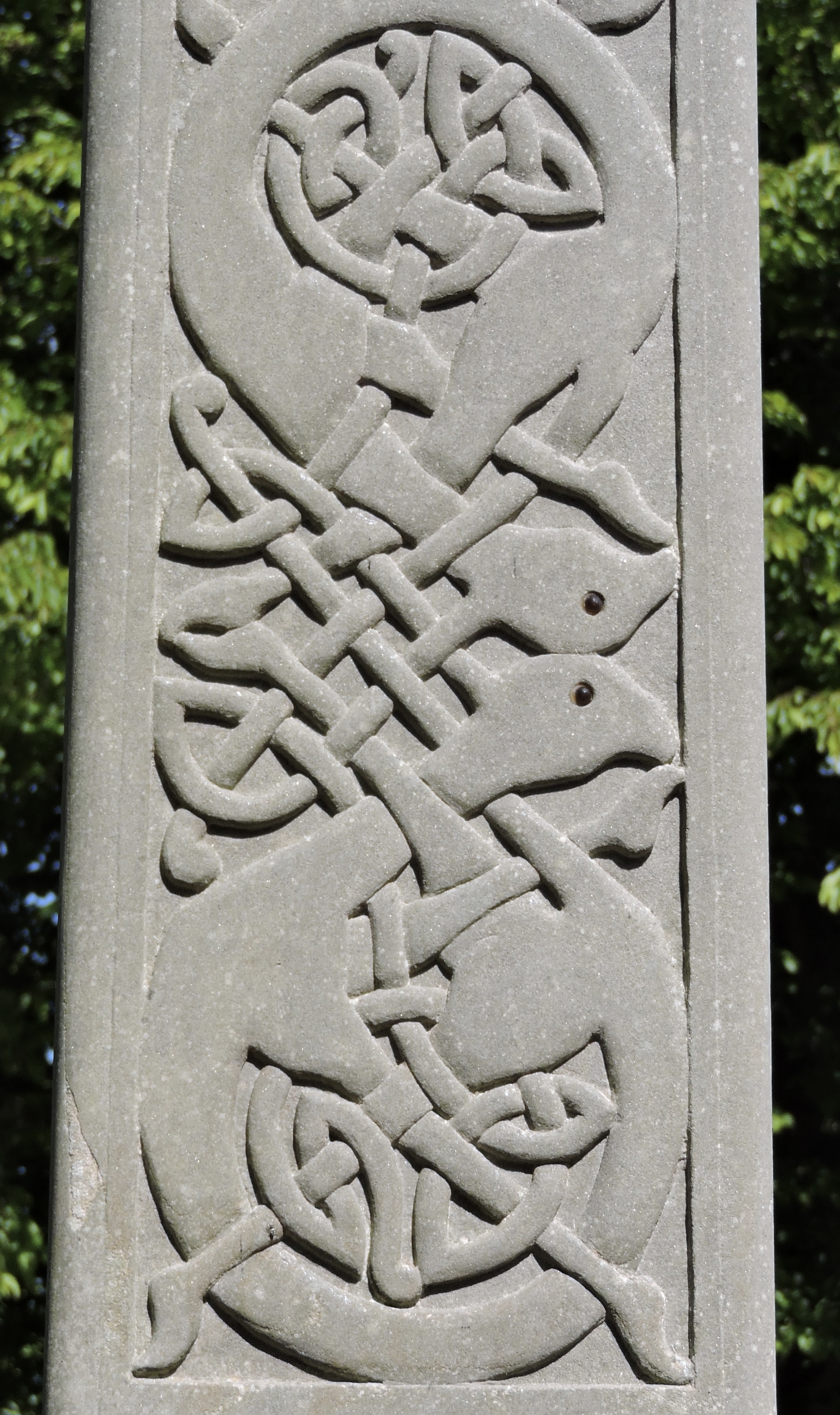
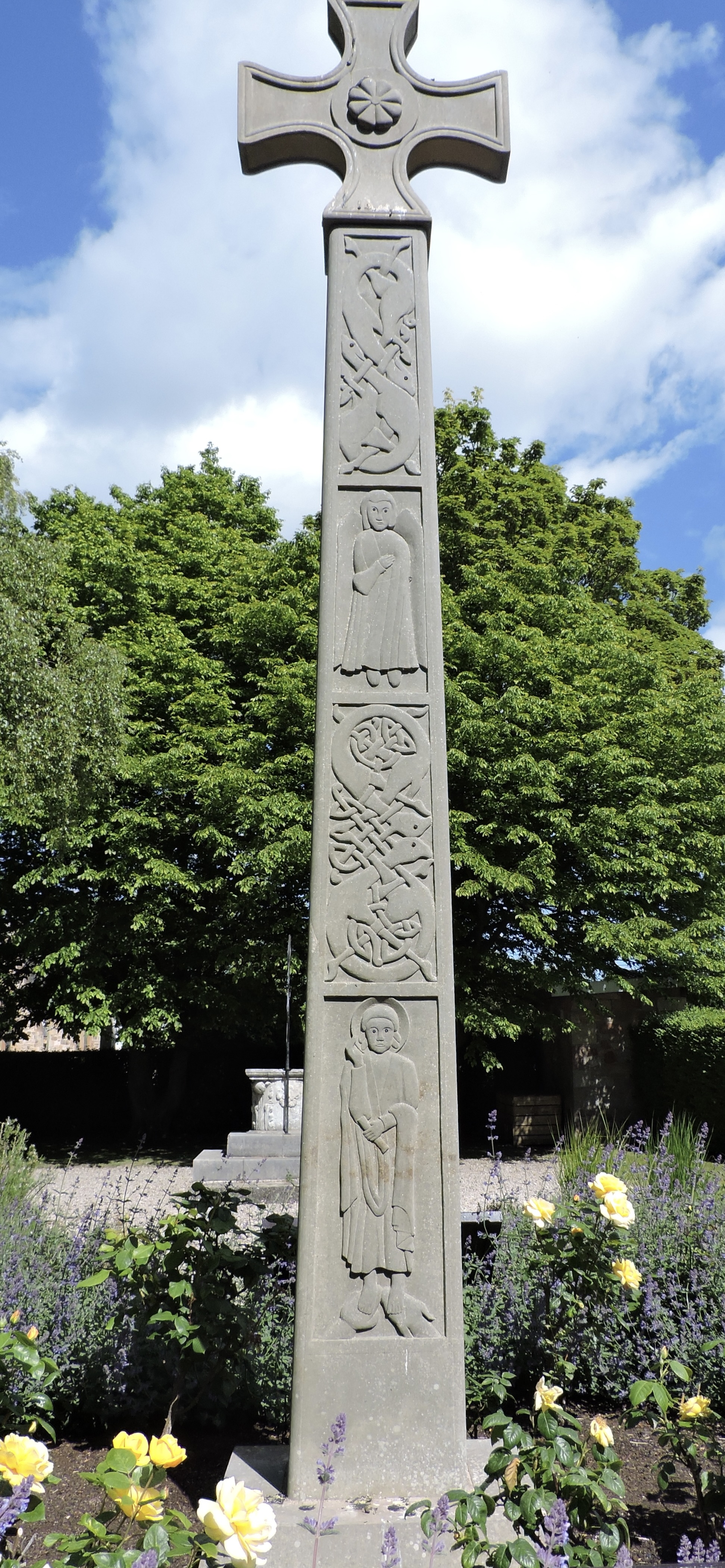
Back on the road through town we stop to admire the Memorial Garden which has a reconstruction of an ancient Anglo Saxon cross, a fragment of which was found in a garden wall adjacent to the kirkyard. The original would have been around 5 metres tall and carved with vine scrolls and seabirds.
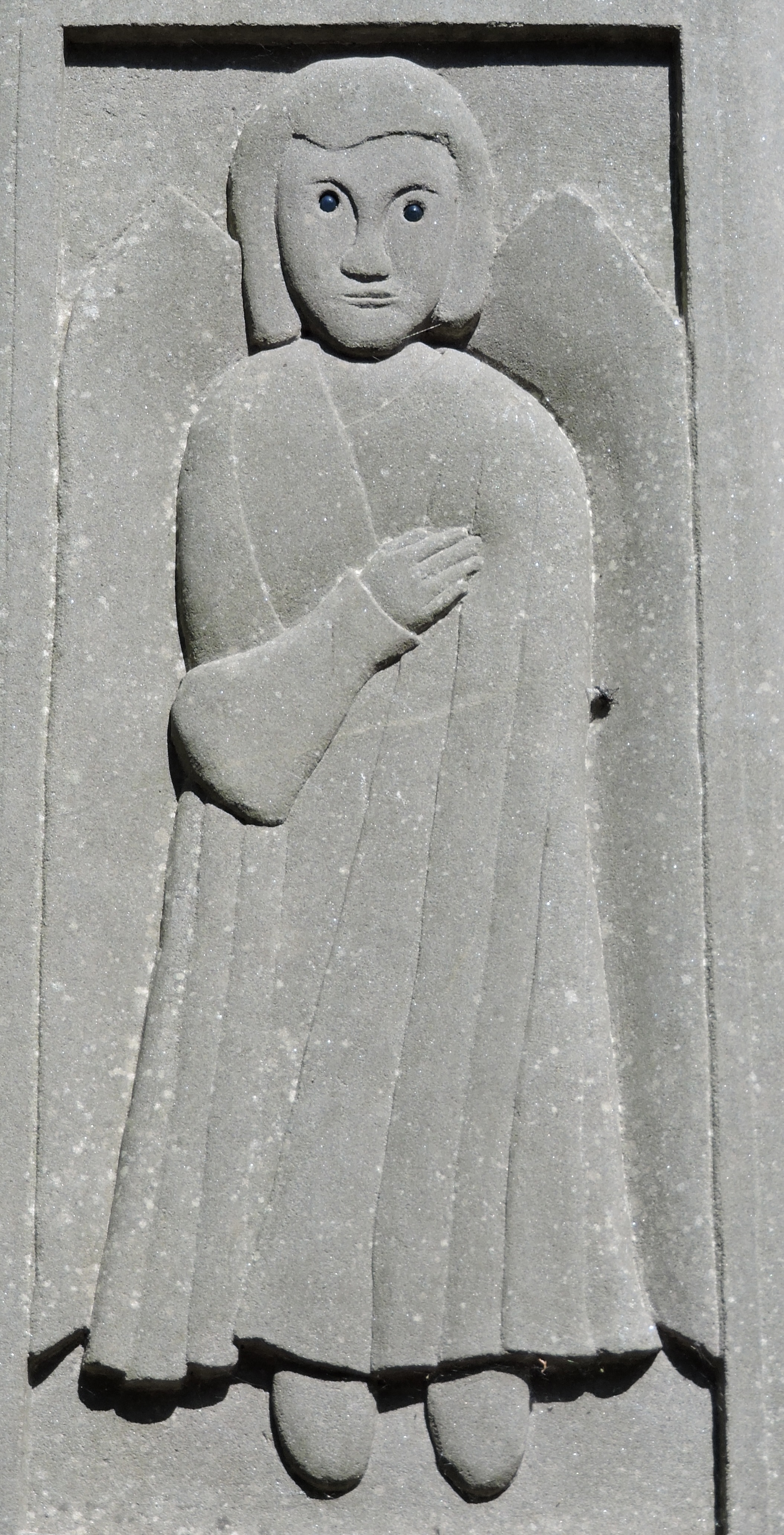
That’s it! Time to go home.

Thanks for reading and especially thanks to people who have been taking the trouble to comment on these posts, especially as it seems that you have had to sign up to WordPress to do this. I’ve now disabled this setting – I hope! I’m still getting to grips with this new version of WordPress so let me know…..and don’t forget to let me know what you think those steps are for.

St Abb’s to Pettico Wick

St Abb’s to Pettico Wick and return via Mire Loch (3.5 miles)

IMG_1511.JPG
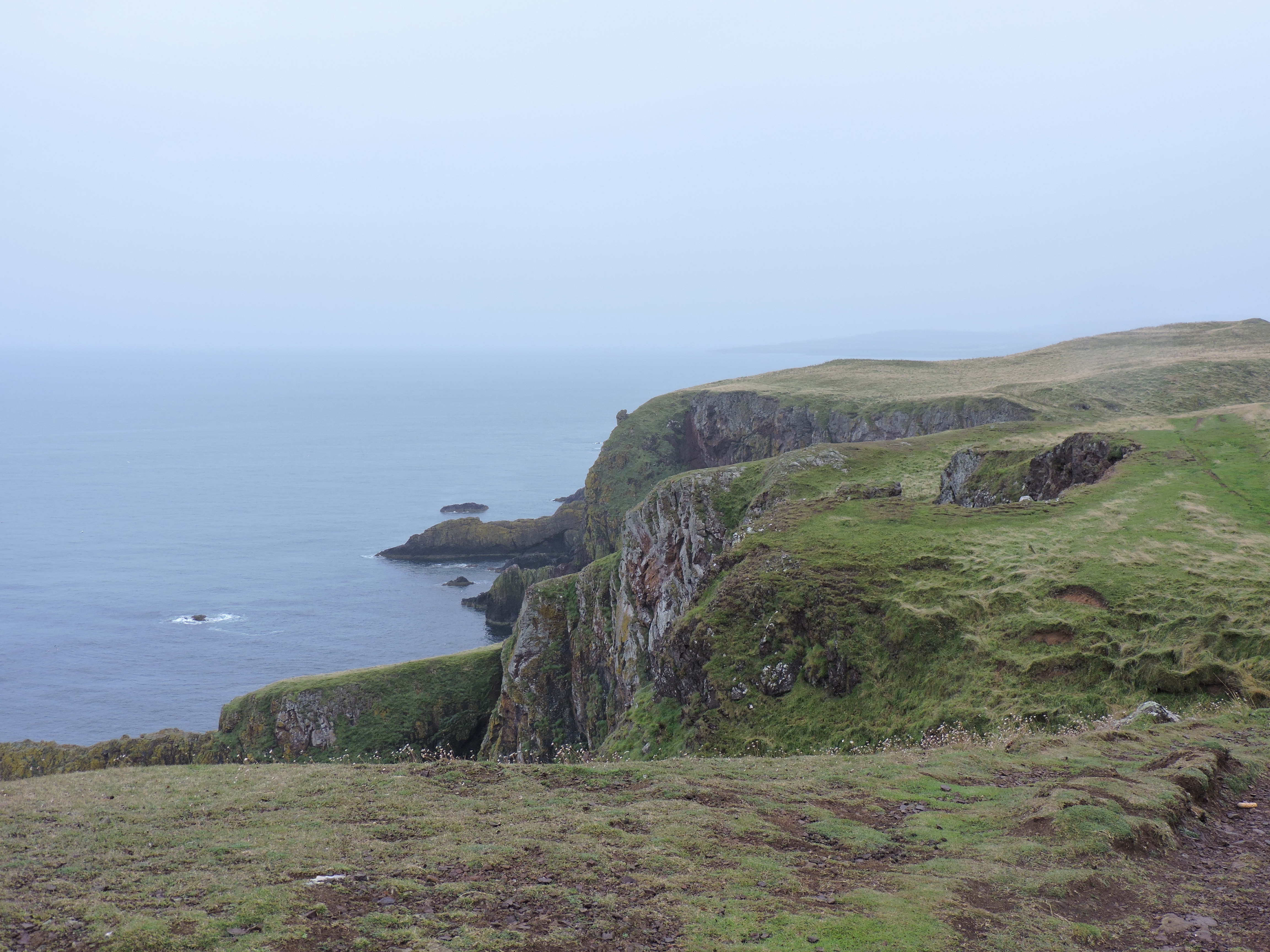
The Berwickshire Coastline with Bass Rock in the far distance


(3.5 miles)

It’s me! Some recent lovely comments on my site made me decide to have another go.  Walking is slow and distances are short for me at the moment which is frustrating – but when the weather is being kind, as it was on the coast today, I suppose it doesn’t matter so much if you can’t walk fast or too far!


We usually walk around St Abb’s Head from the village and return via Mire Loch, missing out Pettico Wick.  Today we decided to go and have a look at this little cove starting from the National Trust Car Park just before you get to St Abb’s village and walking through the farm and out along the ‘Discovery Trail’ before diverting along the ‘Lighthouse Loop’ to the sea at Pettico Wick.  It’s all really well marked, the views are lovely – ahead and looking back towards St Abb’s and Coldingham Bay.

fullsizeoutput_11ce.jpeg
Pettico Wick

Pettico Wick – no idea why this pretty bay is called this, apart from that an alternative name is listed by Canmore (Historic Environment Scotland) – Pettycarwick Bay – so it’s probably just got shortened over time and is now known as Pettico Wick. It’s a tiny harbour with a pier which was built so that supplies for the St Abb’s lighthouse could be landed. We didn’t venture down as there were lots of divers milling about preparing to set off on an exploration of the waters.

The coastal habitat here is a Voluntary Marine Reserve and is protected and part of a European Marine Site.  Apparently there are offshore forests of dense seaweed and the area is full of a mix of Atlantic and Arctic plant and animal species.  You can sometimes see dolphin here and we’ve seen a porpoise previously.

We reach the coast and walk a little way along the coast path northwards to see the thousands of guillemots nesting on the cliffs – they’re tightly packed together on the ledges. Puffins, kittiwakes and razorbills are also known to nest here but it’s hard to make them out amongst the hoard of guillemots – collective noun: A Bazaar of Guillemots –   that’s just what it sounds like too!  It’s unwise to get too close to the cliff edge for obvious reasons (!) but also because we know that breeding success in guillemots and kittiwakes is reduced by the presence of people, who cause the nesting birds stress (shown by raised heart rate) and a related energy loss which may lead them to desert their nests.  I don’t have my real camera today so can’t get good pictures of them but here’s one I took another day!

DSCN4815
Why do they all face the cliff instead of the sea?

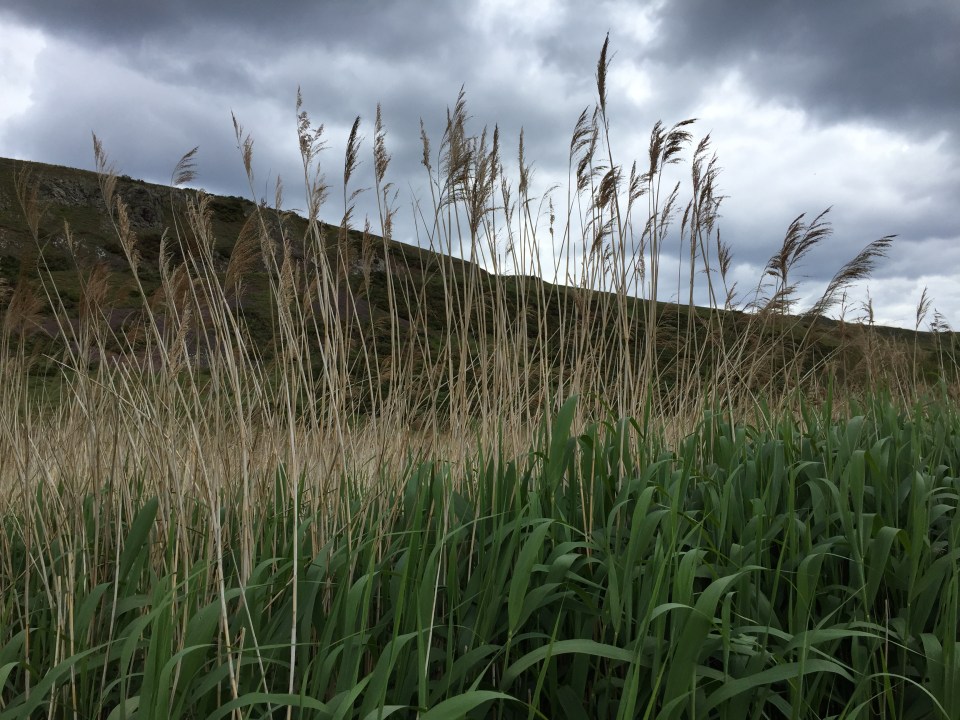
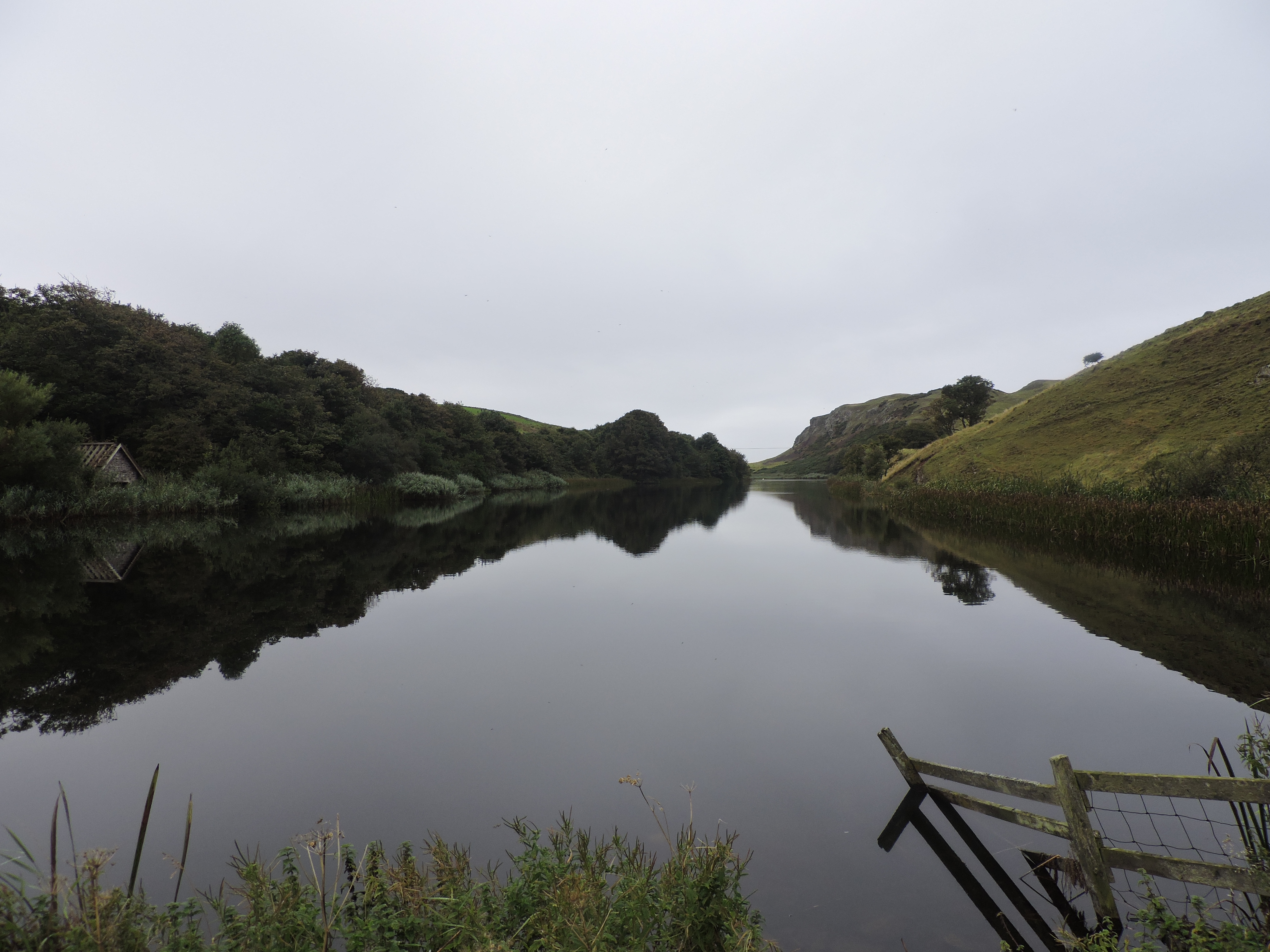
We head back inland along the shore of Mire Loch passing by the reed beds (those black clouds just drifted away!)IMG_1520.JPG

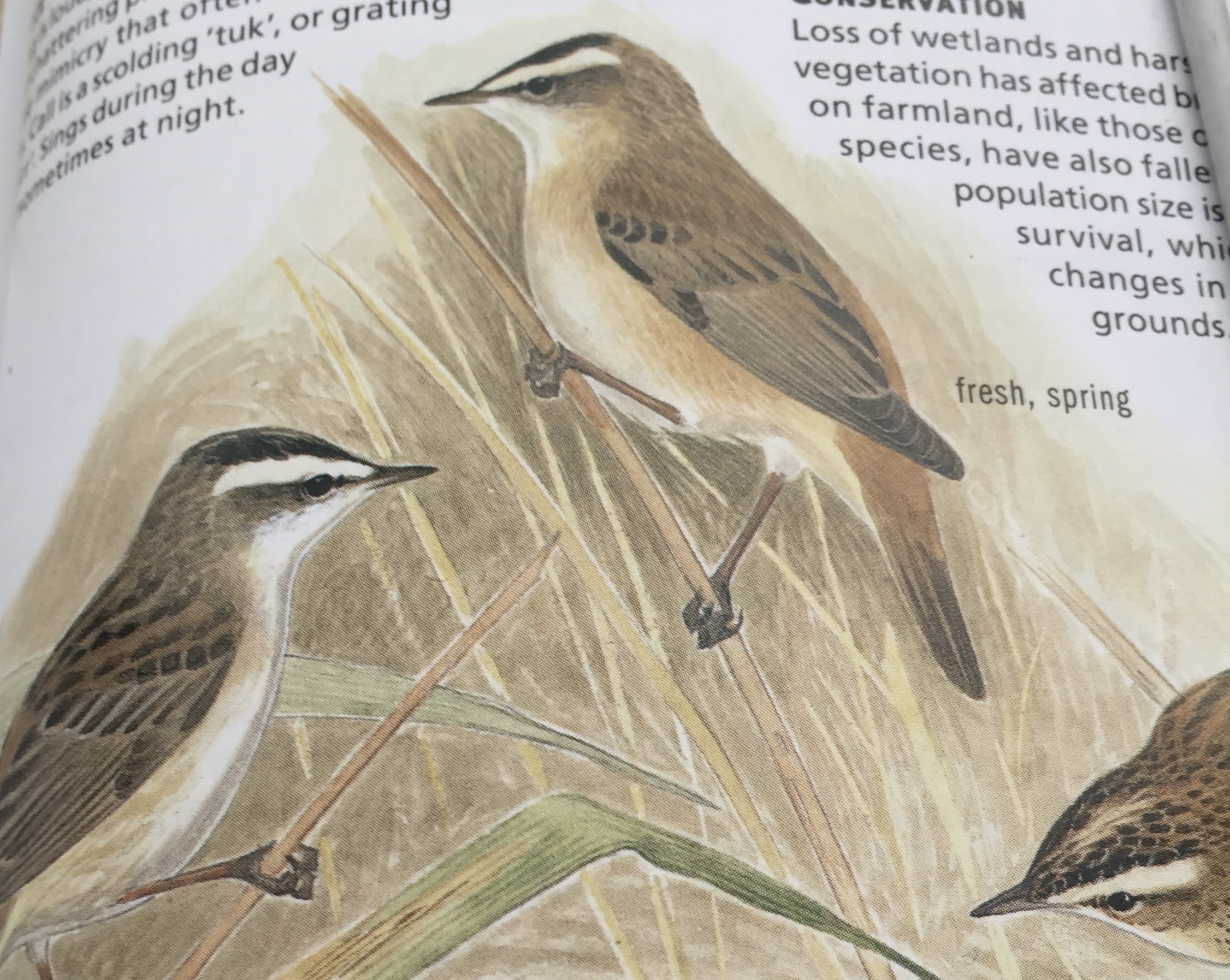
and spotting what we thought might be a reed warbler chattering away.  Looking it up in my book later though, it seems that reed warblers are rare this far north so I think it was probably a sedge warbler – it had that distinctive white stripe above his eye.  They like reed beds and marshes with some trees and bushes, so its perfect for him here.  This is a first for me – never seen one before! No camera!!

fullsizeoutput_11d3.jpeg

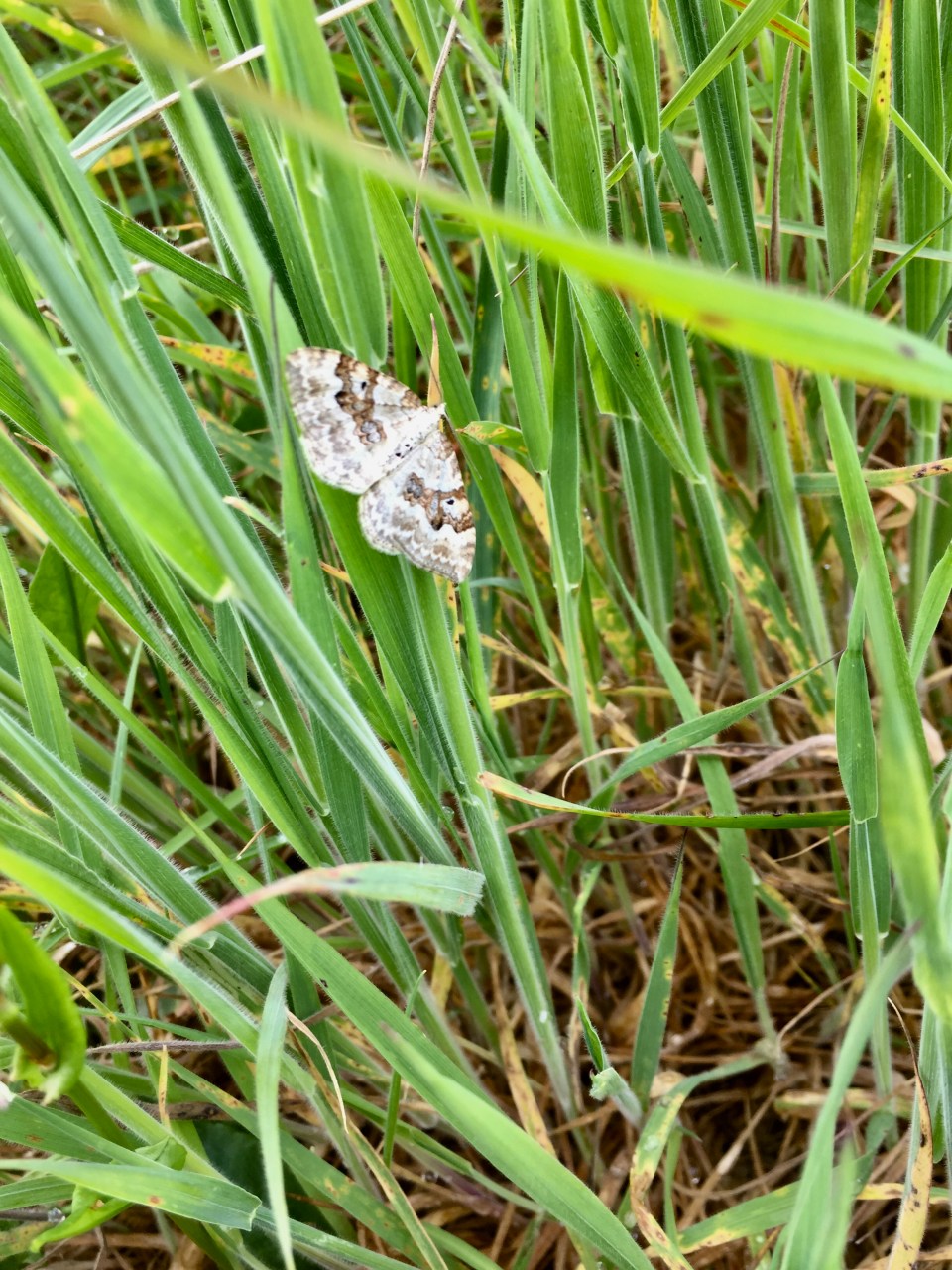
It’s getting warm as we head on through the wooded path and I’m beginning to wish I’d left the extra layers at home!  There are plenty of insects enjoying the sunshine including this moth – known as Mother Shipton because it’s wing pattern is said to look like an old witch, you have to look at it for a long time and turn it about a bit but could be I suppose:

fullsizeoutput_11d0.jpeg

There are also lots of wild flowers and I’ve just got my phone which doesn’t do flowers and insects very well.

I did manage a good picture of the brightly coloured Northern Marsh-orchid which seems to be doing well here:

IMG_1525

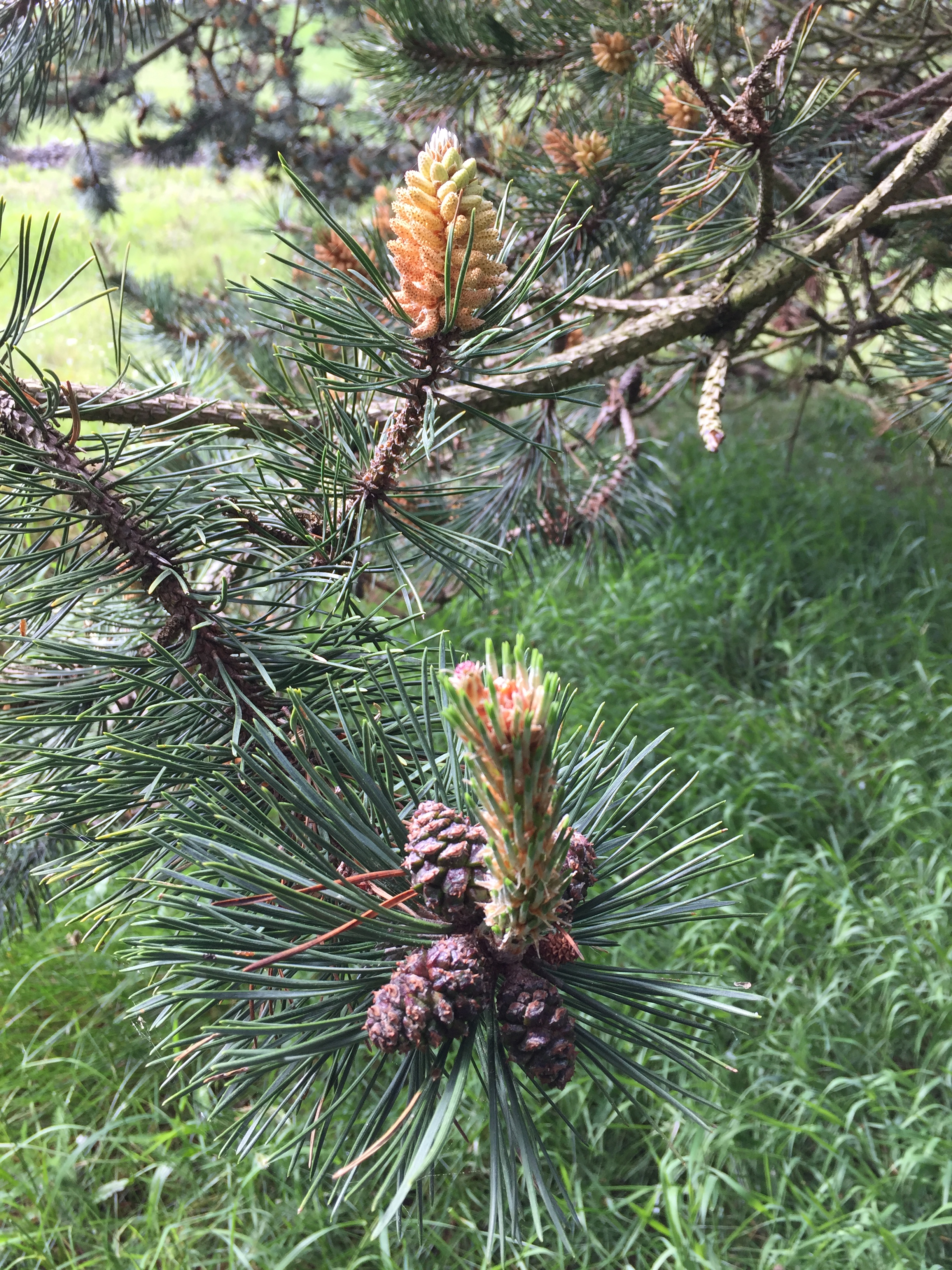
And have a look at the lovely Scots Pine cones and flowers:

IMG_1524


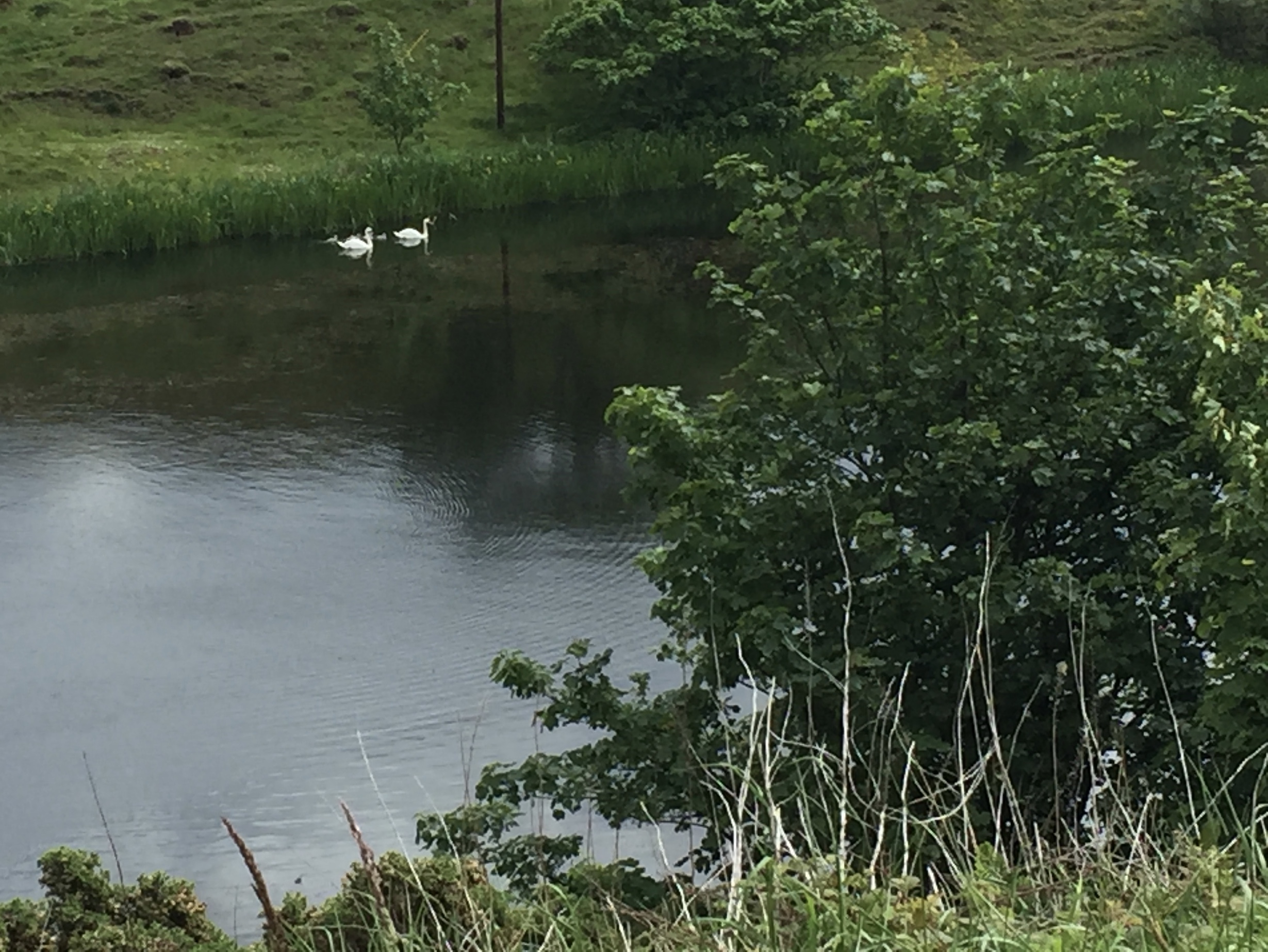
We saw the swans nesting last time we were here – and this time they were guarding 5 cygnets from the hovering gulls.  Swimming not far away was a little troop of golden-eye duck – so pretty! So needed my camera!!

fullsizeoutput_11d2

There’s a steep uphill climb on the way back and I’m slowing down even more. The best way to deal with being slow I’ve found is to pretend you just wanted to take another picture:

IMG_1544
Mr M pretending he’s looking for something on the path and not at all wondering how far behind I am!

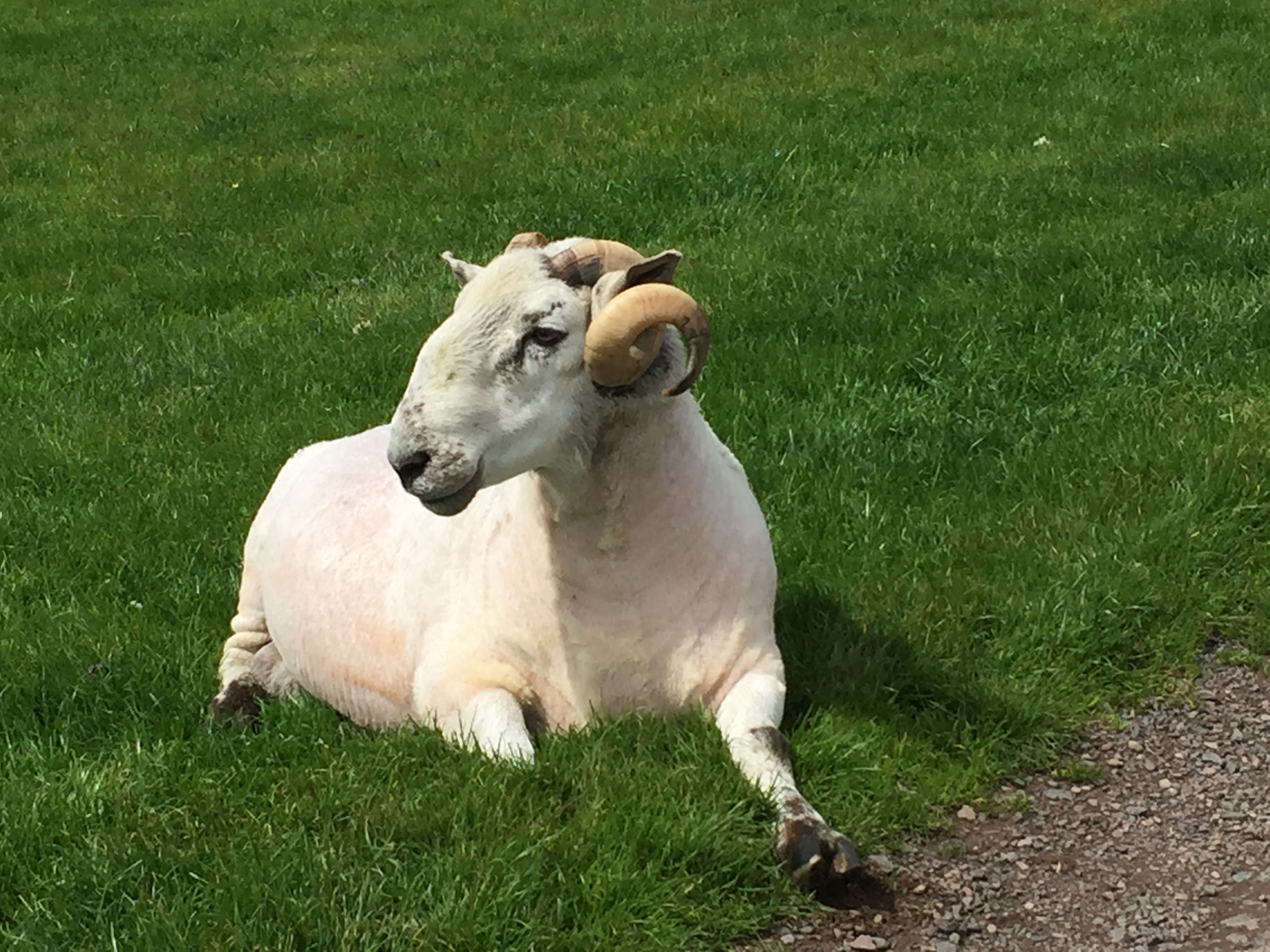
The hills around here are full of sheep and they roam freely – or laze about – whichever takes their fancy:

IMG_1545.JPG
He’s lovely and knows it!


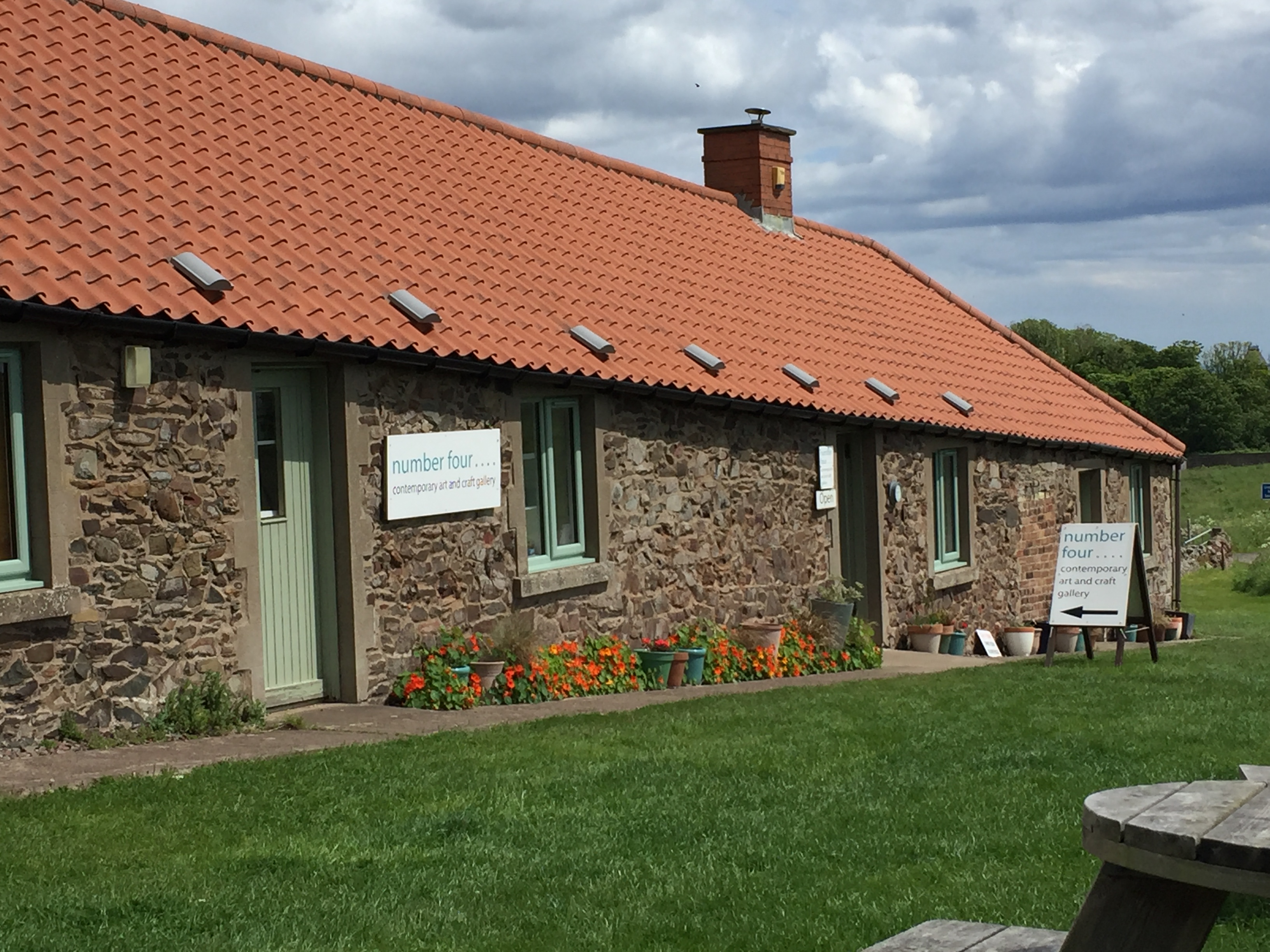
At last I can drag my sore feet through the car park and down to the Old Smiddy Coffee Shop where we stop for a cup of tea and admire the nasturtiums outside of the lovely Number Four Gallery where Mr M dropped of some more arty stuff earlier today….

IMG_1547.JPG

So there we are, I hope you enjoyed reading about this walk.  I just wanted to give a trio of mentions:

to the St Abb’s Ranger who writes a blog, A Day in the (Wild) Life, which is full of lovely photos and interesting info! I notice s/he’s not posted since November last year but hopefully s/he’s just been super busy and will be back soon!

https://stabbsrangers.blogspot.com/2018/

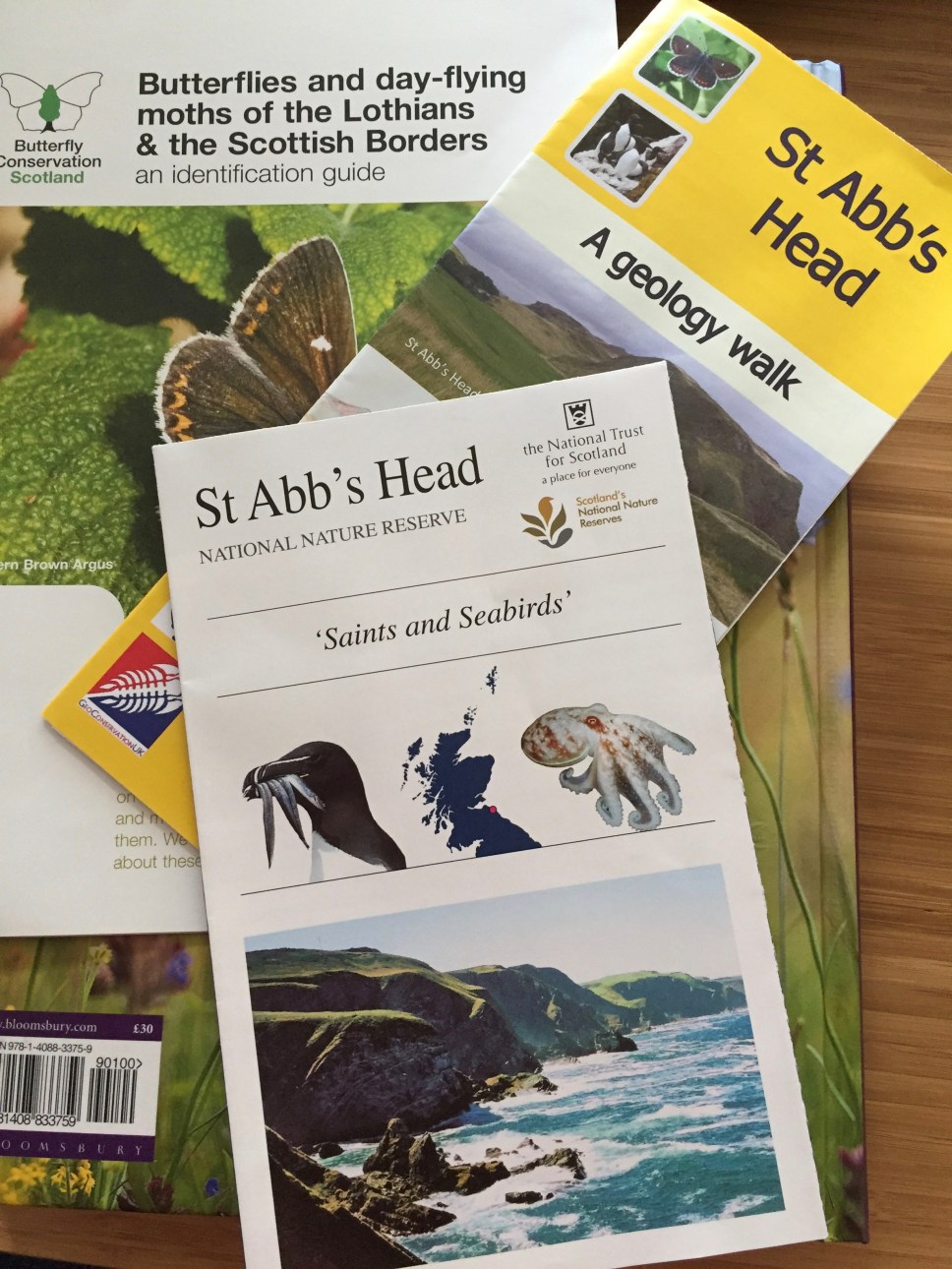
to the National Trust for Scotland for the amazing information/visitor centre at St Abb’s which is full of interesting and very useful (for me) information boards, ‘what you might see’ books and leaflets:

fullsizeoutput_11d6.jpeg


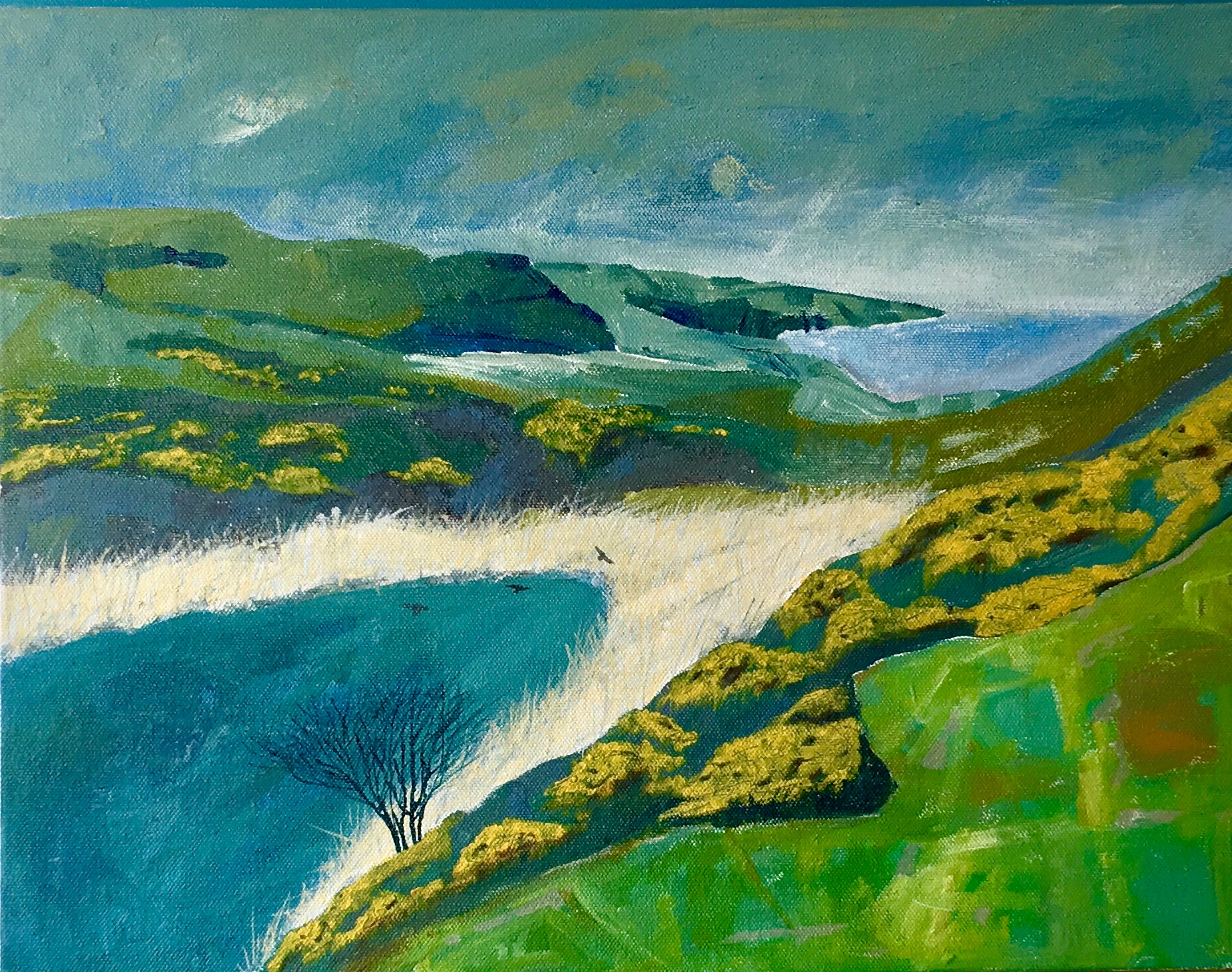
And to Mr M for this beautiful painting of Mire Loch – which of course we don’t get to keep – it’ll be part of his exhibition in The Robson Gallery, Halliwell House, Selkirk from 16th July and you can see it – and more – there:

IMG_1448.jpg
Mire Loch by Andrew Major


Coldingham and St Abbs

DSCN4790.JPG
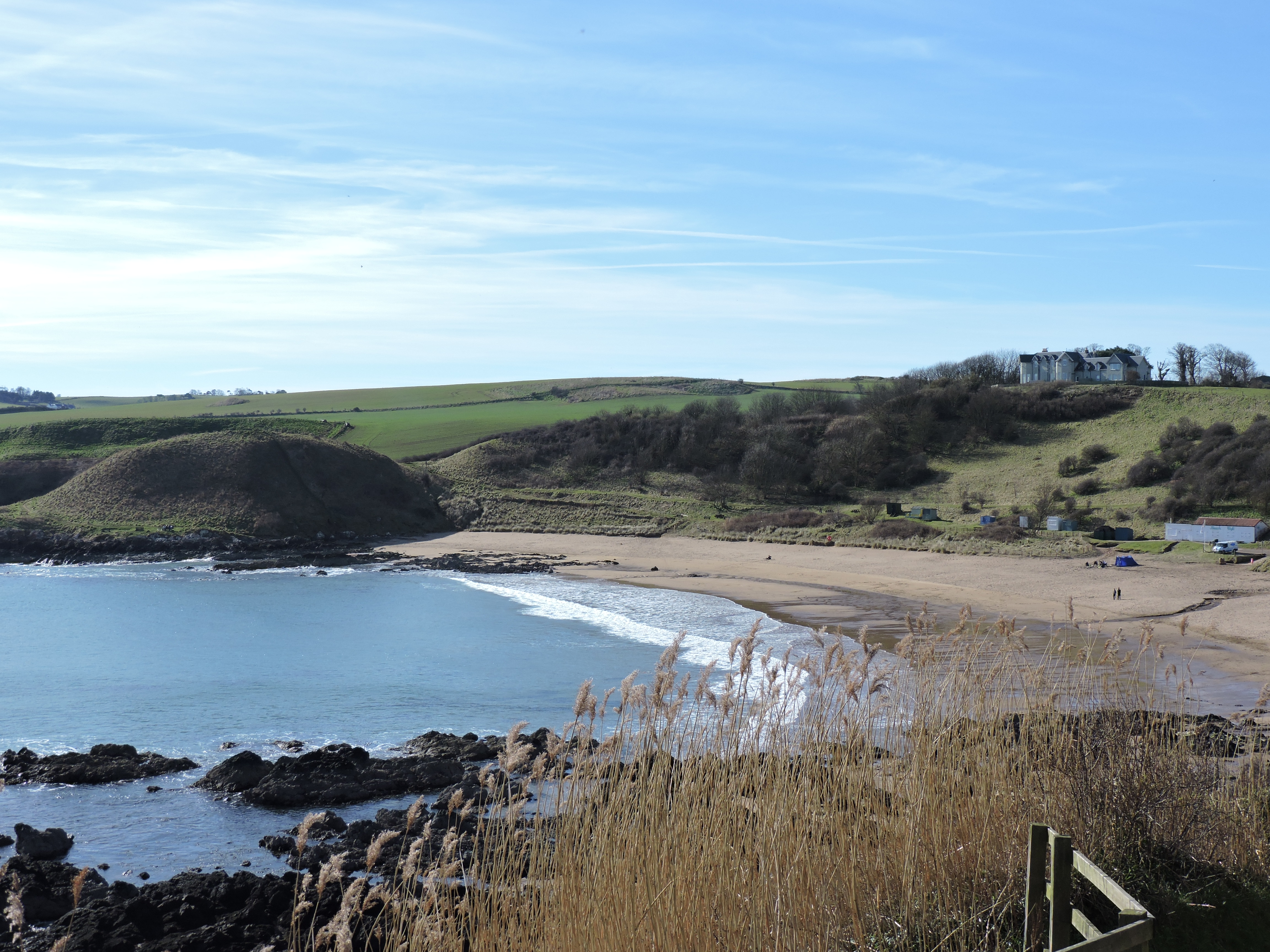
Coldingham Sands from the Coast Path

26th March 2017

Well, it’s been a while but yesterday we ventured out in the beautiful spring sunshine and did a 7 mile circular walk from Coldingham via St Abbs Head.  You can read more about walks we did in the area here: Coldingham Walk ; and more about St Abbs Head and Mire Loch here: St Abbs Head.

So today we did the whole circuit combining the Coldingham and St Abbs Head walks, in the glorious sunshine and accompanied most of the way by the incessant guttural cacophony from thousands and thousands of Guillemot which were perched precariously all along the rocky coast. Continue reading

St Abb’s Head and Mire Loch

DSCN3854.JPG

DSCN3879.JPG

Date: 28th September 2016

Route: From St Abbs National Trust Car Park, along coast path to St Abb’s Headland and then inland alongside Mire Loch.

Distance: 4.5 miles/7 km


What a stunning walk!  Despite the rain and fog, this may be one of the best walks yet since we’ve been in Scotland.

Following on from last week’s ramble to Coldingham Sands, we decided to explore the coastline further. This National Nature Reserve managed by the National Trust for Scotland is just along the road.  At some point we’ll put them together to make one longer day out – with soup and sandwiches in our back packs I think!

I hope you enjoy reading about it:

Continue reading