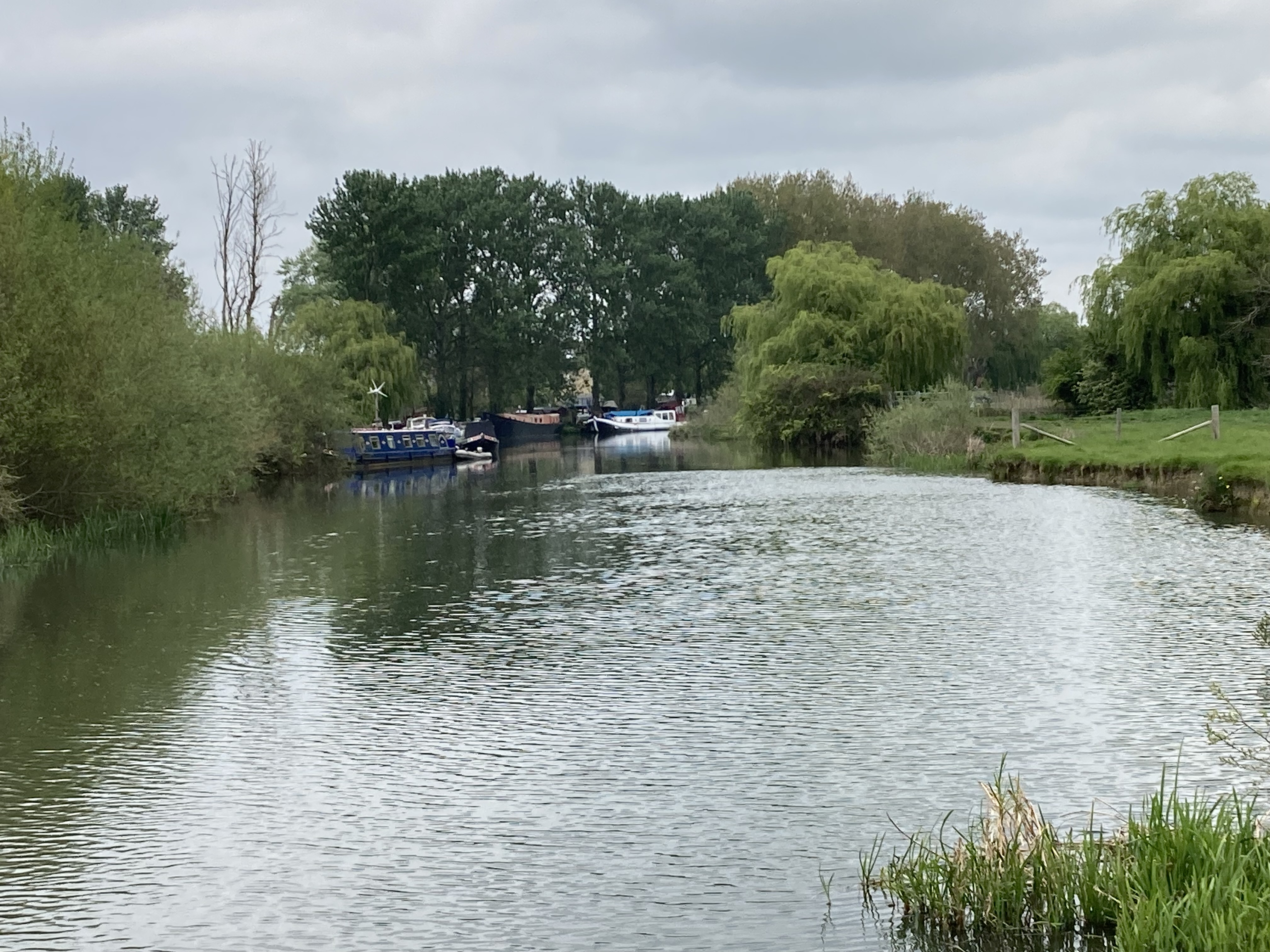
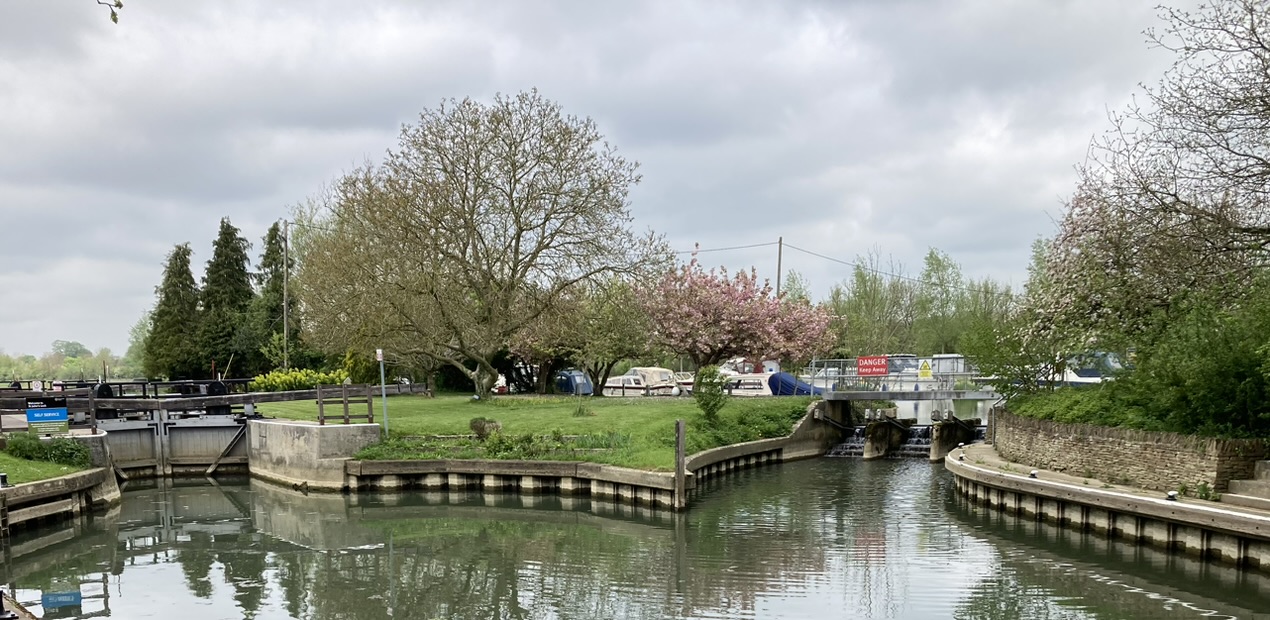
A recent visit to The Cotswold with Ms B, staying in the lovely little village of Langford gave us a chance for a 4 mile circular tramp – a lovely, flat walk through the floodplains alongside the River Thames, starting in the small market town of Lechlade in The Cotswolds. After a stroll through the churchyard of St Lawrence’s Church we walked along a wooded path, across a very busy road bridge and down steps to St John’s Lock – the furthest upstream lock on the River Thames.
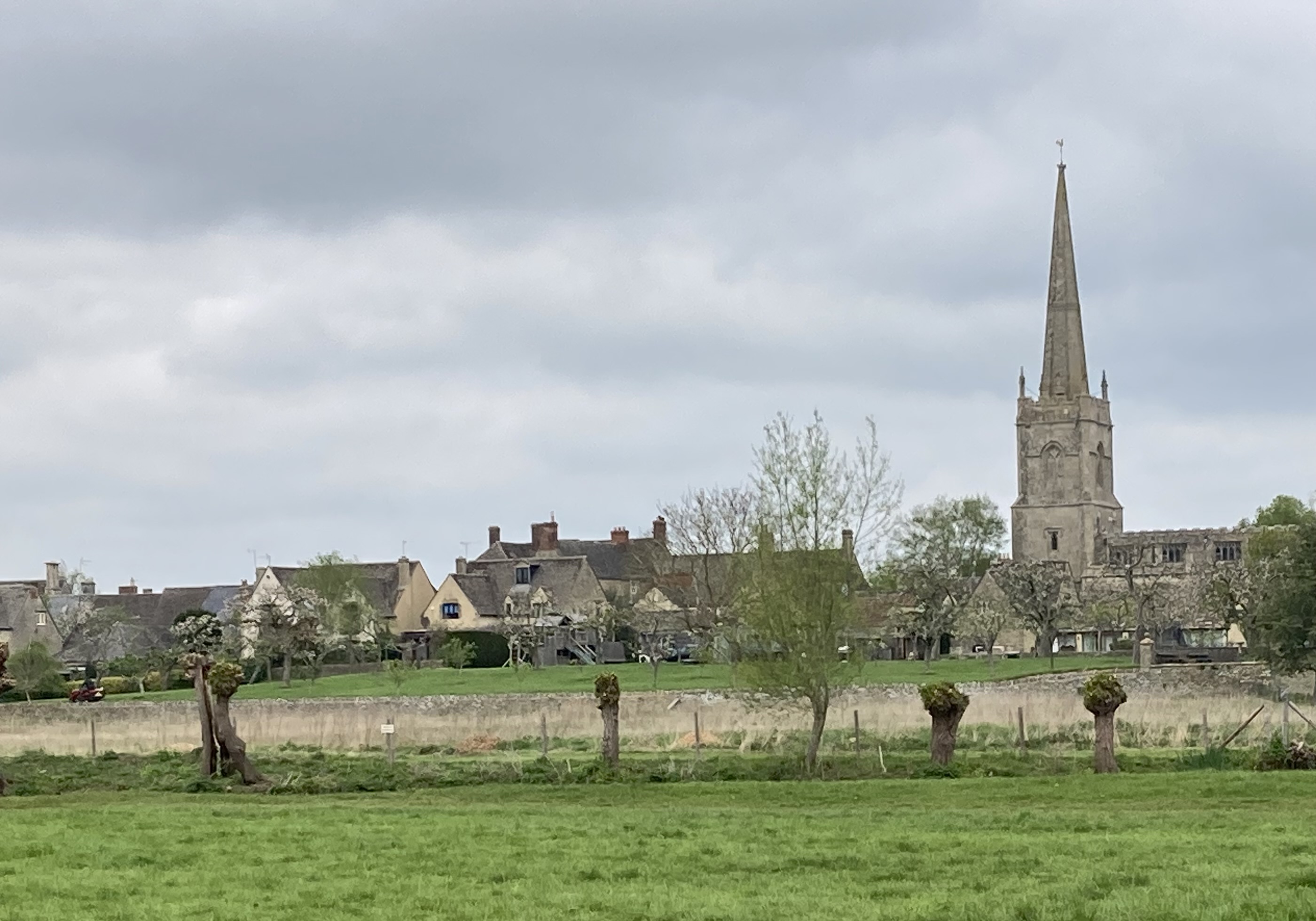
Glad to be away from the road we followed the river through fields and meadows, keeping the church in Lechlade nearly always in view.
An information board early on tells us that if we kept walking we could be in London in 10 days! Deciding not to bother with the trek on this occasion, we carried on following our planned walk under the stone Ha’penny Bridge and across a stream with the Inglesham roundhouse in the distance.
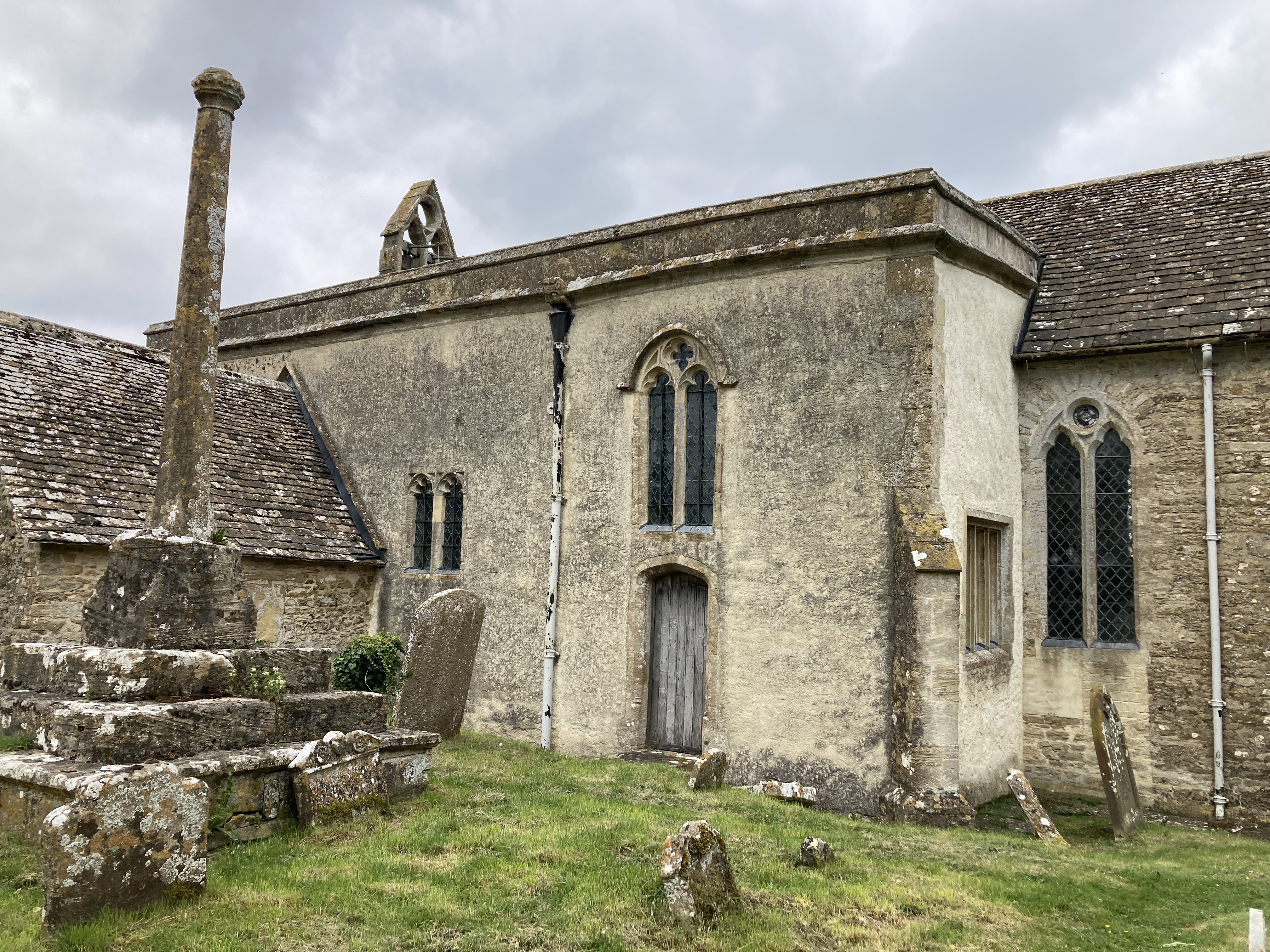
At the roundhouse we took a diversion away from the river to visit what turned out to be the highlight of the walk – the ‘ancient, painted wonder’ of the Church of St John the Baptist with its Saxon carving, 13-19th century painted walls and 17-18th century box pews. This rare example of an unrestored church had us gasping in amazement as soon as we pushed through the ancient wooden door. I’ve never been inside a church that hasn’t been restored in some way before – and I don’t think I’ve ever seen box pews and wall paintings like these.
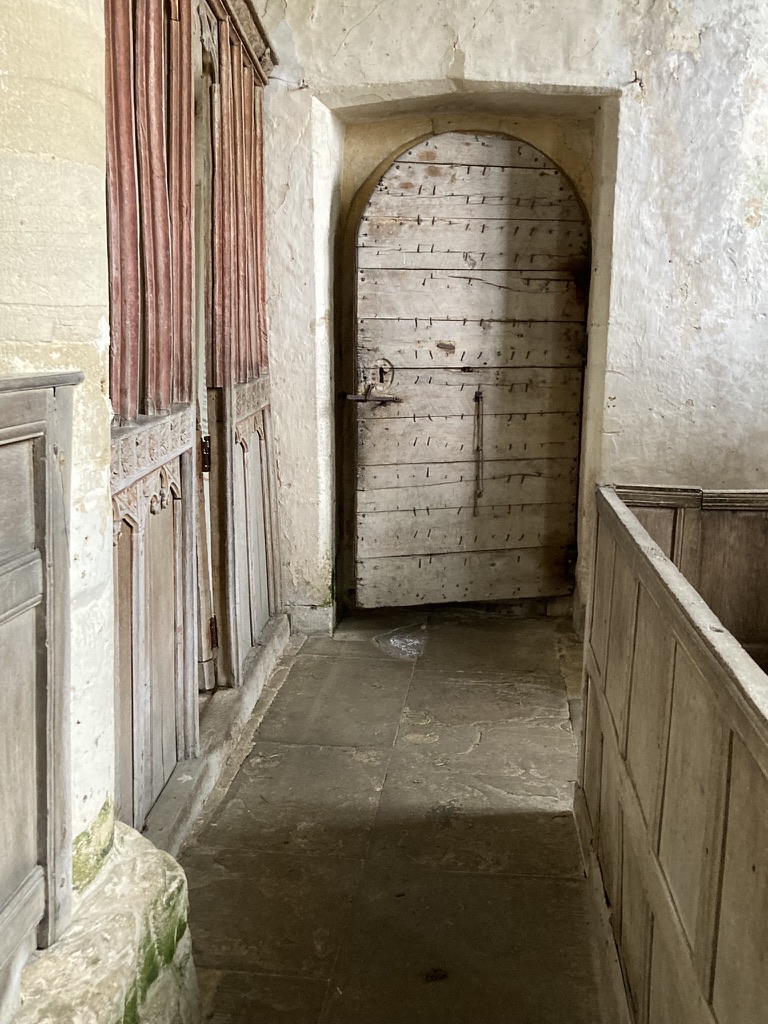
Before the 13th or 14th centuries seating wasn’t usually provided in churches but as sermons became longer so the need for seating became urgent, not surprisingly! The box pews here seem a bit higgledy- piggledy, in some churches they are in orderly rows. The surrounds are shoulder high and the seating narrow. They can’t have been very comfortable but in some places they even contained a fireplace as churches were very cold places. Many pews were owned by farming families and occupied by them for services.
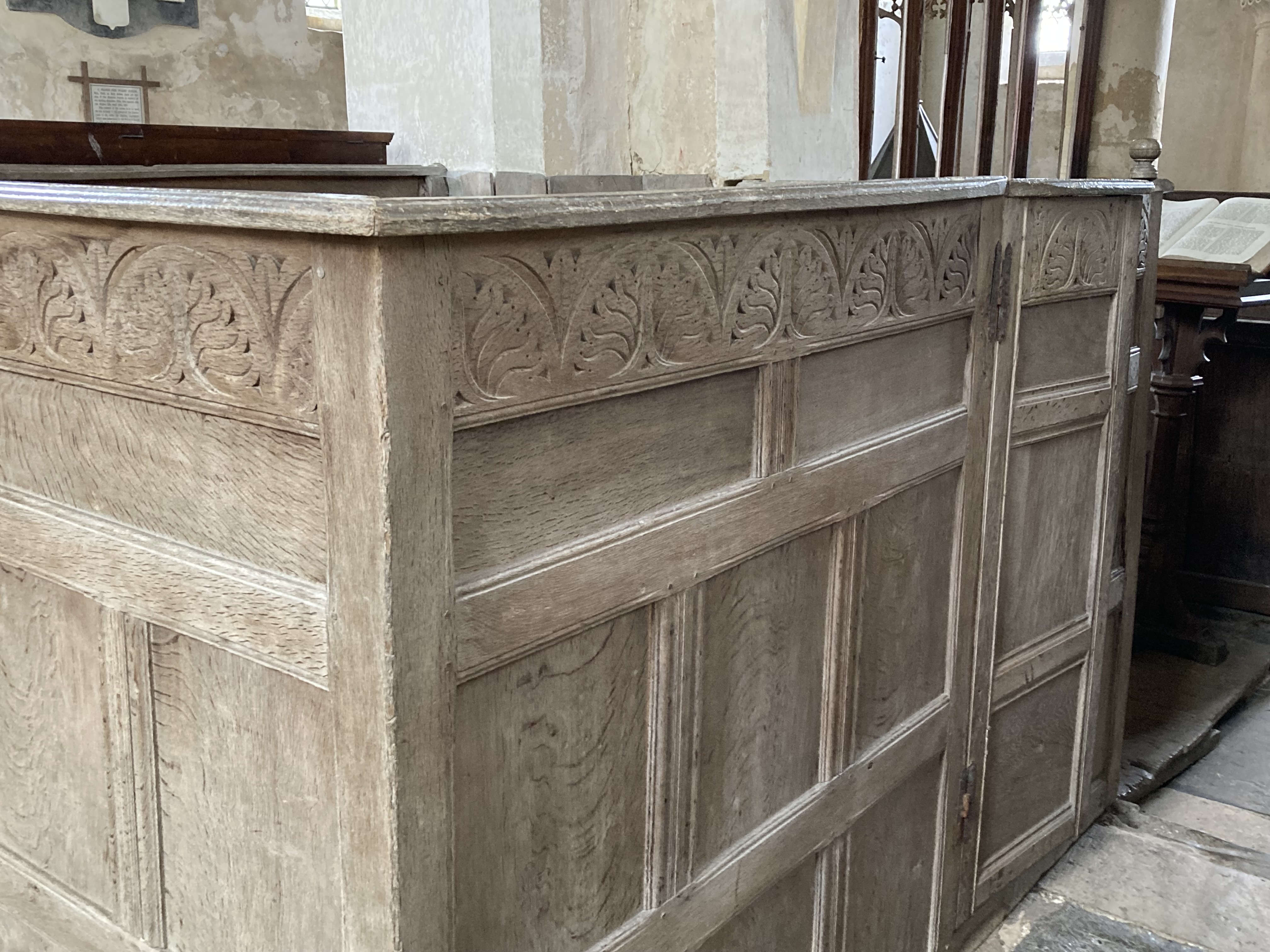
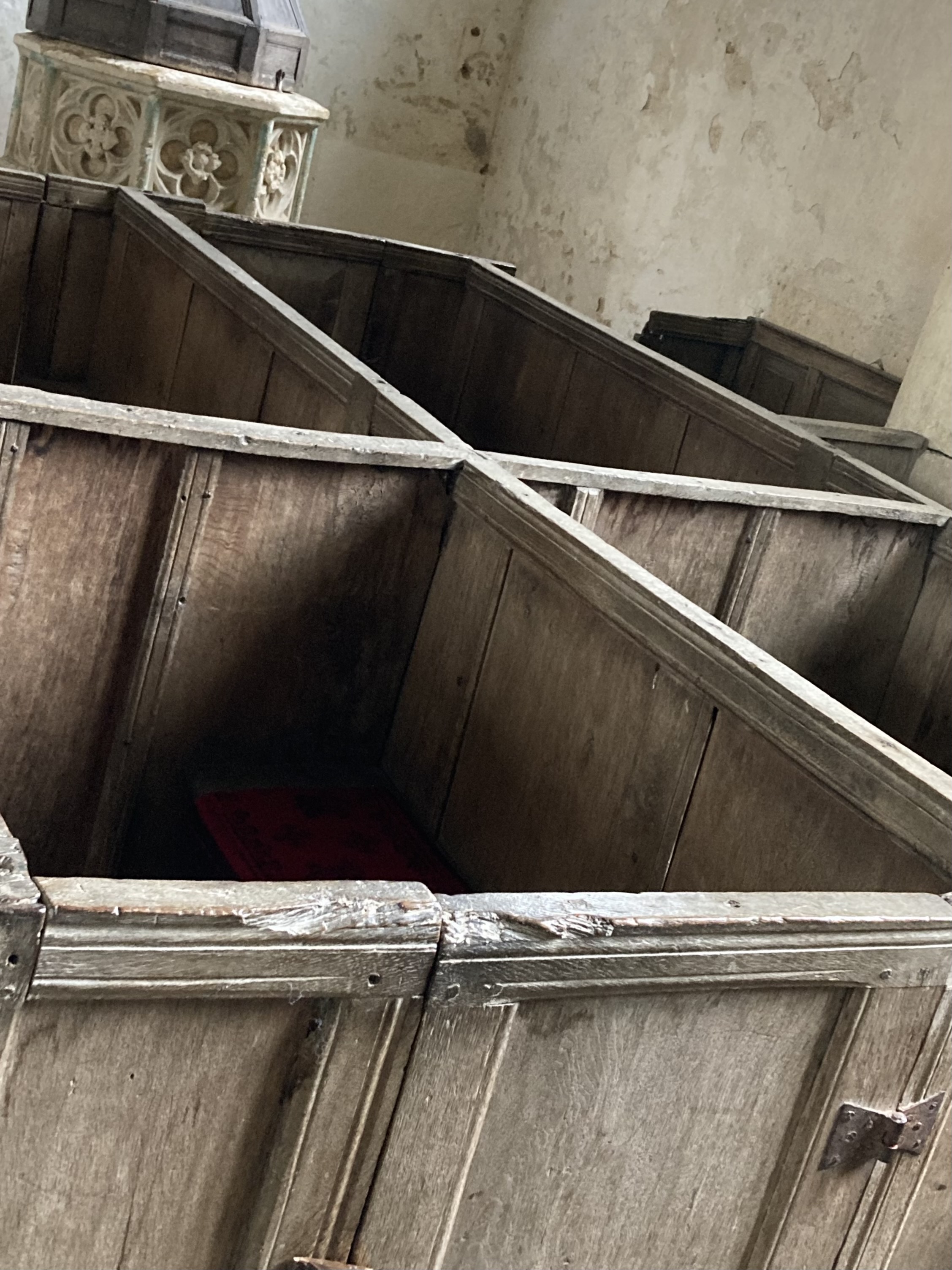
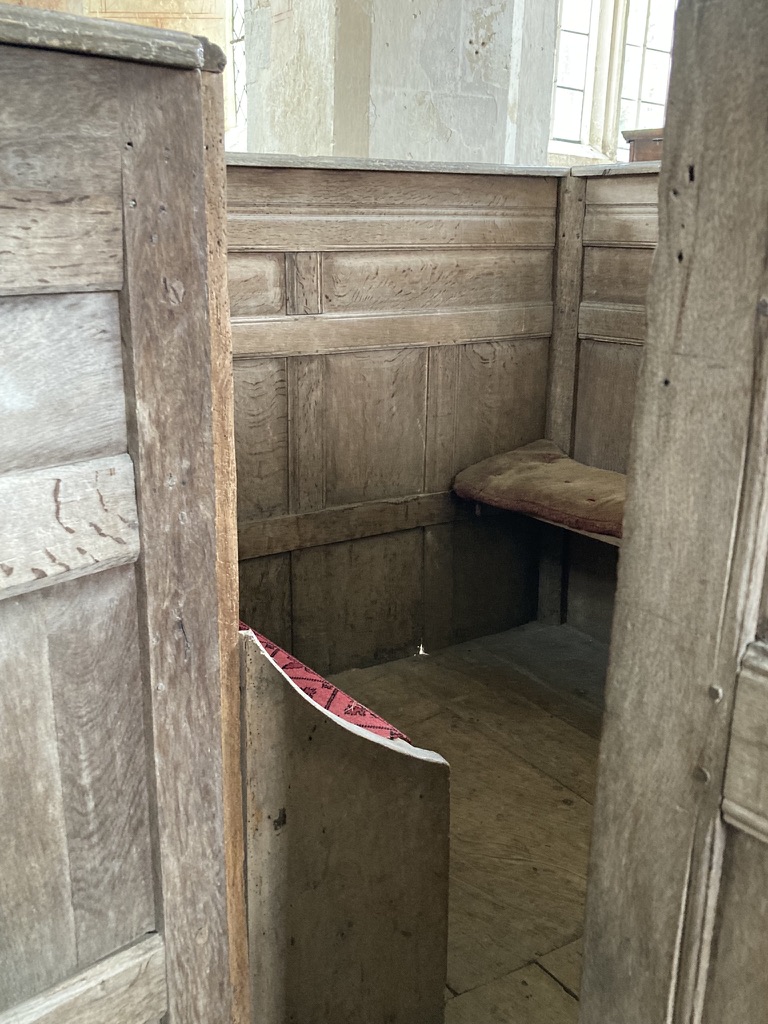
The walls are covered in paintings, many dating from the 14th century and are seven layers deep in places.
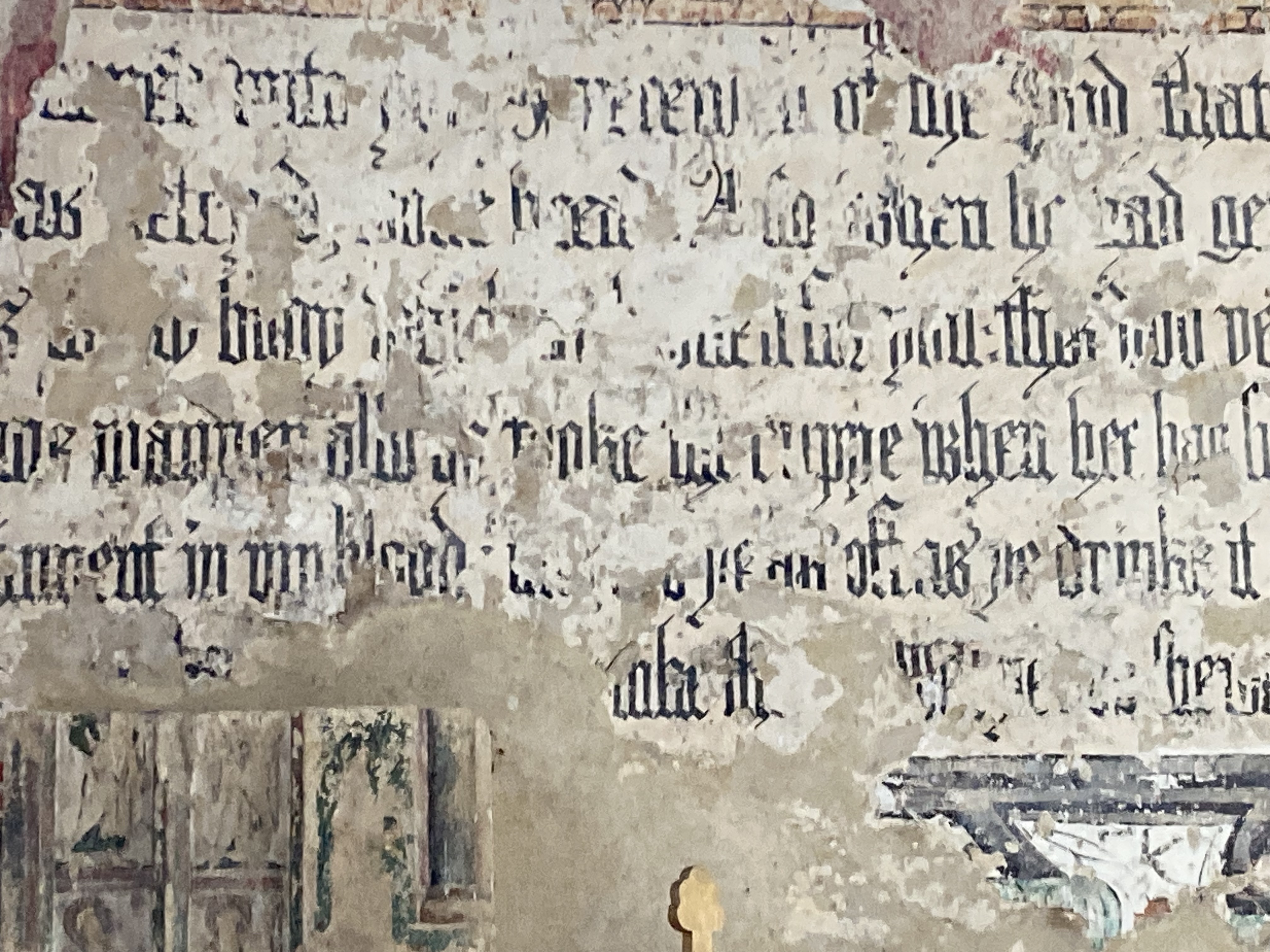


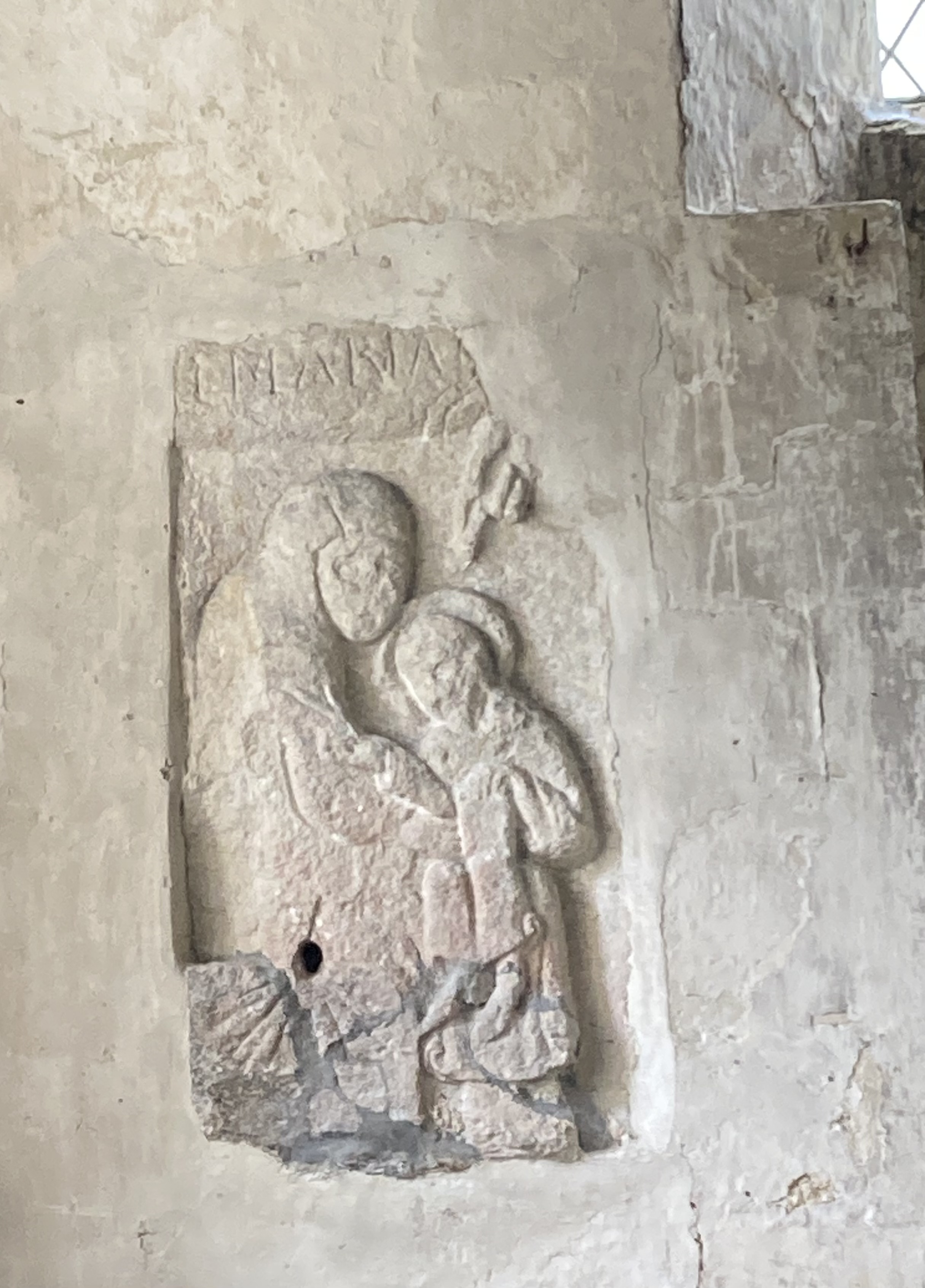
William Morris – textile designer and conservationist recognised the importance of this church and in 1887 raised a funds for essential work to prevent the building falling into ruin. Now the church is under the care of The Churches Conservation Trust [ https://www.visitchurches.org.uk/ ] and conservation of the wall paintings has been ongoing for 23 years. There is recent damage from water ingress after the lead flashings were stolen from the roof so lots of work – and money – is still needed to protect this ancient monument.
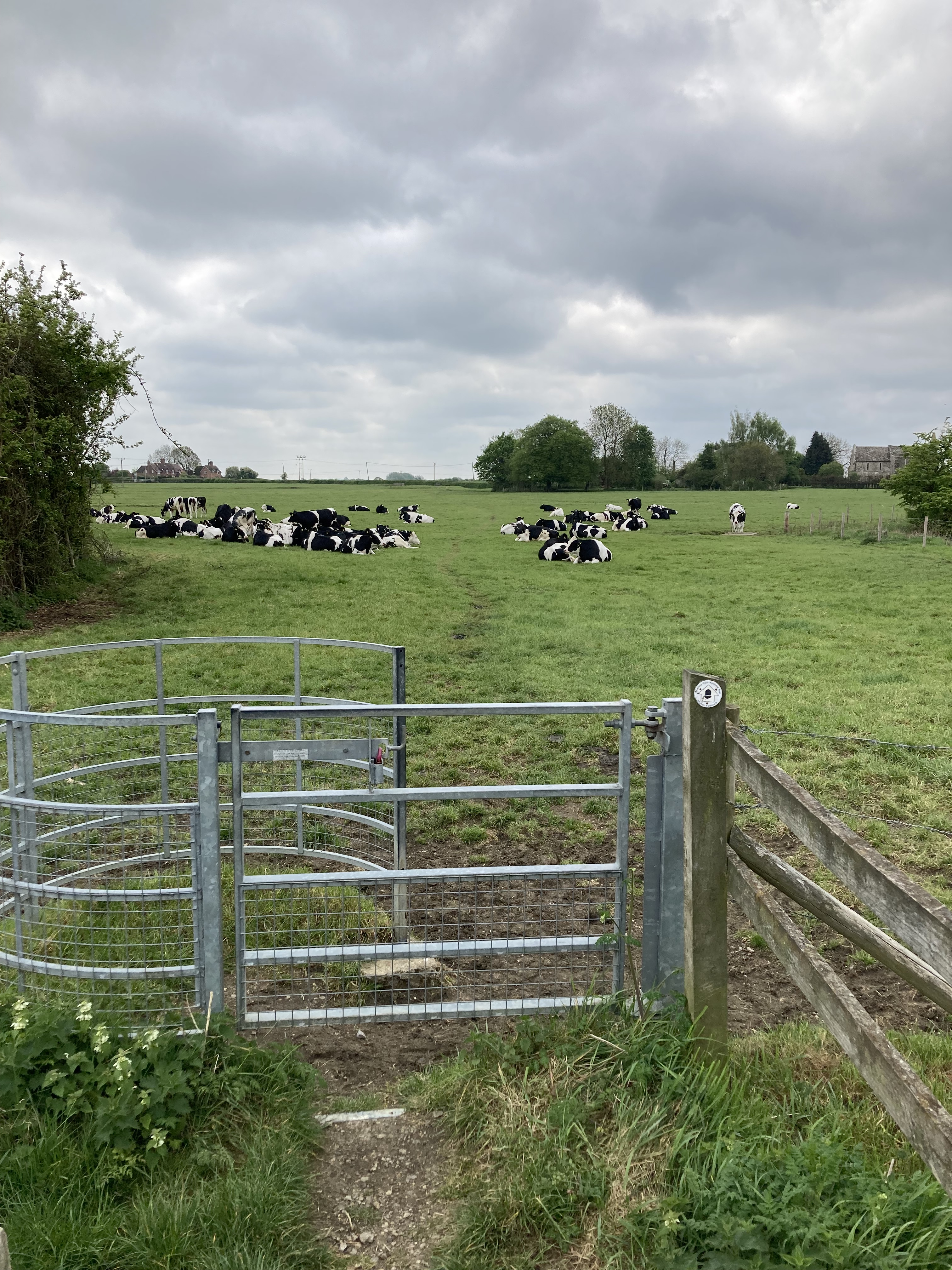
When we took the diversion away from the Thames Path, we had to walk through a field of cows. I am a cow coward! Ms B. had to talk me through them whilst I held on to her coat sleeve and sweated my way across with my eyes closed! On the way back to the river we had found our common sense and walked all the way around the edge of the field to the wooden bridge over the river. It has to be said that the cows seemed completely unconcerned about us whichever way we were walking!
The final mile or so of our walk took us through meadows on the other side of the river and back into Lechlade.
We used directions from Walk 04 in the April 2025 edition of Country Walking magazine. We stayed at Garden Cottage in Langford – perfect cottage, perfect location (airbnb). We ate at The Bell Inn, Langford ( https://www.thebelllangford.com/ ) delicious food, friendly pub and at The Five Alls, Filkins, just 2 minutes up the road https://www.thefiveallsfilkins.co.uk/ again, delicious food!
I’ve just read Night Swimmers by Roisin Maguire – set on the coast of Northern Ireland during lockdown – such a lovely book!
Next time – Howick Hall and Gardens in Northumberland and a walk along the coast.
 ricketyrambler