Belsay Hall – or – “make a U-turn if possible”

Be warned – I do complain quite a bit in this post!

We made 2 attempts to reach Belsay Hall which is about an hour and a half away in Northumberland straight down the A696. We’ve been there before – we know where it is and how to get there. There’s a lovely walk from Belsay Hall itself, through the gardens and along a ravine cut away in the rock which is lined with rhododendrons and other exotic specimens collected by previous owners.

About two thirds of the way there we started noticing ‘road ahead closed’ signs – worrying, but not disastrous – after all we were nearly there, it didn’t say how far ahead the road was closed and the diversion signs seemed to be in completely the wrong direction. Lesson 1 – Never ignore a road ahead closed sign! Suddenly – there it was – a barricade across the road!! We pulled off into a side road and came to a village where we stopped and asked directions from a group of walkers. It has to be said the village green was busy with people all sitting in their cars studying their maps and reconfiguring their satnavs. The next 2 hours was spent criss-crossing the moors, requesting directions in random shops, passing the same group of bikers several times – obviously also lost – and not getting where we wanted to go. Our satnav meanwhile was having a crisis – if I never hear that phrase – “make a U-turn if possible” – again it’ll be too soon. Nearly 3 hours into a drive around Northumberland, thirsty, irritable and desperate for a public convenience – we turn around and head home.

A week later we try again, different route, supposed to take only a few minutes longer. We do well, until we reach a town which is supposed to be not far from Belsay – and there it is again – “make a U-turn if possible”. We spend the next hour making U-turns and studying our newly purchased paper map before finally reaching Belsay with a huge sigh of relief.

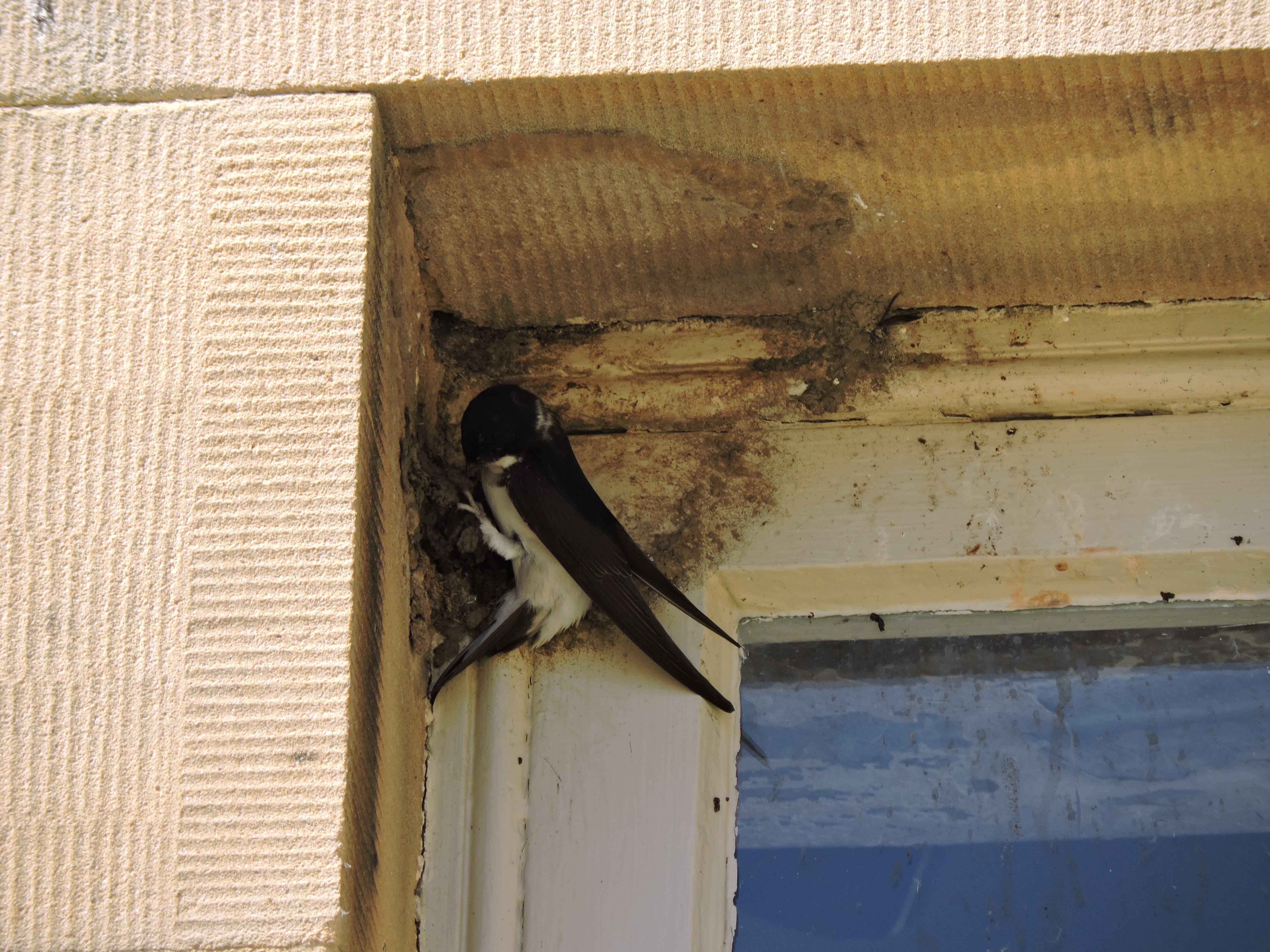
In the spirit of complaining – I’m just going to mention that, along with a new play area and cafe, Belsay have introduced pay and display parking! £4! In cash! Who carries cash anymore? Well luckily Mr RR does – so – fees paid, fortified by tea and coffee (in paper cups – I hate paper cups!) we head for the Hall, spotting a pair of swallows building their nest on the way. It always makes me feel better when I see how hard birds work to build a place to lay their eggs in a certain place, when all we did was sit in the car and turn up (more or less).
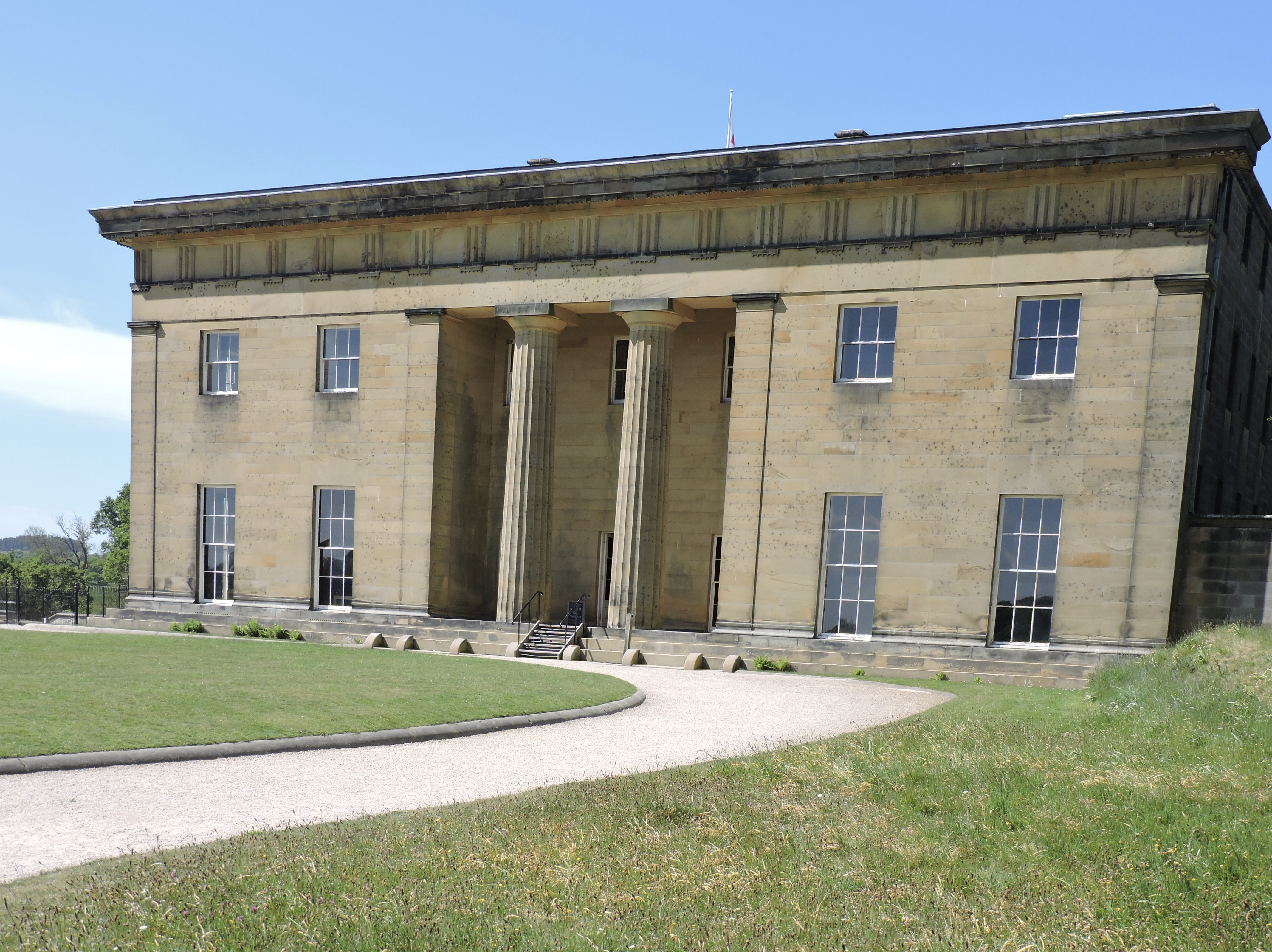
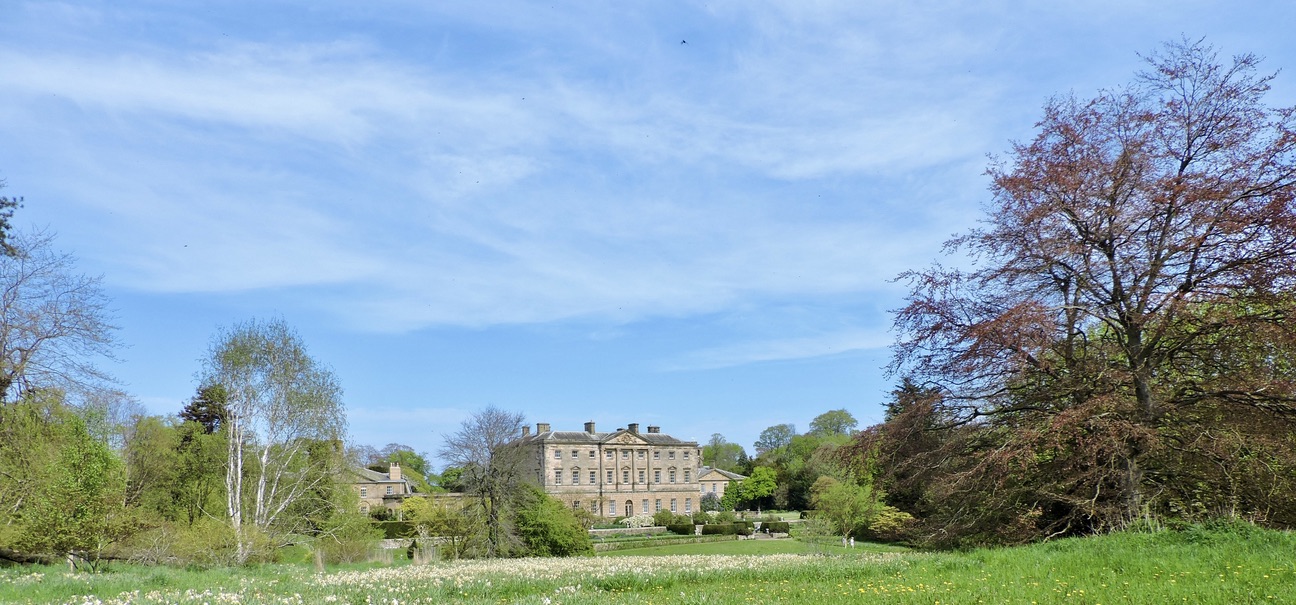
Belsay Hall is a Greek Revival Mansion built of sandstone blocks quarried from the estate, and is exactly 30 metres square. Sir Charles Monck began building it in 1807 having spent his 2 year honeymoon (!) in Greece. He was passionate about the design and architecture of bulidings and the local flora in Greece keeping detailed travel diaries. Later he travelled to Sicily and was inspired by what he saw there to plant the quarry garden at Belsay. The Hall has recently been restored by English Heritage.

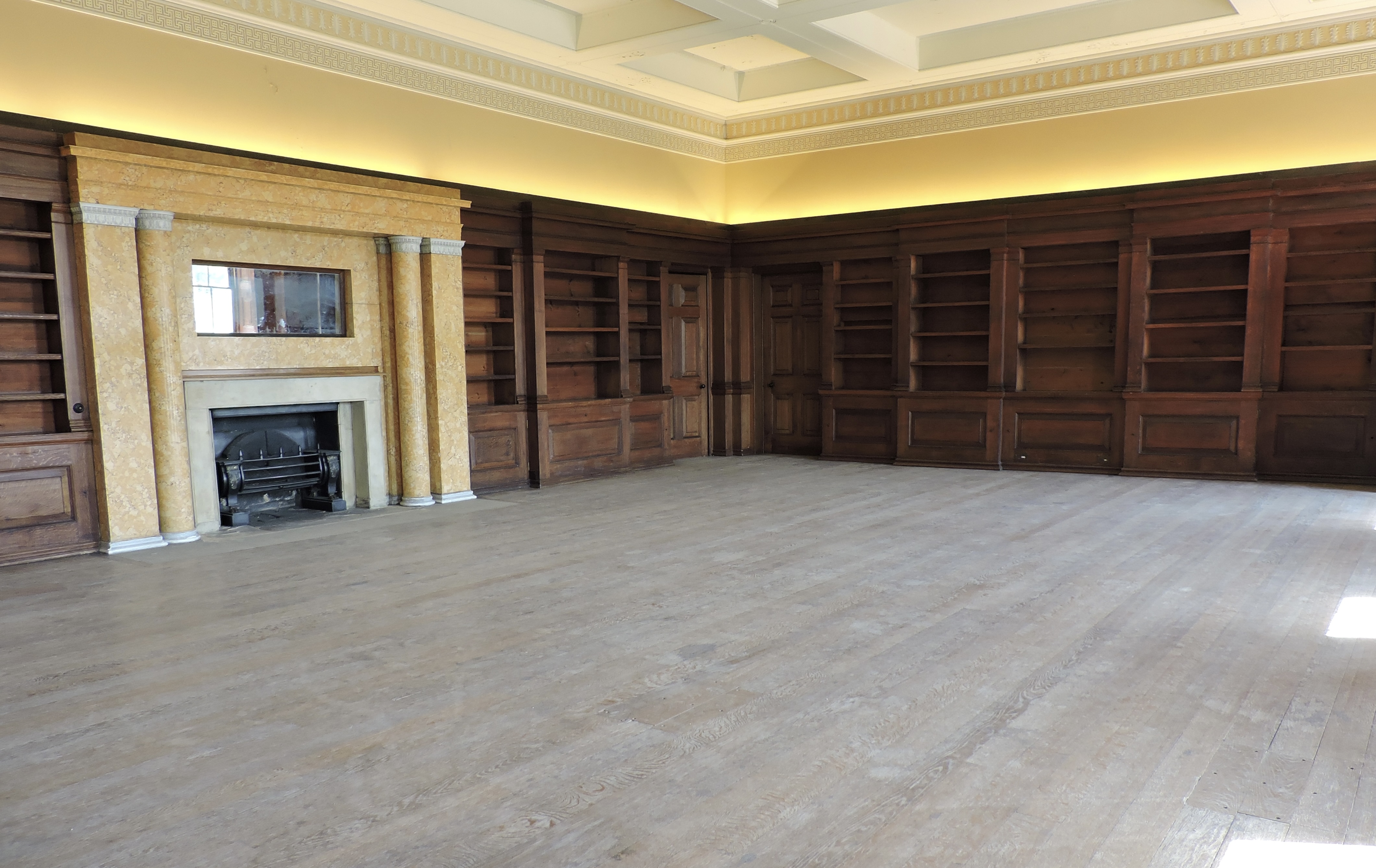
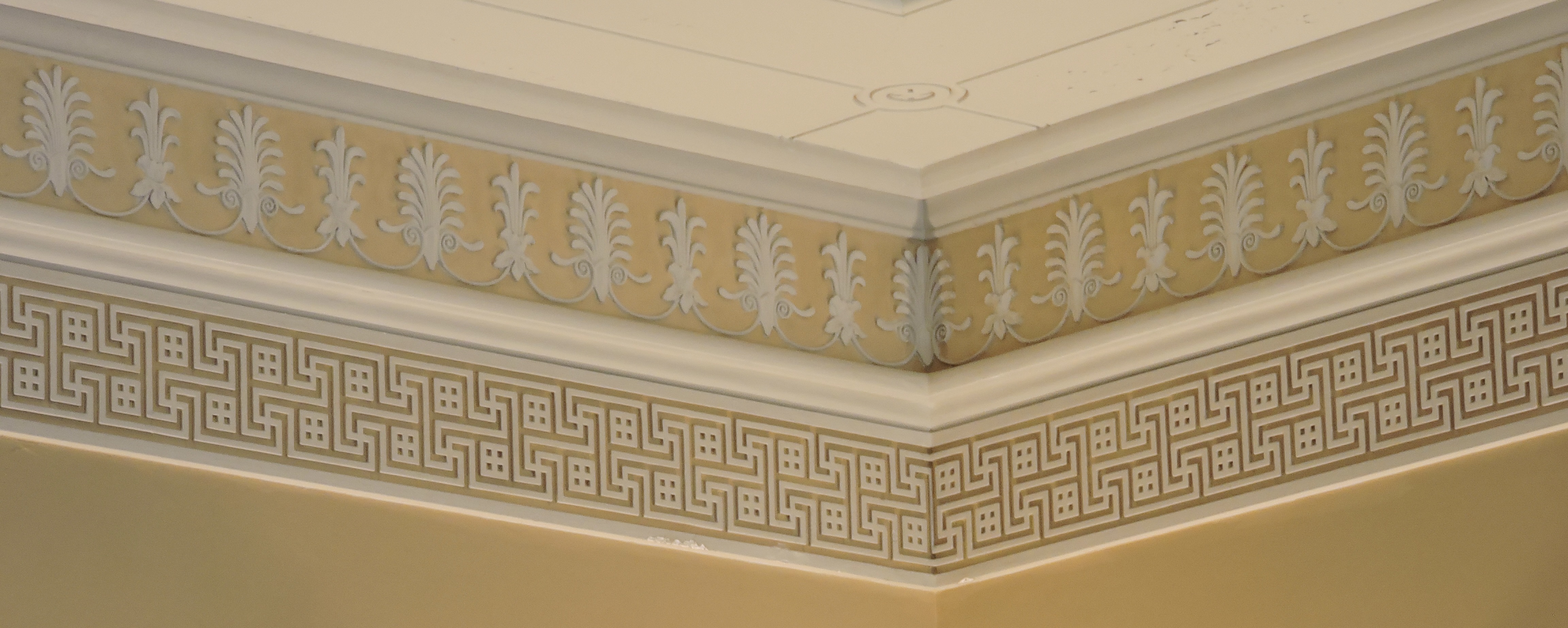
We had a look around the hall, which is empty of furniture and has unplastered walls and high pillars in the entrance hall so that it’s a bit like walking into an ancient temple. The Library which is now bookless has a frieze in a Greek Revival Key pattern
The formal gardens are lovely and well-kept…….

but it’s the quarry garden that steals the show….

We emerge from the quarry path into the sunshine for a view of the medieval castle:
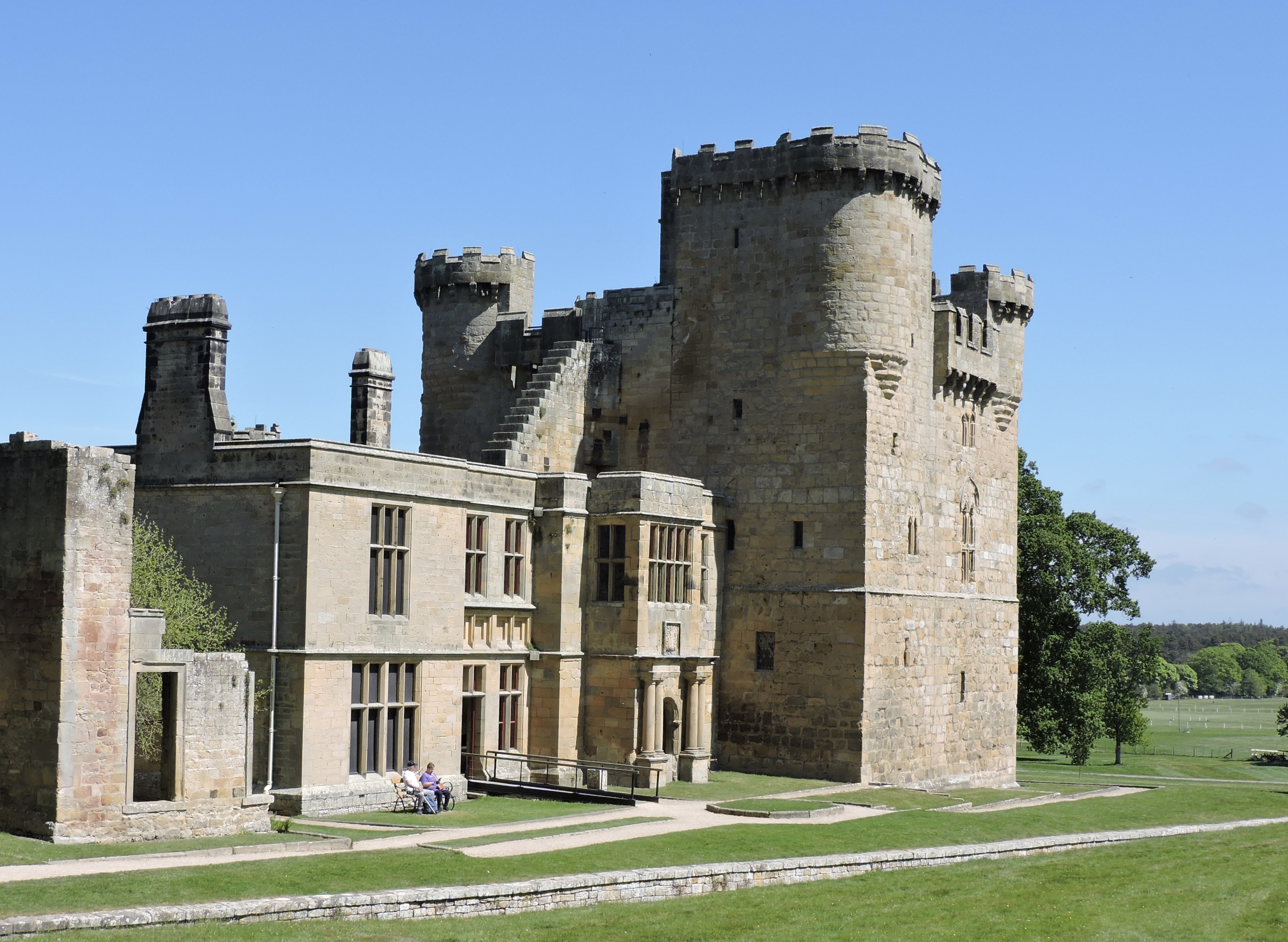
The Middleton family lived at Belsay continuously since the 13th century, although the estate was forfeited in in 1317 when Sir Richard de Middleton’s grandson John was executed for treason – disastrous for Sir Richard as he was Lord Chancellor to Henry III at the time! Luckily for them the estate was returned to the Middleton’s when one of his descendants managed to marry into the resident family.

Alongside the castle is the newly constructed “Wild Man” play area – named after a figure painted on the inside east wall of the tower. “Wild Man” is a medieval mythical figure present on the Middleton coat of arms. It’s one of several fragments of early paintings still visible including heraldic shields and a naval scene reflecting Sir John Middleton VII’s role as commander of fleets against the French in the 1480s.

Also nearby is the newly converted coach house and stables which is now a cafe beautifully done out with wooden beams and upholstered wooden seating. It all looks lovely. Sadly, the experience of having lunch in this lovely building was not so lovely. Lunch was delivered to our table in a cardboard box with a sellophane lid, drinks were in paper cups, and we hacked at our jacket potatoes with flimsy wooden disposable cutlery, whilst reading information on photo boards telling us how proud English Heritage is of its ethical and sustainable practices. I’m not sure whether we just visited on the day the dishwasher broke down or if this was normal – whichever it was, it sort of spoiled the experience for us.

Going back to the Middleton’s for a minute – Sir William Middleton II died in 1757 leaving the estate in debt and everything had to be sold off – but the fortunate Middleton’s again managed to marry into the right family – Sir William’s nephew (also William) wed Jane Monck, a very wealthy heiress. It was William and Jane’s son Charles (who changed his name to Monck so that he could inherit some land in Lincolnshire) who was the passionate Classicist and had the greatest impact on Belsay.

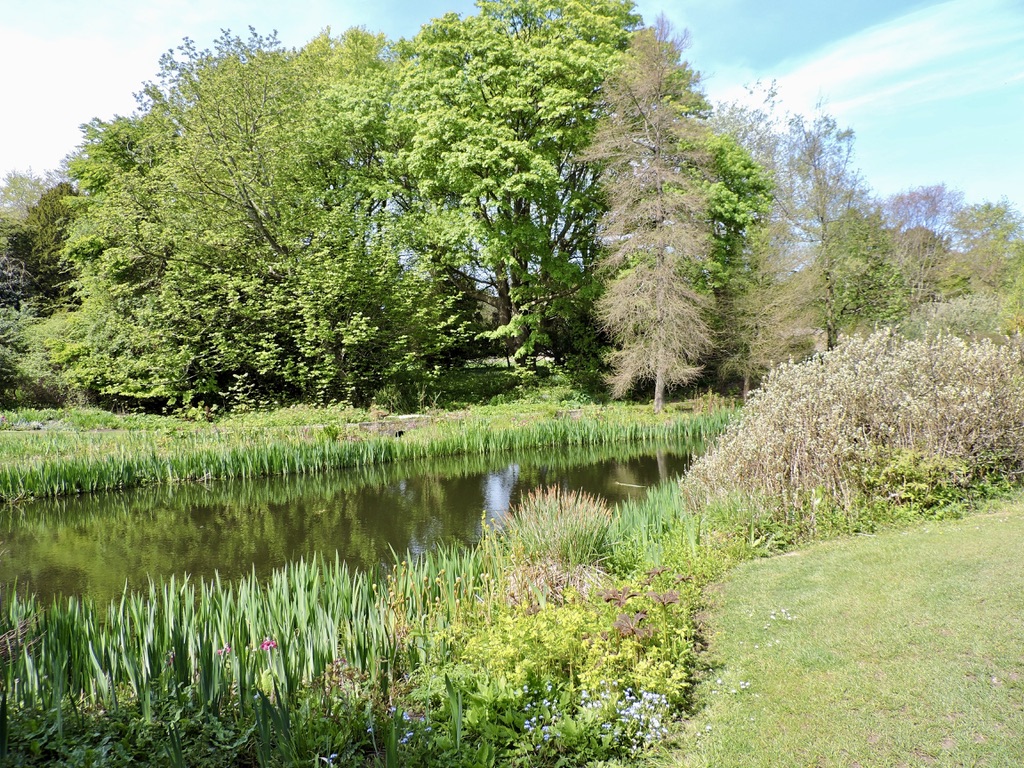
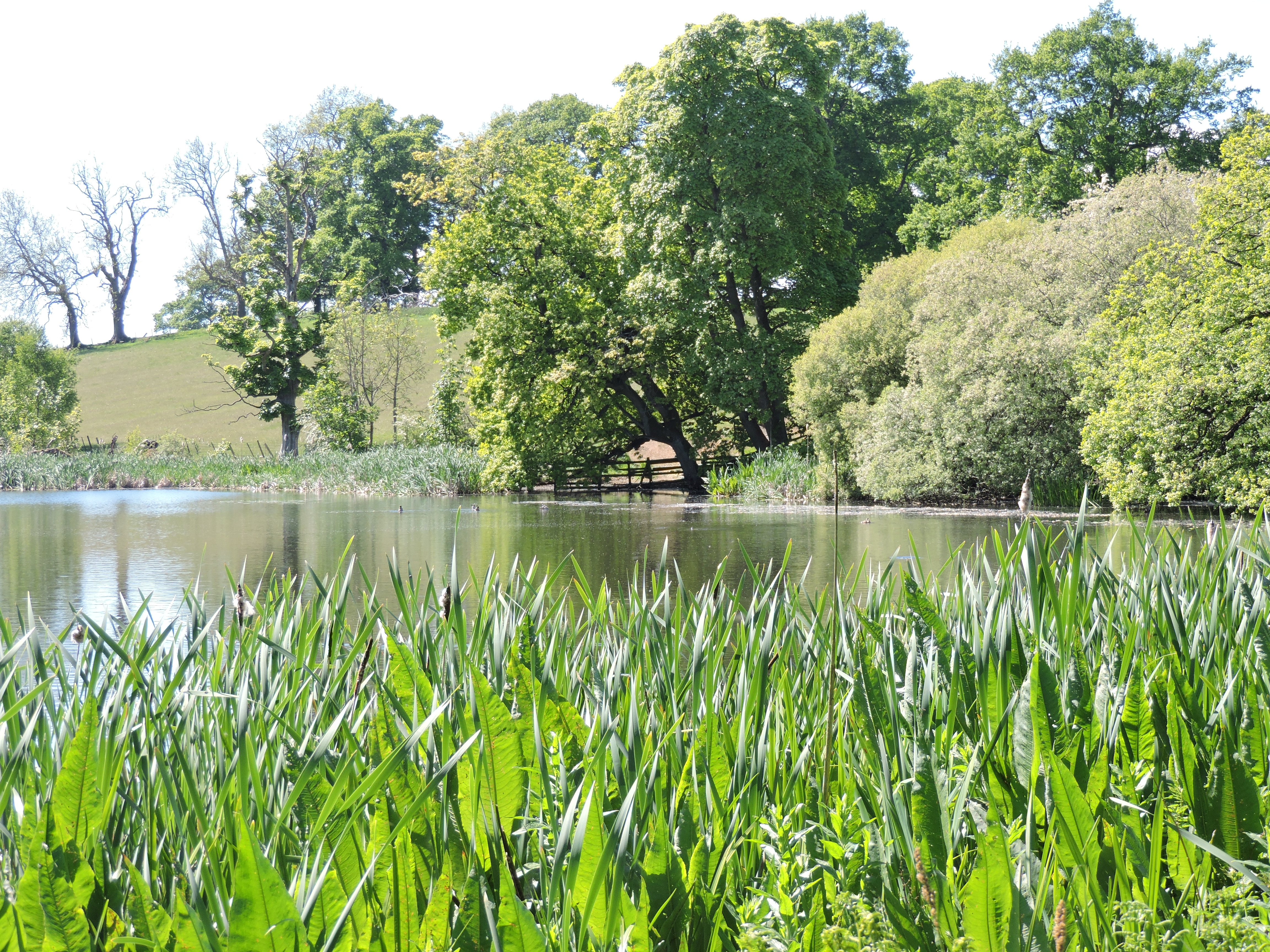
As well as the formal and quarry gardens, Charles planted exotic conifers, Scots Pine and other hardwood species to form Crag Wood to the south of the house and its here we venture next, passing the manmade lake:
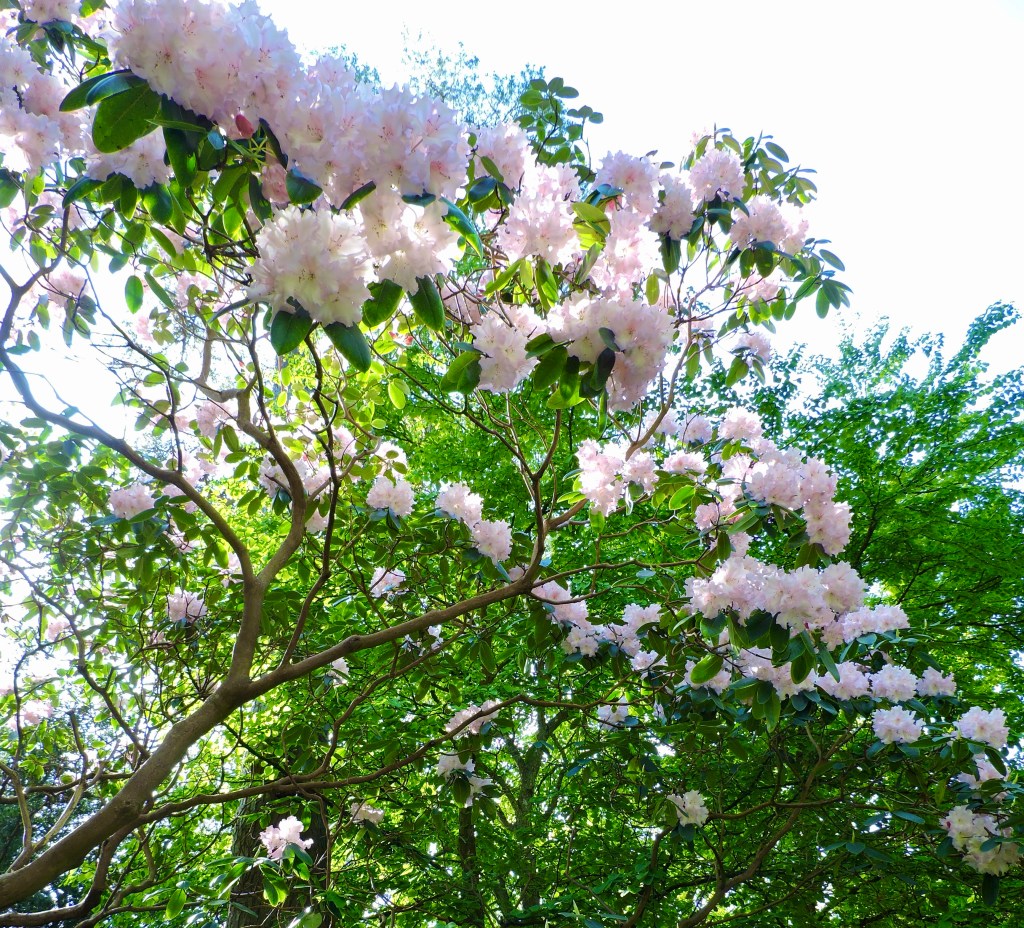
and heading uphill through the woods. As we pass the back of the hall we have a good view of the rhododendron and what are apparently ‘deer shelters’:

I did puzzle over the provision of shelters for deer – but I’m wondering now if these are shelters for people to hide in whilst they try to spot the deer – so they can shoot them of course! What do you think?
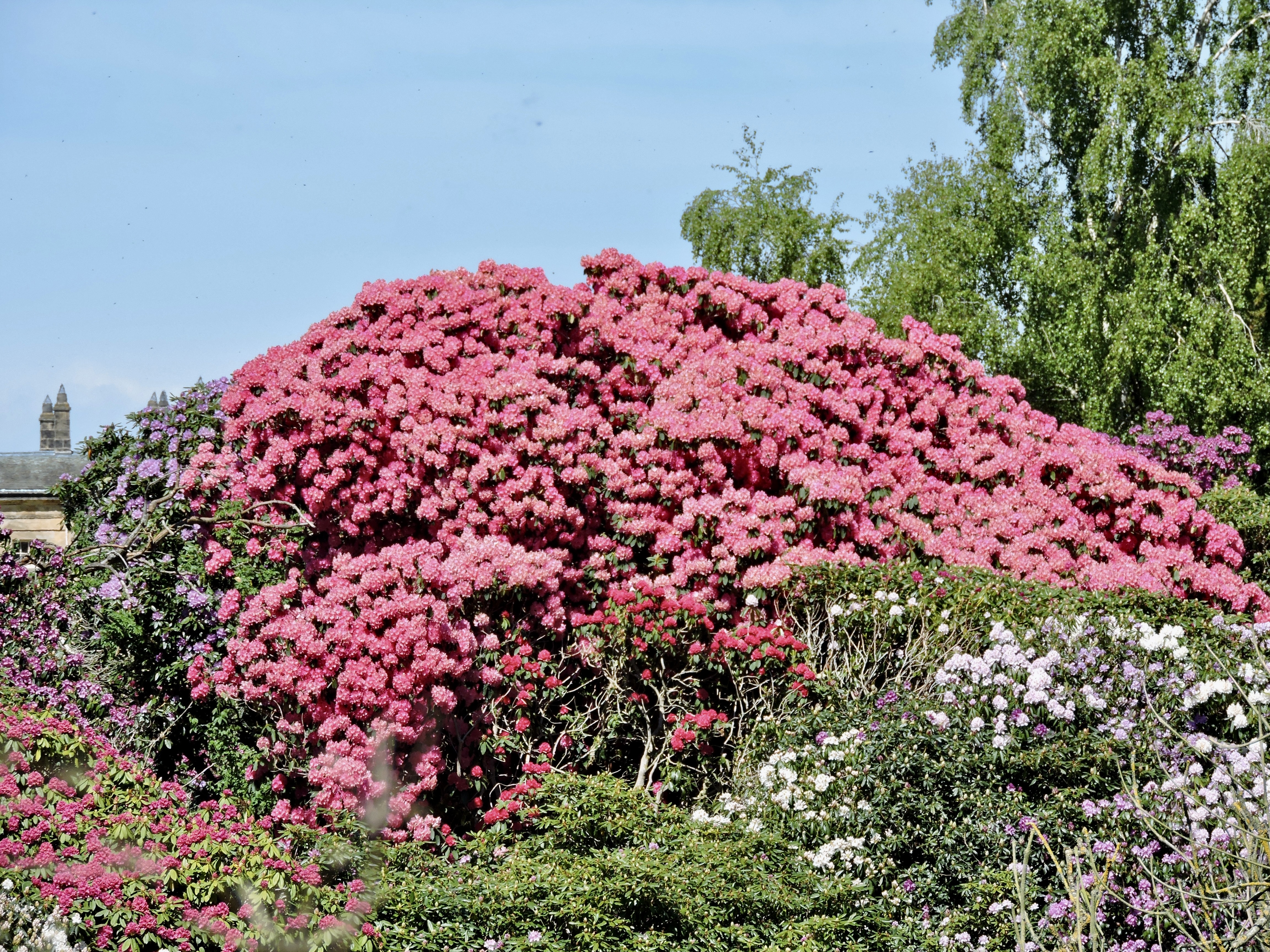
Rhododendron to the south of the hall

We were quite enjoying the ramble through the woods with it’s view of the lake until a flying insect launched itself at me and stung me in the eye! Oh my word, that hurt! No first aid kit of course although a plaster wouldn’t have been much help! Luckily after a sit down on a nearby bench and a few deep breaths we headed back to the Hall where we were hoping there would be some sort of first aid if it was needed. By the time we got back it was feeling better, but I’d had enough by then – time to find our way home.

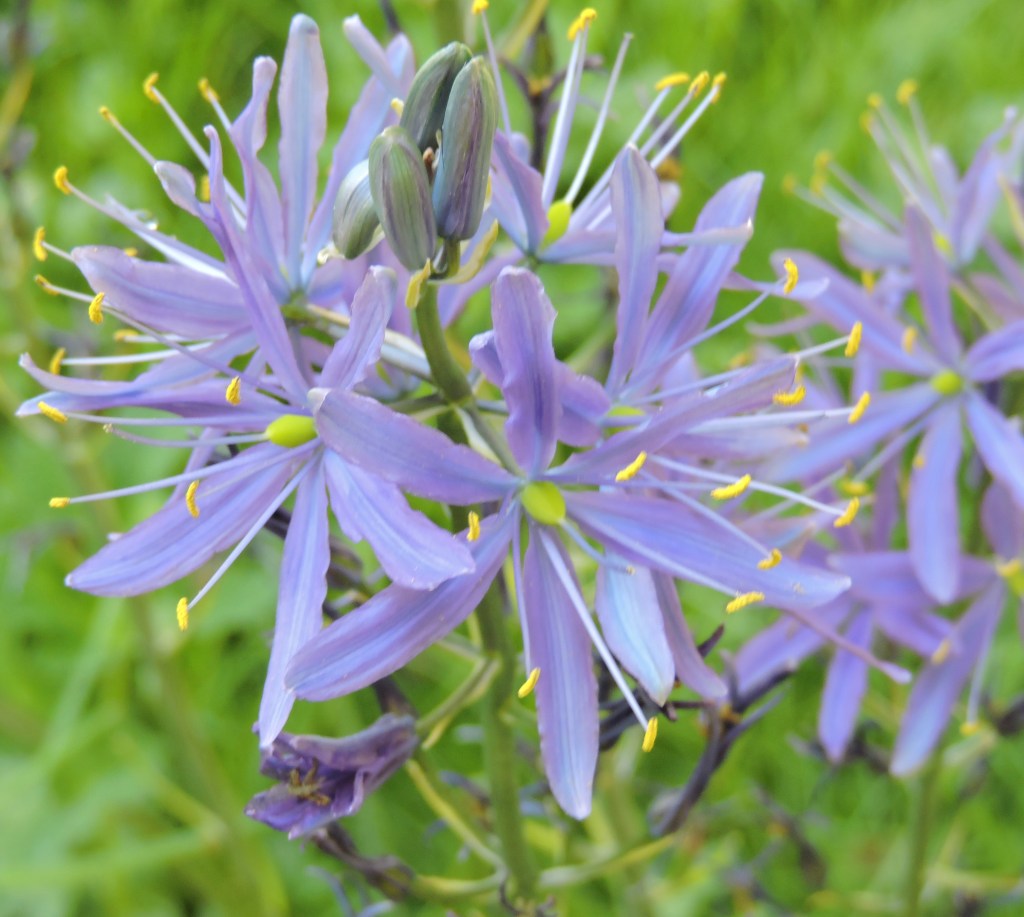
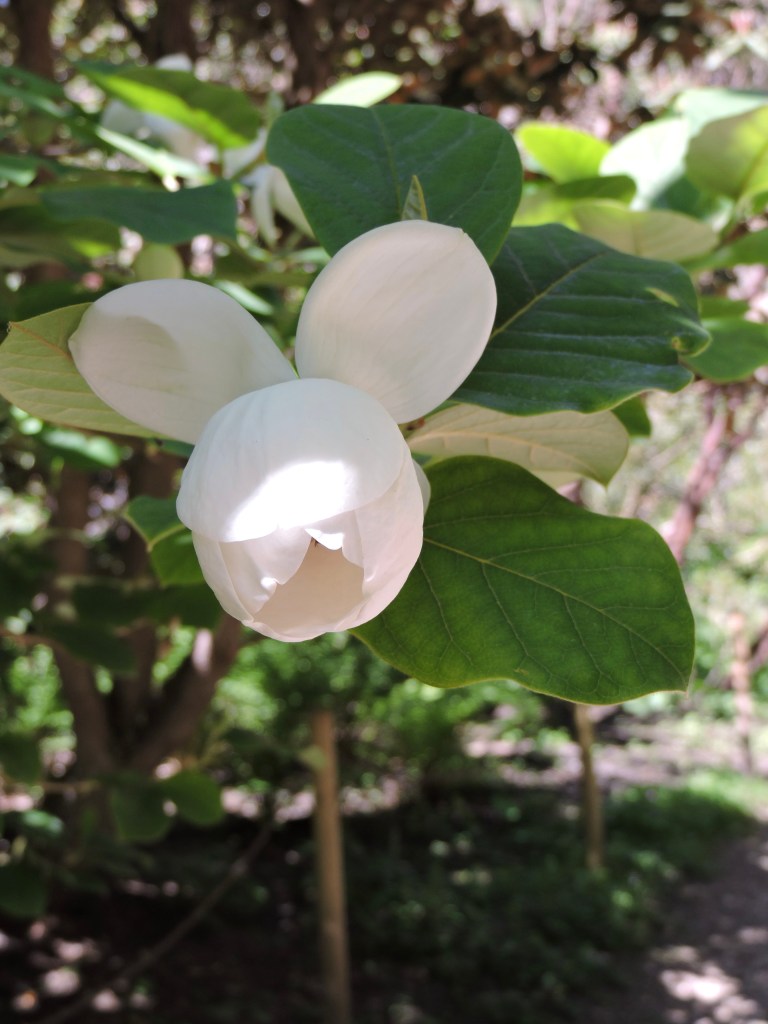
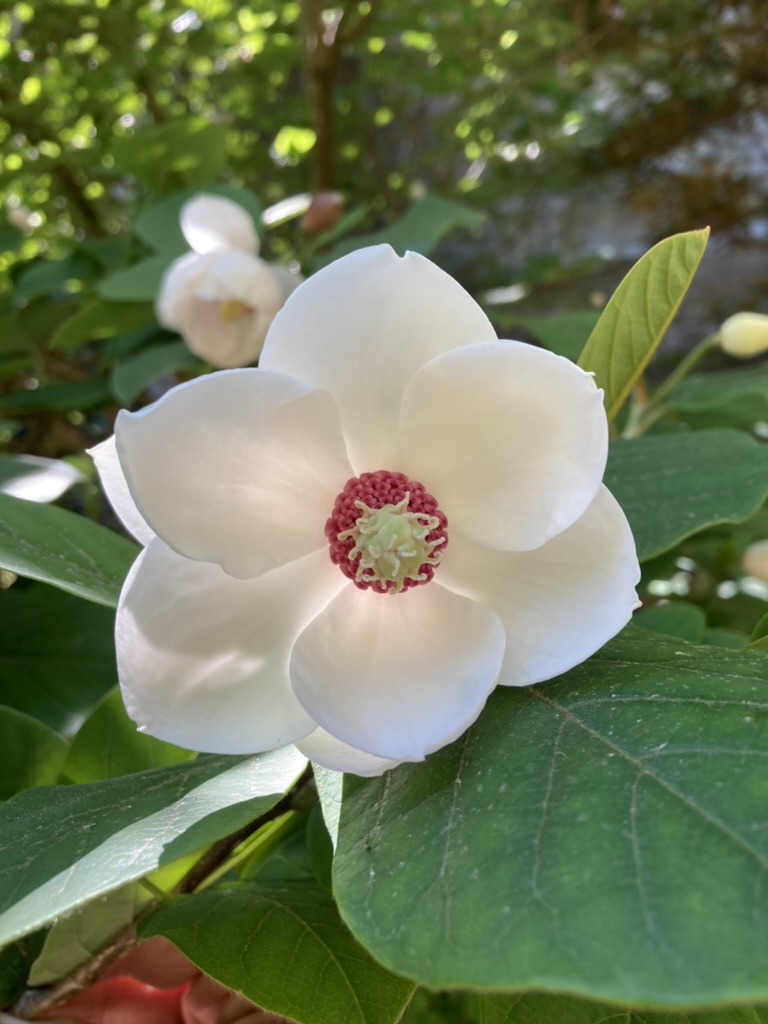
Here’s my favourite flower of the day – Calycanthus chinensis – a stunning tree covered in these beauties:
Howick Hall Gardens and Coast Path

From Howick Hall Gardens you can walk to the coast and along the English Coast Path before turning inland and back to the gardens. Including walking around the gardens we did around 6 miles on a beautiful day in late April.

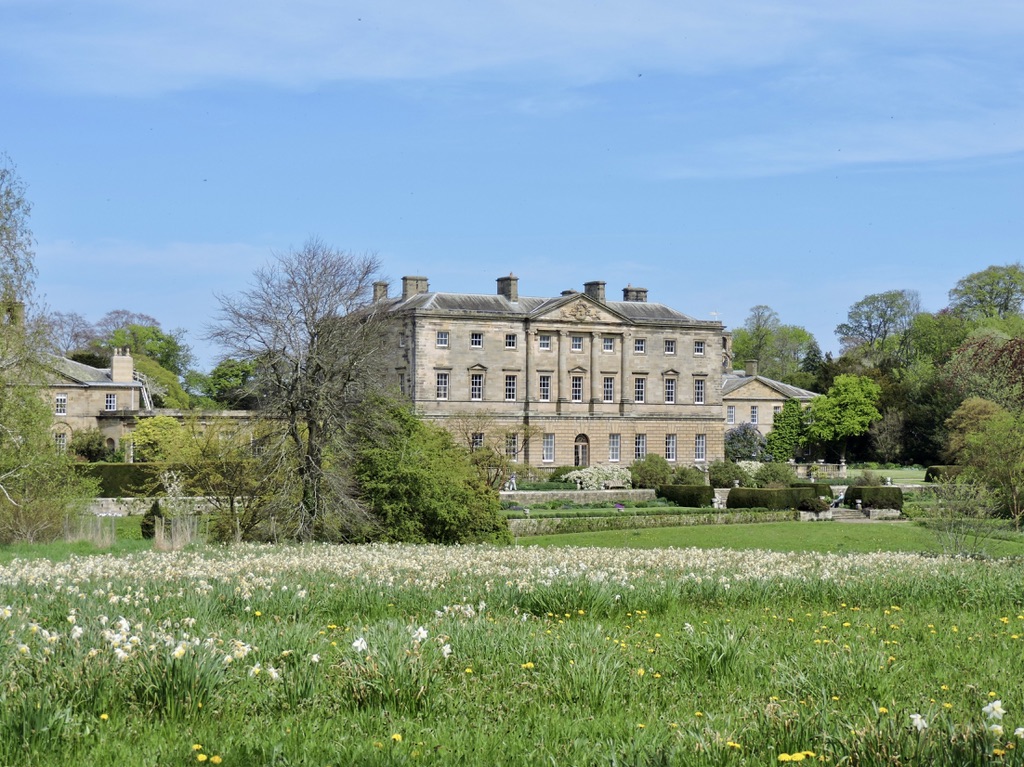
Howick Hall is near the Northumberland coast not far from Alnwick. [ https://howickhallgardens.com/ ] The house, built in 1782, is the birthplace of Earl Grey Tea! The tea was blended by a Chinese mandarin for the 2nd Earl Grey from the spring water at Howick using Bergamot and was so popular that Twinings marketed it for sale all over the world (apparently the Greys were not so business minded and didn’t register the trademark before Twinings got their hands on it, so they’ve never been able to claim any royalties!). Howick was the home of the Grey family from 1319 until the 5th Earl Grey left it to his daughter Lady Mary Howick in 1963. The present Lord and Lady Howick live in the West Wing. The house has a couple of rooms open to the public but mostly its worth visiting for the gardens and arboretum.

We ambled around the woodland gardens before heading for the church which sits within the grounds. The Church of St Micheal and All Angels is an early Victorian building which apparently used to have a Gothic marble canopy – which is like a stone carved decoration usually over the altar – but the 5th Earl disliked it so much that personally took a hammer and chisel to it!

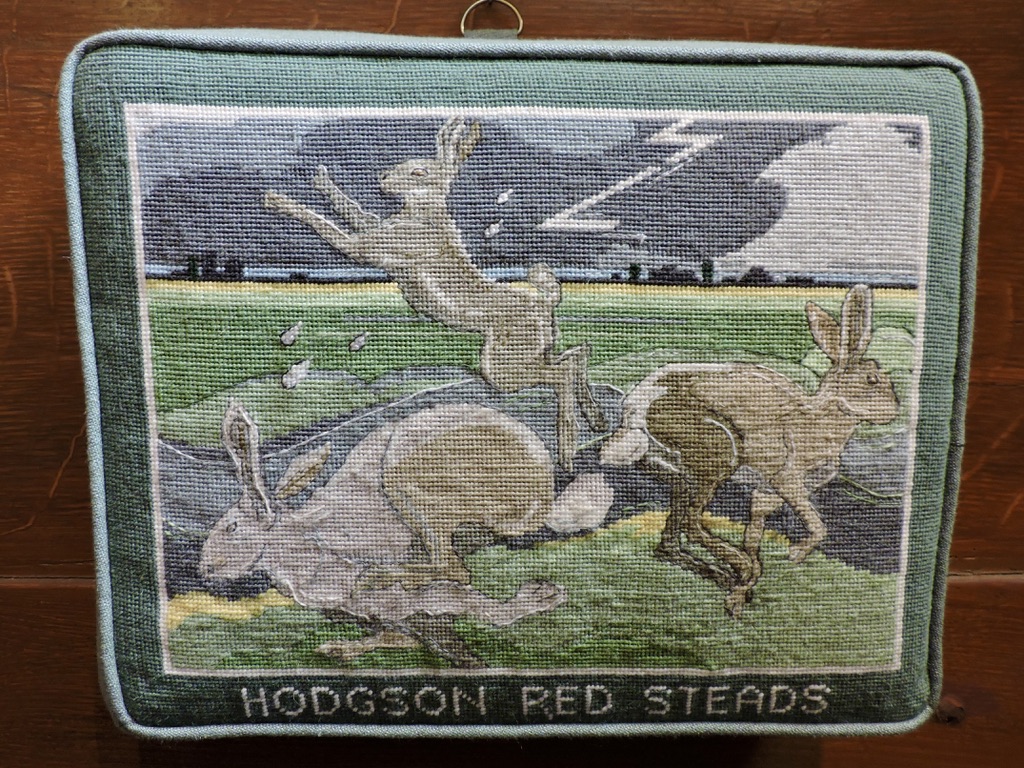
The most interesting part of the church as far as I’m concerned are the Howick Kneelers. A display of nearly 90 hand-stitched kneelers, all designed and produced by local people as part of a community project. Made in 2018-19 the kneelers depict local history, architecture, nature and landscapes and 150 local people were involved in this project. Impressive! Here are just two – they are all just as lovely.

From the church we headed back towards the house for a cuppa and then on to the bog garden which will be at its best in a couple of weeks once the irises are in flower

A little further along is a beautiful, sensory garden designed for the National Autistic Society. It’s been developed for those with autism but anyone can go in – its worth a visit to feel how peaceful it is and marvel over how creatively its been designed.

After walking on through meadows and fields of daffodils we had a quick sit-down to admire the view before heading towards the ‘The Long Walk’.

“The Long Walk” is a one and a half mile path through woodland following the Howick Burn to the sea. It does feel like it’s never going to end. And be warned – once you go through the turnstile about three quarters of the way along there is no going back! To return to the gardens (and your car) you have to take the coast path and follow a farm track to the main road which is about a 2 mile walk. We’ve done it before so were prepared with a picnic to eat once we reached at the beach.

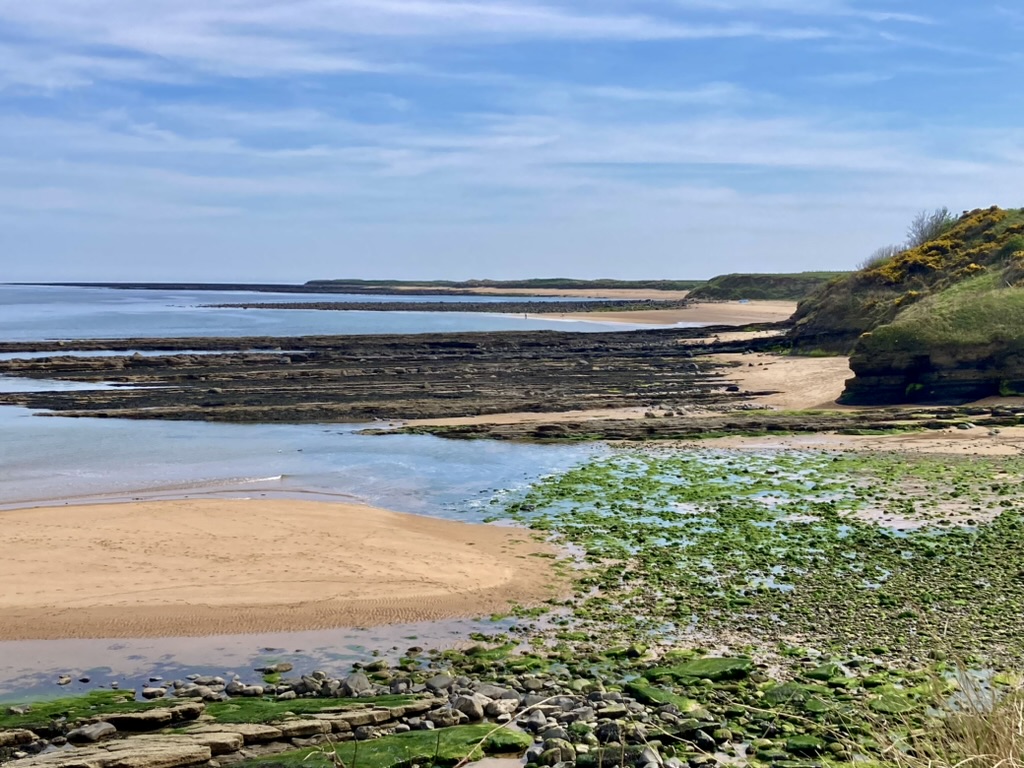
The tide is out!

We sit on the seawall and eat lunch watching some diving birds – maybe Tern – plunging face first into the water for their lunch. The coast path is lined with gorse with glimpses of a calm sea where we can see Eider Ducks floating.

It’s great to be back by the sea so we take our time along the coast path before turning inland for the long road walk back to the gardens where we treat ourselves to ice-cream!

The Thames Path from Lechlade to Ingleston

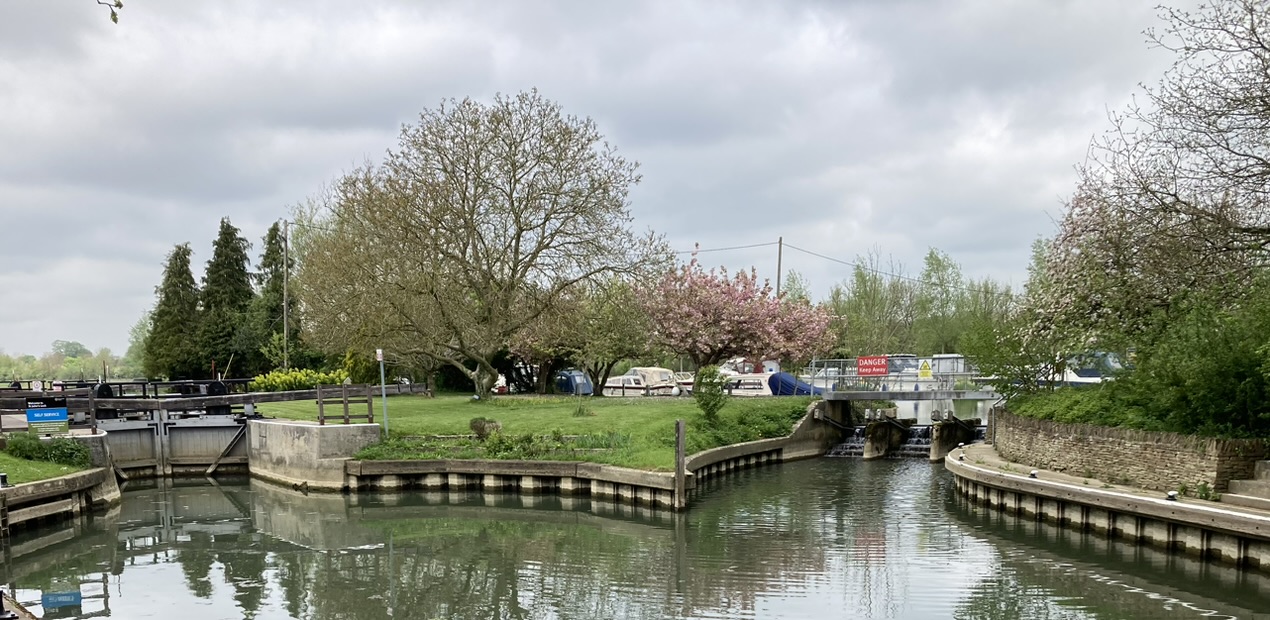
A recent visit to The Cotswold with Ms B, staying in the lovely little village of Langford gave us a chance for a 4 mile circular tramp – a lovely, flat walk through the floodplains alongside the River Thames, starting in the small market town of Lechlade in The Cotswolds. After a stroll through the churchyard of St Lawrence’s Church we walked along a wooded path, across a very busy road bridge and down steps to St John’s Lock – the furthest upstream lock on the River Thames.

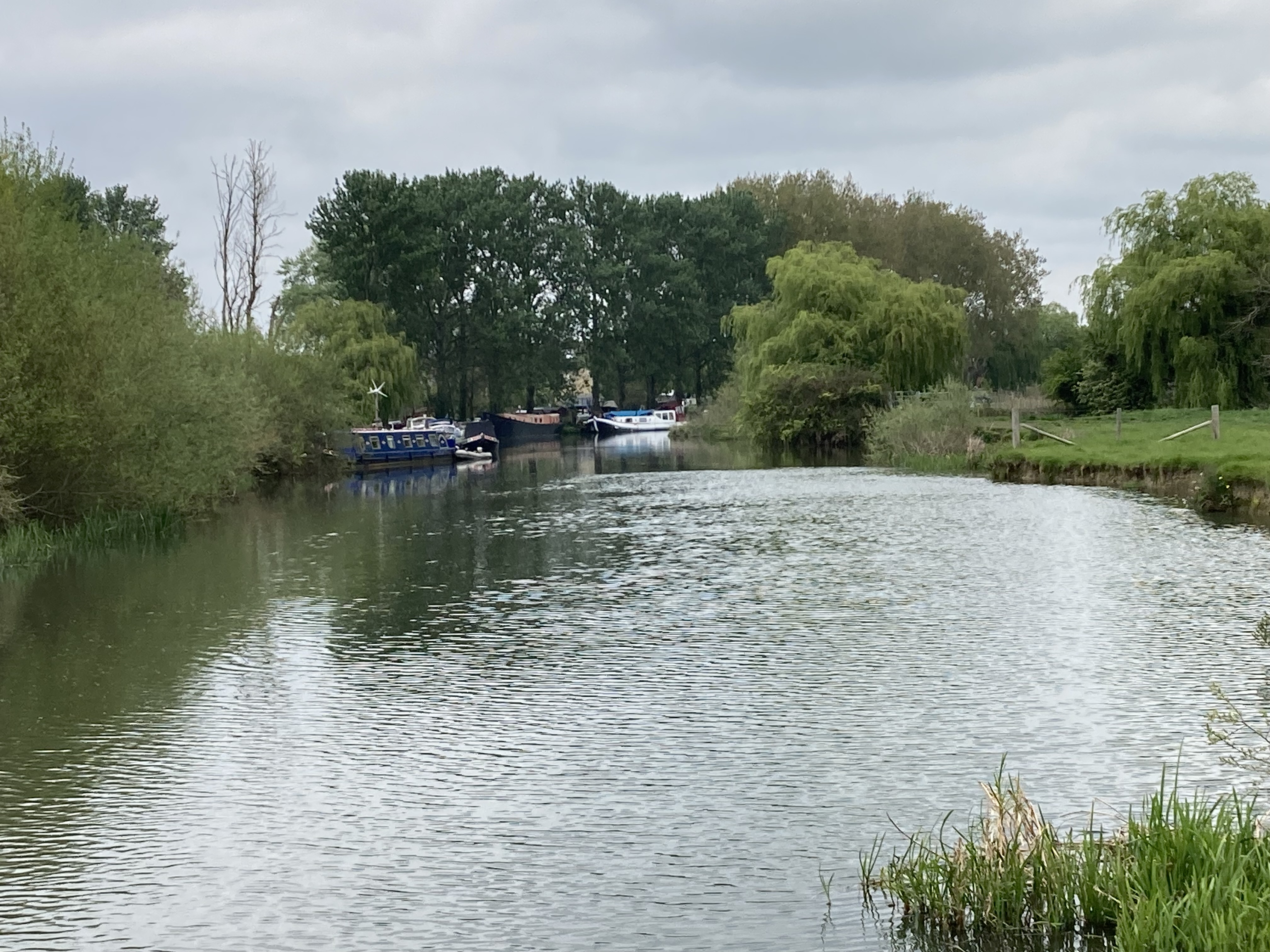
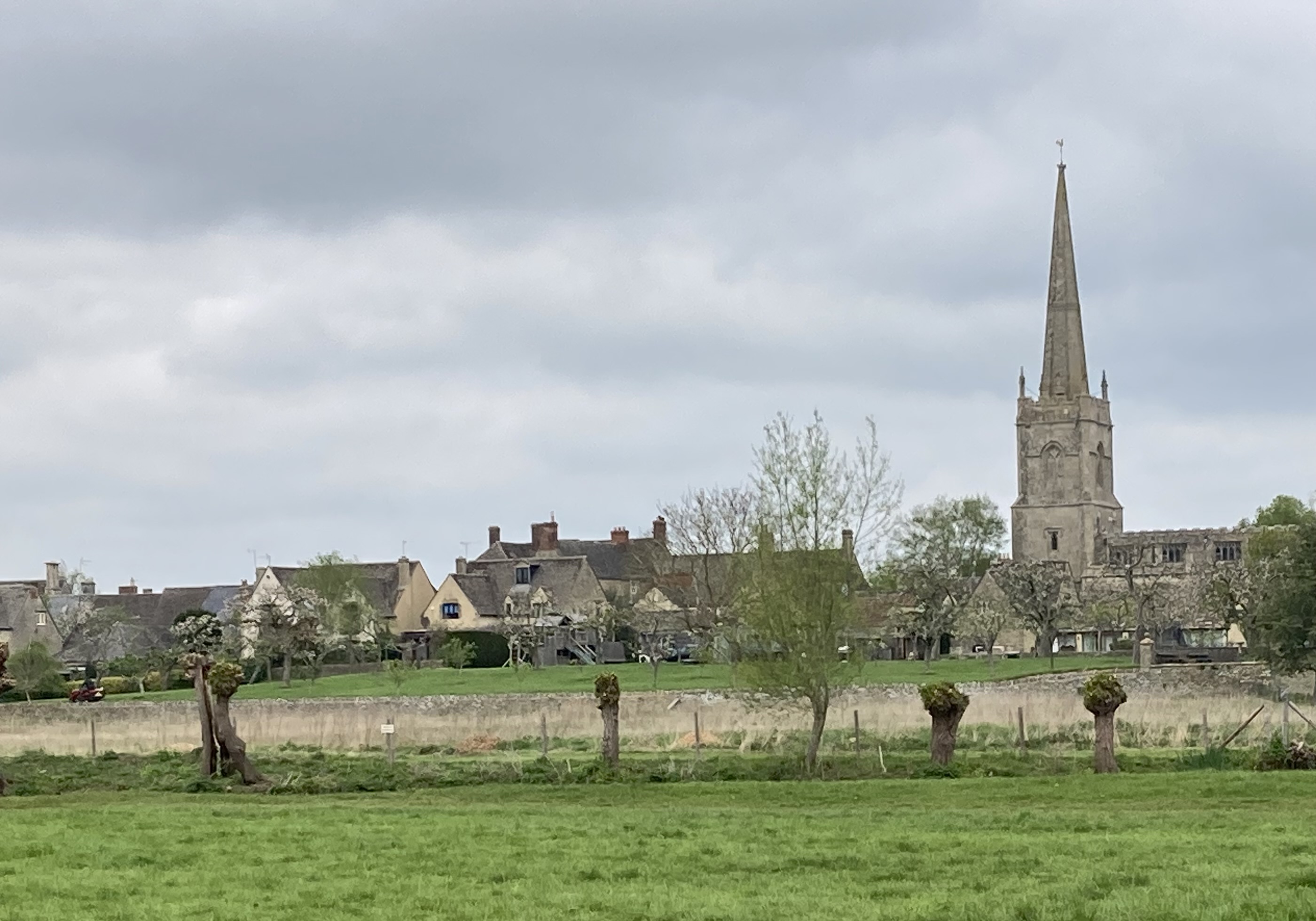
Glad to be away from the road we followed the river through fields and meadows, keeping the church in Lechlade nearly always in view.

An information board early on tells us that if we kept walking we could be in London in 10 days! Deciding not to bother with the trek on this occasion, we carried on following our planned walk under the stone Ha’penny Bridge and across a stream with the Inglesham roundhouse in the distance.

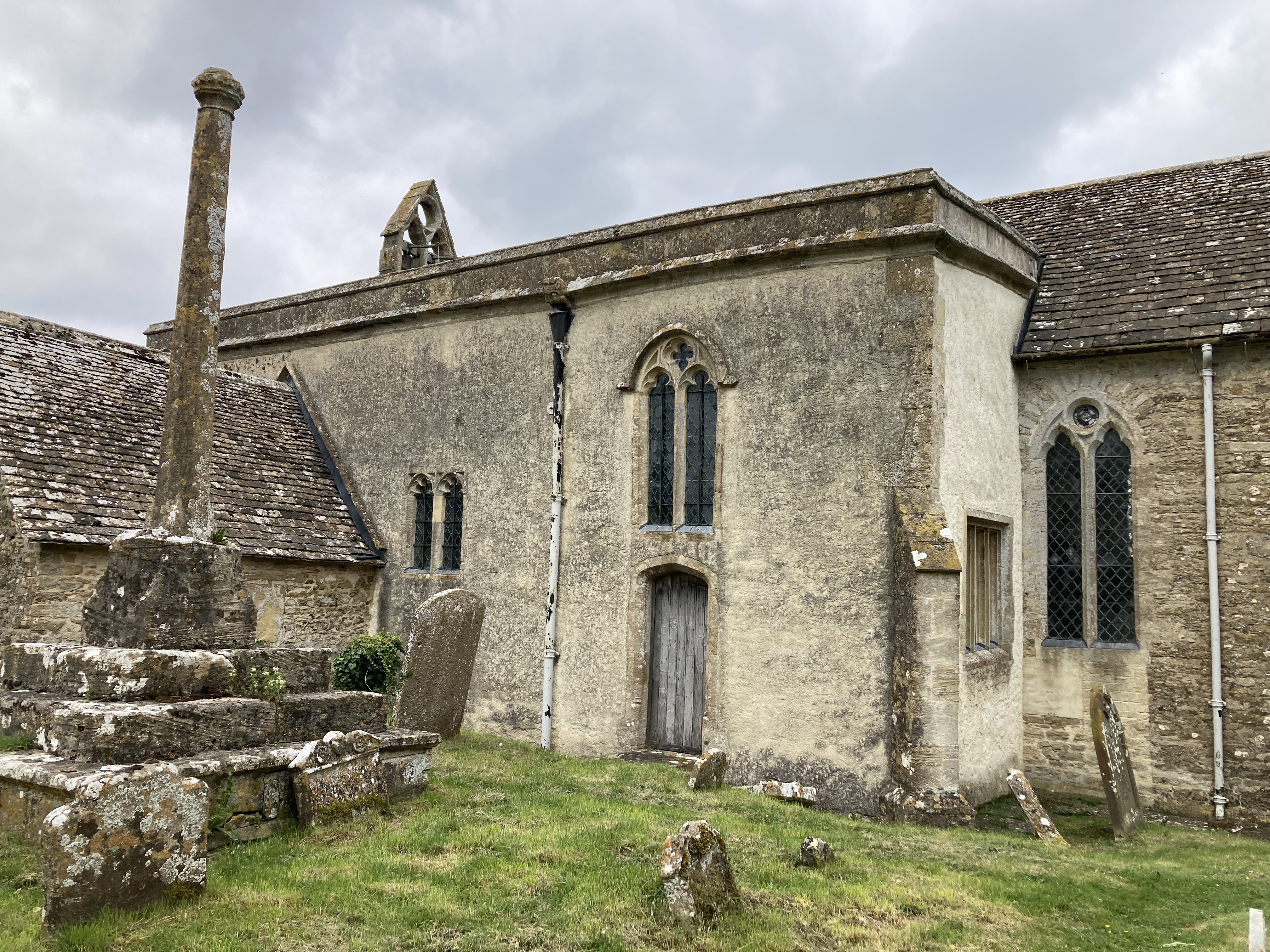
At the roundhouse we took a diversion away from the river to visit what turned out to be the highlight of the walk – the ‘ancient, painted wonder’ of the Church of St John the Baptist with its Saxon carving, 13-19th century painted walls and 17-18th century box pews. This rare example of an unrestored church had us gasping in amazement as soon as we pushed through the ancient wooden door. I’ve never been inside a church that hasn’t been restored in some way before – and I don’t think I’ve ever seen box pews and wall paintings like these.

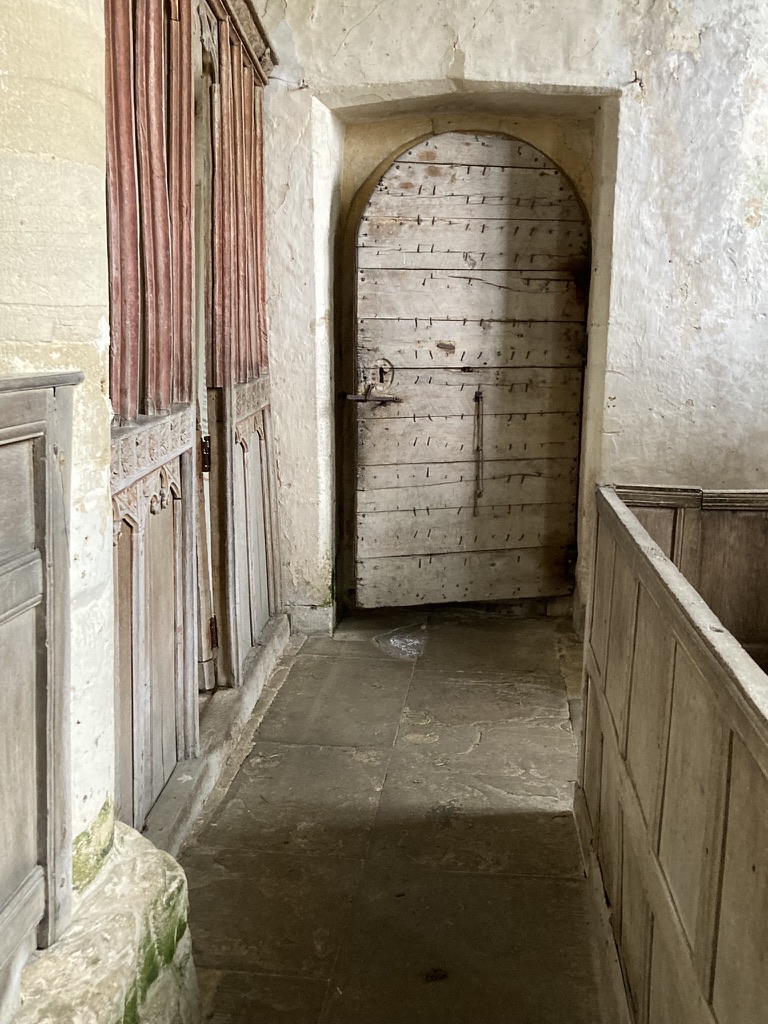
The North Door dates from the 14th century

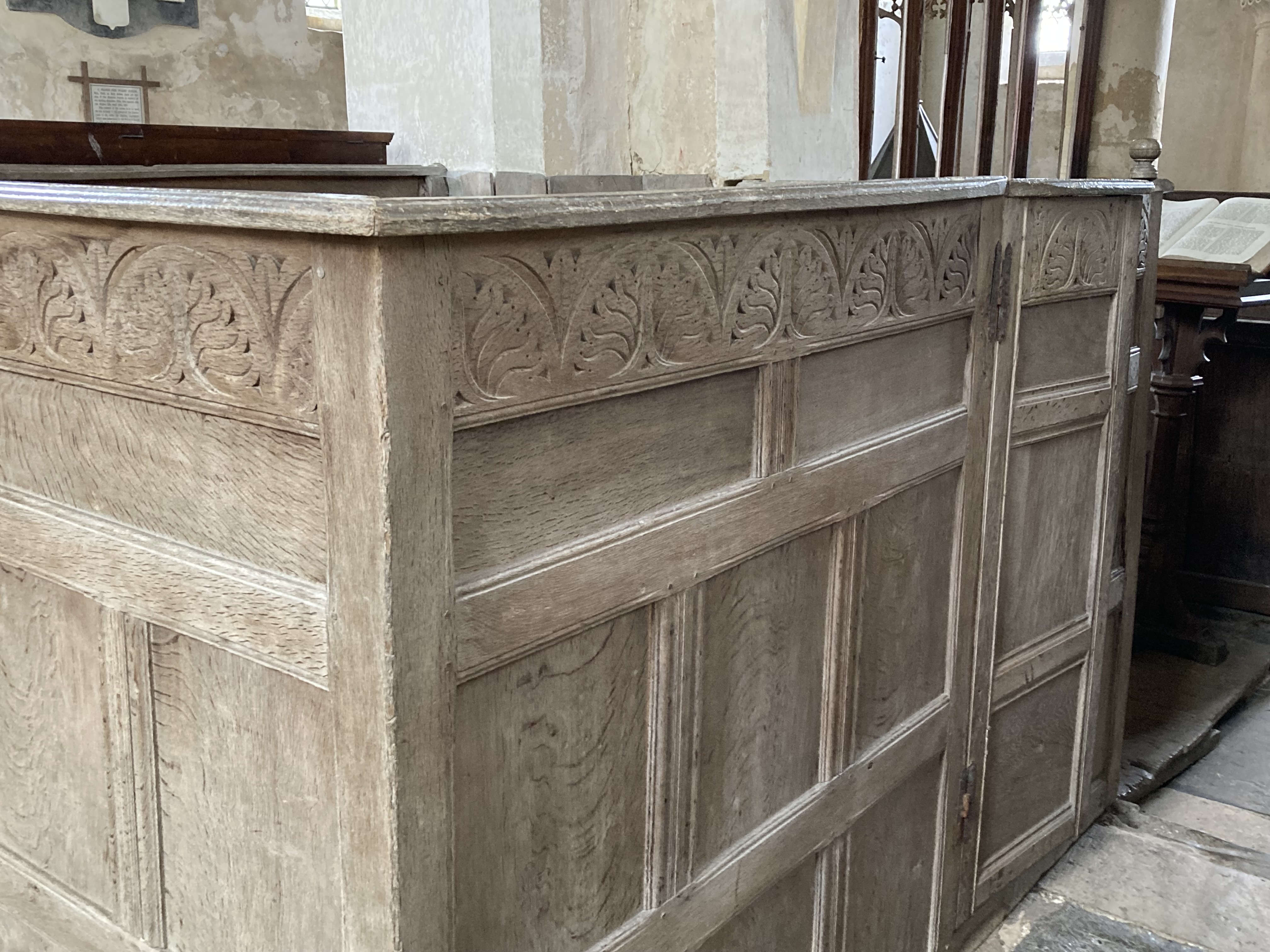
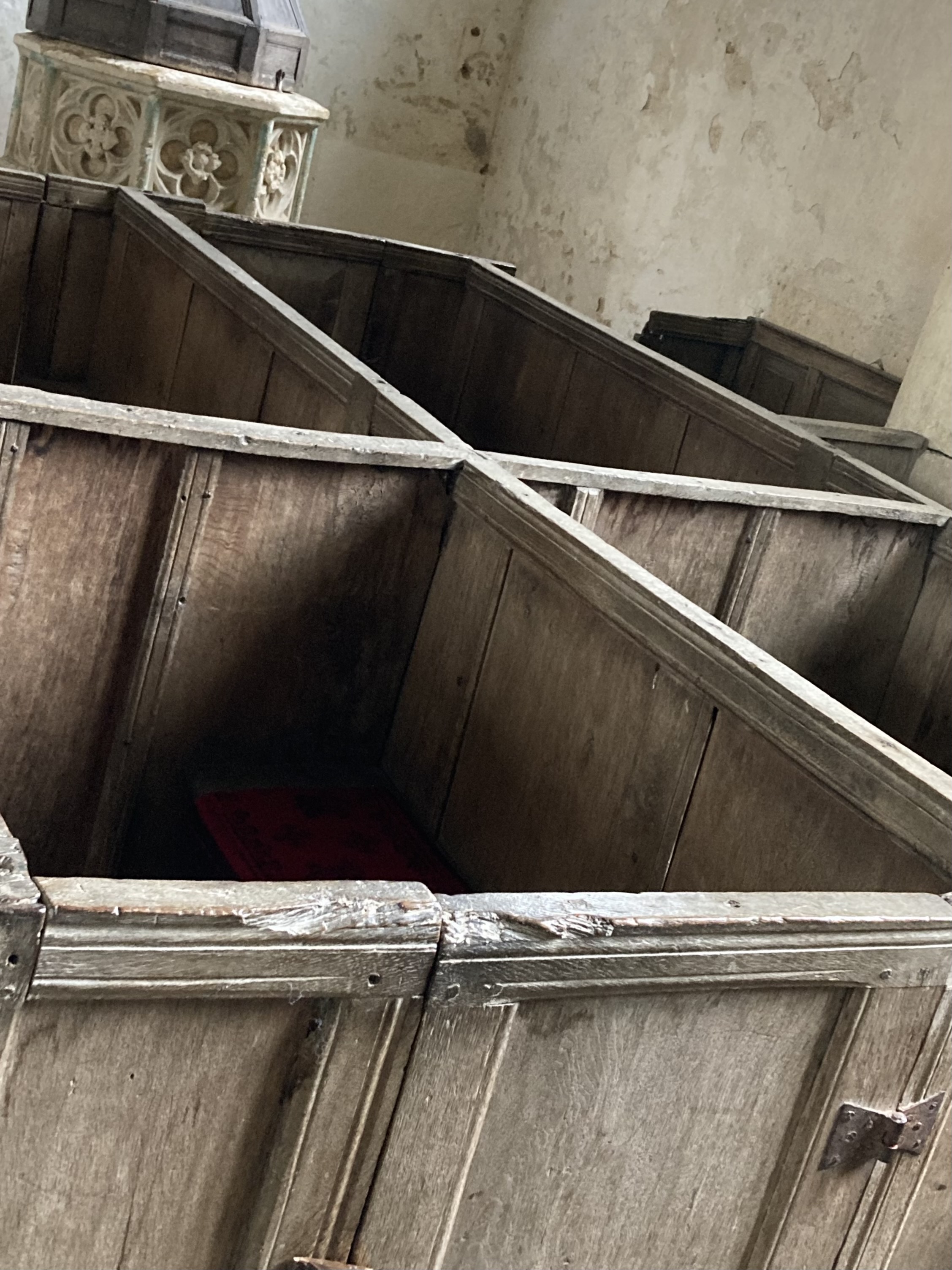
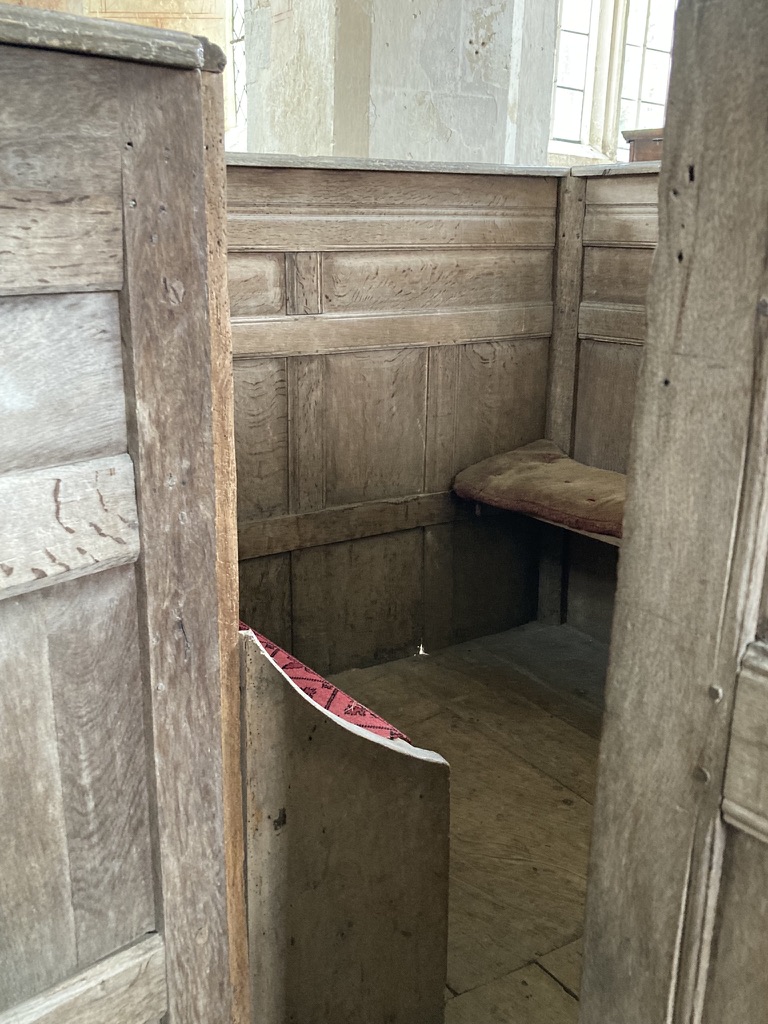
Before the 13th or 14th centuries seating wasn’t usually provided in churches but as sermons became longer so the need for seating became urgent, not surprisingly! The box pews here seem a bit higgledy- piggledy, in some churches they are in orderly rows. The surrounds are shoulder high and the seating narrow. They can’t have been very comfortable but in some places they even contained a fireplace as churches were very cold places. Many pews were owned by farming families and occupied by them for services.

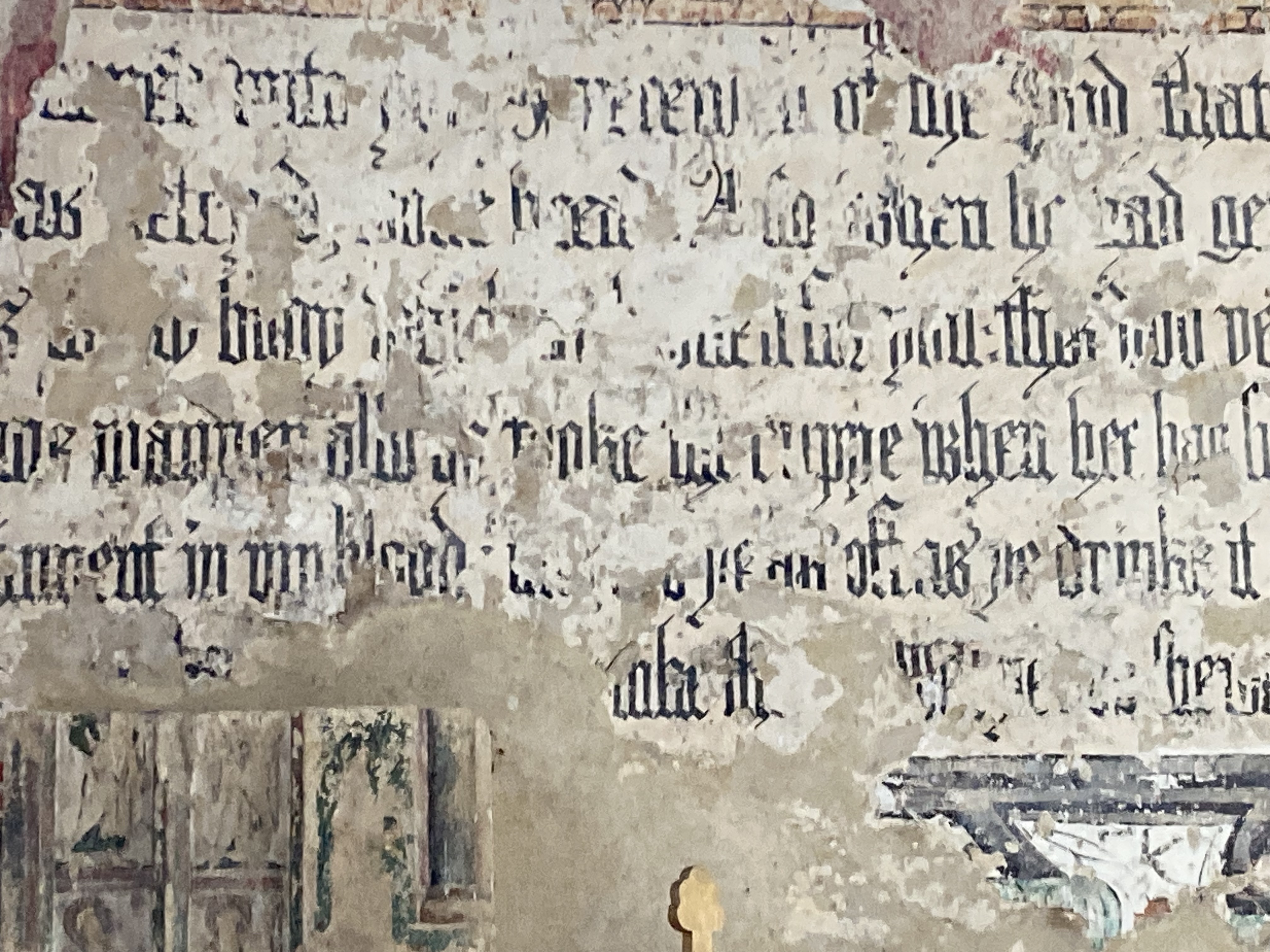
The walls are covered in paintings, many dating from the 14th century and are seven layers deep in places.

A huge stone with an indentation of an unknown knight set into the uneven floor
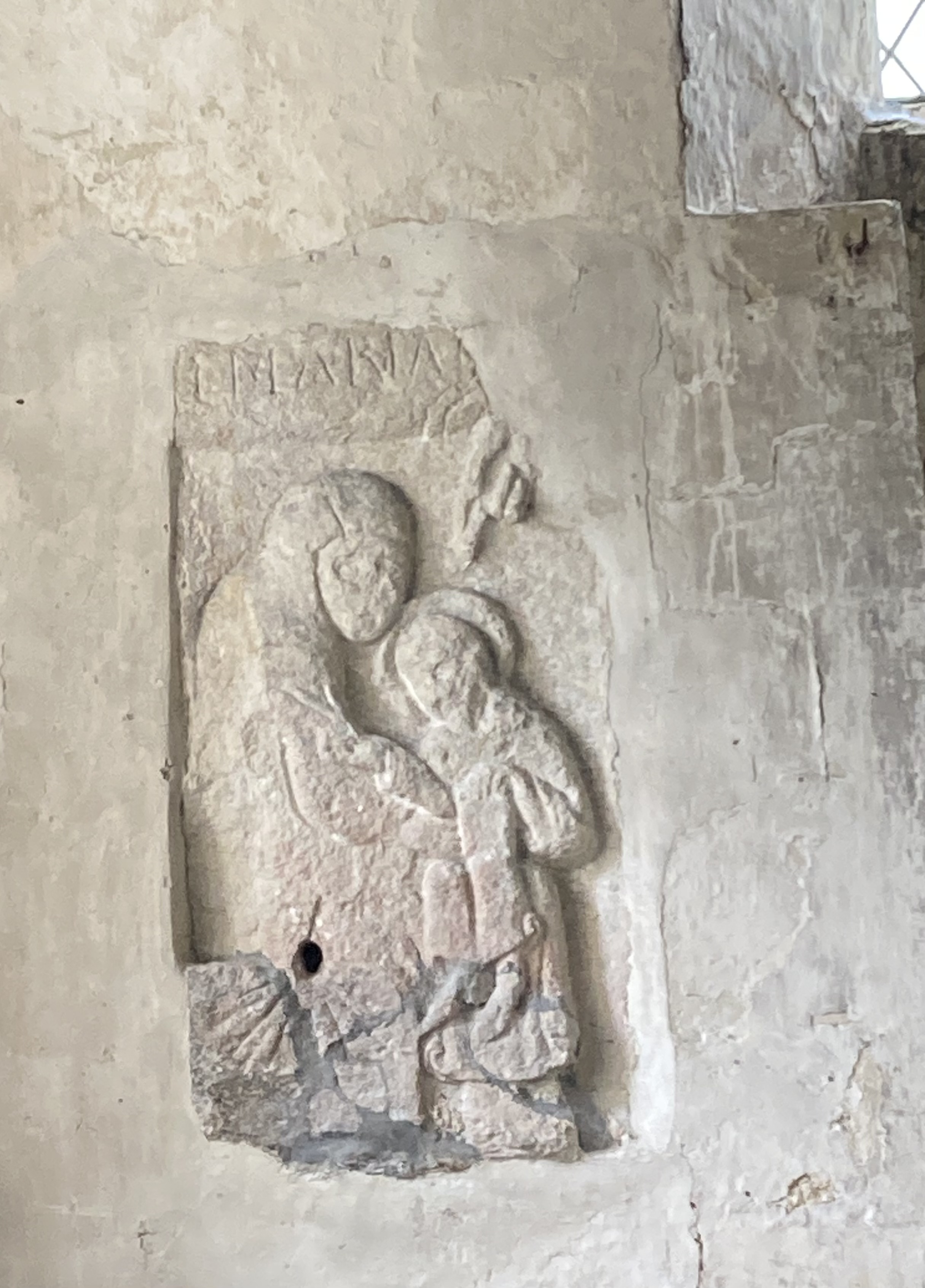
A Saxon carving of the Mother and Child blessed by the hand of God

William Morris – textile designer and conservationist recognised the importance of this church and in 1887 raised a funds for essential work to prevent the building falling into ruin. Now the church is under the care of The Churches Conservation Trust [ https://www.visitchurches.org.uk/ ] and conservation of the wall paintings has been ongoing for 23 years. There is recent damage from water ingress after the lead flashings were stolen from the roof so lots of work – and money – is still needed to protect this ancient monument.

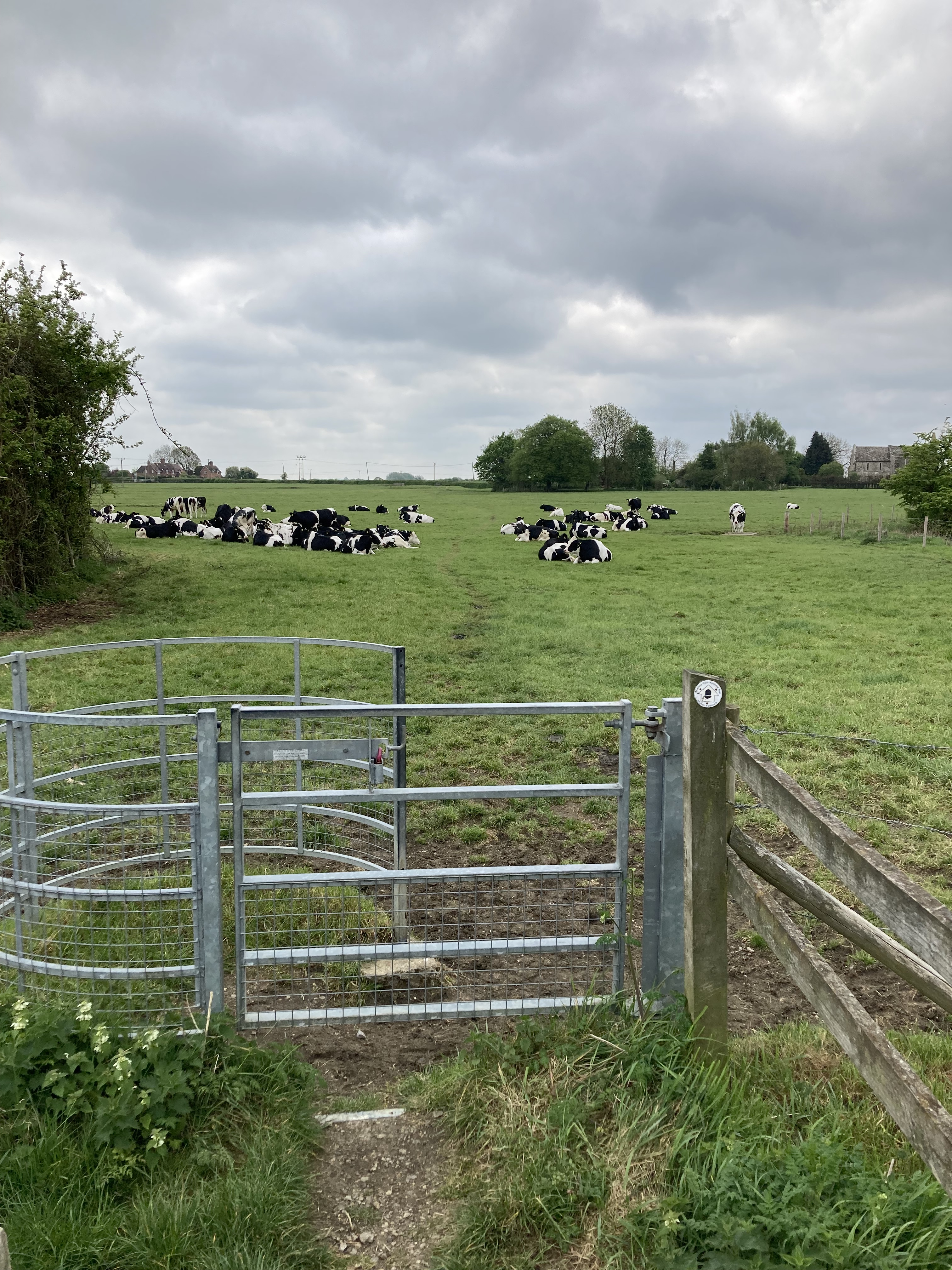
When we took the diversion away from the Thames Path, we had to walk through a field of cows. I am a cow coward! Ms B. had to talk me through them whilst I held on to her coat sleeve and sweated my way across with my eyes closed! On the way back to the river we had found our common sense and walked all the way around the edge of the field to the wooden bridge over the river. It has to be said that the cows seemed completely unconcerned about us whichever way we were walking!

The final mile or so of our walk took us through meadows on the other side of the river and back into Lechlade.

We used directions from Walk 04 in the April 2025 edition of Country Walking magazine. We stayed at Garden Cottage in Langford – perfect cottage, perfect location (airbnb). We ate at The Bell Inn, Langford ( https://www.thebelllangford.com/ ) delicious food, friendly pub and at The Five Alls, Filkins, just 2 minutes up the road https://www.thefiveallsfilkins.co.uk/ again, delicious food!

I’ve just read Night Swimmers by Roisin Maguire – set on the coast of Northern Ireland during lockdown – such a lovely book!

Next time – Howick Hall and Gardens in Northumberland and a walk along the coast.